Kirjojen hintavertailu. Mukana 12 595 353 kirjaa ja 12 kauppaa.
Kirjailija
Ajit Kumar Verma
Kirjat ja teokset yhdessä paikassa: 10 kirjaa, julkaisuja vuosilta 2011-2024, suosituimpien joukossa Reliability and Safety Engineering. Vertaile teosten hintoja ja tarkista saatavuus suomalaisista kirjakaupoista.
Reliability and safety are core issues that must be addressed throughout the life cycle of engineering systems. Reliability and Safety Engineering presents an overview of the basic concepts, together with simple and practical illustrations. The authors present reliability terminology in various engineering fields, viz., electronics engineering, software engineering, mechanical engineering, structural engineering and power systems engineering. The book describes the latest applications in the area of probabilistic safety assessment, such as technical specification optimization, risk monitoring and risk informed in-service inspection. Reliability and safety studies must, inevitably, deal with uncertainty, so the book includes uncertainty propagation methods: Monte Carlo simulation, fuzzy arithmetic, Dempster-Shafer theory and probability bounds. Reliability and Safety Engineering also highlights advances in system reliability and safety assessment including dynamic system modeling and uncertainty management. Case studies from typical nuclear power plants as well as from structural, software and electronic systems are also discussed. Reliability and Safety Engineering combines discussions of theexisting literature on basic concepts and applications with state-of-the-art methods used in reliability and risk assessment of engineering systems. It is designed to assist practicing engineers, students and researchers in the areas of reliability engineering and risk analysis.
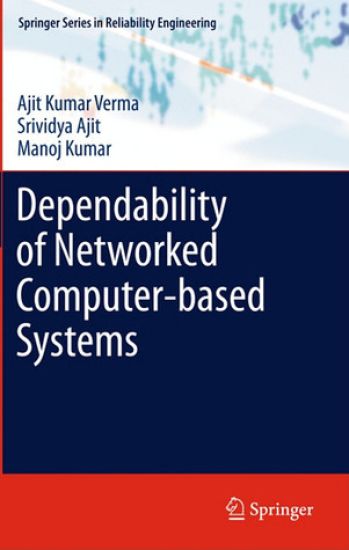
The measurement of dependability attributes on real systems is a very time-consuming and costly affair, making analytical or simulation modeling the only viable solutions. Dependability of Networked Computer-based Systems explores reliability, availability and safety modeling of networked computer-based systems used in life-critical applications such as avionics, nuclear power plants, automobiles and chemical process industries.Dependability of Networked Computer-based Systems gives an overview of basic dependability modeling concepts and addresses new challenges in dependability modeling of networked computer-based systems, as well as new trends, their capabilities and limitations. It covers a variety of dependability modeling methods:stochastic processes,Markov and semi-Markov models,response-time distribution,stochastic Petri-net-based modeling formalisms, andMonte Carlo simulation models.Dependability of Networked Computer-based Systems provides students and researchers with a detailed overview of dependability models and analysis techniques. Practicing engineers will also find this text a useful guide to decision-making based on system dependability at the design, operation and maintenance stages.
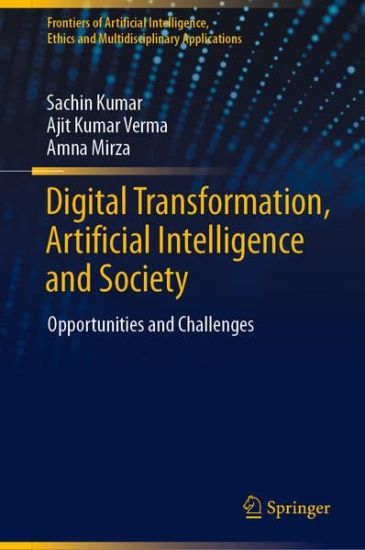
This book examines the fundamental concepts and principles of digital transformation and AI, including their historical development, and underlying technologies, and analyzes the opportunities arising from digital transformation and AI in different sectors, such as healthcare, finance, education, transportation, and governance. It provides a comprehensive overview of digital transformation and AI technologies and their current state of implementation. It also explores the potential challenges and risks associated with digital transformation and AI, including ethical considerations, job displacement, privacy concerns, biases, impact on inequality, social interactions, and the overall well-being of individuals and communities. Additionally, the books provides and discusses policy and regulatory frameworks that can effectively address the opportunities and challenges posed by digital transformation and AI leading to responsible AI. It also delves into impact of automation on the job market and workforce. The book concludes by proposing potential strategies for navigating opportunities and challenges of digital transformation and AI integration. It emphasizes the need for interdisciplinary collaboration among stakeholders, including policymakers, industry leaders, academia, and civil society, to develop a comprehensive approach towards harnessing the full potential of digital transformation and AI and associated technologies. The book employs a multidisciplinary approach, drawing from various fields such as computer science, sociology, philosophy, political science, economics, law and governance. It combines theoretical analysis, empirical case studies, and expert perspectives to provide a holistic view of the subject matter. This book caters to a diverse audience, including students, researchers, academics, policymakers, industry professionals, and technology enthusiasts. It provides a valuable resource for those seeking a comprehensive understanding ofthe opportunities and challenges arising from the integration of digital transformation and AI in society.
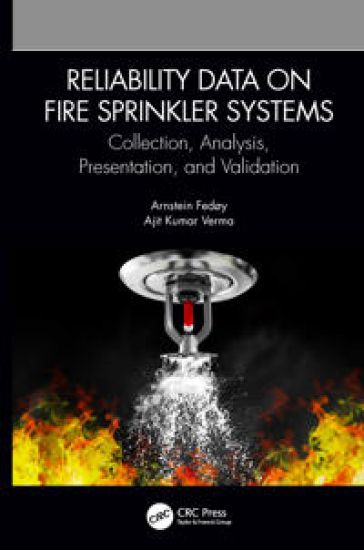
This book covers fire and extinguishing theory and reliability theory and how to validate any survey within the field of engineering. It’s based on a year’s study of historical literature, using critical review and document analysis. It covers how data is collected, analyzed, and presented. It discusses reliability theory, calculation, and uncertainty analysis, and after validating proposes a new methodology and approach using general scientific value and examples.Features Includes an in-depth study on relevant sprinkler reliability studies based for the first time on critical review and document analysis Presents a scientific validating analysis of studies based on how a survey should be conducted Critiques the fact that reliability of a sprinkler system as its ability to function as designed, has never been subject to surveys Suggestions for new survey methodology that can be used for the field of engineering, including all active and passive fire protection measures Discusses extinguishing theory, general design of extinguishing systems, different systems and the reliability of them all "Reliability Data on Fire Sprinkler Systems" will be of interest to Reliability Engineers, Systems, Architecture and Engineers, Design, Maintenance, Mechanical and, Civil Engineers, as well as those working in the field of fire protection and building and fire codes.
Component ratio, determination of the optimum hydraulic loading rate (HLR), and potassium (K+) dosage are important factors for the best yield of the tomato (Solanum lycopersicum var. ceraciformes) plant and pearlspot (Etroplus suratensis) in an aquaponic system. Considering the overall fish growth, health monitoring parameters, plant growth, and water quality parameters, the potassium (K+) dose of 80 mg l-1was found to be the most effective for tomato yield compared to other treatments. Experiments displayed that fish stocking density (0.86 kg m-3), Hydraulic Loading Rate (3.0 m day-1) and K+ dosage (80 mg l-1) showed a positive effect on Pearlspot and tomato crops.
This book covers fire and extinguishing theory and reliability theory and how to validate any survey within the field of engineering. It’s based on a year’s study of historical literature, using critical review and document analysis. It covers how data is collected, analyzed, and presented. It discusses reliability theory, calculation, and uncertainty analysis, and after validating proposes a new methodology and approach using general scientific value and examples.Features Includes an in-depth study on relevant sprinkler reliability studies based for the first time on critical review and document analysis Presents a scientific validating analysis of studies based on how a survey should be conducted Critiques the fact that reliability of a sprinkler system as its ability to function as designed, has never been subject to surveys Suggestions for new survey methodology that can be used for the field of engineering, including all active and passive fire protection measures Discusses extinguishing theory, general design of extinguishing systems, different systems and the reliability of them all"Reliability Data on Fire Sprinkler Systems" will be of interest to Reliability Engineers, Systems, Architecture and Engineers, Design, Maintenance, Mechanical and, Civil Engineers, as well as those working in the field of fire protection and building and fire codes.
This book describes the basic concepts of risk and reliability with detailed descriptions of the different levels of probabilistic safety assessment of nuclear power plants (both internal and external). The book also maximizes readers insights into time dependent risk analysis through several case studies, whilst risk management with respect to non renewable energy sources is also explained. With several advanced reactors utilizing the concept of passive systems, the reliability estimation of these systems are explained in detail with the book providing a reliability estimation of components through mechanistic model approach. This book is useful for advanced undergraduate and post graduate students in nuclear engineering, aerospace engineering, industrial engineering, reliability and safety engineering, systems engineering and applied probability and statistics. This book is also suitable for one-semester graduate courses on risk management of non renewable energy systems in all conventional engineering branches like civil, mechanical, chemical, electrical and electronics as well as computer science. It will also be a valuable reference for practicing engineers, managers and researchers involved in reliability and safety activities of complex engineering systems.