Kirjojen hintavertailu. Mukana 12 595 353 kirjaa ja 12 kauppaa.

Kirjailija

Åke Frändberg

Kirjat ja teokset yhdessä paikassa: 7 kirjaa, julkaisuja vuosilta 2001-2021, suosituimpien joukossa Juridiska grundbegrepp. Vertaile teosten hintoja ja tarkista saatavuus suomalaisista kirjakaupoista.

7 kirjaa

Kirjojen julkaisuhaarukka 2001-2021.

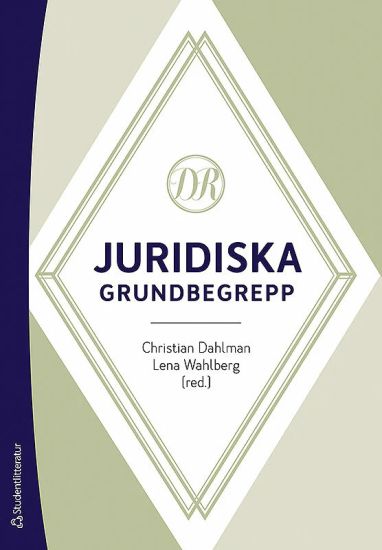
Juridiska grundbegrepp

Juridiska grundbegrepp

Christian Dahlman; Lena Wahlberg; Johan Adestam; Niklas Arvidsson; Leila Brännström; Åke Frändberg; Sverker Jönsson; Lars Lindahl; Ulf Linderfalk; Patricia Mindus; Karol Nowak; Ellika Sevelin; Torben Spaak; Ola Svensson; Sacharias Votinius; Ola Zetterquist

Studentlitteratur AB
2019
nidottu
Boken behandlar grundläggande juridiska begrepp som rätts­källa, prejudikat, rättighet och diskriminering. Varje begrepp behandlas i ett eget kapitel som kan läsas fristående, och vars syfte är att klargöra begreppets innebörd och användning inom juridiken. Bokens övergripande syfte är att skapa medvetenhet om de juridiska begreppens komplexitet – en förutsättning för att förstå och behärska den rättsliga begreppsapparaten. Boken kan användas som kurslitteratur i allmän rättslära, och som referensbok vid juridisk uppsatsskrivning.

Tankar om humanism

Tankar om humanism

Åke Frändberg

CKM Förlag
2021
nidottu
Ordet ”humanism” är mångtydigt. Dels betecknar det en kulturriktning under renässansen som, i strid mot den medeltida skolastiken, ville återvända till och bygga vidare på den antika kulturen. Dels betecknar den en moralisk idé, där den enskilda individens värde sätts i centrum. Denna bok handlar om humanismen i den senare betydelsen. I det offentliga samtalet – såväl i den politiska debatten som i kulturdebatten – framhålls ofta humanismen som ett fundamentalt värde och det varnas ofta för att detta värde är hotat, med negativa följder för samhällslivet. Mer sällan får man reda på vad deltagarna i samtalet egentligen menar med ”humanism”. Om man hyllar de humanistiska idealen och vill försvara dem, kan det inte vara utan värde att försöka bilda sig en genomtänkt och klar uppfattning om vad det är man hyllar och vill försvara. Detta är vad författaren söker göra i denna bok. Boken består av två delar. Den första handlar om själva den humanistiska idén. Här utvecklas författarens syn på vad denna idé innebär och varför den är värdefull. Medan begreppet ”humanism” klargörs i den första delen söker författaren i den andra delen levandegöra den humanistiska idén genom att visa hur den kommer till uttryck hos en rad skönlitterära författare genom tiderna. Här möter vi de antika grekiska tragöderna Aiskylos, Sofokles och Euripides, några epigramförfattare, Montaigne och Anatole France samt svenskarna Vilhelm Ekelund, Pär Lagerkvist och Eyvind Johnson.
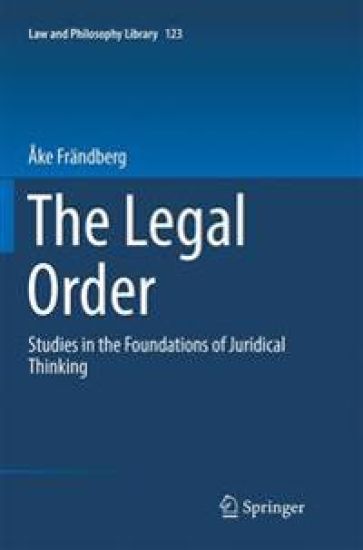
The Legal Order

The Legal Order

Åke Frändberg

Springer Nature Switzerland AG
2019
nidottu
In this monograph a fundamental distinction is made between law and juridical thinking. Law is the content of legal rules and the systems of legal rules. Juridical thinking is the handling of the law by the lawyers. To this distinction corresponds a basic distinction between the language of law and the language of juridical thinking, and correlatively, between L-concepts (law concepts) and J-concepts (juridical or jurisprudential concepts). The monograph is devoted to the J-concepts, especially of technical (not ideological or evaluative) J-concepts. Four kinds of J-concepts are investigated: morphological J-concepts, those that help us to structure the law in a logical and functional way; topological J-concepts, those that help us to indicate the phenomena to which the law is applicable, and to separate the areas of application for different legal systems; praxeological J-concepts, those that help us to explore the relations between law and action, and methodological J-concepts, those that help us to describe the methods of the professional-juridical handling of the law. The work can be characterised as presenting a lawyer´s philosophy of law.
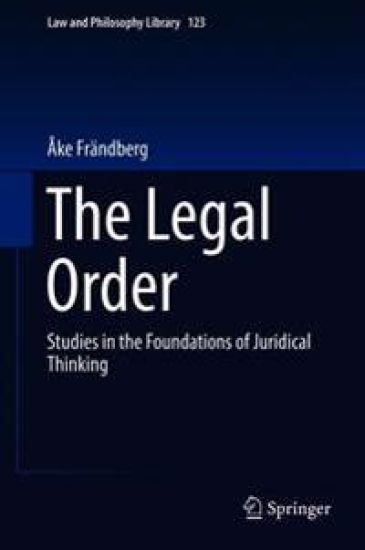
The Legal Order

The Legal Order

Åke Frändberg

Springer International Publishing AG
2018
sidottu
In this monograph a fundamental distinction is made between law and juridical thinking. Law is the content of legal rules and the systems of legal rules. Juridical thinking is the handling of the law by the lawyers. To this distinction corresponds a basic distinction between the language of law and the language of juridical thinking, and correlatively, between L-concepts (law concepts) and J-concepts (juridical or jurisprudential concepts). The monograph is devoted to the J-concepts, especially of technical (not ideological or evaluative) J-concepts. Four kinds of J-concepts are investigated: morphological J-concepts, those that help us to structure the law in a logical and functional way; topological J-concepts, those that help us to indicate the phenomena to which the law is applicable, and to separate the areas of application for different legal systems; praxeological J-concepts, those that help us to explore the relations between law and action, and methodological J-concepts, those that help us to describe the methods of the professional-juridical handling of the law. The work can be characterised as presenting a lawyer´s philosophy of law.
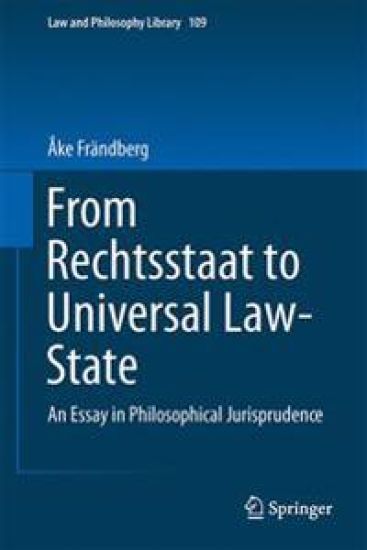
From Rechtsstaat to Universal Law-State

From Rechtsstaat to Universal Law-State

Åke Frändberg

Springer International Publishing AG
2016
nidottu
In this book the author investigates what is common to the German idea of the Rechtsstaat and the Anglo-American idea of the Rule of Law. He argues that, although dressed up in rather different garb, these two concepts are in fact based on the same fundamental idea and stand for the same values (“the law-state values”) – all ideas that are in the European tradition older than their British and German variants. The fundamental idea is that the individual shall enjoy legal protection against infringements brought about by the exercise of power on the part of the state. In the book basic concepts such as legality, legal equality, legal certainty, legal accessibility and legal security are investigated. Also explored are their mutual relations, in particular, conflicts between them. Furthermore, the book offers practical advice on realising and sustaining these values in practice. Finally, it is argued that the characteristic law-state values can only be justified by reference to an even more fundamental humanistic idea, namely, what the author calls “a life of human dignity”.
From Rechtsstaat to Universal Law-State

From Rechtsstaat to Universal Law-State

Åke Frändberg

Springer International Publishing AG
2014
sidottu
In this book the author investigates what is common to the German idea of the Rechtsstaat and the Anglo-American idea of the Rule of Law. He argues that, although dressed up in rather different garb, these two concepts are in fact based on the same fundamental idea and stand for the same values (“the law-state values”) – all ideas that are in the European tradition older than their British and German variants. The fundamental idea is that the individual shall enjoy legal protection against infringements brought about by the exercise of power on the part of the state. In the book basic concepts such as legality, legal equality, legal certainty, legal accessibility and legal security are investigated. Also explored are their mutual relations, in particular, conflicts between them. Furthermore, the book offers practical advice on realising and sustaining these values in practice. Finally, it is argued that the characteristic law-state values can only be justified by reference to an even more fundamental humanistic idea, namely, what the author calls “a life of human dignity”.