Kirjojen hintavertailu. Mukana 12 595 353 kirjaa ja 12 kauppaa.

Kirjailija

Akhil Reed Amar

Kirjat ja teokset yhdessä paikassa: 5 kirjaa, julkaisuja vuosilta 1998-2013, suosituimpien joukossa The Bill of Rights Primer. Vertaile teosten hintoja ja tarkista saatavuus suomalaisista kirjakaupoista.

5 kirjaa

Kirjojen julkaisuhaarukka 1998-2013.

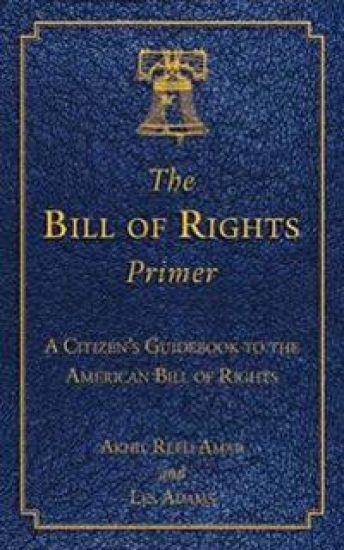
The Bill of Rights Primer

The Bill of Rights Primer

Akhil Reed Amar; Les Adams

Skyhorse Publishing
2013
sidottu
Many Americans reference the Bill of Rights, a document that represents many of the freedoms that define the United States. Who doesn’t know about the First Amendment’s freedom of religion or Second Amendment’s right to bear arms? In this pocket-sized volume, Akhil Reed Amar and Les Adams offer a wealth of knowledge about the Bill of Rights that goes beyond a basic understanding. The Bill of Rights Primer is an authoritative guide to all American freedoms. Uncluttered and well-organized, this text is perfect for those who want to study up on the Bill of Rights without needing a law degree to do so. This elementary guidebook presents a short historical survey of the people, events, decrees, legislation, writings, and cultural milestones, in England and the American colonies, that influenced the Founding Fathers as they drafted the U.S. Constitution and Bill of Rights. With helpful comments and fun facts in the margins, the book will provide a deeper understanding of the Bill of Rights, exhibiting that it is not a stagnant document but one with an evolving meaning shaped by historical events, such as the American Civil War and Reconstruction.
America's Constitution: A Biography

America's Constitution: A Biography

Akhil Reed Amar

Random House Trade
2006
nidottu
In America's Constitution, one of this era's most accomplished constitutional law scholars, Akhil Reed Amar, gives the first comprehensive account of one of the world's great political texts. Incisive, entertaining, and occasionally controversial, this "biography" of America's framing document explains not only what the Constitution says but also why the Constitution says it. We all know this much: the Constitution is neither immutable nor perfect. Amar shows us how the story of this one relatively compact document reflects the story of America more generally. (For example, much of the Constitution, including the glorious-sounding "We the People," was lifted from existing American legal texts, including early state constitutions.) In short, the Constitution was as much a product of its environment as it was a product of its individual creators' inspired genius. Despite the Constitution's flaws, its role in guiding our republic has been nothing short of amazing. Skillfully placing the document in the context of late-eighteenth-century American politics, America's Constitution explains, for instance, whether there is anything in the Constitution that is unamendable; the reason America adopted an electoral college; why a president must be at least thirty-five years old; and why-for now, at least-only those citizens who were born under the American flag can become president. From his unique perspective, Amar also gives us unconventional wisdom about the Constitution and its significance throughout the nation's history. For one thing, we see that the Constitution has been far more democratic than is conventionally understood. Even though the document was drafted by white landholders, a remarkably large number of citizens (by the standards of 1787) were allowed to vote up or down on it, and the document's later amendments eventually extended the vote to virtually all Americans. We also learn that the Founders' Constitution was far more slavocratic than many would acknowledge: the "three fifths" clause gave the South extra political clout for every slave it owned or acquired. As a result, slaveholding Virginians held the presidency all but four of the Republic's first thirty-six years, and proslavery forces eventually came to dominate much of the federal government prior to Lincoln's election. Ambitious, even-handed, eminently accessible, and often surprising, America's Constitution is an indispensable work, bound to become a standard reference for any student of history and all citizens of the United States.
The Bill of Rights

The Bill of Rights

Akhil Reed Amar

Yale University Press
2000
pokkari
"This is one of the most important books about constitutional interpretation of its generation."—Jeffrey Rosen, American Lawyer Are the deep insights of Hugo Black, William Brennan, and Felix Frankfurter that have defined our cherished Bill of Rights fatally flawed? With meticulous historical scholarship and elegant legal interpretation a leading scholar of Constitutional law boldly answers yes as he explodes conventional wisdom about the first ten amendments to the U.S. Constitution in this incisive new account of our most basic charter of liberty. Akhil Reed Amar brilliantly illuminates in rich detail not simply the text, structure, and history of individual clauses of the 1789 Bill, but their intended relationships to each other and to other constitutional provisions. Amar’s corrective does not end there, however, for as his powerful narrative proves, a later generation of antislavery activists profoundly changed the meaning of the Bill in the Reconstruction era. With the Fourteenth Amendment, Americans underwent a new birth of freedom that transformed the old Bill of Rights. We have as a result a complex historical document originally designed to protect the people against self-interested government and revised by the Fourteenth Amendment to guard minority against majority. In our continuing battles over freedom of religion and expression, arms bearing, privacy, states’ rights, and popular sovereignty, Amar concludes, we must hearken to both the Founding Fathers who created the Bill and their sons and daughters who reconstructed it. Amar’s landmark work invites citizens to a deeper understanding of their Bill of Rights and will set the basic terms of debate about it for modern lawyers, jurists, and historians for years to come.
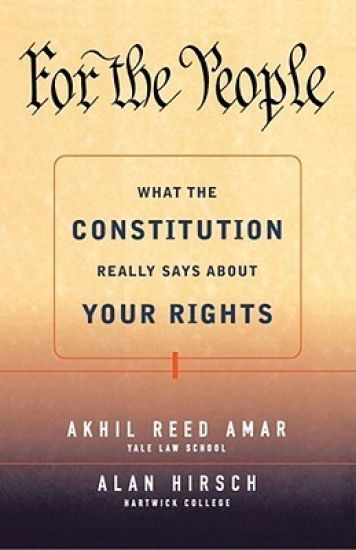
For the People

For the People

Alan R. Hirsch; Akhil Reed Amar

Touchstone
1999
pokkari
We the People have awesome responsibilities. If the Constitution really is to be an instrument of the People, as intended, it is imperative that we all understand this great document.Read this book and keep it (and its copy of the Constitution) on your shelf. We all owe ourselves, and our fellow citizens, an education in our constitutional rights and responsibilities.
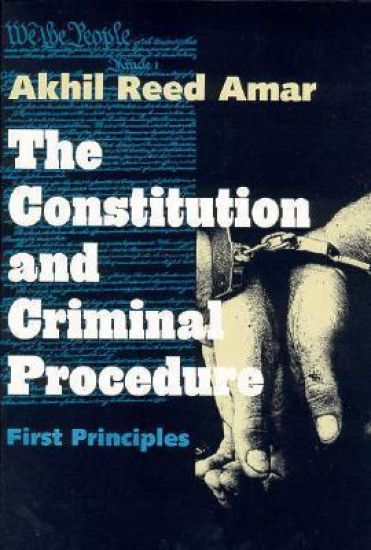
The Constitution and Criminal Procedure

The Constitution and Criminal Procedure

Akhil Reed Amar

Yale University Press
1998
pokkari
Under the banners of the Fourth, Fifth, and Sixth Amendments, the Supreme Court has constitutionalized a vast amount of criminal procedure law in ways that often reward the guilty while hurting the innocent. In this sweeping and provocative book, a distinguished constitutional scholar critiques these developments and reconceptualizes the basic foundations of the field.Akhil Amar examines the role of search warrants, the status of the exclusionary rule, self-incrimination theory and practice, and a host of Sixth Amendment trial-related rights. Through a close and original analysis of constitutional text, history, structure, and precedent—leavened with a healthy measure of common sense—he challenges conventional wisdom on a broad range of topics. He argues that the exclusion of reliable evidence in criminal trials is wrong in principle and in practice; unlawfully seized evidence and fruits of immunized testimony should be constitutionally admissible in criminal trials. Deterrence of government misconduct should in general occur through civil damage suits and administrative sanctions rather than through criminal exclusion.Although addressed to lawyers, judges, and law students, this bold book ultimately targets a much broader audience of policymakers and citizens who seek to understand the principles of this controversial area of constitutional law.