Kirjojen hintavertailu. Mukana 12 595 353 kirjaa ja 12 kauppaa.
Kirjailija
Alain Brossat
Kirjat ja teokset yhdessä paikassa: 13 kirjaa, julkaisuja vuosilta 2016-2025, suosituimpien joukossa Gæstfrihed i kunst og politik. Vertaile teosten hintoja ja tarkista saatavuus suomalaisista kirjakaupoista.
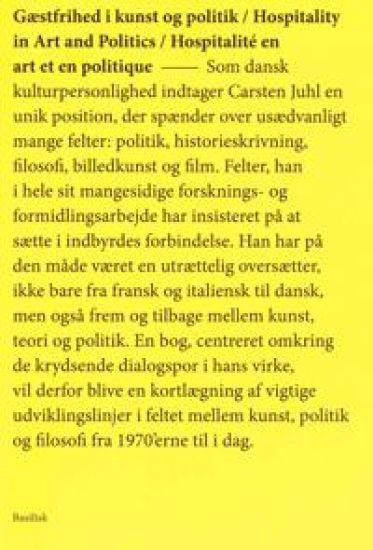
Festskrift til Carsten Juhl med bidrag af bl.a Mikkel Bolt, Stig Brøgger, Peter Borum, Per Aage Brandt, Jan Bäcklund, Jørgen Michaelsen, Mario Perniola, Elsebeth Jørgensen, Else Marie Bukdahl
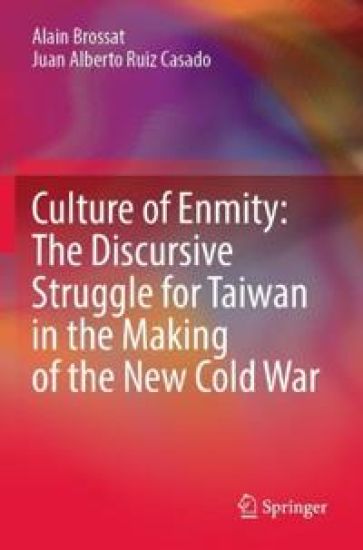
This book provides a thought-provoking analysis of the perception of China as a formidable threat amidst the current era of socio-political polarization and growing militarization. By exploring the discursive strategies and tactics employed to cultivate antagonism, it unveils the “culture of enmity” that fosters fear and distrust towards China, both in Taiwan and beyond. Drawing on interdisciplinary research, the book delves into the ontological characteristics of such a culture and provides insights into the Taiwan conflict as a crucial observation post for understanding the intricate discursive dynamics of the New Cold War. The geopolitical situation of Taiwan presents a predicament as it finds itself at the crossroads of two conflicting realms. On one hand, it is deeply intertwined with Chinese culture and history, with the added dimension of its strategic proximity to China at a time when the latter aspires to become a regional hegemon. On the other hand, Taiwan boasts a Western-influenced political system, Western-leaning strategic alliances, and a distinct political identity forged over the past few decades. It is within this intricate interplay of apparently dissonant but overlapping factors that the thorny and challenging nature of the discursive struggle for Taiwan becomes apparent. The book consists of a collection of articles initially created by the authors during their research in Taiwan over several years, first at National Yang Ming Chiao Tung University and then at National Cheng Kung University. The articles, organized into different chapters, cover various disciplines such as political philosophy, geopolitics, history, discourse analysis, and anthropology, reflecting the diverse educational backgrounds of the authors. Despite their diversity, all chapters are deeply connected to the discursive struggle over Taiwan. Ultimately, by offering a nuanced perspective that challenges prevailing narratives, the authors provide adeliberately controversial yet refreshing viewpoint that advocates for a policy of empathy and negotiation. Such approach goes beyond mere dialogue and diplomacy, emphasizing the need for coexistence and peaceful living among different “worlds”.
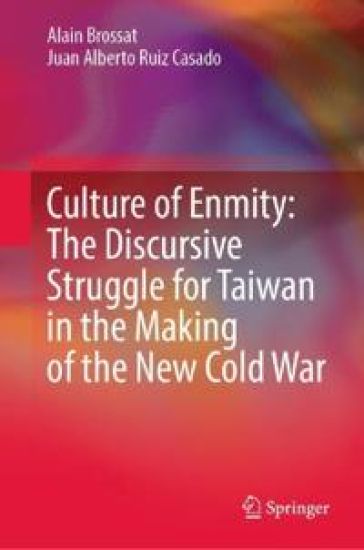
This book provides a thought-provoking analysis of the perception of China as a formidable threat amidst the current era of socio-political polarization and growing militarization. By exploring the discursive strategies and tactics employed to cultivate antagonism, it unveils the “culture of enmity” that fosters fear and distrust towards China, both in Taiwan and beyond. Drawing on interdisciplinary research, the book delves into the ontological characteristics of such a culture and provides insights into the Taiwan conflict as a crucial observation post for understanding the intricate discursive dynamics of the New Cold War. The geopolitical situation of Taiwan presents a predicament as it finds itself at the crossroads of two conflicting realms. On one hand, it is deeply intertwined with Chinese culture and history, with the added dimension of its strategic proximity to China at a time when the latter aspires to become a regional hegemon. On the other hand, Taiwan boasts a Western-influenced political system, Western-leaning strategic alliances, and a distinct political identity forged over the past few decades. It is within this intricate interplay of apparently dissonant but overlapping factors that the thorny and challenging nature of the discursive struggle for Taiwan becomes apparent. The book consists of a collection of articles initially created by the authors during their research in Taiwan over several years, first at National Yang Ming Chiao Tung University and then at National Cheng Kung University. The articles, organized into different chapters, cover various disciplines such as political philosophy, geopolitics, history, discourse analysis, and anthropology, reflecting the diverse educational backgrounds of the authors. Despite their diversity, all chapters are deeply connected to the discursive struggle over Taiwan. Ultimately, by offering a nuanced perspective that challenges prevailing narratives, the authors provide adeliberately controversial yet refreshing viewpoint that advocates for a policy of empathy and negotiation. Such approach goes beyond mere dialogue and diplomacy, emphasizing the need for coexistence and peaceful living among different “worlds”.
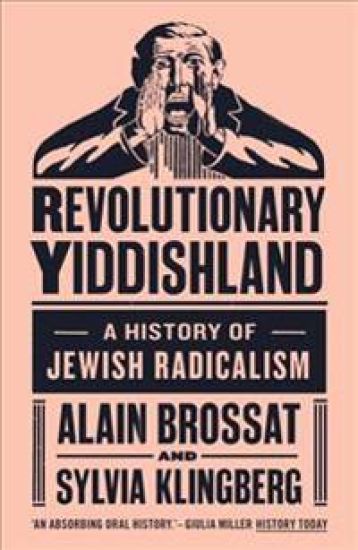
Jewish radicals manned the barricades on the avenues of Petrograd and the alleys of the Warsaw ghetto; they were in the vanguard of those resisting Franco and the Nazis. They originated in Yiddishland, a vast expanse of Eastern Europe that, before the Holocaust, ran from the Baltic Sea to the western edge of Russia and incorporated hundreds of Jewish communities with a combined population of some 11 million people. Within this territory, revolutionaries arose from the Jewish misery of Eastern and Central Europe; they were raised in the fear of God and taught to respect religious tradition, but were caught up in the great current of revolutionary utopian thinking. Socialists, Communists, Bundists, Zionists, Trotskyists, manual workers and intellectuals, they embodied the multifarious activity and radicalism of a Jewish working class that glimpsed the Messiah in the folds of the red flag.Today, the world from which they came has disappeared, dismantled and destroyed by the Nazi genocide. After this irremediable break, there remain only survivors, and the work of memory for red Yiddishland. This book traces the struggles of these militants, their singular trajectories, their oscillation between great hope and doubt, their lost illusions-a red and Jewish gaze on the history of the twentieth century.