Kirjojen hintavertailu. Mukana 12 234 959 kirjaa ja 12 kauppaa.

Kirjailija

Alain Delchambre

Kirjat ja teokset yhdessä paikassa: 6 kirjaa, julkaisuja vuosilta 1992-2012, suosituimpien joukossa Assembly Line Design. Vertaile teosten hintoja ja tarkista saatavuus suomalaisista kirjakaupoista.

6 kirjaa

Kirjojen julkaisuhaarukka 1992-2012.

Integrated Design of a Product Family and Its Assembly System

Integrated Design of a Product Family and Its Assembly System

Pierre De Lit; Alain Delchambre

Springer-Verlag New York Inc.
2012
nidottu
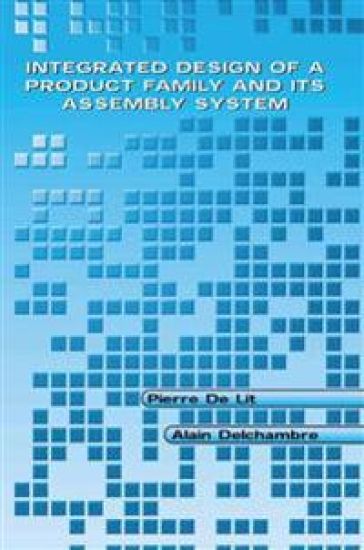
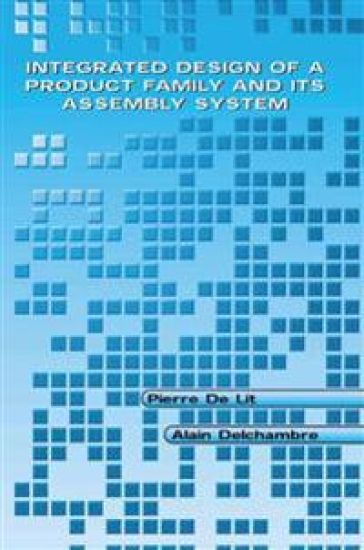
Integrated Design of a Product Family and Its Assembly System presents an integrated approach for the design of a product family and its assembly system, whose main principles consider the product family as a fictitious unique product for which the assembly system is to be devised. It imposes assembly and operation constraints as late as possible in the design process to get liberties in the system design, and adapts the product family at each design stage to integrate the new constraints related to the successive design choices. Integrated Design of a Product Family and Its Assembly System is an important, must-have book for researchers and Ph.D. students in Computer-Integrated Manufacturing, Mechanical Engineering, and Manufacturing, as well as practitioners in the Design, Planning and Production departments in the manufacturing industry. Integrated Design of a Product Family and Its Assembly System is also suitable for use as a textbook in courses such as Computer-Aided Design, Concurrent Engineering, Design for Assembly, Process Planning, and Integrated Design.
Computer-aided Assembly Planning

Computer-aided Assembly Planning

Alain Delchambre

Springer
2012
nidottu
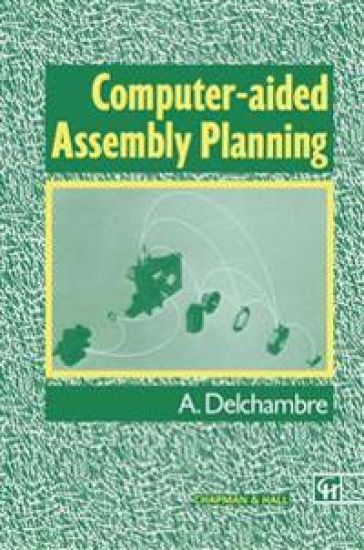
The assembly sector is one of the least automated in the manufacturing industry. Automation is essential if industrial companies are to be competitive in the future. In assembly, an integrated and flexible approach is needed because 75% of the applications are produced in small and medium batches. The methodologies developed in this book deal with the integration of the assembly process from the initial design of the product to its production. In such an integrated system, assembly planning is one of the most important features. A well-chosen assembly plan will reduce both the number of tool changes and the fixtures within the assembly cell. It will prevent the handling of unstable subassemblies, simplify the design of the robot grippers and reduce production costs. An automatic generator of assembly sequences can be an efficient aid to the designer. Whenever he or she modifies features of the product, the influence of these modifications can immediately be checked on the sequences. For small batch production, the automatic generation of assembly sequences is faster, more reliable and more cost-effective than manual generation. By using this latter method interesting sequences could be missed because of the combinatorial explosion of solutions. The main subjects treated in this book are as follows. 1. Presentation and classification of existing systems of automatic generation of assembly sequences. Automatic assembly planning is, indeed, a very recent research area and, in my experience, no systematic study has been carried out up to now.
Assembly Line Design

Assembly Line Design

Brahim Rekiek; Alain Delchambre

Springer London Ltd
2010
nidottu
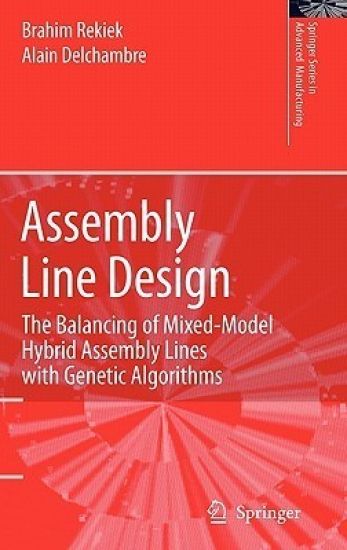
Efficient assembly line design is a problem of industrial importance. Assembly line design is often complex due to the multiple components involved: efficiency, cost and space. The aim is to integrate the design with operations issues, minimising costs. It is important to give the designer tools to help him meet the different objectives. 3 techniques based on the Grouping Genetic Algorithm are presented which can be used to aid assembly line design: - ‘equal piles for assembly lines’ deals with assembly line balancing (balancing stations’ loads); - a method based on a multiple objective grouping genetic algorithm (MO-GGA) deals with resource planning (selection of equipment); - ‘balance for operation’, deals with the changes during the operation of assembly lines. This book will interest technical personnel in design, planning and production departments in industry as well as managers in industry. It will also be of use to researchers and postgraduates in mechanical, manufacturing or micro-engineering.
Assembly Line Design

Assembly Line Design

Brahim Rekiek; Alain Delchambre

Springer London Ltd
2005
sidottu
Efficient assembly line design is a problem of industrial importance. Assembly line design is often complex due to the multiple components involved: efficiency, cost and space. The aim is to integrate the design with operations issues, minimising costs. It is important to give the designer tools to help him meet the different objectives. 3 techniques based on the Grouping Genetic Algorithm are presented which can be used to aid assembly line design: - ‘equal piles for assembly lines’ deals with assembly line balancing (balancing stations’ loads); - a method based on a multiple objective grouping genetic algorithm (MO-GGA) deals with resource planning (selection of equipment); - ‘balance for operation’, deals with the changes during the operation of assembly lines. This book will interest technical personnel in design, planning and production departments in industry as well as managers in industry. It will also be of use to researchers and postgraduates in mechanical, manufacturing or micro-engineering.
Integrated Design of a Product Family and Its Assembly System

Integrated Design of a Product Family and Its Assembly System

Pierre De Lit; Alain Delchambre

Springer-Verlag New York Inc.
2003
sidottu
Integrated Design of a Product Family and Its Assembly System presents an integrated approach for the design of a product family and its assembly system, whose main principles consider the product family as a fictitious unique product for which the assembly system is to be devised. It imposes assembly and operation constraints as late as possible in the design process to get liberties in the system design, and adapts the product family at each design stage to integrate the new constraints related to the successive design choices. Integrated Design of a Product Family and Its Assembly System is an important, must-have book for researchers and Ph.D. students in Computer-Integrated Manufacturing, Mechanical Engineering, and Manufacturing, as well as practitioners in the Design, Planning and Production departments in the manufacturing industry. Integrated Design of a Product Family and Its Assembly System is also suitable for use as a textbook in courses such as Computer-Aided Design, Concurrent Engineering, Design for Assembly, Process Planning, and Integrated Design.
Computer-aided Assembly Planning

Computer-aided Assembly Planning

Alain Delchambre

Chapman and Hall
1992
sidottu
The assembly sector is one of the least automated in the manufacturing industry. Automation is essential if industrial companies are to be competitive in the future. In assembly, an integrated and flexible approach is needed because 75% of the applications are produced in small and medium batches. The methodologies developed in this book deal with the integration of the assembly process from the initial design of the product to its production. In such an integrated system, assembly planning is one of the most important features. A well-chosen assembly plan will reduce both the number of tool changes and the fixtures within the assembly cell. It will prevent the handling of unstable subassemblies, simplify the design of the robot grippers and reduce production costs. An automatic generator of assembly sequences can be an efficient aid to the designer. Whenever he or she modifies features of the product, the influence of these modifications can immediately be checked on the sequences. For small batch production, the automatic generation of assembly sequences is faster, more reliable and more cost-effective than manual generation. By using this latter method interesting sequences could be missed because of the combinatorial explosion of solutions. The main subjects treated in this book are as follows. 1. Presentation and classification of existing systems of automatic generation of assembly sequences. Automatic assembly planning is, indeed, a very recent research area and, in my experience, no systematic study has been carried out up to now.