

Kirjailija
Alain Finkielkraut
Kirjat ja teokset yhdessä paikassa: 18 kirjaa, julkaisuja vuosilta 1992-2024, suosituimpien joukossa Världens hjärtslag : en dialog. Vertaile teosten hintoja ja tarkista saatavuus suomalaisista kirjakaupoista.
18 kirjaa
Kirjojen julkaisuhaarukka 1992-2024.

Vores tid er domineret af en systematisk tildækning af verdens grimhed og skønhed, ifølge den franske filosof Alain Finkielkraut.- Vi er trådt ind i den post-litterære tidsalder. Den tid, hvor det litterære verdenssyn havde en plads i verden, synes i realiteten at være forbi. Ikke at inspirationen pludselig er tørret ud for evigt. Der bliver stadig skrevet rigtige bøger. Men de sætter ikke længere noget aftryk. De har ikke længere en dannende funktion. Sjælens opdragelse er ikke længere bøgernes gebet. I sin kamp mod løgnen er kunsten ved at tabe. – Alain FinkielkrautOm forfatteren Alain Finkielkraut er en af Frankrigs mest toneangivende filosoffer, medlem af Det Franske Akademi. Hans nylig afdøde ven Milan Kundera har sagt om ham, at han er "en mand, som føler et utæmmeligt behov for at hæve stemmen, hvis han støder på fænomener, der slår ham som stupide eller uretfærdige".



Finkielkraut kjenner den filosofiske arven: Grekerne spurte "hva er?" om alt mulig: sannhet, mot, hvordan kan vi vite overhodet? Deres spørsmål brøt med sedvanen/det overleverte. Samme nysgjerrighet og dristighet gjenfinnes i Opplysningstanken som bryter med kirken og autoritetene: Den ville frigjøre individet ved fornuften og bygge et rasjonelt samfunn. Denne sekulariteten som vi lenge tok for gitt, er ikke lenger selvskreven. Den er truet og noen har gått til åpen krig mot den. Boken gir således bedre forståelse av terroren som rammet Paris fredag 13. desember 2015.
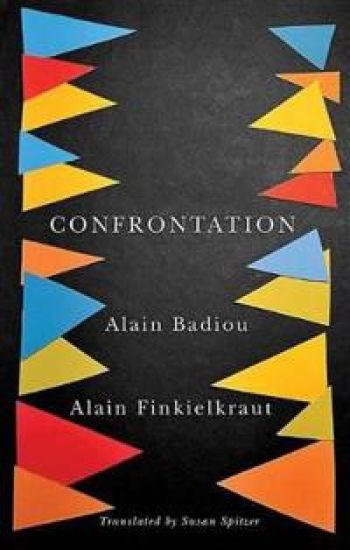
Everything in their respective positions divides them: Alain Badiou is the thinker of a revitalized communism and Alain Finkielkraut the mournful observer of the loss of values. The two opponents, gathered here for their first-ever debate, have irreconcilable visions. Yet neither is a stranger to controversy, and in this debate they make explicit the grounds of their personal dispute as well as addressing, in a frank and open exchange, their ideas and theories. Guided by Aude Lancelin, the two philosophers discuss subjects as diverse as national identity, Israel and Judaism, May 1968, and renewed popularity of the idea of communism. Their passionate debate is more than just the sum total of their disagreements, however, for neither of them is satisfied with the state of our society or the direction in which its political representatives persist in taking it. They agree that there needs to be change and their confrontation in this volume shows the importance of asking difficult questions, not only of each other, but also of our political systems.

Everything in their respective positions divides them: Alain Badiou is the thinker of a revitalized communism and Alain Finkielkraut the mournful observer of the loss of values. The two opponents, gathered here for their first-ever debate, have irreconcilable visions. Yet neither is a stranger to controversy, and in this debate they make explicit the grounds of their personal dispute as well as addressing, in a frank and open exchange, their ideas and theories. Guided by Aude Lancelin, the two philosophers discuss subjects as diverse as national identity, Israel and Judaism, May 1968, and renewed popularity of the idea of communism. Their passionate debate is more than just the sum total of their disagreements, however, for neither of them is satisfied with the state of our society or the direction in which its political representatives persist in taking it. They agree that there needs to be change and their confrontation in this volume shows the importance of asking difficult questions, not only of each other, but also of our political systems.

Første del av boka drøfter de dypere årsaker til uviljen mot både å vite og forstå det som skjer i det tidligere Jugoslavia i dag, i 1993. Artiklene i annen del er skrevet etterhvert som konflikten i landet utviklet seg, som en slags dagbok over den katastrofen den er. Boka avsluttes med to essays av Carsten Jensen.


Dagens intellektuelle har forrådt opplysningsprosjektet; blant annet i den vestlige unnfallenhet overfor hendelsene i kjølvannet av Jugoslavias oppløsning. Finkielkraut fremhever betydningen av en allmenn fornuft og den opplyste samtale med sannhet som mål. Forfatterens sterkt debatterte essaysamling La dèfaite de la pensèe nå på norsk. Dagens intellektuelle har forrådt opplysningsprosjektet. Dette viste seg blant annet i den vestlige unnfallenhet overfor de groteske hendelser som utspandt seg under Bosnia-krigen i 1992 etter oppløsningen av Jugoslavia. Finkielkraut fremhever betydningen av en allmenn fornuft og den opplyste samtale med sannhet som mål. Oversatt av Kjell Olaf Jensen. Nr. 20 i Cappelens upopulære skrifter.


The notion that all the world's peoples constitute a "brotherhood of man" is not a given among all human beings-it is rather the product of history. So suggests acclaimed philosopher Alain Finkielkraut in In the Name of Humanity, an unsettling reflection on the twentieth century in its twilight hours in which he asks us to rethink our assumptions about universalism and humanism. While many people look to humanist ideals as a deterrent to nationalist chauvinism, Finkielkraut challenges the abstract idea of universalism by describing the terrible crimes "civilized" Europe has committed in its name. At the same time as it challenges the inhumanity of our century's great universalistic solutions, In the Name of Humanity also confronts the more onerous elements of unreflective nationalism-clearly condemning the dangerous use of claims for ethnic purity. However, the book does not put forth a standard-issue polemic against the multitude of nationalistic currents that continue to plague the international arena. Indeed, even as he deplores the violence that seems to go hand in hand with nationalism, Finkielkraut defends its underlying cause-the need to belong. Eloquently quoting the experiences of refugees from Hitler's Germany, he shows the reader why we must heed the call of this irreducible need. Finkielkraut reminds us that the concept of cultural relativism-indeed, the very idea of tolerating other cultures-is a relatively recent development in Western history. As he looks for answers he interrogates the differences between historical racism and the racism embedded in the philosophies of this century's genocidal movements, showing how modern racist ideologies like National Socialism look not to sin within the self as the stumbling block of human advancement but to a clandestine conspiracy by a particular, identifiable element of human society. What this form of radical racist thought eliminates is the notion of personal responsibility-instead of finding the answers to misfortune within the self, modern racism suggests that evil can be identified in others and summarily eliminated. Lucidly connected to the ideas of past thinkers, from Plato to Levinas to Hannah Arendt, Finkielkraut's latest work is a troubling indictment of our century that refuses to back away from the "messiness" of human life and culture. In his willingness to abjure simple solutions, he offers a glimmer of hope.

Dispatches from the Balkan War and Other Writings
Alain Finkielkraut
University of Nebraska Press
1999
sidottu
Dispatches from the Balkan War and Other Writings is a collection of essays on the Balkan crisis and on European reaction to it. In opposition to many powerful figures in France, Alain Finkielkraut has largely supported the Croatian struggles for sovereignty. He argues against an array of outmoded views of the Balkan region and its political and cultural conditions—conceptions that date back to earlier in the century and that have long bedeviled the region and the European powers' relation to it. The book takes up larger issues about European political and intellectual history—issues that are in urgent need of reexamination and revision in the post-Cold War world. A timely and passionate book, this volume will be of great interest to Finkielkraut's many admirers as well as to anyone interested in the ongoing Balkan crisis and modern European history.

The Future of a Negation is a crucial statement on the Holocaust-and on Holocaust denial-from Alain Finkielkraut, one of the most acclaimed and influential intellectuals in contemporary Europe. The book examines the Holocaust, its origins in modern European thought and politics, and recent “revisionist” attempts to deny its full dimensions and, in some cases, its very existence as historical fact. Finkielkraut’s central topic is the impulse toward “negation” of the Nazi horrors: the arguments made by many people, of varying political orientations, that “the gas chambers are a hoax or, in any case, an unverifiable rumor.” In addition, Finkielkraut looks at other instances of twentieth-century mass murder and at arguments made by contemporary politicians and intellectuals that similarly deny the full extent of these other atrocities. An original, fearless book, The Future of a Negation is an essential contribution to our understanding of the Holocaust and of genocidal politics and thought in our century.
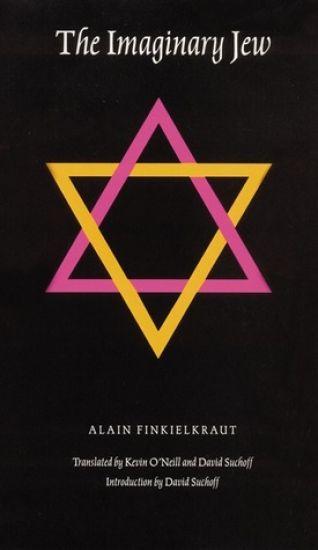
The Holocaust changed what it means to be a Jew, for Jew and non-Jew alike. Much of the discussion about this new meaning is a storm of contradictions. In The Imaginary Jew, Alain Finkielkraut describes with passion and acuity his own passage through that storm. Finkielkraut decodes the shifts in anti-Semitism at the end of the Cold War, chronicles the impact of Israel's policies on European Jews, opposes arguments both for and against cultural assimilation, reopens questions about Marx and Judaism, and marks the loss of European Jewish culture through catastrophe, ignorance, and cliché. He notes that those who identified with Israel continued the erasure of European Judaism, forgetting the pangs and glories of Yiddish culture and the legacy of the Diaspora.

A passionate critique of Enlightenment-both in its contemporary invocation and its historical and cultural use-and a call to arms to rethink human equality and liberty without the sacrifice of individual rights and ethnicities.

In 1988, in what was probably one of the last trials of a Nazi war criminal and the first of such trials to take place in France, Klaus Barbie, the notorious "Butcher of Lyon", was found guilty of crimes against humanity and sentenced to life in prison. Yet despite the memories stirred, despite the verdict, to Alain Finkielkraut the trial was a moral failure. In Remembering in Vain, Finkielkraut maintains that the Barbie trial attests to the failure of international society to take responsibility for criminals of state. Trying Barbie not only for actions against Jews but also for actions against the Resistance-actions heretofore considered war crimes, on which the statute of limitations had run out-blurred the definition of crimes against humanity. Finkielkraut finds most disturbing how seriously taken were the arguments of the defence. By manipulating the guilty conscience of the West, Barbie's Vietnamese-French, Congolese, and Algerian lawyers became accusers, disputing the special significance of the Holocaust and portraying nearly everyone as a Nazi-except the former Nazi himself. Finkielkraut points to the ultimate irony of this Third World defense of a Nazi.