Kirjojen hintavertailu. Mukana 12 480 498 kirjaa ja 12 kauppaa.

Kirjailija

Alain Mabanckou

Kirjat ja teokset yhdessä paikassa: 33 kirjaa, julkaisuja vuosilta 1997-2025, suosituimpien joukossa The Death of Comrade President. Vertaile teosten hintoja ja tarkista saatavuus suomalaisista kirjakaupoista.

33 kirjaa

Kirjojen julkaisuhaarukka 1997-2025.

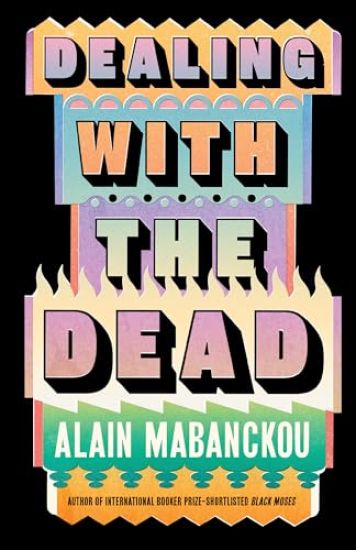
Dealing with the Dead

Dealing with the Dead

Alain Mabanckou

THE NEW PRESS
2025
sidottu
From one of Africa's greatest living writers, a ghostly reckoning with Congolese history One day in the Congolese town of Pointe-Noire, Liwa Ekimakinga wakes to find himself in a cemetery where, three days earlier, he had been buried at the age of twenty-two in a pair of flared purple trousers in which he is now trapped forever. All around him are the other residents of the cemetery, all of whom have their own complex stories of life and death to share. Bewildered by his predicament and unwilling to relinquish his tender bond with his devoted grandmother, Liwa makes his way back home to see her one last time, against all spectral advice. As he does, disturbing rumors swirl together with Liwa's jumbled memories of his last night on earth, leading him to try and solve the mystery of his own untimely demise. Sure to appeal to readers of George Saunders's Lincoln in the Bardo, Dealing with the Dead is an exuberant, phantasmagorical tale of ambition, community, and forces beyond human control and a scathing satire on corruption and political violence by one of the most-recognized chroniclers of modern Central Africa.

As Long As Trees Take Root in the Earth

As Long As Trees Take Root in the Earth

Alain Mabanckou

SEAGULL BOOKS LONDON LTD
2025
nidottu
A hopeful, music-infused poetry collection from Congolese poet Alain Mabanckou. These compelling poems by novelist and essayist Alain Mabanckou conjure nostalgia for an African childhood where the fauna, flora, sounds, and smells evoke snapshots of a life forever gone. Mabanckou’s poetry is frank and forthright, urging his compatriots to no longer be held hostage by the civil wars and political upheavals that have ravaged their country and to embrace a new era of self-determination where the village roosters can sing again. These music-infused texts, beautifully translated by Nancy Naomi Carlson and supported by a grant from the National Endowment for the Arts, appear together in English for the first time. In these pages, Mabanckou pays tribute to his beloved mother, as well as to the regenerative power of nature, especially of trees, whose roots are a metaphor for the poet’s roots, anchored in the red earth of his birthplace. Mabanckou’s yearning for the land of his ancestors is even more poignant because he has been declared persona non grata in his homeland, now called Congo-Brazzaville, due to his biting criticism of the country’s regime. Despite these barriers, his poetry exudes hope that nature’s resilience will lead humankind on the path to redemption and reconciliation.
Dealing with the Dead

Dealing with the Dead

Alain Mabanckou

Profile Books Ltd
2025
nidottu
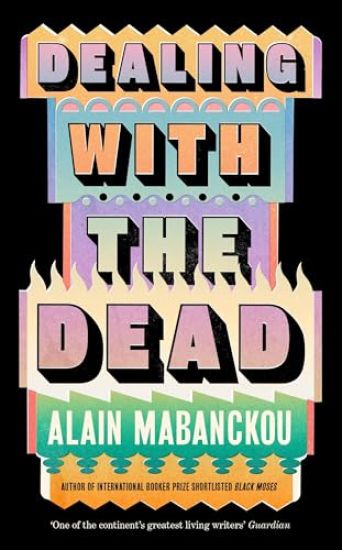
'One of Africa's greatest living writers' Guardian 'Sharp and entertaining' Times Literary Supplement 'Exuberant ... Dealing with the Dead is often damning, frequently hilarious and always compassionate' Financial Times Abruptly deceased at the age of twenty-four and trapped forever in flared purple trousers, Liwa Ekimakingaï encounters the other residents of Frère Lachaise cemetery, all of whom have their own complex stories of life and death. Unwilling to relinquish their tender bond, Liwa makes his way back home to Pointe-Noire to see his devoted grandmother one last time, against all spectral advice. But disturbing rumours swirl together with Liwa's jumbled memories of his last night on earth, leading him to pursue the riddle of his own untimely demise. A phantasmagorical tale of ambition, community and forces beyond human control, Dealing with the Dead is a scathing satire on corruption and political violence by one of the foremost chroniclers of modern Central Africa. 'Africa's Samuel Beckett' Economist Translated from the French by Helen Stevenson
As Long As Trees Take Root in the Earth

As Long As Trees Take Root in the Earth

Alain Mabanckou

Seagull Books London Ltd
2021
sidottu
A hopeful, music-infused poetry collection from Congolese poet Alain Mabanckou. These compelling poems by novelist and essayist Alain Mabanckou conjure nostalgia for an African childhood where the fauna, flora, sounds, and smells evoke snapshots of a life forever gone. Mabanckou's poetry is frank and forthright, urging his compatriots to no longer be held hostage by the civil wars and political upheavals that have ravaged their country and to embrace a new era of self-determination where the village roosters can sing again. These music-infused texts, beautifully translated by Nancy Naomi Carlson and supported by a grant from the National Endowment for the Arts, appear together in English for the first time. In these pages, Mabanckou pays tribute to his beloved mother, as well as to the regenerative power of nature, and especially of trees, whose roots are a metaphor for the poet's roots, anchored in the red earth of his birthplace. Mabanckou's yearning for the land of his ancestors is even more poignant because he has been declared persona non grata in his homeland, now called Congo-Brazzaville, due to his biting criticism of the country's regime. Despite these barriers, his poetry exudes hope that nature's resilience will lead humankind on the path to redemption and reconciliation.
The Death of Comrade President

The Death of Comrade President

Alain Mabanckou

Serpent's Tail
2021
pokkari
In Pointe-Noire, in the small neighbourhood of Voungou, on the family plot where young Michel lives with Maman Pauline and Papa Roger, life goes on. But Michel's everyday cares - lost grocery money, the whims of his parents' moods, their neighbours' squabbling, his endless daydreaming - are soon swept away by the wind of history. In March 1977, just before the arrival of the short rainy season, Comrade President Marien Ngouabi is brutally murdered in Brazzaville, and not even naïve Michel can remain untouched. Starting as a tender, wry portrait of an ordinary Congolese family, Alain Mabanckou quickly expands the scope of his story into a powerful examination of colonialism, decolonization and dead ends of the African continent. At a stroke Michel learns the realities of life - and how much must change for everything to stay the same.
The Death of Comrade President

The Death of Comrade President

Alain Mabanckou

The New Press
2020
sidottu
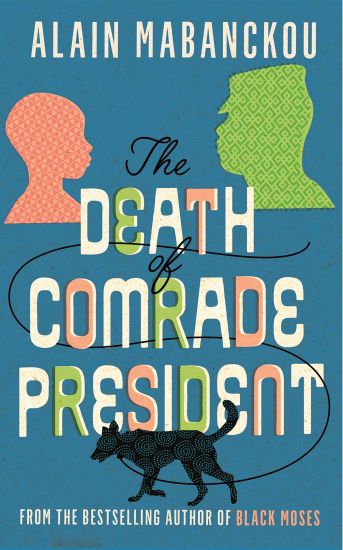
A poignant and riotous tale of family and revolution in postcolonial Africa, from the winner of the French Voices grand prize and finalist for the Man Booker International Prize Pointe-Noire, a bustling port town on Congo's southwestern coast, is host to Alain Mabanckou's astonishing cycle of novels that is already being hailed as one of the grandest, funniest fictional projects of our time. His novels have been twice short-listed for the Man Booker International Prize and have been described as "beautiful" (Salman Rushdie), "brutally satiric" (Uzodinma Iweala), containing "fireworks on every page" (Los Angeles Review of Books), and "vividly colloquial, mischievous and outrageous" (Marina Warner) . Mabanckou's riotous new novel, The Death of Comrade President, returns to the 1970s milieu of his awarding-winning novel Black Moses, telling the story of Michel, a daydreamer whose life is completely overthrown when, in March 1977, just before the arrival of the rainy season, Congo's Comrade President Marien Ngouabi is brutally murdered. Thanks to his mother's kinship with the president, not even naive Michel can remain untouched. And if he is to protect his family, Michel must learn to lie. Moving seamlessly between the small-scale worries of everyday life and the grand tragedy of postcolonial politics, Mabanckou explores the nuances of the human soul through the naive perspective of a boy who learns the realities of life--and how much must change for everything to stay the same.
Kuppinurin

Kuppinurin

Alain Mabanckou

Aviador
2020
sidottu
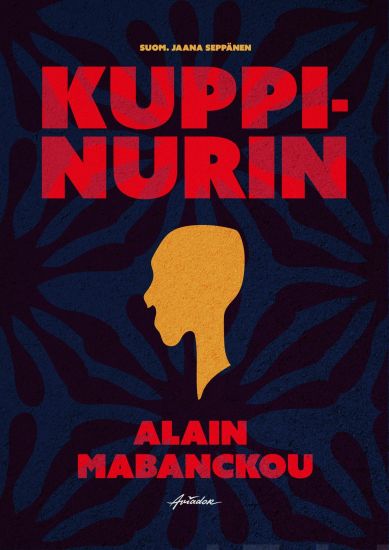
Kongon Brazzavilleen sijoittuvan romaanin päähenkilö Kuppinurin, sivistynyt mutta rappiolle joutunut mies, saa tehtäväkseen kirjoittaa kronikkaa kantabaarinsa asiakkaista ja sattumuksista. Näin syntyvä romaani antaa äänen syrjäytyneille ihmisille ja laitapuolen kulkijoille. Se virtaa vuolaan karnevalistisina tarinoina kertojinaan ihmiset, joilla on nyt elämänsä tilittämiseen ainutlaatuinen tilaisuus. Mutta yhteinen kurjuus aiheuttaa myös kyräilyä ja pahansuopuutta, joka pienenkin tilaisuuden tullen äityy silmittömäksi vihaksi ja väkivallaksi. Kongon tasavallassa syntynyt, nykyään Ranskan kansalainen ja akateemikko Alain Mabanckou (s. 1966) on ranskankielisen maailman tärkeimpiä nykykirjailijoita. Hän on voittanut satiirisilla romaaneillaan useita kansainvälisiä palkintoja ja ollut myös Booker-palkinto- ehdokkaana. Kuppinurin on hänen toinen suomennettu teoksensa.
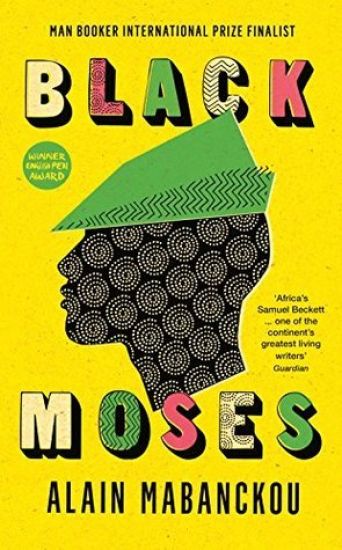
Black Moses

Black Moses

Alain Mabanckou

The New Press
2019
nidottu
The "heart-breaking" (New York Times Book Review), rollicking, award-winning novel that has been described as "Oliver Twist in 1970s Africa" (Les Inrockuptibles) "One of the most compelling books you'll read in any language this year." --Rolling Stone Winner of the Hurston-Wright Legacy Award Longlisted for the Man Booker International Prize Shortlisted for the Albertine Prize Shortlisted for the Aspen Words Literary Prize Longlisted for the PEN Translation Prize Greeted with wildly enthusiastic reviews on publication, Alain Mabanckou's riotous novel begins in an orphanage in 1970s Congo-Brazzaville run by a malicious political stooge who makes the life of our hero, Tokumisa Nzambe po Mose yamoyindo abotami namboka ya Bakoko--his name means "Let us thank God, the black Moses is born on the lands of the ancestors," but most people just call him Moses--very difficult. Moses is also terrorized by his two fellow orphans--the twins Songi-Songi and Tala-Tala--but after Moses exacts revenge on them by lacing their food with hot pepper, the twins take Moses under their wing, escape the orphanage, and move to the bustling port town of Pointe-Noire, where they form a gang that survives on petty theft. What follows is a "pointed" (Los Angeles Times), "vivid and funny" (New York Times), larger-than-life tale that chronicles Moses's ultimately tragic journey through the Pointe-Noire underworld and the politically repressive reality of Congo-Brazzaville in the 1970s and '80s. "Ringing with beautiful poetry," (Wall Street Journal) Black Moses is a vital new extension of Mabanckou's cycle of Pointe-Noire novels that stand out as one of the grandest and funniest fictional projects of our time.
The Negro Grandsons of Vercingetorix

The Negro Grandsons of Vercingetorix

Alain Mabanckou

Indiana University Press
2019
pokkari
Set in the imaginary African Republic of Vietongo, The Negro Grandsons of Vercingetorix begins when conflict breaks out between rival leaders and the regional ethnic groups they represent. Events recorded in a series of notebooks under the watchful eye of Hortense Lloki show how civil war culminates in a series of outlandish actions perpetrated by the warring parties' private militias—the Anacondas and the Romans from the North who have seized power against Vercingetorix (named after none other than the legendary Gallic warrior who fought against Caesar's army) and his Little Negro Grandsons in the South who are eager to regain control. Award-winning author Alain Mabanckou is at his satiric best in this novel that catalogues the pain and suffering caused by the ravages of civil war. Translated into English for the first time, this novel provides a gritty slice of life in an active war zone.
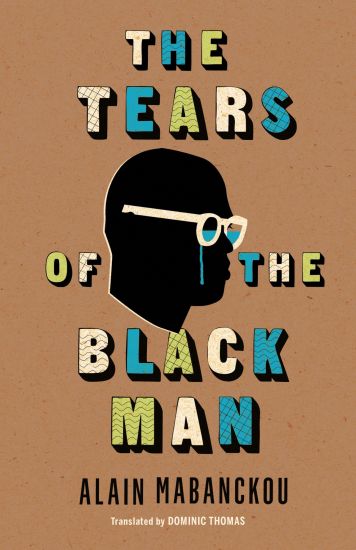
The Tears of the Black Man

The Tears of the Black Man

Alain Mabanckou

Indiana University Press
2018
pokkari
In The Tears of the Black Man, award-winning author Alain Mabanckou explores what it means to be black in the world today. Mabanckou confronts the long and entangled history of Africa, France, and the United States as it has been shaped by slavery, colonialism, and their legacy today. Without ignoring the injustices and prejudice still facing blacks, he distances himself from resentment and victimhood, arguing that focusing too intensely on the crimes of the past is limiting. Instead, it is time to ask: Now what? Embracing the challenges faced by ethnic minority communities today, The Tears of the Black Man looks to the future, choosing to believe that the history of Africa has yet to be written and seeking a path toward affirmation and reconciliation.
Black Moses

Black Moses

Alain Mabanckou

Serpent's Tail
2017
pokkari
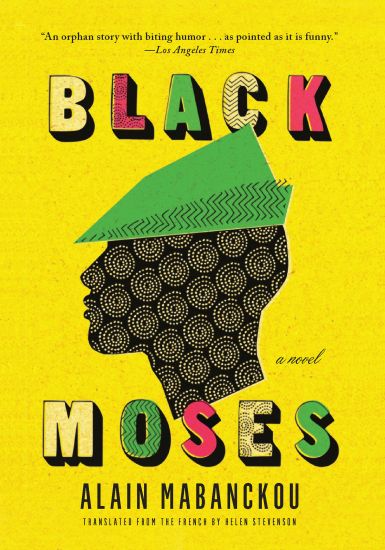
LONGLISTED FOR THE MAN BOOKER INTERNATIONAL PRIZE 2017 It's 1970, and in the People's Republic of Congo a Marxist-Leninist revolution is ushering in a new age. But over at the orphanage on the outskirts of Pointe-Noire where young Moses has grown up, the revolution has only strengthened the reign of terror of Dieudonné Ngoulmoumako, the institution's corrupt director. So Moses escapes to Pointe-Noire, where he finds a home with a larcenous band of Congolese Merry Men and among the Zairian prostitutes of the Trois-Cents quarter. But the authorities won't leave Moses in peace, and intervene to chase both the Merry Men and the Trois-Cents girls out of town. All this injustice pushes poor Moses over the edge. Could he really be the Robin Hood of the Congo? Or is he just losing his marbles? Black Moses is a larger-than-life comic tale of a young man obsessed with helping the helpless in an unjust world. It is also a vital new extension of Mabanckou's extraordinary, interlinked body of work dedicated to his native Congo, and confirms his status as one of our great storytellers.
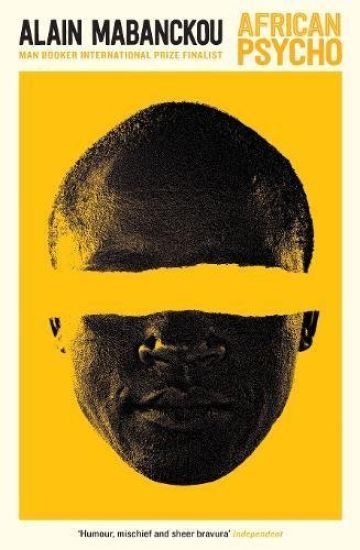
African Psycho

African Psycho

Alain Mabanckou

Serpent's Tail
2017
pokkari
Finalist for the Man Booker International Prize 2015 Gregoire Nakobomayo, a petty criminal, has decided to kill his girlfriend Germaine. He's planned the crime for some time, but still, the act of murder requires a bit of psychological and logistical preparation. Luckily, he has a mentor to call on, the far more accomplished serial killer Angoualima. The fact that Angoualima is dead doesn't prevent Gregoire from holding lengthy conversations with him. Little by little, Gregoire interweaves Angoualima's life and criminal exploits with his own. Continuing with the plan despite a string of botched attempts, Gregoire's final shot at offing Germaine leads to an abrupt unravelling. Lauded in France for its fresh and witty style, African Psycho's inventive use of language surprises and relieves the reader by sending up this disturbing subject.
Black bazar

Black bazar

Alain Mabanckou

Bokvennen
2016
sidottu
«Det er ikke så underlig at de fleste kompisene på Jip's kaller meg Rumpolog. Det var Hvite-Pierrot som fant opp det nyordet, men jeg nekter for nyord, ingenting er nytt under sola, rumpologi har eksistert siden tidenes morgen da Adam og Eva snudde ryggen til Gud.» Hovedpersonen i Black Bazar er en moteløve fra Kongo med sans for italienske dresser og Weston-sko. I kjølvannet av en opprivende kjærlighetssorg kommer han til forfatter.kallet og begynner litt etter litt sitt nådeløse portrett av verden og menneskene. Med ironi og vemod maler han frem det mest fantastiske persongalleri der hver på sin måte avslører evne til dyd, usseldom eller samfunnsanalyse og logisk nok får sitt kallenavn etter sosial rang, hudfarge eller nasjonal opprinnelse. Et saftig språk med utenlandske vendinger preger diskusjonene om identitet, historiske sannheter eller forholdet til Gud og de tidligere franske koloniherrene. Her finnes ikke sømmelighet eller politisk korrekthet, men heller krass, ofte underliggende humor båret frem med en jublende selvironi.
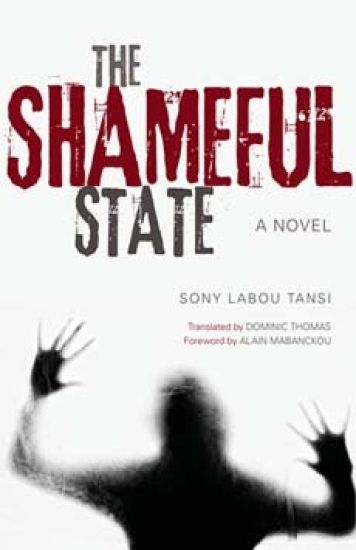
The Shameful State

The Shameful State

Sony Labou Tansi; Alain Mabanckou

Indiana University Press
2016
pokkari
Set in a fictitious African nation, this novel by the distinguished writer Sony Labou Tansi takes aim at the corruption, degeneracy, violence, and repression of political life in Africa. At the heart of The Shameful State is the story of Colonel Martillimi Lopez, the nation's president, whose eccentricity and whims epitomize the "shameful situation in which humanity has elected to live." Lopez stages a series of grotesque and barbaric events while his nation falls apart. Unable to resist the dictator's will, his desperate citizens are left with nothing but humiliation. The evocation of this deranged world is a showcase for the linguistic and stylistic inventiveness that are the hallmark of Sony Labou Tansi's work. This first English translation by Dominic Thomas includes a foreword by Congolese writer Alain Mabanckou that contextualizes the novel's importance in literary history and the significance of Sony Labou Tansi for future generations of writers.