Kirjojen hintavertailu. Mukana 12 390 323 kirjaa ja 12 kauppaa.

Kirjailija

Alan A. Berryman

Kirjat ja teokset yhdessä paikassa: 4 kirjaa, julkaisuja vuosilta 1999-2014, suosituimpien joukossa Population Systems. Vertaile teosten hintoja ja tarkista saatavuus suomalaisista kirjakaupoista.

4 kirjaa

Kirjojen julkaisuhaarukka 1999-2014.

Population Systems

Population Systems

Alan A. Berryman; Pavel Kindlmann

Springer
2014
nidottu
I had taught courses in applied ecology, population dynamics, and population management for many years and, like many of my colleagues, had grown acc- tomed to the blank stares of my students as we wove our way through the confused semantics and intricate concepts of traditional ecology and wrestled with elaborate mathematical arguments. I searched in vain for a central unifying concept on which to organize a theory of population ecology until, 30 years ago, I read a small book of essays edited by John Milsum of McGill University entitled Positive Feedback – A General Systems Approach to Positive/Negative Feedback and Mutual Causality. Stimulated by the articles in this book, particularly those written by Milsum, M. Maruyama, and A. Rapoport, I began to structure my lectures around the central ideas of general systems theory. I first used this approach in my graduate courses in population dynamics and population management and then, encouraged by the results, in my undergraduate course in forest entomology and to teach population dynamics to practicing foresters. Almost without exception, my students found the general systems approach intuitively reasonable and easier to understand than traditional teaching methods. Even undergraduates seem to grasp the fundamental principles quite rapidly and, more important, to realize that a general understanding of population systems is an essential part of their education. These reactions by my students, and their continued encouragement, led me to write this book.

Forest Insects

Forest Insects

Alan A. Berryman

Springer-Verlag New York Inc.
2012
nidottu
This book is intended as a general text for undergraduates studying the manage­ ment of forest insect pests. It is divided into four parts: insects, ecology, manage­ ment, and practice. Part I, Insects, contains two chapters. The first is intended to provide an overview of the general attributes of insects. Recognizing that it is impossible to adequately treat such a diverse and complex group of organisms in such a short space, I have attempted to highlight those insectan characteristics that make them difficult animals to combat. I have also tried to expose the insects' weak points, those attributes that make them vulnerable to manipulation by human actions. Even so, this first chapter will seem inadequate and sketchy to many of my colleagues. Ideally, this book should be used in conjunction with a laboratory manual covering insect anatomy, physiology, biology, behavior, and classifica­ tion in much greater depth-in fact, this is how I organize my forest entomology course. It is hoped that this first chapter will provide nonentomologists with a general feel for the insects and with a broad understanding of their strengths and weaknesses, while Chapter 2 will provide a brief overview of the diverse insect fauna that attacks the various parts of forest trees and their products.
Population Systems

Population Systems

Alan A. Berryman; Pavel Kindlmann

Springer-Verlag New York Inc.
2008
sidottu
I had taught courses in applied ecology, population dynamics, and population management for many years and, like many of my colleagues, had grown acc- tomed to the blank stares of my students as we wove our way through the confused semantics and intricate concepts of traditional ecology and wrestled with elaborate mathematical arguments. I searched in vain for a central unifying concept on which to organize a theory of population ecology until, 30 years ago, I read a small book of essays edited by John Milsum of McGill University entitled Positive Feedback – A General Systems Approach to Positive/Negative Feedback and Mutual Causality. Stimulated by the articles in this book, particularly those written by Milsum, M. Maruyama, and A. Rapoport, I began to structure my lectures around the central ideas of general systems theory. I first used this approach in my graduate courses in population dynamics and population management and then, encouraged by the results, in my undergraduate course in forest entomology and to teach population dynamics to practicing foresters. Almost without exception, my students found the general systems approach intuitively reasonable and easier to understand than traditional teaching methods. Even undergraduates seem to grasp the fundamental principles quite rapidly and, more important, to realize that a general understanding of population systems is an essential part of their education. These reactions by my students, and their continued encouragement, led me to write this book.
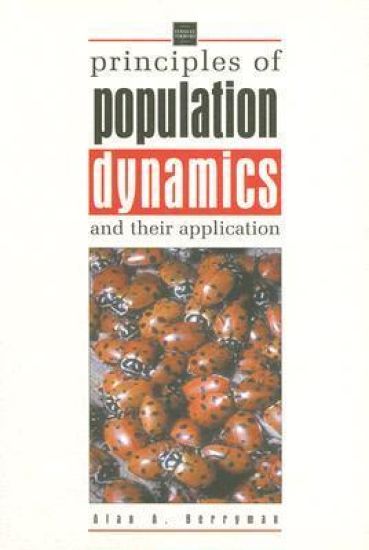
Principles of Population Dynamics and Their Application
This book provides an introduction to population dynamics, exploring rules that govern change in any dynamic system and applying these general principles to populations of living organisms. Principles of Population Dynamics and their Application is aimed at applied ecologists, resource managers. and pest managers. It is also aimed at undergraduate students taking courses in forestry, fisheries, widlife and pest management.