Kirjojen hintavertailu. Mukana 12 152 606 kirjaa ja 12 kauppaa.

Kirjailija

Alan Axelrod

Kirjat ja teokset yhdessä paikassa: 38 kirjaa, julkaisuja vuosilta 1983-2026, suosituimpien joukossa Bradley. Vertaile teosten hintoja ja tarkista saatavuus suomalaisista kirjakaupoista.

38 kirjaa

Kirjojen julkaisuhaarukka 1983-2026.

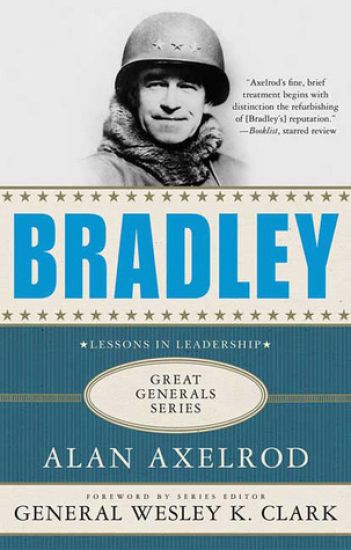
Bradley

Bradley

Alan Axelrod; Wesley K. Clark

Palgrave Macmillan
2009
nidottu
Dubbed by the World War II press as "The G.I. General" because of his close identification with his men, Omar Bradley rose to command the largest exclusively American field command in U.S. history during the European Campaign. Alan Axelrod applies his signature insight and compelling prose to the life, strategy and legacy of the general who remains the model for all commanders today as the man who revolutionized the National Guard, shaped the U.S. army's focus on the individual soldier, and emphasized cooperation and coordination among the military services.
The Gilded Age: 1876-1912: Overture to the American Century
With Season 3 of the hit Julian Fellowes HBO series The Gilded Age breaking records in summer 2025 with its highest ratings ever--and season 4 anticipated to air in 2026--this book is the perfect fix for fans eager to dive deeper into the dynamic history of this period. The Gilded Age--the name coined by Mark Twain to refer to the period of rapid economic growth in America between the 1870s and 1900--offers some intriguing parallels to our own time. In this lushly illustrated, insightful book, prolific historian Alan Axelrod explores this intense era in all its dimensions. Like today, the turn of the century was an era of technological wonders, but also a period divided--by wealth, by class, and by politics. Axelrod powerfully and vividly portrays the rise of the great industrial and financial empires; inventors like Thomas Edison and Henry Ford; the rise of consumerism; mass immigration; struggles for basic human rights in labor and housing; extraordinary architectural and artistic production; the story of Reconstruction; the changing roles of women; controversial presidential elections and constitutional crises; and more. More than 200 photographs, political cartoons, engravings, news clippings, and other ephemera help bring this fascinating period into focus.
Vinston Cherchill. SEO. 25 urokiv liderstva dlja biznesu
Vinston Cherchill - najznanishij britanets v istoriji, derzhavnij i politichnij dijach, prem'jer-ministr Velikoji Britaniji vprodovzh 1940-1945 i 1951-1955 rokiv, vijskovij, laureat Nobelivskoji premiji z literaturi. U knizi "Vinston Cherchill, SEO" sformulovani 25 urokiv liderstva Vinstona Cherchillja, jaki dali jomu zmogu stati slavetnim strategom, taktikom, politikom, oratorom, menedzherom. Kozhen urok dopovnjujut komentari, scho dajut zmogu zastosuvati tsi pravila v ninishnikh umovakh.PerekladachJevgenij Miroshnichenko
From Ronald to Donald

From Ronald to Donald

Edwin G. Oswald; Alan Axelrod

MCFARLAND CO INC
2024
pokkari
On November 4, 1980, American voters gave Ronald Reagan a 41-state Electoral College landslide. The man this mandate carried into the White House was largely compounded of mythology. Like most compelling mythologies, Reagan's was a synthesis of celebrity as well as emotional, intellectual, and cultural streams. Throughout his eight years in the oval office, the "Great Communicator" was largely successful in shaping the soul of America to reflect his durable mantra that "government is the problem." That same American soul later embraced Donald Trump--a president who, the authors argue, would have appalled Reagan. Reagan's myth persists, and by understanding his time in office in the context of American history and of the American presidency, we can understand how a transformative president created more than policy by also shaping culture with the instrumental force of mythology. This book attempts to neither praise nor bury Reagan but to explain him in non-partisan terms of contemporary popular mythology. The authors examine his legacy in his war on "big government," which still drives politics, economic policy, and culture, even in Trump's era. They make the case that understanding the mythology at work is a necessary step toward healing American politics and saving American democracy.
Teodor Ruzvelt. Zakony liderstva
Teodor Ruzvelt proshel put ot deputata zakonodatelnogo sobranija shtata do prezidenta Soedinennykh Shtatov. On vydvinul mnogo smelykh predlozhenij, osuschestvil tselyj rjad neprostykh reform v dejatelnosti federalnogo pravitelstva i pri etom nikogda ne zabyval, chto sluzhit narodu Soedinennykh Shtatov. I po sej den Teodor Ruzvelt ostaetsja odnim iz samykh populjarnykh liderov natsii. V etoj knige vy najdete 7 zakonov liderstva Ruzvelta i 136 bestsennykh urokov, kotorye budut polezny sovremennym lideram i vdokhnovjat ikh na novye uspekhi. Serija "Put lidera. Legendarnye bestsellery" - eto sem naibolee znachimykh v svoej oblasti knig o vlijanii, upravlenii, stojkosti, vnutrennej sile, bogatstve, reshitelnosti i uporstve. Vse avtory - priznannye lidery ili luchshie eksperty po kljuchevym navykam lidera. Eti bestsellery uzhe imejut svoju istoriju uspekha i pomogli millionam ljudej dobitsja vydajuschikhsja rezultatov. Knigi serii "Put lidera. Legendarnye bestsellery" roskoshno oformleny: pereplet iz chernogo bumvinila, tisnenie zolotom, skruglennye ugly, stilnye krasnye forzatsy i lenta-ljasse, kachestvennaja belaja bumaga v bloke. Prekrasnyj podarok i ukrashenie dlja knizhnoj polki.
Uinston Cherchill. Nikogda ne sdavajtes
Uinston Cherchill - velichajshij britanets v istorii, gosudarstvennyj i politicheskij dejatel, premer-ministr Velikobritanii v 1940-1945 i 1951-1955 godakh, voennyj, laureat Nobelevskoj premii po literature. V etoj knige sformulirovany 25 zakonov liderstva Uinstona Cherchillja. Kazhdyj zakon dopolnjajut kommentarii, pozvoljajuschie primenit eti pravila v segodnjashnikh uslovijakh. Kniga takzhe vykhodit pod nazvaniem "Uinston Cherchill. Zakony liderstva"
A Century of American Toys and Games

A Century of American Toys and Games

Jim Pressman; Donna Pressman; Alan Axelrod

ABBEVILLE PRESS INC.,U.S.
2022
sidottu
"A wonderful trip down memory lane, and a remarkable story of perseverance... The pictures are priceless!" —Richard E. Grey, former chairman and CEO of Tyco "This book chronicles the 'ins' and 'outs' of the everchanging toy industry better than anything I have ever read... For me, as a competitor and friend of Pressman Toy, this book is inspirational and instructional." —Bob Moog, President and Co-founder of University Games "This is a must-read for anyone interested in the toy industry, and actually anyone interested in how to successfully build a business." —Tom Kalinske, former CEO of Mattel, Matchbox, Sega, and Leapfrog When Jack Pressman went into business as a manufacturer of basic playthings like lead soldiers and toy xylophones in 1922, he could little have imagined that his small venture would become one of the iconic American toy companies. The firm scored its first megahit in the 1920s, when it popularised Chinese checkers, and it went on to introduce enduring favourites like Rummikub and Tri-Ominos. Today the Pressman Toy Corporation remains well known for its line of classic board games in eye-catching red boxes, as well as games based on popular TV shows. This centennial history traces the growth of the company under the leadership of three successive Pressmans: Jack, his wife Lynn (one of the first female CEOs in the industry), and their son Jim. It is a story that reflects the development of the toy industry as a whole — encompassing the rise of plastics, the emergence of character licensing and TV advertising, and the surprising endurance of the physical board game in our digital age. Abundantly illustrated with new colour photography as well as rare archival images, this will be an essential volume for anyone with an interest in the history of play.
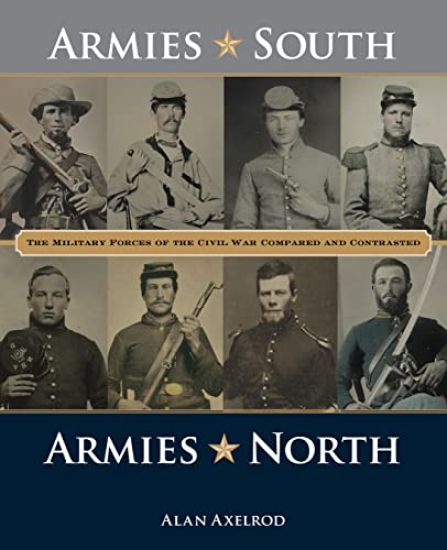
Armies South, Armies North

Armies South, Armies North

Alan Axelrod

ROWMAN LITTLEFIELD
2022
pokkari
An argument settler--and starter--for Civil War buffs who want to know which side had the better soldiers: Armies South, Armies North definitively compares the military forces of both sides. Civil War buffs are always arguing over which side had the better soldiers. Armies South/Armies North by Alan Axelrod helps readers reconsider their understanding of America’s most harrowing war. Axelrod is the author of more than one hundred books with a passion for military history and leadership. Each chapter of his new book compares the military forces with both quantitative and qualitative measures. Axelrod analyzes the equipment, the leadership and strategies, and the men who fought in each army, with additional focus on lesser known flash points during the war.
In the Time of the Revolution

In the Time of the Revolution

Alan Axelrod

ROWMAN LITTLEFIELD
2022
pokkari
The American Revolution was a war, but it was also a time, a span of history, in which some people fought, but most just lived. They thought, acted, worked, raised families, worshipped, built, sold, bought, and tried to live as best they could in a time of hope, anxiety, despair, loss, gain, and, above all, disruption. In the Time of the Revolution is a popular, single-volume history of the American Revolution, 1775 to 1783, an intensely active, exciting, and critical span of time in North America. It began with a lopsided skirmish at Lexington, Massachusetts, culminated militarily in a major amphibious campaign mounted by a large Franco-American army against British army and naval forces at Yorktown, Virginia in 1781, and then passed through two more years of desultory combat and cruel fights between diehard Loyalists and vengeful Patriots before ending in the Treaty of Paris. During these eight years in an America that was a collection of young towns on the edge of a vast wilderness, the break-up with the mother country was the central fact of life.
100 Turning Points in American History

100 Turning Points in American History

Alan Axelrod

The Lyons Press
2022
pokkari
Arnold J. Toynbee, the most famous professional historian of the twentieth century, is widely quoted as having declared that “History is just one damn thing after another.” This book argues that history is not about “things” at all but is all about turning points—the decisions, acts, innovations, errors, ideas, successes, and failures on which the shape of a nation’s life—our lives—depends. It presents the 100 points at which America’s path decisively turned on its way to where we find ourselves today. ? Columbus arrives in the New World? The first slaves arrive in America ? Independence is declared ? The Indian Removal Act is passed? Female suffragists meet in Seneca Falls? Harpers Ferry is raided? Fort Sumter falls? A transcontinental railroad is completed? Edison lights his first electric lamp? Prohibition makes America a nation of lawbreakers? FDR offers a “New Deal” ? The B-29 Enola Gay drops an atomic bomb on Hiroshima? The Supreme Court decides Brown v. Board of Education? Neil Armstrong sets foot on the moon? President Nixon creates the EPA? 9/11 … Obama … Sandy Hook … Russian election “meddling” … the Age of Trump … These and many more are the crucial “plot points” in our grand national story, and best-selling historian Alan Axelrod presents them here.
100 Turning Points in Military History

100 Turning Points in Military History

Alan Axelrod

The Lyons Press
2021
pokkari
Arnold J. Toynbee, the most famous professional historian of the twentieth century, is widely quoted as having declared that “History is just one damn thing after another.” This book argues that history is not about “things” at all but is all about turning points—the decisions, acts, innovations, errors, ideas, successes, and failures on which the shape of a nation’s life—our lives—depends. It presents the 100 points at which America’s path decisively turned on its way to where we find ourselves today. ? Columbus arrives in the New World? The first slaves arrive in America ? Independence is declared ? The Indian Removal Act is passed? Female suffragists meet in Seneca Falls? Harpers Ferry is raided? Fort Sumter falls? A transcontinental railroad is completed? Edison lights his first electric lamp? Prohibition makes America a nation of lawbreakers? FDR offers a “New Deal” ? The B-29 Enola Gay drops an atomic bomb on Hiroshima? The Supreme Court decides Brown v. Board of Education? Neil Armstrong sets foot on the moon? President Nixon creates the EPA? 9/11 … Obama … Sandy Hook … Russian election “meddling” … the Age of Trump … These and many more are the crucial “plot points” in our grand national story, and best-selling historian Alan Axelrod presents them here.
In the Time of the Revolution

In the Time of the Revolution

Alan Axelrod

The Lyons Press
2020
sidottu
The American Revolution was a war, but it was also a time, a span of history, in which some people fought, but most just lived. They thought, acted, worked, raised families, worshipped, built, sold, bought, and tried to live as best they could in a time of hope, anxiety, despair, loss, gain, and, above all, disruption. In the Time of the Revolution is a popular, single-volume history of the American Revolution, 1775 to 1783, an intensely active, exciting, and critical span of time in North America. It began with a lopsided skirmish at Lexington, Massachusetts, culminated militarily in a major amphibious campaign mounted by a large Franco-American army against British army and naval forces at Yorktown, Virginia in 1781, and then passed through two more years of desultory combat and cruel fights between diehard Loyalists and vengeful Patriots before ending in the Treaty of Paris. During these eight years in an America that was a collection of young towns on the edge of a vast wilderness, the break-up with the mother country was the central fact of life.
100 Turning Points in Military History

100 Turning Points in Military History

Alan Axelrod

The Lyons Press
2019
sidottu
The typical military history presents a chronicle of battles and wars and the commanders and troops who fought them. This book takes a different approach. It presents battles and wars and people aplenty, but they are not its ultimate subjects. This book is about the turning points that not only make military history dynamic but crucial to the story of humanity and civilization. This book is about the decisions, acts, innovations, errors, ideas, successes, and failures that shaped the evolution of military art and science—strategy, tactics, and technology—and, in doing so, shaped the course of world history. Here are the 100 points—from the birth of warfare in the Battle of Megiddo, 1457 BC, to the ongoing evolution of military history on its newest battlefield, cyberspace—at which the path of the warrior decisively turned on its long journey to where we find ourselves today.
100 Turning Points in American History

100 Turning Points in American History

Alan Axelrod

The Lyons Press
2019
sidottu
Arnold J. Toynbee, the most famous professional historian of the twentieth century, is widely quoted as having declared that “History is just one damn thing after another.” This book argues that history is not about “things” at all but is all about turning points—the decisions, acts, innovations, errors, ideas, successes, and failures on which the shape of a nation’s life—our lives—depends. It presents the 100 points at which America’s path decisively turned on its way to where we find ourselves today. ? Columbus arrives in the New World ? The first slaves arrive in America ? Independence is declared ? The Indian Removal Act is passed ? Female suffragists meet in Seneca Falls ? Harpers Ferry is raided ? Fort Sumter falls ? A transcontinental railroad is completed ? Edison lights his first electric lamp ? Prohibition makes America a nation of lawbreakers ? FDR offers a “New Deal” ? The B-29 Enola Gay drops an atomic bomb on Hiroshima ? The Supreme Court decides Brown v. Board of Education ? Neil Armstrong sets foot on the moon ? President Nixon creates the EPA ? 9/11 … Obama … Sandy Hook … Russian election “meddling” … the Age of Trump … These and many more are the crucial “plot points” in our grand national story, and best-selling historian Alan Axelrod presents them here.
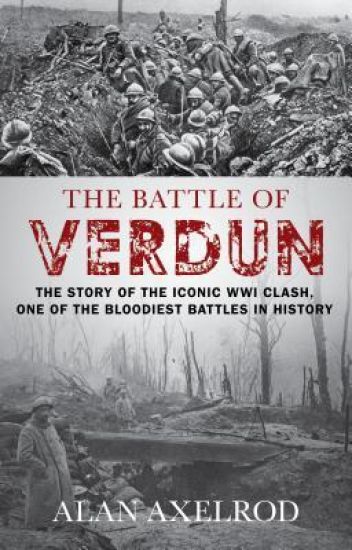
The Battle of Verdun

The Battle of Verdun

Alan Axelrod

The Lyons Press
2019
pokkari
The Great War ate men, machines, and money without mercy or remission. At the end of 1915, the German army chief of staff, Erich von Falkenhayn, believed he knew how to finally kill the beast and win the war. On Christmas day, 1915, Falkenhayn sent a letter to Kaiser Wilhelm II proposing a campaign to demoralize Britain, whose industrial might and maritime power were the foundation of the alliance against Germany, while also knocking France out of the war. He wrote that the “strain on France has reached breaking point …. If we succeed in opening the eyes of her people to the fact that in a military sense they have nothing more to hope for, that breaking point would be reached and England’s best sword knocked out of her hand.” His plan was to attack a single point the French perceived as so vital that they would be compelled “to throw in every man they have.” Falkenhayn concluded: “If they do so, the forces of France will bleed to death” or, as he put it later, the “French army would be bled white.” Falkenhayn’s target of choice was Verdun, a place that, throughout virtually all of the history of Europe, had been a fortress. Located within a loop of the Meuse River, it occupied a strategic blocking position in the Meuse River valley. As recently as the Franco-Prussian War of 1871, Verdun had been the last of the French fortified cities to hold out against the German onslaught. After that war, it had been vastly augmented, so that it was now a circle of detached forts surrounding a central citadel. The town of Verdun itself, also fortified, was likewise encircled by forts distributed in a five-mile radius. The combined massive complex guarded not only passage through the river valley region, but also dominated a key railroad junction leading to points south, southwest, west, and north in France. Along with the related, but separate, Battle of the Somme, Verdun was among the most deadly battles in history. To understand this struggle is to understand all of World War I, including the principal stated motive of Woodrow Wilson for bringing the United States into the “European War” in April 1917. For him, Verdun proved both France’s determination to win at all costs and the likelihood that, without help, it would be defeated nevertheless. The unparalleled barbarity of Verdun, a product of the Old World, convinced the American president that only the principal nation of the New World could finally alter the grim course of human destiny. While many, both in 1916 and in the decades that followed, saw Verdun as a bloody monument to the inescapable futility of war, Wilson saw in it a hope for fighting what he would call a “war to end all wars.”
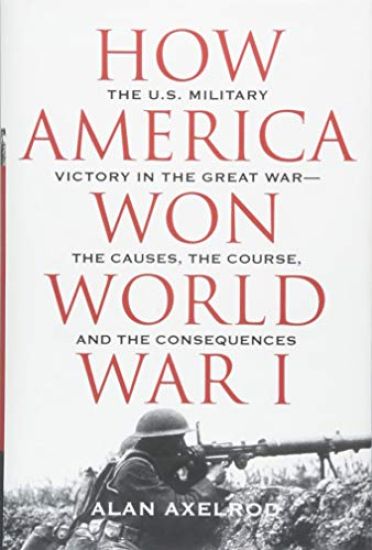
How America Won World War I

How America Won World War I

Alan Axelrod

The Lyons Press
2018
sidottu
Immediately after the armistice was signed in November, 1918, an American journalist asked Paul von Hindenburg who won the war against Germany. He was the chief of the German General Staff, co-architect with Erich Ludendorff of Germany’s Eastern Front victories and its nearly war-winning Western Front offensives, and he did not hesitate in his answer. “The American infantry,” he said. He made it even more specific, telling the reporter that the final death blow for Germany was delivered by “the American infantry in the Argonne.” The British and the French often denigrated the American contribution to the war, but they had begged for US entry into the conflict, and their stake in America’s victory was, if anything, even greater than that of the United States itself. But How America Won World War I will not litigate the points of view of Britain and France. The book will accepts as gospel the assessment of the top German leader whose job it had been to oppose the Americans directly - that the American infantry won the war - and this book will tell how the American infantry did it.
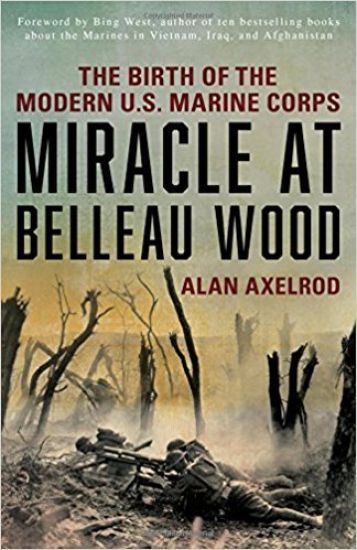
Miracle at Belleau Wood

Miracle at Belleau Wood

Alan Axelrod; Bing West

The Lyons Press
2018
pokkari
Now in paperback!Military Book Club® Main Selection History Book Club® Featured Alternate*The battle that transformed a group of common soldiers into the modern-day Marine CorpsMiracle at Belleau Wood begins in June 1918 at Les Mare Farm in France with just 200 U.S. marines, who spilled their blood to prevail against impossible odds, resisting an overwhelming German force of thousands and turned the battle back against the enemy, saved Paris, saved France, and saved the Allied hope of victory. Called “the Gettysburg of the Great War” by many at the time, it rescued America and its allies from almost certain defeat. This book tells the riveting story of the modern marines as America’s fiercest and most effective warriors, the world’s preeminent fighting elite. Miracle at Belleau Wood is the story of an epoch-making battle--a battle that elevated the Corps to legendary status and forever burned them into the American imagination. Praise for Miracle at Belleau Wood “Axelrod brings us back vividly to the shocking casualties of ‘the war to end all wars.’”—Bing West, author of No True Glory, former Assistant Secretary of Defense “Alan Axelrod has perfectly captured the embodiment of U.S. Marines and their unparalleled Esprit de Corps. . . . A must read!”—Jay Kopelman, author of the best-selling From Baghdad with Love “Axelrod is one of America’s great military historians. He’s done it this time with riveting non-stop action that reads like the best of Hemingway’s frontline reports plus the Marine Corps novels of W.E.B. Griffin. Axelrod pushes you right into the action, onto the battlefield, and never lets up.”—Paul B. Farrell, JD, PhD, syndicated columnist for Dow Jones’s MarketWatch, former Staff Sergeant in the US Marine Corps Praise for Patton: A Biography“Like Patton at his best: polished, precise, and persuasive.”—Kirkus Reviews
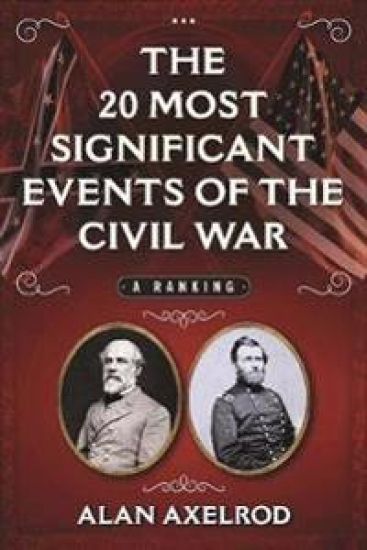
The 20 Most Significant Events of the Civil War

The 20 Most Significant Events of the Civil War

Alan Axelrod

Skyhorse Publishing
2017
sidottu
This is the first book to not only select the events that most influenced the causes and outcome of America’s Civil War, but also to rank them in order of significance. In each of the book’s 20 detailed essays, author/historian/speaker Alan Axelrod presents an engaging narrative about the event, and also explains how the event shaped the course of the war, and ultimately the future of the country. The author’s selection and ranking criteria include: Effect as cause or trigger of the war Decisiveness: whether it was a war-winning or war-losing event (both in military terms and in terms of public opinion, morale, and support) Magnitude and scope: size and cost of a battle Enduring postwar significance in American history, politics, society, culture and/or in military history and technology From Lincoln’s Inauguration, Antietam, and John Brown’s raid, to the New York draft riots and Stonewall Jackson dying as a result of friendly fire ? never before has the Civil War been explored quite this way. The Civil War was a violent argument between the North and the South. The purpose of this book is to start another argument about its history.
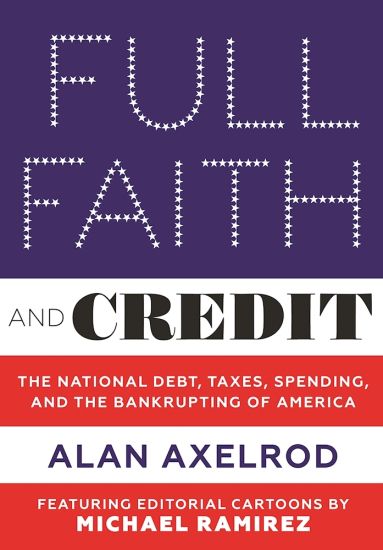
Full Faith and Credit

Full Faith and Credit

Alan Axelrod

Abbeville Press Inc.,U.S.
2016
sidottu
Conservative, Liberal, Republican, Democrat, Libertarian, Socialist . . . Each has a laundry list for America on which the slow-motion cataclysm of unsustainable national debt is but a lonely bullet point among dozens of others. Full Faith and Credit zooms in on that point, liberates it from partisan programs and political orientations, expands it, explores it, and explains it. The book examines key dimensions of our national life—from a military-industrial complex more menacing than even Eisenhower could have imagined to a Tower of Babel tax code that covertly translates taxes into secret subsidies. With the aim of converting bystanders into informed advocates of change, Full Faith and Credit is rich with eye-opening data, surprising case studies, and you-can’t-make-this-stuff-up examples: For every official the United States public has elected, its government supports 5000 unelected employees.$1 billion is the cost to destroy $16 billion in ammunition unneeded by the U.S. military.$20,973,890,000 is the total taxpayer cost to the Treasury of gambling losses deducted by millionaires. With easy-to-follow graphs and charts, as well as 20 uproarious full-colour editorial cartoons drawn from the prior work of Pulitzer Prize–winning artist Michael Ramirez, Full Faith and Credit locates the tipping point of the $19.4 trillion (and counting) national debt crisis and offers ideas on how to fix it.
The Battle of the Somme

The Battle of the Somme

Alan Axelrod

The Lyons Press
2016
sidottu
Fought during 1916, the Battle of the Somme was conceived by the French and British as a great offensive to be waged against Germany even as France poured incredible numbers of men into the slaughterhouse that was the desperate defense of Verdun. The French general-in-chief, Joseph “Papa” Joffre, was especially anxious to go on the offensive. For the French high command cherished the belief, born in the era of Napoleon, that the success of French arms depended on attack and that defense was anathema to what the nationalistic philosopher Henri Bergson called the “élan vital” of the French people, a quality, he argued, that set the Gallic race apart from the rest of the world. After more than five months, the British eked out a penetration of some six miles into German territory. The cost had been 420,000 Britons killed or wounded (70,000 men per mile gained)—and most of these were from “Kitchener’s Army,” so-called Pals Battalions, working- and middle-class volunteers promised that they could fight alongside their friends, co-workers, and neighbors. This meant that the Somme, more than any other battle before or since, devastated the young male population of entire British towns, villages, and neighborhoods. French losses were just under 200,000. The Germans lost at least 650,000. Just as the French refused to give up ground at Verdun, the Germans held on stubbornly at the Somme—so stubbornly that General Ludendorff actually complained that his men “fought too doggedly, clinging too resolutely to the mere holding of ground, with the result that the losses were heavy.” The only thing “conclusive” about the Somme was the ineluctable fact of death. No battle ever fought in any conflict provided a stronger incentive for all sides to reach a negotiated peace—the “peace without victory” that Woodrow Wilson, still standing on the sidelines, urged the combatants to agree upon. Instead, the Kaiser, appalled both by Verdun and the Somme, relieved Falkenhayn and replaced him with Hindenburg and Ludendorff, who had achieved great success on the Eastern Front. The new commanders created two new defensive lines, both well behind the Somme front. On the one hand, it was a retreat. On the other, it was a commitment to draw the French and British farther east and invite them to sacrifice more of their soldiery. The modest advance the British made was but the prelude to additional slaughter.