Kirjojen hintavertailu. Mukana 12 595 353 kirjaa ja 12 kauppaa.

Kirjailija

Alan Bewell

Kirjat ja teokset yhdessä paikassa: 5 kirjaa, julkaisuja vuosilta 1989-2017, suosituimpien joukossa Natures in Translation. Vertaile teosten hintoja ja tarkista saatavuus suomalaisista kirjakaupoista.

5 kirjaa

Kirjojen julkaisuhaarukka 1989-2017.

Natures in Translation

Natures in Translation

Alan Bewell

Johns Hopkins University Press
2017
sidottu
For many critics, Romanticism is synonymous with nature writing, for representations of the natural world appear during this period with a freshness, concreteness, depth, and intensity that have rarely been equaled. Why did nature matter so much to writers of the late eighteenth and early nineteenth centuries? And how did it play such an important role in their understanding of themselves and the world? In Natures in Translation, Alan Bewell argues that there is no Nature in the singular, only natures that have undergone transformation through time and across space. He examines how writers-as disparate as Erasmus and Charles Darwin, Joseph Banks, Gilbert White, William Bartram, William Wordsworth, John Clare, and Mary Shelley-understood a world in which natures were traveling and resettling the globe like never before. Bewell presents British natural history as a translational activity aimed at globalizing local natures by making them mobile, exchangeable, comparable, and representable. Bewell explores how colonial writers, in the period leading up to the formulation of evolutionary theory, responded to a world in which new natures were coming into being while others disappeared. For some of these writers, colonial natural history held the promise of ushering in a "cosmopolitan" nature in which every species, through trade and exchange, might become a true "citizen of the world." Others struggled with the question of how to live after the natures they depended upon were gone. Ultimately, Natures in Translation demonstrates that-far from being separate from the dominant concerns of British imperial culture-nature was integrally bound up with the business of empire.
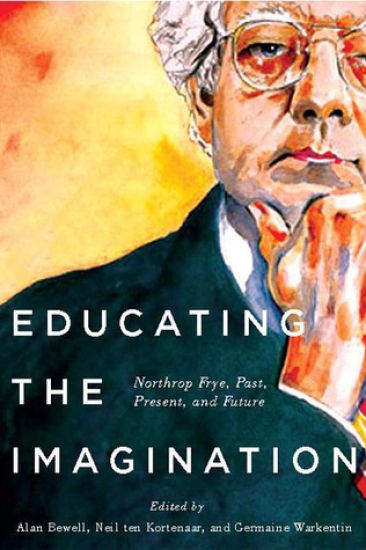
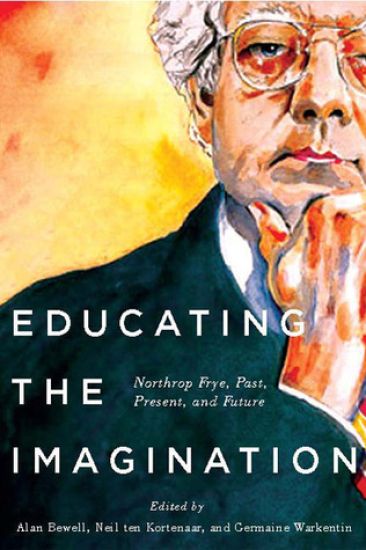
Educating the Imagination

Educating the Imagination

Alan Bewell; Neil ten Kortenaar; Germaine Warkentin

McGill-Queen's University Press
2015
sidottu
Northrop Frye's long career made him Canada's most creative public intellectual. A century after his birth, his many books demonstrate a powerful vision of the resources of the human imagination. Frye's critical theory sought the continuities linking human creation in all spheres of life, trusting in the idea of a single human community sharing myths, stories, and images that express shared visions and desires. The essays in Educating the Imagination illustrate the extraordinary range of Frye's ideas. Robert Bringhurst examines how Frye mapped the mind, Ian Balfour considers what "belief" meant for Frye, and Gordon Teskey re-examines two of the critic's great subjects - Blake and Milton. Michael Dolzani and Thomas Willard discuss Frye's symbolism, and Robert Tally looks at his utopianism. A strong thread running through all the essays is Frye's interest in the Romantic era, as Mark Ittenson shows. Three essays pair Frye with other titans of the time: Fredric Jameson, Paul de Man, and Jacques Derrida. Troni Y. Grande examines a gender issue in Frye's theory of tragedy, and J. Edward Chamberlin concludes by relating Frye's writings to songs, ceremonies of belief, and the common ground that they represent across cultures. Engaging with significant matters of contemporary concern, Educating the Imagination provides a renewed understanding of Northrop Frye and the fertility of his ideas about the imagination and society. Contributors include Ian Balfour (York), Robert Bringhurst, Adam Carter (Lethbridge), J. Edward Chamberlin (Toronto), Alexander Dick (British Columbia), Michael Dolzani (Baldwin Wallace), Troni Y. Grande (Regina), Mark Ittensohn (Zurich), Garry Sherbert (Regina), Robert T. Tally, Jr., (Texas State), Gordon Teskey (Harvard), and Thomas Willard (Arizona).
Educating the Imagination

Educating the Imagination

Alan Bewell; Neil ten Kortenaar; Germaine Warkentin

McGill-Queen's University Press
2015
nidottu
Northrop Frye's long career made him Canada's most creative public intellectual. A century after his birth, his many books demonstrate a powerful vision of the resources of the human imagination. Frye's critical theory sought the continuities linking human creation in all spheres of life, trusting in the idea of a single human community sharing myths, stories, and images that express shared visions and desires. The essays in Educating the Imagination illustrate the extraordinary range of Frye's ideas. Robert Bringhurst examines how Frye mapped the mind, Ian Balfour considers what "belief" meant for Frye, and Gordon Teskey re-examines two of the critic's great subjects - Blake and Milton. Michael Dolzani and Thomas Willard discuss Frye's symbolism, and Robert Tally looks at his utopianism. A strong thread running through all the essays is Frye's interest in the Romantic era, as Mark Ittenson shows. Three essays pair Frye with other titans of the time: Fredric Jameson, Paul de Man, and Jacques Derrida. Troni Y. Grande examines a gender issue in Frye's theory of tragedy, and J. Edward Chamberlin concludes by relating Frye's writings to songs, ceremonies of belief, and the common ground that they represent across cultures. Engaging with significant matters of contemporary concern, Educating the Imagination provides a renewed understanding of Northrop Frye and the fertility of his ideas about the imagination and society. Contributors include Ian Balfour (York), Robert Bringhurst, Adam Carter (Lethbridge), J. Edward Chamberlin (Toronto), Alexander Dick (British Columbia), Michael Dolzani (Baldwin Wallace), Troni Y. Grande (Regina), Mark Ittensohn (Zurich), Garry Sherbert (Regina), Robert T. Tally, Jr., (Texas State), Gordon Teskey (Harvard), and Thomas Willard (Arizona).
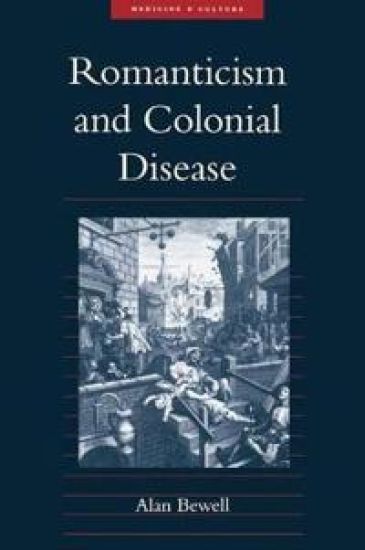
Romanticism and Colonial Disease

Romanticism and Colonial Disease

Alan Bewell

Johns Hopkins University Press
2004
pokkari
Colonial experience was profoundly structured by disease, as expansion brought people into contact with new and deadly maladies. Pathogens were exchanged on a scale far greater than ever before. Native populations were decimated by wave after wave of Old World diseases. In turn, colonists suffered disease and mortality rates much higher than in their home countries. Not only disease, but the idea of disease, and the response to it, deeply affected both colonizers and those colonized. In Romanticism and Colonial Disease, Alan Bewell focuses on the British response to colonial disease as medical and literary writers, in a period roughly from the end of the eighteenth century to the middle of the nineteenth century, grappled to understand this new world of disease. Bewell finds this literature characterized by increasing anxiety about the global dimensions of disease and the epidemiological cost of empire. Colonialism infiltrated the heart of Romantic literature, affecting not only the Romantics' framing of disease but also their understanding of England's position in the colonial world. The first major study of the massive impact of colonial disease on British culture during the Romantic period, Romanticism and Colonial Disease charts the emergence of the idea of the colonial world as a pathogenic space in need of a cure, and examines the role of disease in the making and unmaking of national identities.
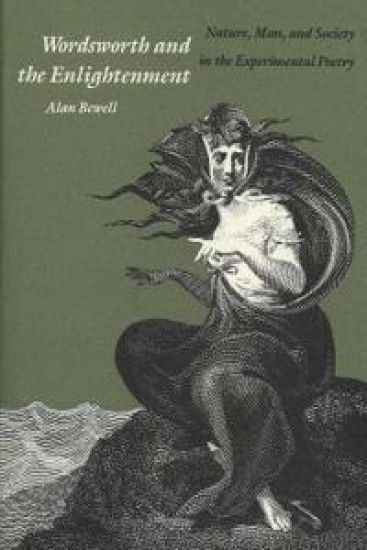
Wordsworth and the Enlightenment

Wordsworth and the Enlightenment

Alan Bewell

Yale University Press
1989
sidottu
This book provides a new context for understanding Wordsworth's major poetry by examining the poet's response to Enlightenment attitudes toward nature and society. Alan Bewell argues that at the core of Wordsworth's poetry is an anthropological vision, a concern with how human beings first made the transition from nature to society. In substantially new interpretations of the early Prelude and many of the shorter poems, Bewell suggest that Wordsworth's major objective as a poet was to write a history of the imagination, which would show the role it has played in human progress and the genesis of social institutions. The various fields comprised in Enlightenment anthropology provided Wordsworth with a model for how such a history might proceed. In eighteenth-century ethnography, geology, environmental theory, and biblical studies, in philosophical inquiries into the genesis of myths, the supernatural, and the idea of death, he found discursive models for talking about human origins. Moral philosophy also constituted a powerful discourse on marginal individuals, which underlies Wordsworth's interest in writing about outcasts and beggars, idiots and savages, the blind, the deaf, and the mute. Bewell argues that Wordsworth identified with and fashioned his self-understanding out of his observation of these individuals; the shift to autobiography in his later works was thus toward a complementary mode of anthropological inquiry.