Kirjojen hintavertailu. Mukana 12 390 323 kirjaa ja 12 kauppaa.

Kirjailija

Alan Cribb

Kirjat ja teokset yhdessä paikassa: 12 kirjaa, julkaisuja vuosilta 2005-2026, suosituimpien joukossa Rethinking Healthcare Improvement. Vertaile teosten hintoja ja tarkista saatavuus suomalaisista kirjakaupoista.

12 kirjaa

Kirjojen julkaisuhaarukka 2005-2026.

Rethinking Healthcare Improvement

Rethinking Healthcare Improvement

Alan Cribb; Polly Mitchell; Vikki Entwistle

BLOOMSBURY PUBLISHING PLC
2026
sidottu
What is ‘good’ healthcare? Does that new procedure benefit both patient A and patient B? Bringing together the fields of philosophy and public health, this open access book provides a much-needed framework for navigating the ethical issues that arise in healthcare improvement. Acknowledging the complexity in attempts to raise the quality of healthcare, from different cultural and intellectual perspectives to ever-increasing costs, Cribb, Mitchell and Entwistle reveal the contribution philosophy can make to improvement activities. In four clear parts they uncover the ethical impulses already embedded in health services and connect them with philosophical literature to present an original and practically useful guide to answering questions about what is better and why. In so doing, they explore a number of ethical approaches, including value-led systems of improvement and a decentring of consequentialist methods in order to prioritise compassion and social justice over figures and outcomes. Throughout the editors advocate ‘pragmatic pluralism’, maintaining that healthcare demands a reflective, context sensitive approach which is cautious about the universality of claims and the scalability of improvement interventions. This accessible text effortlessly combines theory and practice with a wide range of real-world case studies, including urban poverty screening in US primary care and initiatives introduced in the UK to ensure anti-racist practice. Across social policy, healthcare management, bioethics and beyond, this is a must-read for students, scholars and practitioners alike. The eBook editions of this book are available open access under a CC BY-NC-ND 4.0 licence on bloomsburycollections.com. Open access was funded by the Wellcome Trust.
Rethinking Healthcare Improvement

Rethinking Healthcare Improvement

Alan Cribb; Polly Mitchell; Vikki Entwistle

BLOOMSBURY PUBLISHING PLC
2026
nidottu
What is ‘good’ healthcare? Does that new procedure benefit both patient A and patient B? Bringing together the fields of philosophy and public health, this open access book provides a much-needed framework for navigating the ethical issues that arise in healthcare improvement. Acknowledging the complexity in attempts to raise the quality of healthcare, from different cultural and intellectual perspectives to ever-increasing costs, Cribb, Mitchell and Entwistle reveal the contribution philosophy can make to improvement activities. In four clear parts they uncover the ethical impulses already embedded in health services and connect them with philosophical literature to present an original and practically useful guide to answering questions about what is better and why. In so doing, they explore a number of ethical approaches, including value-led systems of improvement and a decentring of consequentialist methods in order to prioritise compassion and social justice over figures and outcomes. Throughout the editors advocate ‘pragmatic pluralism’, maintaining that healthcare demands a reflective, context sensitive approach which is cautious about the universality of claims and the scalability of improvement interventions. This accessible text effortlessly combines theory and practice with a wide range of real-world case studies, including urban poverty screening in US primary care and initiatives introduced in the UK to ensure anti-racist practice. Across social policy, healthcare management, bioethics and beyond, this is a must-read for students, scholars and practitioners alike. The eBook editions of this book are available open access under a CC BY-NC-ND 4.0 licence on bloomsburycollections.com. Open access was funded by the Wellcome Trust.
Values and Ethics

Values and Ethics

Alan Cribb; Vikki Entwistle; Polly Mitchell

Cambridge University Press
2024
pokkari
Ethics involves examining values and identifying what is good, right, and justified – and why. Diverse values and ethical issues run through healthcare improvement, but they are not always recognised or given the attention they need. While much effort goes into understanding whether intervention X effectively leads to change Y, questions such as 'is X ethically acceptable?', 'does Y count as an improvement?', 'should Y be prioritised?', and 'if so, why?' are sometimes neglected. This Element demonstrates the ethical considerations and rich array of values that inevitably underpin both the goals of healthcare improvement (what aspects of quality or what kinds of good are pursued) and how improvement work is undertaken. It outlines an agenda for improvement ethics with the aim of helping those involved in healthcare improvement to reflect on and discuss ethical aspects of their work more explicitly and rigorously. This title is also available as Open Access on Cambridge Core.
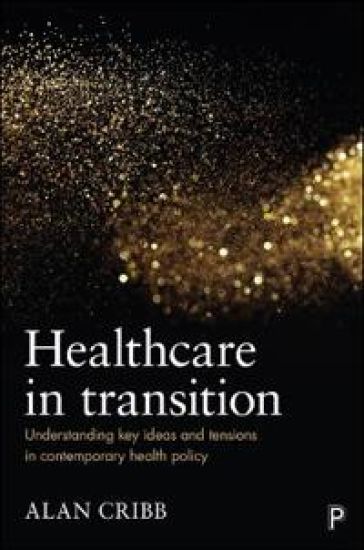
Healthcare in Transition

Healthcare in Transition

Alan Cribb

Policy Press
2017
sidottu
Health policy thinking must change. This book explores the fundamental currents and tensions that lie behind recent trends such as shared decision-making, co-production, and personalisation. Its arguments will help fuel a shift away from a `delivery’ model towards a more deliberative model of healthcare.
Healthcare in Transition

Healthcare in Transition

Alan Cribb

Policy Press
2017
nidottu
Health policy thinking must change. This book explores the fundamental currents and tensions that lie behind recent trends such as shared decision-making, co-production, and personalisation. These are often discussed in relation to an epidemiological transition but this text argues that they embody a philosophical transition – a change in our conceptions of healthcare and of appropriate forms of knowledge and analysis. As clinical concerns are increasingly nested within social concerns then policy analysis must engage with the multiple philosophical tensions that are now centre stage. This focus on key underlying ideas and tensions in healthcare couldn’t have come at a better time. With international relevance, the book’s arguments help fuel a shift away from a ‘delivery’ model towards a more deliberative model of healthcare.
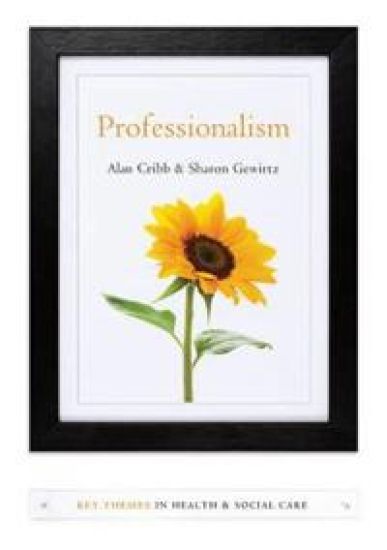
Professionalism

Professionalism

Alan Cribb; Sharon Gewirtz

Polity Press
2015
sidottu
Professionalism is a complex and highly disputed idea of crucial importance in a range of fields, not least health and social care. It can inspire people by reminding them of workplace ideals and the value of occupational expertise. But it can also feel threatening and de-motivating; for example, if it is used to demand ever more from people working in very challenging circumstances. The language of professionalism can evoke a special relationship of trust between service users and practitioners. But it can also suggest a social distance between two classes of people; high status professionals and their lower status 'non-professional' clients. This book is an original and accessible guide to these ambiguities and complexities. Cribb and Gewirtz clarify the nature of professionalism and explain and defend its importance, providing an understanding of, and an analytical engagement with, both idealistic and critical perspectives. In addition, the authors assess the implications of contemporary policy trends for professional work, showing how they may be radically altering our understanding of the 'good' professional. This inviting and reflective study draws upon examples and case studies and weaves in a range of relevant theoretical concepts and perspectives. Written in a style that encourages and supports further reflection on this complex topic, Professionalism is the only book of its kind for practitioners, researchers and students in health and social care.
Professionalism

Professionalism

Alan Cribb; Sharon Gewirtz

Polity Press
2015
nidottu
Professionalism is a complex and highly disputed idea of crucial importance in a range of fields, not least health and social care. It can inspire people by reminding them of workplace ideals and the value of occupational expertise. But it can also feel threatening and de-motivating; for example, if it is used to demand ever more from people working in very challenging circumstances. The language of professionalism can evoke a special relationship of trust between service users and practitioners. But it can also suggest a social distance between two classes of people; high status professionals and their lower status 'non-professional' clients. This book is an original and accessible guide to these ambiguities and complexities. Cribb and Gewirtz clarify the nature of professionalism and explain and defend its importance, providing an understanding of, and an analytical engagement with, both idealistic and critical perspectives. In addition, the authors assess the implications of contemporary policy trends for professional work, showing how they may be radically altering our understanding of the 'good' professional. This inviting and reflective study draws upon examples and case studies and weaves in a range of relevant theoretical concepts and perspectives. Written in a style that encourages and supports further reflection on this complex topic, Professionalism is the only book of its kind for practitioners, researchers and students in health and social care.
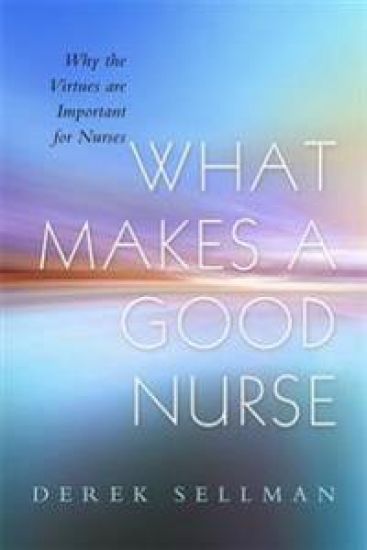
What Makes a Good Nurse

What Makes a Good Nurse

Derek Sellman; Alan Cribb

Jessica Kingsley Publishers
2011
pokkari
In recent years, the human values at the heart of the nursing profession seem to have become side-lined by an increased focus on managerialist approaches to health care provision. Nursing's values are in danger of becoming marginalised further precisely because that which nursing does best - providing care and helping individuals through the human trauma of illness - is difficult to measure, and therefore plays little, if any, part in official accounts of outcome measures. Derek Sellman sets out the case for re-establishing the primacy of the virtues that underpin the practice of nursing in order to address the question: what makes a good nurse? He provides those in the caring professions with both a rationale and a practical understanding of the importance that particular character traits, including justice, courage, honesty, trustworthiness and open-mindedness, play in the practice of nursing, and explains why and how nurses should strive to cultivate these virtues, as well as the implications of this for practice. This original and thought-provoking book will be essential reading for nurses and nursing students, care workers, care commissioners, and many others who work in the caring professions.
Understanding Education

Understanding Education

Alan Cribb; Sharon Gewirtz

Polity Press
2009
sidottu
Who should be educated, when, by whom and how? What purposes should education serve? Why does education matter? These fundamental questions of value are not always seen as central to the sociology of education. However, this book argues that they are pivotal and provides a sophisticated and engaging introduction to the field that is designed to open up these important debates. It draws attention to the many points of disagreement that exist between major thinkers in the sociology of education, and the values on which their ideas are based. By involving readers in crucial questions about the potential contribution of sociology to education policies and practices, it aims to bridge the divide between education as it is talked about by academics, and the concerns of policymakers and educators who have to make practical decisions about what is to be done.Chapter by chapter the book introduces competing approaches in the sociology of education - structural functionalism, symbolic interactionism, Marxism, feminism, critical race theory and poststructuralism. It shows how these can be applied to major themes such as social reproduction, the politics of knowledge, multicultural education, identity and teachers’ work. Throughout, the authors emphasise the importance of understanding social and educational values and the ways in which these underpin and impact upon the work of both academics and educators.
Understanding Education

Understanding Education

Alan Cribb; Sharon Gewirtz

Polity Press
2009
nidottu
Who should be educated, when, by whom and how? What purposes should education serve? Why does education matter? These fundamental questions of value are not always seen as central to the sociology of education. However, this book argues that they are pivotal and provides a sophisticated and engaging introduction to the field that is designed to open up these important debates. It draws attention to the many points of disagreement that exist between major thinkers in the sociology of education, and the values on which their ideas are based. By involving readers in crucial questions about the potential contribution of sociology to education policies and practices, it aims to bridge the divide between education as it is talked about by academics, and the concerns of policymakers and educators who have to make practical decisions about what is to be done.Chapter by chapter the book introduces competing approaches in the sociology of education - structural functionalism, symbolic interactionism, Marxism, feminism, critical race theory and poststructuralism. It shows how these can be applied to major themes such as social reproduction, the politics of knowledge, multicultural education, identity and teachers’ work. Throughout, the authors emphasise the importance of understanding social and educational values and the ways in which these underpin and impact upon the work of both academics and educators.
Health and the Good Society

Health and the Good Society

Alan Cribb

Oxford University Press
2008
nidottu
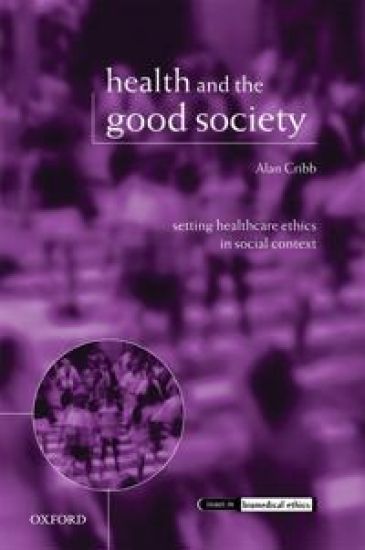
The goals of healthcare and health policy, and the health-related dilemmas facing policy makers, professionals, and citizens are extensively analysed and debated in a range of disciplines including public health, sociology, and applied philosophy. Health and the Good Society is the first full-length work that addresses these debates in a way that cuts across these disciplinary boundaries. Alan Cribb's core argument is that clinical ethics needs to be understood in the context of public health ethics. This entails healthcare ethics embracing 'the social dimension' of health in two overlapping senses: first, the various respects in which health experiences and outcomes are socially determined; and second, the ways in which health-related goods are better understood as social rather then purely individual goods. This broader approach to the ethics of healthcare includes a concern with the social construction of both healthcare goods and the roles, ideals, and obligations of agents; that is to say it focuses upon the 'value field' of health-related action and not only upon the ethics of action within this value field. This groundbreaking book thus seeks to 'open up' the agenda of healthcare ethics both methodologically and substantively: it argues that population-oriented perspectives are central to all healthcare ethics, and that everybody has some share of responsibility for securing health-related goods including the good of greater health equality. One of its major conclusions is that the rather limited tradition of health education policy and practice needs a complete re-think.
Health and the Good Society

Health and the Good Society

Alan Cribb

Oxford University Press
2005
sidottu
The goals of healthcare and health policy, and the health-related dilemmas facing policy makers, professionals, and citizens are extensively analysed and debated in a range of disciplines including public health, sociology, and applied philosophy. Health and the Good Society is the first full-length work that addresses these debates in a way that cuts across these disciplinary boundaries. Alan Cribb's core argument is that clinical ethics needs to be understood in the context of public health ethics. This entails healthcare ethics embracing 'the social dimension' of health in two overlapping senses: first, the various respects in which health experiences and outcomes are socially determined; and second, the ways in which health-related goods are better understood as social rather then purely individual goods. This broader approach to the Cthics of healthcare includes a concern with the social construction of both healthcare goods and the roles, ideals, and obligations of agents; that is to say it focuses upon the 'value field' of health-related action and not only upon the ethics of action within this value field. This groundbreaking book thus seeks to 'open up' the agenda of healthcare ethics both methodologically and substantively: it argues that population-oriented perspectives are central to all healthcare ethics, and that everybody has some share of responsibility for securing health-related goods including the good of greater health equality. One of its major conclusions is that the rather limited tradition of health education policy and practice needs a complete re-think.