Kirjojen hintavertailu. Mukana 12 109 114 kirjaa ja 12 kauppaa.

Kirjailija

Alan D. Schrift

Kirjat ja teokset yhdessä paikassa: 8 kirjaa, julkaisuja vuosilta 2005-2013, suosituimpien joukossa The New Century. Vertaile teosten hintoja ja tarkista saatavuus suomalaisista kirjakaupoista.

8 kirjaa

Kirjojen julkaisuhaarukka 2005-2013.

The New Century

The New Century

Keith Ansell-Pearson; Alan D. Schrift

Acumen Publishing Ltd
2013
nidottu
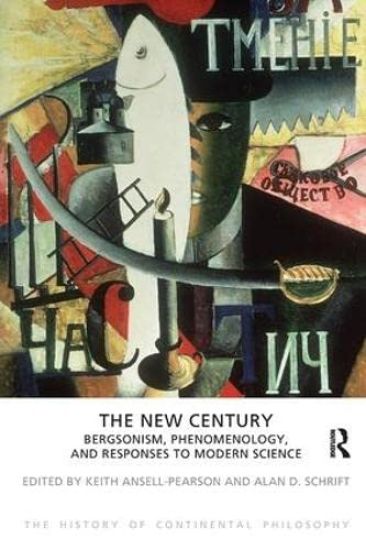
This volume covers the period between the 1890s and 1930s, a period that witnessed revolutions in the arts and society which set the agenda for the rest of the century. In philosophy, the period saw the birth of analytic philosophy, the development of new programmes and new modes of inquiry, the emergence of phenomenology as a new rigorous science, the birth of Freudian psychoanalysis, and the maturing of the discipline of sociology. This period saw the most influential work of a remarkable series of thinkers who reviewed, evaluated and transformed 19th-century thought. A generation of thinkers - among them, Henri Bergson, Emile Durkheim, Sigmund Freud, Martin Heidegger, Edmund Husserl, Karl Jaspers, Max Scheler, and Ludwig Wittgenstein - completed the disenchantment of the world and sought a new re-enchantment.
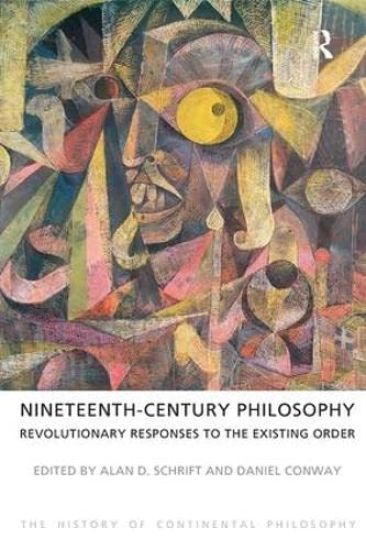
Nineteenth-Century Philosophy

Nineteenth-Century Philosophy

Alan D. Schrift; Daniel Conway

Acumen Publishing Ltd
2013
sidottu
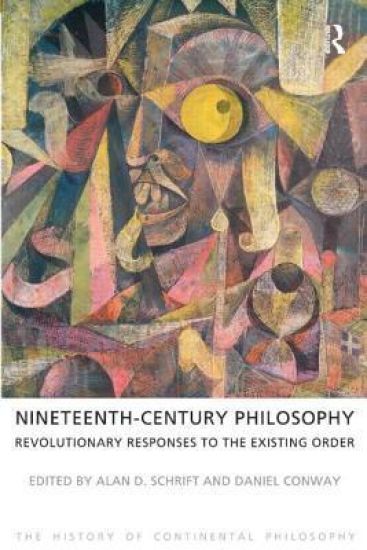
The second half of the 19th Century saw a revolution in both European politics and philosophy. Philosophical fervour reflected political fervour. Five great critics dominated the European intellectual scene: Ludwig Feuerbach, Karl Marx, Soren Kierkegaard, Fyodor Dostoevsky, and Friedrich Nietzsche. "Nineteenth-Century Philosophy" assesses the response of each of these leading figures to Hegelian philosophy - the dominant paradigm of the time - to the shifting political landscape of Europe and the United States, and also to the emerging critique of modernity itself. Both individually and collectively, these thinkers succeeded in revolutionizing theology, philosophy, psychology, and politics. The period also saw the emergence of new schools of thought and new disciplinary thinking. The volume covers the birth of sociology and the social sciences, the development of French spiritualism, the beginning of American pragmatism, the rise of science and mathematics, and the maturation of hermeneutics and phenomenology.
The New Century

The New Century

Keith Ansell-Pearson; Alan D. Schrift

Acumen Publishing Ltd
2013
sidottu
This volume covers the period between the 1890s and 1930s, a period that witnessed revolutions in the arts and society which set the agenda for the rest of the century. In philosophy, the period saw the birth of analytic philosophy, the development of new programmes and new modes of inquiry, the emergence of phenomenology as a new rigorous science, the birth of Freudian psychoanalysis, and the maturing of the discipline of sociology. This period saw the most influential work of a remarkable series of thinkers who reviewed, evaluated and transformed 19th-century thought. A generation of thinkers - among them, Henri Bergson, Emile Durkheim, Sigmund Freud, Martin Heidegger, Edmund Husserl, Karl Jaspers, Max Scheler, and Ludwig Wittgenstein - completed the disenchantment of the world and sought a new re-enchantment.
Poststructuralism and Critical Theory's Second Generation
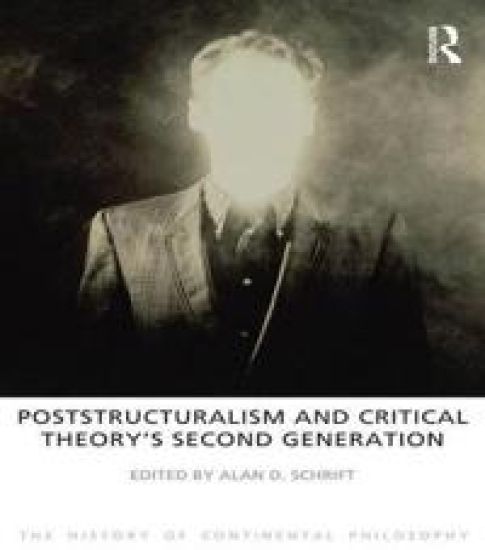
"Poststructuralism and Critical Theory's Second Generation" analyses the major themes and developments in a period that brought continental philosophy to the forefront of scholarship in a variety of humanities and social science disciplines and that set the agenda for philosophical thought on the continent and elsewhere from the 1960s to the present. Focusing on the years 1960-1984, the volume examines the major figures associated with poststructuralism and the second generation of critical theory, the two dominant movements that emerged in the 1960s: Althusser, Foucault, Deleuze, Derrida, Lyotard, Irigaray, and Habermas. Influential thinkers such as Serres, Bourdieu, and Rorty, who are not easily placed in "standard" histories of the period, are also covered. Beyond this, thematic essays engage with issues as diverse as the Nietzschean legacy, the linguistic turn in continental thinking, the phenomenological inheritance of Gadamer and Ricoeur, the influence of psychoanalysis, the emergence of feminist thought and a philosophy of sexual difference, the renewal of the critical theory tradition, and the importation of continental philosophy into literary theory.
Nineteenth-Century Philosophy

Nineteenth-Century Philosophy

Alan D. Schrift; Daniel Conway

Acumen Publishing Ltd
2013
nidottu
The second half of the 19th Century saw a revolution in both European politics and philosophy. Philosophical fervour reflected political fervour. Five great critics dominated the European intellectual scene: Ludwig Feuerbach, Karl Marx, Soren Kierkegaard, Fyodor Dostoevsky, and Friedrich Nietzsche. "Nineteenth-Century Philosophy" assesses the response of each of these leading figures to Hegelian philosophy - the dominant paradigm of the time - to the shifting political landscape of Europe and the United States, and also to the emerging critique of modernity itself. Both individually and collectively, these thinkers succeeded in revolutionizing theology, philosophy, psychology, and politics. The period also saw the emergence of new schools of thought and new disciplinary thinking. The volume covers the birth of sociology and the social sciences, the development of French spiritualism, the beginning of American pragmatism, the rise of science and mathematics, and the maturation of hermeneutics and phenomenology.
Poststructuralism and Critical Theory's Second Generation
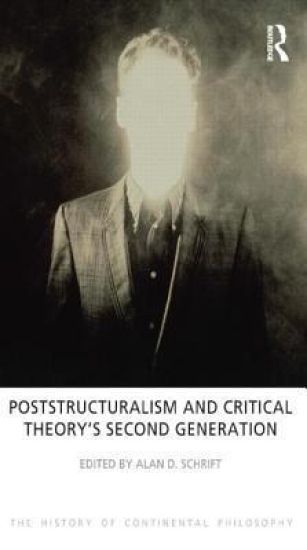
"Poststructuralism and Critical Theory's Second Generation" analyses the major themes and developments in a period that brought continental philosophy to the forefront of scholarship in a variety of humanities and social science disciplines and that set the agenda for philosophical thought on the continent and elsewhere from the 1960s to the present. Focusing on the years 1960-1984, the volume examines the major figures associated with poststructuralism and the second generation of critical theory, the two dominant movements that emerged in the 1960s: Althusser, Foucault, Deleuze, Derrida, Lyotard, Irigaray, and Habermas. Influential thinkers such as Serres, Bourdieu, and Rorty, who are not easily placed in "standard" histories of the period, are also covered. Beyond this, thematic essays engage with issues as diverse as the Nietzschean legacy, the linguistic turn in continental thinking, the phenomenological inheritance of Gadamer and Ricoeur, the influence of psychoanalysis, the emergence of feminist thought and a philosophy of sexual difference, the renewal of the critical theory tradition, and the importation of continental philosophy into literary theory.
Twentieth-Century French Philosophy

Twentieth-Century French Philosophy

Alan D. Schrift

Wiley-Blackwell (an imprint of John Wiley Sons Ltd)
2005
sidottu
This unique book addresses trends such as vitalism, neo-Kantianism, existentialism, Marxism and feminism, and provides concise biographies of the influential philosophers who shaped these movements, including entries on over ninety thinkers. Offers discussion and cross-referencing of ideas and figuresProvides Appendix on the distinctive nature of French academic culture
Twentieth-Century French Philosophy

Twentieth-Century French Philosophy

Alan D. Schrift

Wiley-Blackwell (an imprint of John Wiley Sons Ltd)
2005
nidottu
This unique book addresses trends such as vitalism, neo-Kantianism, existentialism, Marxism and feminism, and provides concise biographies of the influential philosophers who shaped these movements, including entries on over ninety thinkers. Offers discussion and cross-referencing of ideas and figuresProvides Appendix on the distinctive nature of French academic culture