Kirjojen hintavertailu. Mukana 12 595 353 kirjaa ja 12 kauppaa.

Kirjailija

Alan E. Steinweis

Kirjat ja teokset yhdessä paikassa: 4 kirjaa, julkaisuja vuosilta 2008-2023, suosituimpien joukossa The People's Dictatorship. Vertaile teosten hintoja ja tarkista saatavuus suomalaisista kirjakaupoista.

4 kirjaa

Kirjojen julkaisuhaarukka 2008-2023.

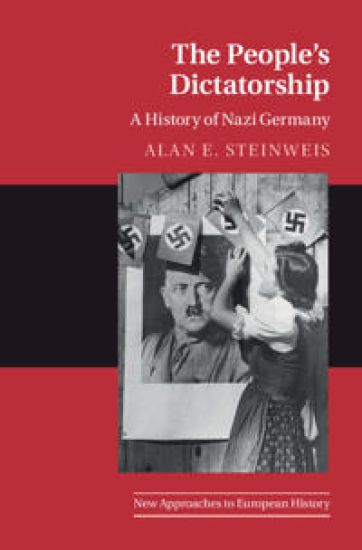
The People's Dictatorship

The People's Dictatorship

Alan E. Steinweis

Cambridge University Press
2023
sidottu
In this up-to-date, succinct, and highly readable volume, Alan E. Steinweis presents a new synthesis of the origins, development, and downfall of Nazi Germany. After tracing the intellectual and cultural origins of Nazi ideology, the book recounts the rise and eventual victory of the Nazi movement against the background of the struggling Weimar Republic. The book details the rapid transformation of Germany into a dictatorship, focusing on the interplay of Nazi violence and the readiness of Germans to accommodate themselves to the new regime. Steinweis chronicles Nazi efforts to transform German society into a so-called People's Community, imbued with hyper-nationalism, an authoritarian spirit, Nazi racial doctrine, and antisemitism. The result was less a People's Community than what Steinweis calls a People's Dictatorship – a repressive regime that acted brutally toward the targets of its persecution, its internal opponents, and its foreign enemies even as it enjoyed support across much of German society.
The People's Dictatorship

The People's Dictatorship

Alan E. Steinweis

Cambridge University Press
2023
pokkari
In this up-to-date, succinct, and highly readable volume, Alan E. Steinweis presents a new synthesis of the origins, development, and downfall of Nazi Germany. After tracing the intellectual and cultural origins of Nazi ideology, the book recounts the rise and eventual victory of the Nazi movement against the background of the struggling Weimar Republic. The book details the rapid transformation of Germany into a dictatorship, focusing on the interplay of Nazi violence and the readiness of Germans to accommodate themselves to the new regime. Steinweis chronicles Nazi efforts to transform German society into a so-called People's Community, imbued with hyper-nationalism, an authoritarian spirit, Nazi racial doctrine, and antisemitism. The result was less a People's Community than what Steinweis calls a People's Dictatorship – a repressive regime that acted brutally toward the targets of its persecution, its internal opponents, and its foreign enemies even as it enjoyed support across much of German society.

Kristallnacht 1938

Kristallnacht 1938

Alan E. Steinweis

The Belknap Press
2009
sidottu
On November 7, 1938, a Jewish teenager, Herschel Grynszpan, fatally shot a German diplomat in Paris. Within three days anti-Jewish violence erupted throughout Germany, initially incited by local Nazi officials, and ultimately sanctioned by the decisions of Hitler and Goebbels at the pinnacle of the Third Reich. As synagogues burned and Jews were beaten in the streets, police stood aside. Men, women, and children—many neighbors of the victims—participated enthusiastically in acts of violence, rituals of humiliation, and looting. By the night of November 10, a nationwide antisemitic pogrom had inflicted massive destruction on synagogues, Jewish schools, and Jewish-owned businesses. During and after this spasm of violence and plunder, 30,000 Jewish men were rounded up and sent to concentration camps, where hundreds would perish in the following months. Kristallnacht revealed to the world the intent and extent of Nazi Judeophobia. However, it was seen essentially as the work of the Nazi leadership. Now, Alan Steinweis counters that view in his vision of Kristallnacht as a veritable pogrom—a popular cathartic convulsion of antisemitic violence that was manipulated from above but executed from below by large numbers of ordinary Germans rioting in the streets, heckling and taunting Jews, cheering Stormtroopers' hostility, and looting Jewish property on a massive scale. Based on original research in the trials of the pogrom's perpetrators and the testimonies of its Jewish survivors, Steinweis brings to light the evidence of mob action by all sectors of the civilian population. Kristallnacht 1938 reveals the true depth and nature of popular antisemitism in Nazi Germany on the eve of the Holocaust.
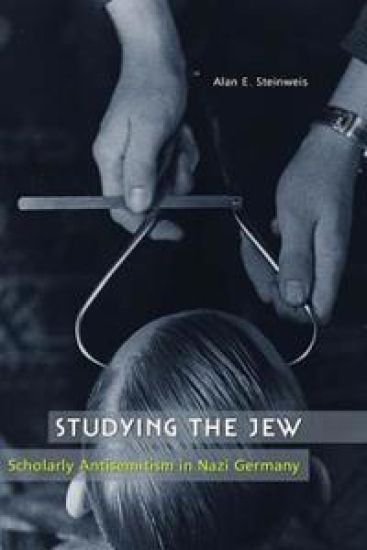
Studying the Jew

Studying the Jew

Alan E. Steinweis

Harvard University Press
2008
nidottu
Early in his political career, Adolf Hitler declared the importance of what he called “an antisemitism of reason.” Determined not to rely solely on traditional, cruder forms of prejudice against Jews, he hoped that his exclusionary and violent policies would be legitimized by scientific scholarship. The result was a disturbing, and long-overlooked, aspect of National Socialism: Nazi Jewish Studies.Studying the Jew investigates the careers of a few dozen German scholars who forged an interdisciplinary field, drawing upon studies in anthropology, biology, religion, history, and the social sciences to create a comprehensive portrait of the Jew—one with devastating consequences. Working within the universities and research institutions of the Third Reich, these men fabricated an elaborate empirical basis for Nazi antisemitic policies. They supported the Nazi campaign against Jews by defining them as racially alien, morally corrupt, and inherently criminal.In a chilling story of academics who perverted their talents and distorted their research in support of persecution and genocide, Studying the Jew explores the intersection of ideology and scholarship, the state and the university, the intellectual and his motivations, to provide a new appreciation of the use and abuse of learning and the horrors perpetrated in the name of reason.