Kirjojen hintavertailu. Mukana 12 185 689 kirjaa ja 12 kauppaa.

Kirjailija

Alan F. Schatzberg

Kirjat ja teokset yhdessä paikassa: 3 kirjaa, julkaisuja vuosilta 2019-2024, suosituimpien joukossa Schatzberg's Manual of Clinical Psychopharmacology. Vertaile teosten hintoja ja tarkista saatavuus suomalaisista kirjakaupoista.

3 kirjaa

Kirjojen julkaisuhaarukka 2019-2024.

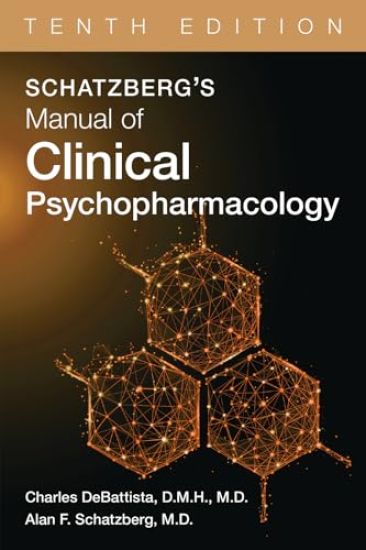
Schatzberg's Manual of Clinical Psychopharmacology

Schatzberg's Manual of Clinical Psychopharmacology

Charles DeBattista; Alan F. Schatzberg

American Psychiatric Association Publishing
2024
pokkari
Provides a thorough understanding of evolving treatments and medications. Blending evidence-based information with practical, real-world experience, this accessible volume examines the efficacy, dosing, and side effects of drug classes such as antidepressants, antipsychotic medications, mood stabilizers, and stimulants. Key features of this edition include the following:Updated information on newly FDA-approved agents such as vesicular monoamine transporter type-2 inhibitors for tardive dyskinesia, as well as those in late-stage review.A new chapter on pharmacogenomic testing and other commercially available tests designed to help clinicians select appropriate medications for their patients.Quick-reference summary tables on psychotropic classes for swift access to essential information, facilitating informed decision-making in clinical practice.A comprehensive list of suggested readings for each chapter, opening the door to further study and exploration.Additional sections also discuss approaches to treatment-resistant disorders, pharmacotherapy for substance use disorders, and working in specific settings and with special populations—including emergency department treatment and treating pregnant patients, children, and individuals from minority and marginalized communities. With its unrivaled wealth of information, Schatzberg’s Manual of Clinical Psychopharmacology remains a trusted, indispensable resource for clinicians seeking the latest advancements in psychopharmacology, arming them with the knowledge they will need to navigate with confidence the intricacies of psychotropic medications.
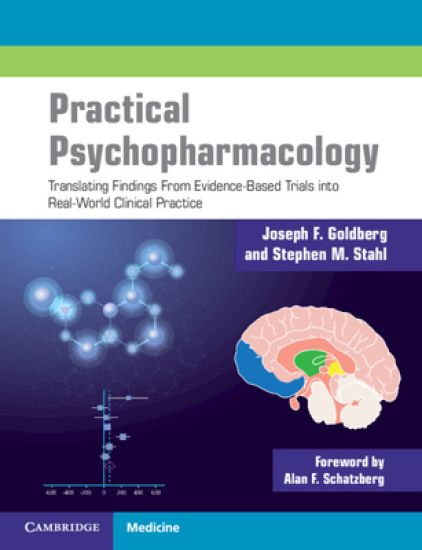
Practical Psychopharmacology

Practical Psychopharmacology

Joseph F. Goldberg; Stephen M. Stahl; Alan F. Schatzberg

Cambridge University Press
2021
pokkari
Despite the lack of guidance available for practitioners, extensive polypharmacy has become the primary method of treating patients with severe and chronic mood, anxiety, psychotic or behavioral disorders. This ground-breaking new book provides an overview of psychopharmacology knowledge and decision-making strategies, integrating findings from evidence-based trials with real-world clinical presentations. It adopts the approach and mind-set of a clinical investigator and reveals how prescribers can practice 'bespoke psychopharmacology', tailoring care to the individualized needs of patients. Practitioners at all levels of expertise will enhance their ability to devise rationale-based treatments, targeting manifestations of dysfunctional neural circuitry and dimensions of psychopathology that cut across conventional psychiatric diagnoses. Presented in a user-friendly, practical, full-colour layout and incorporating summary tables, bullet points, and illustrative case vignettes, it is an invaluable guide for all healthcare professionals prescribing psychotropic medications, including psychiatry specialists, primary care physicians, and advanced practice registered nurses.
Schatzberg's Manual of Clinical Psychopharmacology

Schatzberg's Manual of Clinical Psychopharmacology

Alan F. Schatzberg; Charles DeBattista

American Psychiatric Association Publishing
2019
pokkari
Schatzberg's Manual of Clinical Psychopharmacology is a meticulously researched, yet down-to-earth guide for practitioners prescribing psychotropic medications to individuals with psychiatric disorders or symptoms mandating treatment. The ninth edition offers up-to-date information on current drugs, interactions, side effects, and dosing guidelines, and retains the strengths and features that have made it a standard text for trainees and practicing clinicians. The authors also include a new chapter on important developments in laboratory-guided pharmacotherapy, including pharmacogenomic testing, neurocognitive testing, quantitative EEG, and neuroimaging. Although the book's primary purpose is to provide the reader-practitioner with basic and practical information regarding the many classes of psychiatric medications, the authors stress that understanding how to select and prescribe psychotropic medications does not obviate the basic need to comprehensively evaluate and understand psychiatric patients. Accordingly, the book draws on the authors' clinical experience, as well as on the scientific literature, resulting in an accessible, yet rigorous text. Features that have helped cement this book's reputation include: • Coverage is not limited to long-standing and newly approved medications, but also includes agents that are likely to receive approval from the FDA in the near future, ensuring that the reader stays up-to-date.• References are provided for key statements, and each chapter is then followed by a list of selected relevant articles and books for readers who want to go beyond the material presented, making for a leaner, more reader-friendly guide.• Dozens of summary tables with key information on classes of psychotropics function as quick-reference guides, promoting learning and serving as convenient resources for overloaded clinicians.• The appendix offers two kinds of suggested readings. The first, for clinicians, is invaluable to trainees, while the second, for patients and families, helps point clinicians to books aimed at a lay audience to supplement information provided to patients. Staying abreast of both new medications and promising treatment protocols is essential in this rapidly evolving field. Schatzberg's Manual of Clinical Psychopharmacology delivers authoritative information in a friendly, collegial style, ensuring that both students and practicing clinicians are equipped to provide a superior standard of care.