Kirjojen hintavertailu. Mukana 12 595 353 kirjaa ja 12 kauppaa.
Kirjailija
Alan Harding
Kirjat ja teokset yhdessä paikassa: 14 kirjaa, julkaisuja vuosilta 1993-2026, suosituimpien joukossa The Countess of Huntingdon's Connexion. Vertaile teosten hintoja ja tarkista saatavuus suomalaisista kirjakaupoista.
This is the first detailed study of the operation of the Countess of Huntingdon's Connexion, an important group in early Methodism. Alan Harding explores how the Connexion developed locally; the identity of its preachers and their training; the religious and social origins of those who joined its congregations; and the relationship between central direction and local initiative. The book examines the Connexion's attitudes to the Church of England and also to Dissent, to whose revival in the later eighteenth century it made a significant contribution. It considers the Connexion's relationship with other sections of the Revival, and reflects on the doctrinal issues that divided it from Weleyan Methodism.
The state is the most powerful and contested of political ideas, loved for its promise of order but hated for its threat of coercion. In this broad-ranging new study, Alan Harding challenges the orthodoxy that there was no state in the Middle Ages, arguing instead that it was precisely then that the concept acquired its force. He explores how the word 'state' was used by medieval rulers and their ministers and connects the growth of the idea of the state with the development of systems for the administration of justice and the enforcement of peace. He shows how these systems provided new models for government from the centre, successfully in France and England but less so in Germany. The courts and legislation of French and English kings are described establishing public order, defining rights to property and liberty, and structuring commonwealths by 'estates'. In the final chapters the author reveals how the concept of the state was taken up by political commentators in the wars of the later Middle Ages and the Reformation Period, and how the law-based 'state of the king and the kingdom' was transformed into the politically dynamic 'modern state'.
In the years after the First World War the British government had to adapt its communication policy to connect with the new mass electorate. This book examines the government’s own Film Units and their slow development of the Public Information Film. By reviewing the entire film catalogue produced by the Empire Marketing Board, the General Post Office and Crown Film Units, particular themes are identified which not only reflect the demands of the Units’ sponsors but also the anxieties and concerns of the 1930s and 1940s. The impact of the films is explored through the contemporary reaction of the audiences to them. By the time the Crown Film Unit was closed in 1952 a style of Public Information Film had been developed and continued into the 1970s.
In the years after the First World War the British government had to adapt its communication policy to connect with the new mass electorate. This book examines the government’s own Film Units and their slow development of the Public Information Film. By reviewing the entire film catalogue produced by the Empire Marketing Board, the General Post Office and Crown Film Units, particular themes are identified which not only reflect the demands of the Units’ sponsors but also the anxieties and concerns of the 1930s and 1940s. The impact of the films is explored through the contemporary reaction of the audiences to them. By the time the Crown Film Unit was closed in 1952 a style of Public Information Film had been developed and continued into the 1970s.
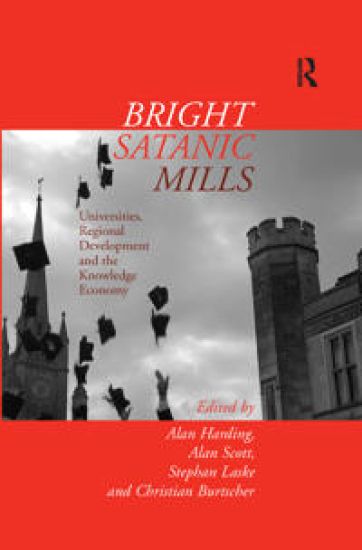
Recent years have seen a growing emphasis upon the need for universities to contribute to the economic, social and environmental well-being of the regions in which they are situated, and for closer links between the university and the region. This book brings together a cross-disciplinary and cross-national team of experts to consider the reasons for, and the implications of, the new relationship between universities and territorial development. Examining the complex interactions between the 'inner life' of the university and its external environment, it poses the question: 'Can the modern university manage the governance and balancing of these, sometimes conflicting, demands'? Against a backdrop of ongoing processes of globalization, there is growing recognition of the importance of sub-national development strategies - processes of regionalization, governmental decentralization and sub-national mobilization, that provide a context for universities to become powerful partners in the process of managing sub-national economic, social and environmental change. Allied to this, the continued evolution of the knowledge economy has freed up location decisions within knowledge-intensive industries, while paradoxically innovation in the production of goods and services has become still more 'tied' to locations that can nurture the human and intellectual capital upon which those industries rely. Thus cities and regions in which higher education services are concentrated have, or are thought to have, a competitive advantage. With universities facing ever increasing pressures of commercialization, which deepen the engagement between universities and external stakeholders, including those based in their localities, the tension between the university's academic (basic research and teaching) mission and external demands has never been greater. This book provides a long overdue analysis, bringing all the competing issues together, synthesizing the key conceptual debates and analyzing the way in which they have been experienced in different local, regional and national contexts and with what effects.
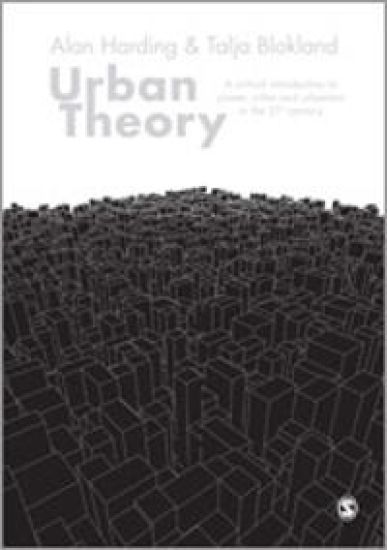
What is Urban Theory? How can it be used to understand our urban experiences? Experiences typically defined by enormous inequalities, not just between cities but within cities, in an increasingly interconnected and globalised world. This book explains: Relations between urban theory and modernity in key ideas of the Chicago School, spatial analysis, humanistic urban geography, and ‘radical' approaches like MarxismCities and the transition to informational economies, globalization, urban growth machine and urban regime theory, the city as an "actor"Spatial expressions of inequality and key ideas like segregation, ghettoization, suburbanization, gentrificationSocio-cultural spatial expressions of difference and key concepts like gender, sexuality, race, ethnicity and "culturalist" perspectives on identity, lifestyle, subcultureHow cities should be understood as intersections of horizontal and vertical – of coinciding resources, positions, locations, influencing how we make and understand urban experiences. Critical, interdisciplinary and pedagogically informed - with opening summaries, boxes, questions for discussion and guided further reading - Urban Theory: A Critical Introduction to Power, Cities and Urbanism in the 21st Century provides the tools for any student of the city to understand, even to change, our own urban experiences.
What is Urban Theory? How can it be used to understand our urban experiences? Experiences typically defined by enormous inequalities, not just between cities but within cities, in an increasingly interconnected and globalised world. This book explains: Relations between urban theory and modernity in key ideas of the Chicago School, spatial analysis, humanistic urban geography, and ‘radical' approaches like MarxismCities and the transition to informational economies, globalization, urban growth machine and urban regime theory, the city as an "actor"Spatial expressions of inequality and key ideas like segregation, ghettoization, suburbanization, gentrificationSocio-cultural spatial expressions of difference and key concepts like gender, sexuality, race, ethnicity and "culturalist" perspectives on identity, lifestyle, subcultureHow cities should be understood as intersections of horizontal and vertical – of coinciding resources, positions, locations, influencing how we make and understand urban experiences. Critical, interdisciplinary and pedagogically informed - with opening summaries, boxes, questions for discussion and guided further reading - Urban Theory: A Critical Introduction to Power, Cities and Urbanism in the 21st Century provides the tools for any student of the city to understand, even to change, our own urban experiences.
The Countess of Huntingdon's Connexion is one of the most interesting phenomena in the history of Non-Conformity and one of the most neglected strands in the history of the Evangelical Revival. The book is based on author's comprehensive and original research of hitherto unknown sources.
Recent years have seen a growing emphasis upon the need for universities to contribute to the economic, social and environmental well-being of the regions in which they are situated, and for closer links between the university and the region. This book brings together a cross-disciplinary and cross-national team of experts to consider the reasons for, and the implications of, the new relationship between universities and territorial development. Examining the complex interactions between the 'inner life' of the university and its external environment, it poses the question: 'Can the modern university manage the governance and balancing of these, sometimes conflicting, demands'? Against a backdrop of ongoing processes of globalization, there is growing recognition of the importance of sub-national development strategies - processes of regionalization, governmental decentralization and sub-national mobilization, that provide a context for universities to become powerful partners in the process of managing sub-national economic, social and environmental change. Allied to this, the continued evolution of the knowledge economy has freed up location decisions within knowledge-intensive industries, while paradoxically innovation in the production of goods and services has become still more 'tied' to locations that can nurture the human and intellectual capital upon which those industries rely. Thus cities and regions in which higher education services are concentrated have, or are thought to have, a competitive advantage. With universities facing ever increasing pressures of commercialization, which deepen the engagement between universities and external stakeholders, including those based in their localities, the tension between the university's academic (basic research and teaching) mission and external demands has never been greater. This book provides a long overdue analysis, bringing all the competing issues together, synthesizing the key conceptual debates and analyzing the way in which they have been experienced in different local, regional and national contexts and with what effects.
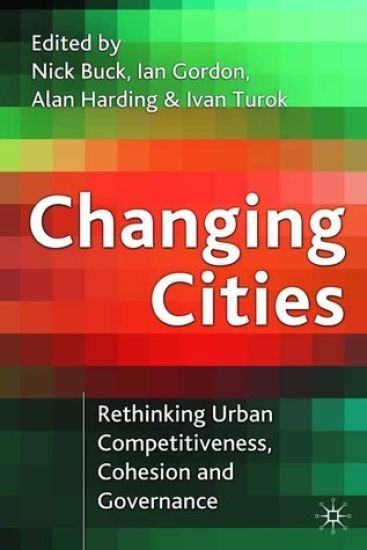
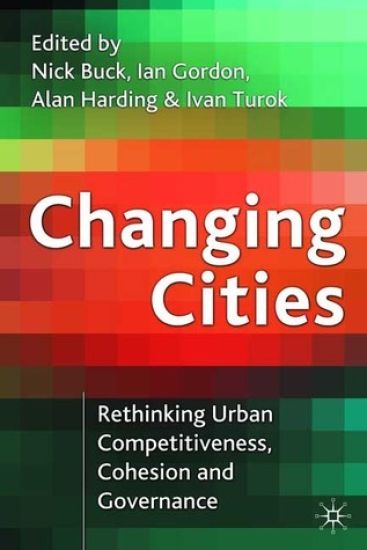
A new conventional wisdom, spanning academic and policy communities, sees a combination of economic competitiveness, social cohesion and responsive governance as essential for survival in the post-1980s world - and cities as crucial to achieving these goals. This interdisciplinary text provides the first critical examination of these ideas, drawing on the UK Cities research programme and other recent research. It combines analysis of the competitiveness-cohesion-governance problematic with examination of the major processes underlying key sectors of the urban economy, physical development, social relations, neighbourhoods and urban policy.
A new conventional wisdom, spanning academic and policy communities, sees a combination of economic competitiveness, social cohesion and responsive governance as essential for survival in the post-1980s world - and cities as crucial to achieving these goals. This interdisciplinary text provides the first critical examination of these ideas, drawing on the UK Cities research programme and other recent research. It combines analysis of the competitiveness-cohesion-governance problematic with examination of the major processes underlying key sectors of the urban economy, physical development, social relations, neighbourhoods and urban policy.
This is a comprehensive account of politics, government and society in thirteenth-century England. Three episodes stand out: the revolt of the barons against King John in 1215, the protest against the misgovernment of Henry III which began in 1258, and the resistance to the demands of Edward I on the resources of the land which came to a head in 1297. Professor Harding places these political events in the context of social and economic change, in order to provide a rounded account of the century. The introduction demonstrates the constitutional importance given by past historians to the period which saw the framing of the Magna Carta and the beginnings of Parliament and statute law. The central chapters describe the developing social structure of peasants, townsmen and professional people, knights, clergy and lay magnates. The book finally sees the politics of the century in terms of royal ambitions to dominate Britain and to play a leading role in Europe.
This is a comprehensive account of politics, government and society in thirteenth-century England. Three episodes stand out: the revolt of the barons against King John in 1215, the protest against the misgovernment of Henry III which began in 1258, and the resistance to the demands of Edward I on the resources of the land which came to a head in 1297. Professor Harding places these political events in the context of social and economic change, in order to provide a rounded account of the century. The introduction demonstrates the constitutional importance given by past historians to the period which saw the framing of the Magna Carta and the beginnings of Parliament and statute law. The central chapters describe the developing social structure of peasants, townsmen and professional people, knights, clergy and lay magnates. The book finally sees the politics of the century in terms of royal ambitions to dominate Britain and to play a leading role in Europe.