Kirjojen hintavertailu. Mukana 12 203 741 kirjaa ja 12 kauppaa.

Kirjailija

Alan Jacobs

Kirjat ja teokset yhdessä paikassa: 30 kirjaa, julkaisuja vuosilta 1998-2026, suosituimpien joukossa The Year of Our Lord 1943. Vertaile teosten hintoja ja tarkista saatavuus suomalaisista kirjakaupoista.

30 kirjaa

Kirjojen julkaisuhaarukka 1998-2026.

The Year of Our Lord 1943

The Year of Our Lord 1943

Alan Jacobs

Oxford University Press Inc
2018
sidottu
By early 1943, it had become increasingly clear that the Allies would win the Second World War. Around the same time, it also became increasingly clear to many Christian intellectuals on both sides of the Atlantic that the soon-to-be-victorious nations were not culturally or morally prepared for their success. A war won by technological superiority merely laid the groundwork for a post-war society governed by technocrats. These Christian intellectuals-- Jacques Maritain, T. S. Eliot, C. S. Lewis, W. H. Auden, and Simone Weil, among others--sought both to articulate a sober and reflective critique of their own culture and to outline a plan for the moral and spiritual regeneration of their countries in the post-war world. In this book, Alan Jacobs explores the poems, novels, essays, reviews, and lectures of these five central figures, in which they presented, with great imaginative energy and force, pictures of the very different paths now set before the Western democracies. Working mostly separately and in ignorance of one another's ideas, the five developed a strikingly consistent argument that the only means by which democratic societies could be prepared for their world-wide economic and political dominance was through a renewal of education that was grounded in a Christian understanding of the power and limitations of human beings. The Year of Our Lord 1943 is the first book to weave together the ideas of these five intellectuals and shows why, in a time of unprecedented total war, they all thought it vital to restore Christianity to a leading role in the renewal of the Western democracies.
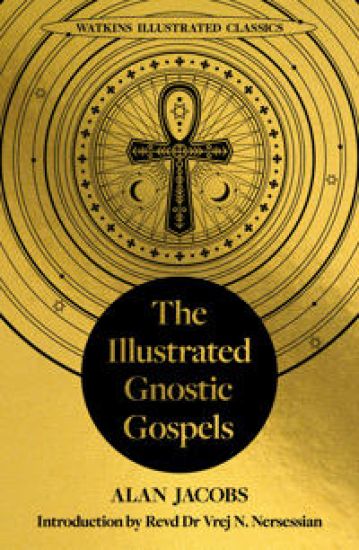
The Illustrated Gnostic Gospels (Watkins Illustrated Classics)
Omitted from the Bible and discovered only in 1945 in Nag Hammadi in Egypt, the Gnostic Gospels are a source of fascination, intrigue and inspiration for many spiritual seekers. Now, Alan Jacob's bestselling selection of these sacred texts, including the Gospels of Mary Magdalene, Philip, Thomas and Judas, and introduced by the Reverend Dr. Vrej Nersessian, curator of the Christian Middle East section at the British Library, is presented in a glorious gift edition, beautifully illustrated with medieval paintings, images of archaeological artefacts and gnostic symbols. Unearth the ancient sayings and enlightened teachings of the Gnostic Gospels, dated from the 2nd to the 4th century AD, to truly envision the origins and history of Christianity itself. Explore these 14 key texts, chosen out of the 54 discovered for their curious and poignant relevance today, dealing with questions of good and evil, sin and suffering and the path to salvation. Discover the light these esoteric doctrines shed on intimate conversations between Jesus and his Disciples, and learn from the Gospel of Mary Magdalene more about his relationship with this favourite disciple. Learn from concentrated mini-parables in The Gospel of Thomas, containing deep inward and symbolic meaning, many of which are not found in the New Testament. Artfully woven together by author and senior priest at the Armenian Apostolic Church, Reverend Dr. Vrej Nersessian, and by poet and author Alan Jacobs, The Illustrated Gnostic Gospels is an enticing must-have for those wanting to experience a deeper and more intimate relationship with Christianity.
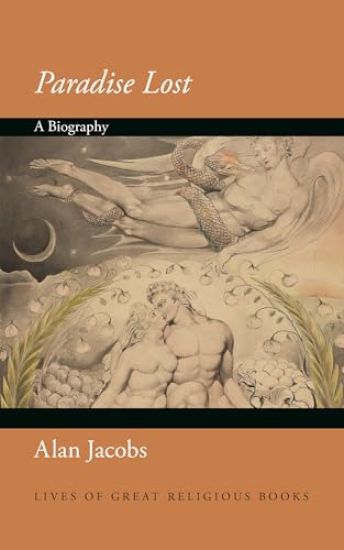
Paradise Lost

Paradise Lost

Alan Jacobs

PRINCETON UNIVERSITY PRESS
2025
sidottu
The life and times of Milton’s epic poem about Satan’s revolt against God and humanity’s expulsion from paradiseJohn Milton’s Paradise Lost has secured its place in the pantheon of epic poems, but unlike almost all other works in the pantheon, it is intimately associated with religious doctrine and its implications for how we live our lives. For more than three centuries, it has been a flashpoint for arguments not just about Christianity but also about governance, rebellion and obedience, sexual politics, and what makes poetry great. Alan Jacobs tells the story of Milton’s enduring poem, shedding light on its composition and reception and explaining why it resonates so powerfully with us today.Composed through dictation after Milton went blind in 1652, Paradise Lost centers on an ancient biblical answer to the eternal question of how evil came into the world. It has proved impossible to disentangle the defense or critique of the poem from attitudes toward Christianity itself. Does Christian theology entail monarchy or democracy? Are relations between the sexes thwarted by pompous and tyrannical men or by vain and disobedient women? Jacobs traces how generations of readers have grappled with these and other questions, along the way revealing how Milton’s poem influenced novelists like Mary Shelley and Philip Pullman and has served as the inspiration for paintings, operas, comic books, and video games.An essential companion to Milton’s poetic masterpiece, this book shows why Paradise Lost continues to serve as a mirror reflecting our own complex attitudes about power and authority, justice and revolt, and sin and salvation.
Breaking Bread with the Dead: A Reader's Guide to a More Tranquil Mind
"At a time when many Americans . . . are engaged in deep reflection about the meaning of the nation's history this] is an exceptionally useful companion for those who want to do so with honesty and integrity." --Shelf Awareness From the author of How to Think and The Pleasures of Reading in an Age of Distraction, a literary guide to engaging with the voices of the past to stay sane in the present W. H. Auden once wrote that "art is our chief means of breaking bread with the dead." In his brilliant and compulsively readable new treatise, Breaking Bread with the Dead, Alan Jacobs shows us that engaging with the strange and wonderful writings of the past might help us live less anxiously in the present--and increase what Thomas Pynchon once called our "personal density." Today we are battling too much information in a society changing at lightning speed, with algorithms aimed at shaping our every thought--plus a sense that history offers no resources, only impediments to overcome or ignore. The modern solution to our problems is to surround ourselves only with what we know and what brings us instant comfort. Jacobs's answer is the opposite: to be in conversation with, and challenged by, those from the past who can tell us what we never thought we needed to know. What can Homer teach us about force? How does Frederick Douglass deal with the massive blind spots of America's Founding Fathers? And what can we learn from modern authors who engage passionately and profoundly with the past? How can Ursula K. Le Guin show us truths about Virgil's female characters that Virgil himself could never have seen? In Breaking Bread with the Dead, a gifted scholar draws us into close and sympathetic engagement with texts from across the ages, including the work of Anita Desai, Henrik Ibsen, Jean Rhys, Simone Weil, Edith Wharton, Amitav Ghosh, Claude L vi-Strauss, Italo Calvino, and many more. By hearing the voices of the past, we can expand our consciousness, our sympathies, and our wisdom far beyond what our present moment can offer.
Charitable Writing – Cultivating Virtue Through Our Words

Charitable Writing – Cultivating Virtue Through Our Words

Richard Hughes Gibson; James Edward Beitler; Anne Ruggles Gere; Alan Jacobs

IVP Academic
2020
nidottu
ECPA Top Shelf Book Cover Award Our written words carry weight. Unfortunately, in today's cultural climate, our writing is too often laced with harsh judgments and vitriol rather than careful consideration and generosity. But might the Christian faith transform how we approach the task of writing? How might we love God and our neighbors through our writing? This book is not a style guide that teaches you where to place the comma and how to cite your sources (as important as those things are). Rather, it offers a vision for expressing one's faith through writing and for understanding writing itself as a spiritual practice that cultivates virtue. Under the guidance of two experienced Christian writers who draw on authors and artists throughout the church's history, we learn how we might embrace writing as an act of discipleship for today—and how we might faithfully bear the weight of our written words.
Six of Diamonds

Six of Diamonds

Alan Jacobs

Xlibris UK
2020
pokkari
When six jewellers die carrying six huge diamonds, two detectives are selected to solve the mystery. They have to travel all over the world against strange opposition but assisted by an even stranger benefactor. Eventually, turning to Israel and Jerusalem for the final solution of the puzzling case. One detective must travel beneath the old city from which he knows he will not return.
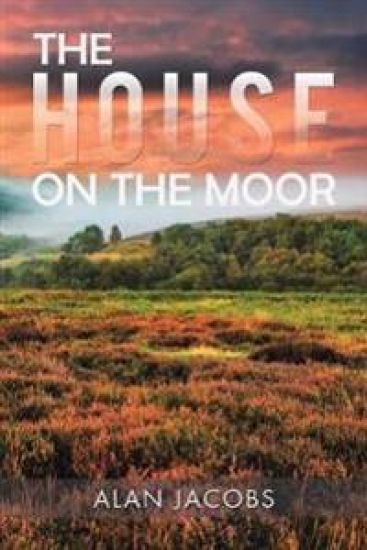
The House on the Moor

The House on the Moor

Alan Jacobs

Xlibris UK
2020
pokkari
At the end of WW11, Gary Phillips left the Royal Navy a badly disfigured ex pilot. He bought an old empty house on a lonely moor to hide himself away from society. Little did he know why it was old and empty. He soon found out that it was full of the ghosts of orphan girls raped and murdered there by rich, famous and influential people for their pleasure in the 1920s. Eventually uncovered, the three people who ran the place were arrested, tried and hanged. None of the clients who used and abused the girls were even named. Gary, with the aid of Lucy Cameron a local woman who, as an ex-wartime nurse could see behind Gary's disfigurement, became determined to bring these people to justice and set the ghosts free no matter how much time had elapsed. But they finds that there are other ghosts waiting for freedom, too. Much older ghosts. Are our couple able to help them? Lucy and Gary are determined to. And will their developing love guide them?
Six of Diamonds

Six of Diamonds

Alan Jacobs

Xlibris UK
2020
sidottu
When six jewellers die carrying six huge diamonds, two detectives are selected to solve the mystery. They have to travel all over the world against strange opposition but assisted by an even stranger benefactor. Eventually, turning to Israel and Jerusalem for the final solution of the puzzling case. One detective must travel beneath the old city from which he knows he will not return.
The House on the Moor

The House on the Moor

Alan Jacobs

Xlibris UK
2020
sidottu
At the end of WW11, Gary Phillips left the Royal Navy a badly disfigured ex pilot. He bought an old empty house on a lonely moor to hide himself away from society. Little did he know why it was old and empty. He soon found out that it was full of the ghosts of orphan girls raped and murdered there by rich, famous and influential people for their pleasure in the 1920s. Eventually uncovered, the three people who ran the place were arrested, tried and hanged. None of the clients who used and abused the girls were even named. Gary, with the aid of Lucy Cameron a local woman who, as an ex-wartime nurse could see behind Gary's disfigurement, became determined to bring these people to justice and set the ghosts free no matter how much time had elapsed. But they finds that there are other ghosts waiting for freedom, too. Much older ghosts. Are our couple able to help them? Lucy and Gary are determined to. And will their developing love guide them?
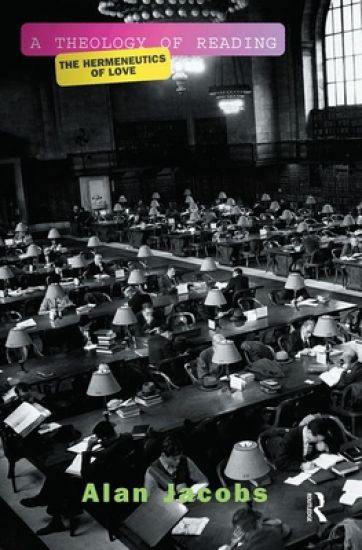
A Theology Of Reading

A Theology Of Reading

Alan Jacobs

Routledge
2019
sidottu
If the whole of the Christian life is to be governed by the ?law of love??the twofold love of God and one's neighbor?what might it mean to read lovingly? That is the question that drives this unique book. Jacobs pursues this challenging task by alternating largely theoretical, theological chapters?drawing above all on Augustine and Mikhail Bakhtin?
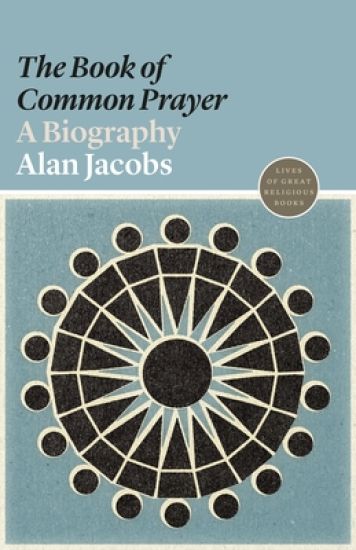
The Book of Common Prayer

The Book of Common Prayer

Alan Jacobs

Princeton University Press
2019
pokkari
How The Book of Common Prayer became one of the most influential works in the English languageWhile many of us are familiar with such famous words as “Dearly beloved, we are gathered together here. . .” or “Ashes to ashes, dust to dust,” we may not know that they originated in The Book of Common Prayer, which first appeared in 1549. Like the words of the King James Bible and Shakespeare, the language of this prayer book has saturated English culture and letters. Here Alan Jacobs tells its story. He shows how The Book of Common Prayer—from its beginnings as a means of social and political control in the England of Henry VIII to its worldwide presence today—became a venerable work whose cadences express the heart of religious life for millions.
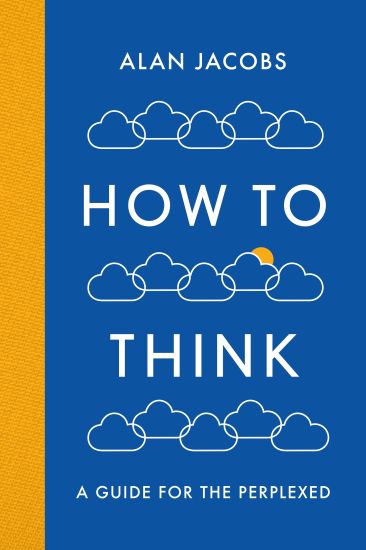
How To Think

How To Think

Alan Jacobs

Profile Books Ltd
2018
pokkari
How to Think is a contrarian treatise on why we're not as good at thinking as we assume - but how recovering this lost art can rescue our inner lives from the chaos of modern life. Most of us don't want to think, writes the American essayist Alan Jacobs. Thinking is trouble. It can force us out of familiar, comforting habits, and it can complicate our relationships with like-minded friends. Finally, thinking is slow, and that's a problem when our habits of consuming information (mostly online) leave us lost in the echo chamber of social media, where speed and factionalism trump accuracy and nuance. In this clever, witty book, Jacobs diagnoses the many forces that prevent thought - forces that have only worsened in the age of Twitter, such as "alternative facts," and information overload. He also dispels the many myths we hold about what it means to think well. (For example: it's impossible to "think for yourself.") Drawing on sources as far-flung as the novelist Marilynne Robinson, the basketball legend Wilt Chamberlain, the British philosopher John Stuart Mill and the Christian theologian C.S. Lewis, Jacobs digs into the nuts and bolts of the cognitive process, offering hope that each of us can reclaim our mental lives from the whirlpool of what now passes for public debate. After all, if we can learn to think together, perhaps we can learn to live together.
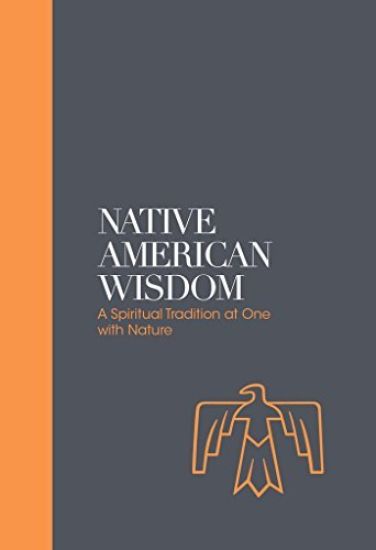
Native American Wisdom - Sacred Texts

Native American Wisdom - Sacred Texts

Alan Jacobs

Watkins Publishing
2018
nidottu
Although there are major differences in the lifestyles of the numerous Native American nations, they share fundamental beliefs. The spiritual wisdom of these people is based on a love and reverence for Nature, a belief in a Supreme Being and a spirit world that interacts with human activity. Organized in alphabetical order and grouped around the main Native American Nations from Apache to Zuni, including the Sioux, Eskimo, Cherokee and many more, the evocative words that Alan Jacobs has selected from all the major tribes express the love and respect they feel for their environment and our place within it.
How to Think: A Survival Guide for a World at Odds
"Absolutely splendid . . . essential for understanding why there is so much bad thinking in political life right now." --David Brooks, New York TimesHow to Think is a contrarian treatise on why we're not as good at thinking as we assume--but how recovering this lost art can rescue our inner lives from the chaos of modern life. As a celebrated cultural critic and a writer for national publications like The Atlantic and Harper's, Alan Jacobs has spent his adult life belonging to communities that often clash in America's culture wars. And in his years of confronting the big issues that divide us--political, social, religious--Jacobs has learned that many of our fiercest disputes occur not because we're doomed to be divided, but because the people involved simply aren't thinking. Most of us don't want to think. Thinking is trouble. Thinking can force us out of familiar, comforting habits, and it can complicate our relationships with like-minded friends. Finally, thinking is slow, and that's a problem when our habits of consuming information (mostly online) leave us lost in the spin cycle of social media, partisan bickering, and confirmation bias. In this smart, endlessly entertaining book, Jacobs diagnoses the many forces that act on us to prevent thinking--forces that have only worsened in the age of Twitter, "alternative facts," and information overload--and he also dispels the many myths we hold about what it means to think well. (For example: It's impossible to "think for yourself.") Drawing on sources as far-flung as novelist Marilynne Robinson, basketball legend Wilt Chamberlain, British philosopher John Stuart Mill, and Christian theologian C.S. Lewis, Jacobs digs into the nuts and bolts of the cognitive process, offering hope that each of us can reclaim our mental lives from the impediments that plague us all. Because if we can learn to think together, maybe we can learn to live together, too.
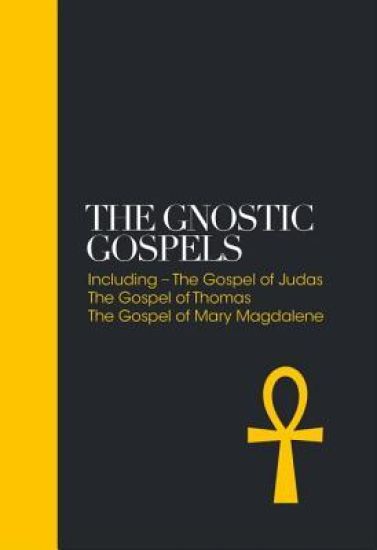
The Gnostic Gospels – Sacred Texts

The Gnostic Gospels – Sacred Texts

Alan Jacobs

Watkins Publishing
2016
sidottu
The selections made in this volume shed light on these esoteric doctrines revealing intimate conversations between Jesus and his Disciples. The Gospel of Mary Magdalene throws new light on his relationship with this favourite disciple. The Gospel of Thomas contains concentrated mini-parables, containing deep inward and symbolic meaning, many of which are not found in the New Testament. The texts chosen are relevant to many of the perplexities of contemporary life and deal with the questions of good and evil, sin and suffering and the path to salvation.