Kirjojen hintavertailu. Mukana 12 595 353 kirjaa ja 12 kauppaa.

Kirjailija

Alan Jeffreys

Kirjat ja teokset yhdessä paikassa: 8 kirjaa, julkaisuja vuosilta 2003-2025, suosituimpien joukossa Churchill's Forgotten Generals. Vertaile teosten hintoja ja tarkista saatavuus suomalaisista kirjakaupoista.

8 kirjaa

Kirjojen julkaisuhaarukka 2003-2025.

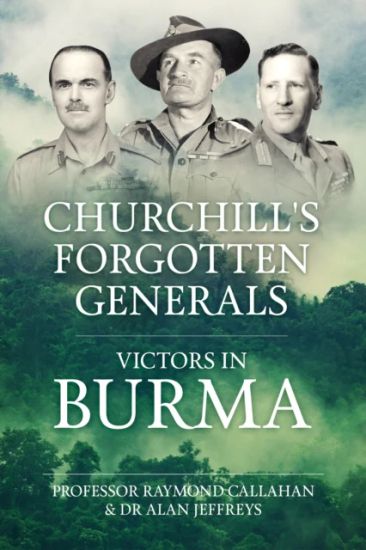
Churchill's Forgotten Generals

Churchill's Forgotten Generals

Raymond Callahan; Alan Jeffreys

HELION COMPANY
2025
sidottu
Generals Auchinleck, Slim and Savory and their role in the campaigns in Northeast India and Burma (Myanmar) have been largely forgotten in the historiography of the Second World War. Prime Minister Winston Churchill sacked General Claude Auchinleck as Commander-in-Chief (C-in-C) in the Mediterranean and Middle East theatre after the First Battle of Alamein. However, Auchinleck became C-in-C India for the remainder of the Second World War. In this role, he was essential in making sure the Indian Army was geared towards jungle warfare, but also improved the lot of both Indian officers and men not least by improving pay and conditions.General William Slim is perhaps better known as the successful commander of the 14th Army who also wrote one of the best books on the war: Defeat into Victory, an apt description of the campaign in Burma. He was a popular commander and referred to as General 'Bill' Slim by the British and Indian soldiers who served under him. Auchinleck and Slim both became Field Marshals after the war. Major General Reginald Savory played an essential role as the Director of Infantry from 1943 until the end of the war. He made sure that all infantry battalions and training establishments across India were trained for jungle warfare. His was a forgotten role that until now has not been documented. He retired as a Lieutenant General having been Adjutant General until the Independence of India and Pakistan in 1947.The appointments of Auchinleck, Slim and Savory in 1943 were an important factor in the eventual defeat of the Imperial Japanese Army in Burma. It helped that the key figures in Indian military affairs were, for the first time in the war, all drawn from the Indian Army and thus understood the traditions and ways of the Indian Army.
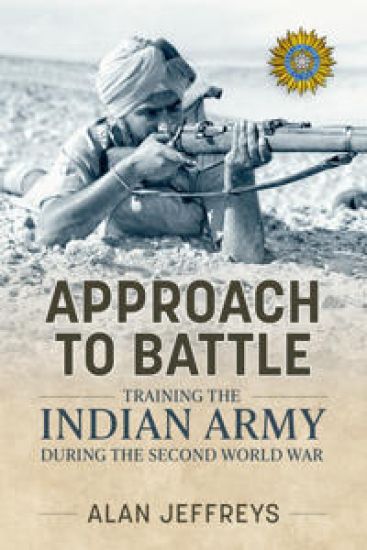
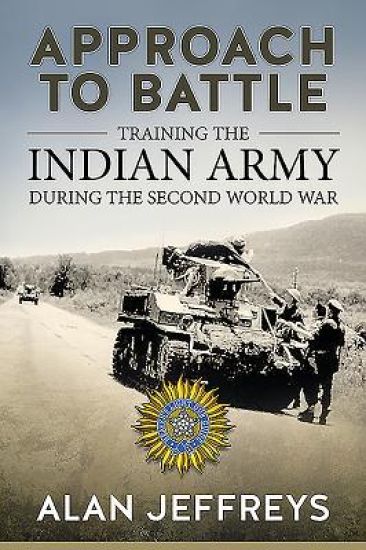
Approach to Battle

Approach to Battle

Alan Jeffreys

HELION COMPANY
2024
pokkari
The Indian Army was the largest volunteer army during the Second World War. Indian Army divisions fought in the Middle East, North Africa and Italy - and went to make up the overwhelming majority of the troops in South East Asia. Over two million personnel served in the Indian Army - and India provided the base for supplies for the Middle Eastern and South East Asian theaters. This monograph is a modern historical interpretation of the Indian Army as a holistic organization during the Second World War. It will look at training in India - charting how the Indian Army developed a more comprehensive training structure than any other Commonwealth country. This was achieved through both the dissemination of doctrine and the professionalism of a small coterie of Indian Army officers who brought about a military culture within the Indian Army - starting in the 1930s - that came to fruition during the Second World War, which informed the formal learning process. Finally, it will show that the Indian Army was reorganized after experiences of the First World War. During the interwar period, the army developed training and belief for both fighting on the North West Frontier, and as an aid to civil power. With the outbreak of the Second World War, in addition to these roles, the army had to expand and adapt to fighting modern professional armies in the difficult terrains of desert, jungle and mountain warfare. A clear development of doctrine and training can be seen, with many pamphlets being produced by GHQ India that were, in turn, used to formulate training within formations and then used in divisional, brigade and unit training instructions - thus a clear line of process can be seen not only from GHQ India down to brigade and battalion level, but also upwards from battalion and brigade level based on experience in battle that was absorbed into new training instructions. Together with the added impetus for education in the army, by 1945 the Indian Army had become a modern, professional and national army.
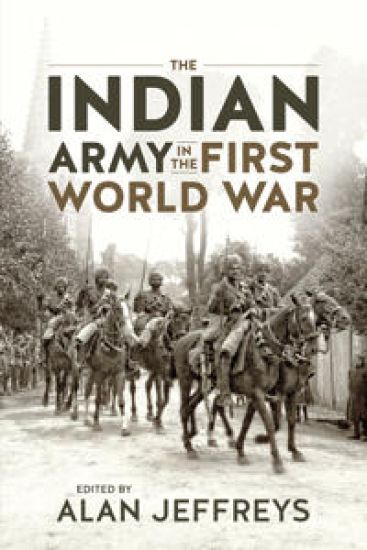
Indian Army in the First World War: New Perspectives
The book addresses the important global role of the Indian Army during the First World War. It is an academic reassessment of the army by both established and early career scholars of the Indian Army, as well as naval historians. It looks at the historiography of the army - taking into account the recent work on the army (particularly on the Western Front in 1914-1915). The edited volume covers the traditional areas of the Indian Army on the Western Front, in Palestine, Mesopotamia and the defense of the Suez Canal; however, there are also chapters on combined operations; Indian prisoners of war in Germany and Turkey; the expansion of the officer corps; and the Sikh experience, as well as the mobilization of the equine army at the beginning of the war and the demobilization of the army in the period from 1918 until 1923. Three additional chapters are related to the theme, such as the role of the Royal Indian Marine; the Territorial Army in India; and Churchill's portrayal of the Indian Army during the Gallipoli campaign in his account The World Crisis.
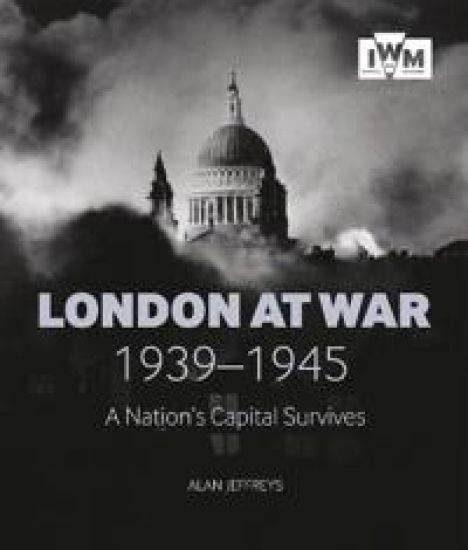
London at War

London at War

Alan Jeffreys

Imperial War Museum
2018
sidottu
London was a city on the front line in the Second World War. It suffered hits from nearly 12,000 tons of bombs, with nearly 30,000 civilians killed by enemy action. The Blitz changed the landscape of the city. Many famous landmarks were hit, including Buckingham Palace, the Houses of Parliament, the Tower of London - even the Imperial War Museum. Some areas, such as Stepney, were so badly damaged that they had to be almost entirely rebuilt after the war. But it wasn't just the city's physical landscape that was transformed. With the arrival of large numbers of Commonwealth and overseas service personnel, London became much more cosmopolitan. After 1942, vast numbers of American servicemen were deployed in the capital, and it was also a busy transport hub and a popular destination for troops on leave.This book tells the story of these momentous years in London's history through IWM's unique collections. Using personal accounts from letters and diaries, objects, photographs, maps and documents it gives an up-close and revealing insight into those turbulent years in the capital, experienced by those who lived there.
The Indian Army in the First World War

The Indian Army in the First World War

Alan Jeffreys

Helion Company
2018
sidottu
The book addresses the important global role of the Indian Army during the First World War. It is an academic reassessment of the army by both established and early career scholars of the Indian Army, as well as naval historians. It looks at the historiography of the army - taking into account the recent work on the army (particularly on the Western Front in 1914-1915). The edited volume covers the traditional areas of the Indian Army on the Western Front, in Palestine, Mesopotamia and the defence of the Suez Canal; however, there are also chapters on combined operations; Indian prisoners of war in Germany and Turkey; the expansion of the officer corps; and the Sikh experience, as well as the mobilisation of the equine army at the beginning of the war and the demobilisation of the army in the period from 1918 until 1923. Three additional chapters are related to the theme, such as the role of the Royal Indian Marine; the Territorial Army in India; and Churchill’s portrayal of the Indian Army during the Gallipoli campaign in his account The World Crisis.
Approach to Battle

Approach to Battle

Alan Jeffreys

Helion Company
2016
sidottu
The Indian Army was the largest volunteer army during the Second World War. Indian Army divisions fought in the Middle East, North Africa and Italy - and went to make up the overwhelming majority of the troops in South East Asia. Over two million personnel served in the Indian Army - and India provided the base for supplies for the Middle Eastern and South East Asian theatres. This monograph is a modern historical interpretation of the Indian Army as a holistic organisation during the Second World War. It will look at training in India - charting how the Indian Army developed a more comprehensive training structure than any other Commonwealth country. This was achieved through both the dissemination of doctrine and the professionalism of a small coterie of Indian Army officers who brought about a military culture within the Indian Army - starting in the 1930s - that came to fruition during the Second World War, which informed the formal learning process. Finally, it will show that the Indian Army was reorganised after experiences of the First World War. During the interwar period, the army developed training and belief for both fighting on the North West Frontier, and as an aid to civil power. With the outbreak of the Second World War, in addition to these roles, the army had to expand and adapt to fighting modern professional armies in the difficult terrains of desert, jungle and mountain warfare. A clear development of doctrine and training can be seen, with many pamphlets being produced by GHQ India that were, in turn, used to formulate training within formations and then used in divisional, brigade and unit training instructions - thus a clear line of process can be seen not only from GHQ India down to brigade and battalion level, but also upwards from battalion and brigade level based on experience in battle that was absorbed into new training instructions. Together with the added impetus for education in the army, by 1945 the Indian Army had become a modern, professional and national army.
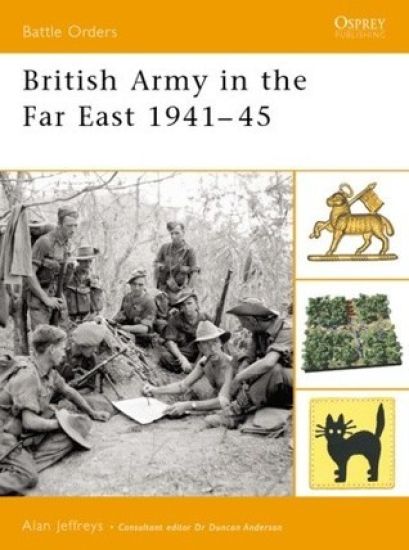
The British Army in the Far East 1941–45

The British Army in the Far East 1941–45

Alan Jeffreys

Osprey Publishing
2005
nidottu
This title focuses on the British and Commonwealth Armies that fought in the Far East between 1941 and 1945. It compares their division-level formations in India and South East Asia with those of the Japanese. British tactics in the Far East developed rapidly from 1940. By 1944 a centralised doctrine was in place and, with rigorous training, by 1945 the 14th Army was capable of defeating the Japanese in the jungle. Weapons and equipment are examined, as is the issue of effective leadership of small units in the jungle. This book provides a detailed examination of the overall structure of the British Army in this theatre and documents the development of the Allied forces that fought there.
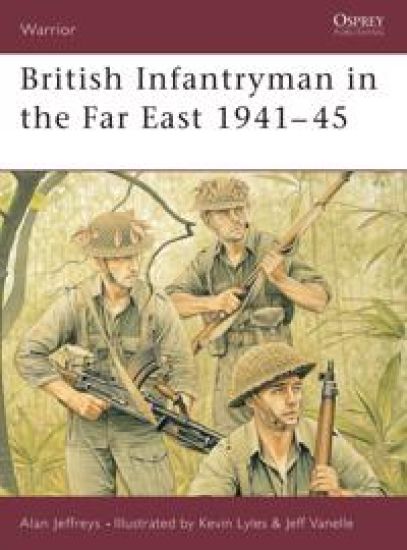
British Infantryman in the Far East 1941–45

British Infantryman in the Far East 1941–45

Alan Jeffreys

Osprey Publishing
2003
nidottu
This work focuses on the experience, tactics, training and weapons of the British soldier from the Fall of Malaya and Singapore until the Reconquest of Burma. It covers jungle warfare training in India and the ensuing action in Burma, tracing the development of tactics and doctrine: this formed the basis for the victories in the Arakan and the battles of Kohima and Imphal. Uniforms, equipment and weapons developed for jungle warfare are all covered. Other aspects such as the soldier's view of India, the entertainment available on leave, food rationing and other supplies such as cigarettes, the introduction of the forces newspaper SEAC, and the medical problems of malaria are covered.