Kirjojen hintavertailu. Mukana 12 152 606 kirjaa ja 12 kauppaa.
Kirjailija
Alan M. Wachman
Kirjat ja teokset yhdessä paikassa: 5 kirjaa, julkaisuja vuosilta 1994-2007, suosituimpien joukossa The Politics of Governing. Vertaile teosten hintoja ja tarkista saatavuus suomalaisista kirjakaupoista.
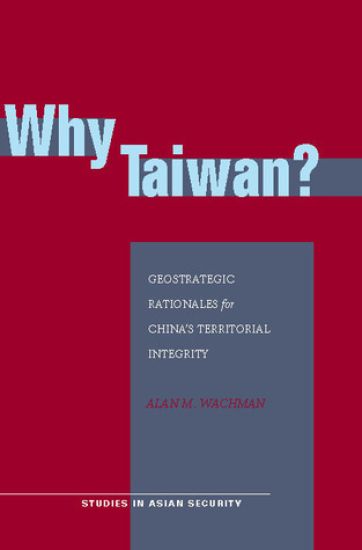
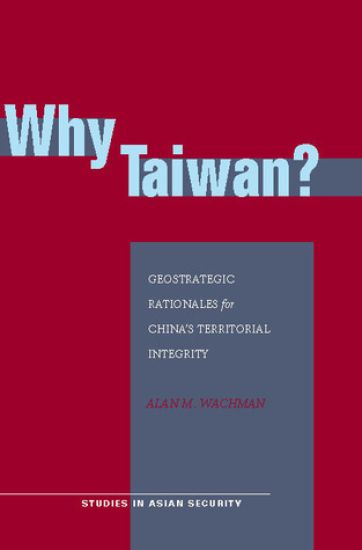
Why has the PRC been so determined that Taiwan be part of China? Why, since the 1990s, has Beijing been feverishly developing means to prevail in combat with the U.S. over Taiwan's status? Why is Taiwan worth fighting for? To answer, this book focuses on the territorial dimension of the Taiwan issue and highlights arguments made by PRC analysts about the geostrategic significance of Taiwan, rather than emphasizing the political dispute between Beijing and Taipei. It considers Beijing's quest for Taiwan since 1949 against the backdrop of recurring Chinese anxieties about the island's status since the seventeenth century. In recent years, the PRC has become dependent on international maritime commerce and has undertaken to expand considerably its navy to ensure access to the sea. PRC analysts concerned about strategy have articulated rationales for eliminating rival influences over Taiwan, the location of which is deemed as critical to China's projection of naval power. This book traces the evolution, explains the appeal, and suggests implications of the geostrategic calculations that pervade PRC strategic considerations of Taiwan.
Why has the PRC been so determined that Taiwan be part of China? Why, since the 1990s, has Beijing been feverishly developing means to prevail in combat with the U.S. over Taiwan's status? Why is Taiwan worth fighting for? To answer, this book focuses on the territorial dimension of the Taiwan issue and highlights arguments made by PRC analysts about the geostrategic significance of Taiwan, rather than emphasizing the political dispute between Beijing and Taipei. It considers Beijing's quest for Taiwan since 1949 against the backdrop of recurring Chinese anxieties about the island's status since the seventeenth century. In recent years, the PRC has become dependent on international maritime commerce and has undertaken to expand considerably its navy to ensure access to the sea. PRC analysts concerned about strategy have articulated rationales for eliminating rival influences over Taiwan, the location of which is deemed as critical to China's projection of naval power. This book traces the evolution, explains the appeal, and suggests implications of the geostrategic calculations that pervade PRC strategic considerations of Taiwan.
It’s tough to keep students afloat in a sea of detail when moving from country to country in a comparative course. While it’s important to give students a sense of place, lengthy textbooks can overwhelm them with far too much description. Students are left with no clear path for understanding regional context or for making meaningful cross-national comparisons, and little sense of larger concepts and themes. The Politics of Governing: A Comparative Introduction answers this dilemma in a truly brief text—only 320 pages long—that frames country case studies within regional chapters. This approach equips students to see the bigger picture and understand how the issues of governing can no longer be separated from events outside a country’s borders. The authors answer the same set of questions in each chapter—What are the purposes of government (the ends of politics)? What do governments do (the functions of politics)? Who exercises political power (the processes of politics)?—giving this concise text strong analysis of particular countries within a powerful regional framework. The book incorporates the American experience as a familiar touch point for students and examines those areas of the world in which the U.S. is most engaged: The European chapters highlight the development of supranational institutions and their impact on politics in Great Britain, France, and Germany. These stand in contrast to the transitional politics underway to the east with Central Europe’s new democracies and the upheavals in Russia, the Ukraine, and the Balkan states keeping those countries at the margins of this new Europe.The diversity of Asian governments is explored within the context of competing forces between markets and democracy, at the core of which stands mainland China.The forces of religion and culture across the Muslim world shape the chapter that encompasses North Africa, the Middle East, and Southeast Asia, with country case studies focused on Morocco, Iran, and Indonesia. The chapter on Latin America highlights the draw of North American markets and the appeal of distinctive political and economic patterns in South America, with case studies on Mexico and Brazil. A final chapter on regional convergence examines both developing countries and competing supranational markets to understand how people in countries caught in between larger, competing regional trading blocs are affected.
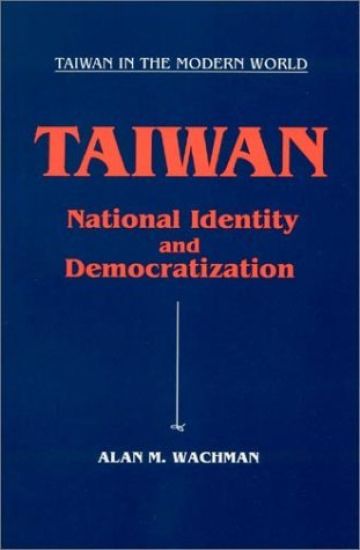
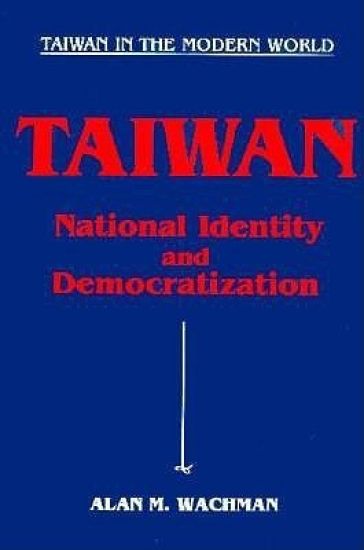
Taiwan has become a democracy despite the inability of its political elite to agree on the national identity of the state. This is a study of the history of democratisation in the light of the national identity problem, based on interviews with leading figures in the KMT and opposition parties.
Taiwan has become a democracy despite the inability of its political elite to agree on the national identity of the state. This is a study of the history of democratisation in the light of the national identity problem, based on interviews with leading figures in the KMT and opposition parties.