Kirjojen hintavertailu. Mukana 12 595 353 kirjaa ja 12 kauppaa.

Kirjailija

Alan M. Weinberg

Kirjat ja teokset yhdessä paikassa: 3 kirjaa, julkaisuja vuosilta 1991-2019, suosituimpien joukossa The Neglected Shelley. Vertaile teosten hintoja ja tarkista saatavuus suomalaisista kirjakaupoista.

3 kirjaa

Kirjojen julkaisuhaarukka 1991-2019.

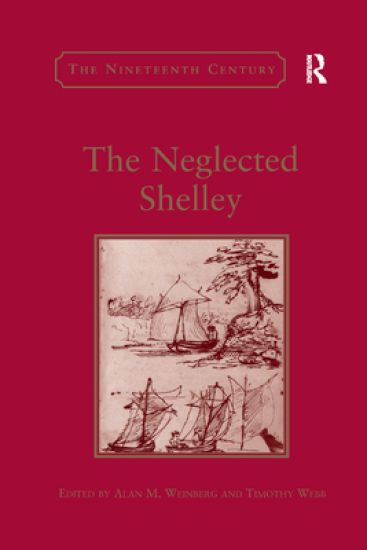
The Neglected Shelley

The Neglected Shelley

Alan M. Weinberg; Timothy Webb

Routledge
2019
nidottu
New editions and facsimiles of Percy Bysshe Shelley's works are changing the landscape of Shelley studies by making complete compositions and fragments that have received only limited critical attention readily available to scholars. Building on the work begun in Weinberg and Webb's 2009 volume, The Unfamiliar Shelley, The Neglected Shelley sheds light on the breadth and depth of Shelley's oeuvre, including the poet's earliest work, written when he was not yet twenty and was experimenting with gothic romances, and other striking forms of literary expression, such as two collections of provocative verse. There are discussions of Shelley's collaboration with Mary Shelley in the composition of Frankenstein, and his skill as a translator of Greek poetry and drama, reflecting his urgent concern with Greek culture. His contributions to prose are the focus of essays on his letters, the subversive notes to Queen Mab, and his complex engagement with Jewish culture. Shelley's considerable corpus of fragments is well-represented in contributions on the later narrative fiction, 'Athanase'/'Prince Athanase', and the significant group of unfinished poems, including 'Mazenghi', 'Fiordispina', 'Ginevra' and 'The Boat on the Serchio', that treat Italian topics. Finally, there are explorations of subtle though neglected or underestimated works such as Rosalind and Helen, The Sensitive-Plant, and the verse-drama Hellas. The Neglected Shelley shows that even the poet's apparently slighter works are important in their own right and are richly instructive as expressions of Shelley's developing art of composition and the diverse interests he pursued throughout his career.

The Neglected Shelley

The Neglected Shelley

Alan M. Weinberg; Timothy Webb

Routledge
2015
sidottu
New editions and facsimiles of Percy Bysshe Shelley's works are changing the landscape of Shelley studies by making complete compositions and fragments that have received only limited critical attention readily available to scholars. Building on the work begun in Weinberg and Webb's 2009 volume, The Unfamiliar Shelley, The Neglected Shelley sheds light on the breadth and depth of Shelley's oeuvre, including the poet's earliest work, written when he was not yet twenty and was experimenting with gothic romances, and other striking forms of literary expression, such as two collections of provocative verse. There are discussions of Shelley's collaboration with Mary Shelley in the composition of Frankenstein, and his skill as a translator of Greek poetry and drama, reflecting his urgent concern with Greek culture. His contributions to prose are the focus of essays on his letters, the subversive notes to Queen Mab, and his complex engagement with Jewish culture. Shelley's considerable corpus of fragments is well-represented in contributions on the later narrative fiction, 'Athanase'/'Prince Athanase', and the significant group of unfinished poems, including 'Mazenghi', 'Fiordispina', 'Ginevra' and 'The Boat on the Serchio', that treat Italian topics. Finally, there are explorations of subtle though neglected or underestimated works such as Rosalind and Helen, The Sensitive-Plant, and the verse-drama Hellas. The Neglected Shelley shows that even the poet's apparently slighter works are important in their own right and are richly instructive as expressions of Shelley's developing art of composition and the diverse interests he pursued throughout his career.
Shelley's Italian Experience

Shelley's Italian Experience

Alan M. Weinberg

Palgrave Macmillan
1991
sidottu
Focusing on Shelley's 'Italian experience', the present study both addresses itself to the living context which nurtured Shelley's creativity, and explores a neglected but essential component of his work. The poet's four years of self-exile in Italy (1818-1822) were, in fact, the most decisive of his career. As he responded to Italy, his poetry acquired a new subtlety and complexity of vision. Endowed with remarkably keen powers of absorption, the poet imaginatively reshaped the rich cultural heritage of Italy and the vital qualities of its landscape and climate.