Kirjojen hintavertailu. Mukana 12 595 353 kirjaa ja 12 kauppaa.

Kirjailija

Alan Petersen

Kirjat ja teokset yhdessä paikassa: 22 kirjaa, julkaisuja vuosilta 1996-2026, suosituimpien joukossa Gunnar Widforss. Vertaile teosten hintoja ja tarkista saatavuus suomalaisista kirjakaupoista.

22 kirjaa

Kirjojen julkaisuhaarukka 1996-2026.

Gunnar Widforss

Gunnar Widforss

Fredrik Sjöberg; Alan Petersen

Almlöfs Förlag
2018
sidottu
Gunnar Widforss (1879–1934) var en fantastisk målare med akvarellen som uttrycksmedel. Han lämnade Sverige 1920 för USA, där han slog igenom stort och blev välkänd som ”Nationalparksmålaren” och ”Grand Canyons främste skildrare”. Han fick till och med en bergstopp uppkallad efter sig, ”Widforss Point”. I Sverige förblev han bortglömd tills Fredrik Sjöberg uppmärksammade honom i sin bok ”Flyktkonsten” (2006). Men någon bok eller utställning har inte gjorts i Sverige sedan 1918 och hans bilder från Grand Canyon har aldrig visats i Sverige tidigare. Därför känns det angeläget att lyfta fram denne akvarellmästare ur glömskan. Han har en plats inte bara i amerikansk konsthistoria utan även i svensk och europeisk.
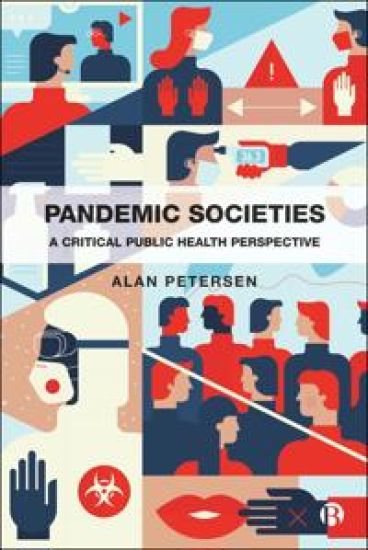
Pandemic Societies

Pandemic Societies

Alan Petersen

Bristol University Press
2024
nidottu
From SARS to Zika, and Ebola to COVID-19, epidemics and pandemics have become increasingly prevalent in recent years. Each outbreak presents new challenges but the responses are often similar. This important book explores the dimensions, dynamics and implications of emerging pandemic societies. Drawing on ideas from sociology and science and technology studies, it sheds new light on how pandemics are socially produced and, in turn, shape societies in areas such as governance, work and recreation, science and technology, education, and family life. It offers pointers to the future of pandemic societies, including the expansion of technologies of surveillance and control, as well as the prospects of social renewal created by economic and social disruption.
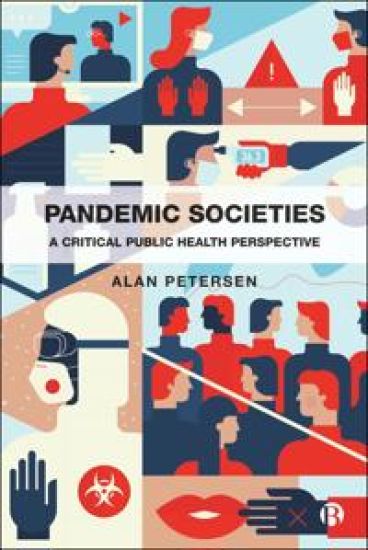
Pandemic Societies

Pandemic Societies

Alan Petersen

Bristol University Press
2024
sidottu
From SARS to Zika, and Ebola to COVID-19, epidemics and pandemics have become increasingly prevalent in recent years. Each outbreak presents new challenges but the responses are often similar. This important book explores the dimensions, dynamics and implications of emerging pandemic societies. Drawing on ideas from sociology and science and technology studies, it sheds new light on how pandemics are socially produced and, in turn, shape societies in areas such as governance, work and recreation, science and technology, education, and family life. It offers pointers to the future of pandemic societies, including the expansion of technologies of surveillance and control, as well as the prospects of social renewal created by economic and social disruption.
The Basement

The Basement

Alan Petersen

17th Street Books
2024
pokkari
What happened in the basement?When Cassie Walsh returns to her small Minnesota hometown for her mother's funeral, she intends to leave as quickly as possible. But a shocking discovery in the basement freezer of her childhood home changes everything.The discovery of the body of Cassie's long-lost teenage crush in her mother's chest freezer shatters her world and forces her to confront a buried secret from 15 years ago.Haunted by a past she tried to escape, Cassie is thrusted into a harrowing quest for truth. Her journey uncovers sinister family secrets and a web of lies that threaten to destroy everything she thought she knew. As Cassie delves deeper into the shadows of her past, she faces chilling consequences and revelations that will leave readers on the edge of their seats."The Basement" is a gripping psychological thriller that explores the devastating impact of family lies and the relentless pursuit of truth. This heart-pounding tale of betrayal, revenge, and the dark legacy of a family's buried sins will captivate fans of Daniel Hurst, Freida McFadden, and Lucinda Berry. Get ready to be captivated by this new addition to the psychological thriller genre, guaranteed to keep you awake, flipping pages.
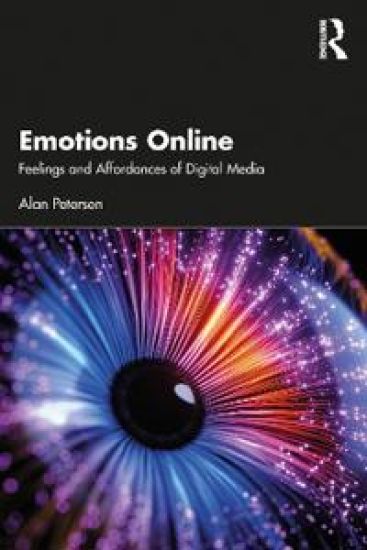
Emotions Online

Emotions Online

Alan Petersen

TAYLOR FRANCIS LTD
2022
sidottu
Digital media have become deeply immersed in our lives, heightening both hopes and fears of their affordances. While the internet, mobile phones, and social media offer their users many options, they also engender concerns about their manipulations and intrusions. Emotions Online explores the visions that shape responses to media and the emotional regimes that govern people’s engagements with them.This book critically examines evidence on the role of digital media in emotional life. Offering a sociological perspective and using ideas from science and technology studies and media studies, it explores:• The dimensions and operations of the online emotional economy• Growing concerns about online harms and abuse, especially to children• ‘Deepfakes’ and other forms of image-based abuse• The role of hope in shaping online behaviours• ‘Digital well-being’ and its market• COVID-19’s impacts on perceptions of digital media and Big Tech• Growing challenges to centralised control of the internet, and the implications for future emotional lifeThe book breaks new ground in the sociological study of digital media and the emotions. It reveals the dynamics of online emotional regimes showing how deceptive designs and algorithm-driven technologies serve to attract and engage users. As it argues, digital media rely on the emotional labours of many people, including social media inf luencers and content moderators who make the internet seem smart. The book provides an invaluable overview of the evidence and debates on the role of digital media in emotional life and guidance for future research, policy, and action.
Emotions Online

Emotions Online

Alan Petersen

TAYLOR FRANCIS LTD
2022
nidottu
Digital media have become deeply immersed in our lives, heightening both hopes and fears of their affordances. While the internet, mobile phones, and social media offer their users many options, they also engender concerns about their manipulations and intrusions. Emotions Online explores the visions that shape responses to media and the emotional regimes that govern people’s engagements with them.This book critically examines evidence on the role of digital media in emotional life. Offering a sociological perspective and using ideas from science and technology studies and media studies, it explores:• The dimensions and operations of the online emotional economy• Growing concerns about online harms and abuse, especially to children• ‘Deepfakes’ and other forms of image-based abuse• The role of hope in shaping online behaviours• ‘Digital well-being’ and its market• COVID-19’s impacts on perceptions of digital media and Big Tech• Growing challenges to centralised control of the internet, and the implications for future emotional lifeThe book breaks new ground in the sociological study of digital media and the emotions. It reveals the dynamics of online emotional regimes showing how deceptive designs and algorithm-driven technologies serve to attract and engage users. As it argues, digital media rely on the emotional labours of many people, including social media inf luencers and content moderators who make the internet seem smart. The book provides an invaluable overview of the evidence and debates on the role of digital media in emotional life and guidance for future research, policy, and action.
Stem Cell Tourism and the Political Economy of Hope

Stem Cell Tourism and the Political Economy of Hope

Alan Petersen; Megan Munsie; Claire Tanner; Casimir MacGregor; Jane Brophy

Palgrave Macmillan
2020
nidottu
This book provides a unique and innovative perspective on the controversial phenomenon of ‘stem cell tourism’. A growing number of patients are embarking on stem cell treatments that are clinically unproven and yet available in clinics and hospitals around the world. The authors offer a cutting-edge multi-dimensional perspective on this complex and rapidly changing phenomenon, including an analysis of the experiences of those who have undertaken or have contemplated undertaking a stem cell treatment, as well as examination of the views of those who undertake research or advise on or provide stem cell treatments. Developing the concept of ‘the political economy of hope’, and referencing case studies of the stem cell treatment market in China, Germany, and Australia, this book argues for a reframing of ‘stem cell tourism’ to understand why patients and families pursue these treatments and whether authorities’ concerns are justified and whether their responses are appropriate and proportionate to the alleged risks.
Digital Health and Technological Promise
What is ‘digital health’? And what are its implications for medicine and healthcare, and for individual citizens and society? Digital health is of growing interest to policymakers, clinicians and businesses. It is underpinned by promise and optimism, with predictions that digital technologies and related innovations will soon ‘transform’ medicine and healthcare, and enable individuals to better manage their own health and risk and to receive a more ‘personalized’ treatment and care. Offering a sociological perspective, this book critically examines the dimensions and implications of digital health, a term that is often ill defined, but signifies the promise of technology to ‘empower’ individuals and improve their lives as well as generating efficiencies and wealth. The chapters explore relevant sociological concepts and theories; changing conceptions of the self, evident in citizens’ growing use of wearables, online behaviours and patient activism; changes in medical practices, especially precision (or personalized) medicine and growing reliance on big data and algorithm-driven decisions; the character of the digital healthcare economy; and the perils of digital health. It is argued that, for various reasons, including the way digital technologies are designed and operate, and the influence of big technology companies and other interests seeking to monetize citizens’ data, digital health is unlikely to deliver much of what is promised. Citizens’ use of digital technologies is likened to a Faustian bargain: citizens are likely to surrender something of far greater value (their personal data) than what they obtain from its use. However, growing data activism and calls for ‘algorithmic accountability’ highlight the potential for citizens to create alternative futures—ones oriented to fulfilling human needs rather than techno-utopian visions.This ground-breaking book will provide an invaluable resource for those seeking to understand the socio-cultural and politico-economic implications of digital health.
Digital Health and Technological Promise
What is ‘digital health’? And what are its implications for medicine and healthcare, and for individual citizens and society? Digital health is of growing interest to policymakers, clinicians and businesses. It is underpinned by promise and optimism, with predictions that digital technologies and related innovations will soon ‘transform’ medicine and healthcare, and enable individuals to better manage their own health and risk and to receive a more ‘personalized’ treatment and care. Offering a sociological perspective, this book critically examines the dimensions and implications of digital health, a term that is often ill defined, but signifies the promise of technology to ‘empower’ individuals and improve their lives as well as generating efficiencies and wealth. The chapters explore relevant sociological concepts and theories; changing conceptions of the self, evident in citizens’ growing use of wearables, online behaviours and patient activism; changes in medical practices, especially precision (or personalized) medicine and growing reliance on big data and algorithm-driven decisions; the character of the digital healthcare economy; and the perils of digital health. It is argued that, for various reasons, including the way digital technologies are designed and operate, and the influence of big technology companies and other interests seeking to monetize citizens’ data, digital health is unlikely to deliver much of what is promised. Citizens’ use of digital technologies is likened to a Faustian bargain: citizens are likely to surrender something of far greater value (their personal data) than what they obtain from its use. However, growing data activism and calls for ‘algorithmic accountability’ highlight the potential for citizens to create alternative futures—ones oriented to fulfilling human needs rather than techno-utopian visions.This ground-breaking book will provide an invaluable resource for those seeking to understand the socio-cultural and politico-economic implications of digital health.

Odd Jobs

Odd Jobs

Alan Petersen

17th Street Books
2018
pokkari
Former CIA operative, Pete Maddox finds odd jobs on the Threat Elimination Network (TEN); a secretive and shadowy network hidden deep down in the dark web where freelancers like Maddox bid for lucrative contracts that require professionals with his lethal skills.Officially, TEN does not exist. Only the best freelancers can join by invitation from its mysterious Board of Directors and its freelancers must adhere to strict rules of engagement.It's too bad not everyone follows the rules.Someone is killing the network's freelancers and a data breach leaves Maddox and his family exposed forcing him into a global hunt to find out who is behind the attacks before they get to him first.
Stem Cell Tourism and the Political Economy of Hope

Stem Cell Tourism and the Political Economy of Hope

Alan Petersen; Megan Munsie; Claire Tanner; Casimir MacGregor; Jane Brophy

Palgrave Macmillan
2017
sidottu
This book provides a unique and innovative perspective on the controversial phenomenon of ‘stem cell tourism’. A growing number of patients are embarking on stem cell treatments that are clinically unproven and yet available in clinics and hospitals around the world. The authors offer a cutting-edge multi-dimensional perspective on this complex and rapidly changing phenomenon, including an analysis of the experiences of those who have undertaken or have contemplated undertaking a stem cell treatment, as well as examination of the views of those who undertake research or advise on or provide stem cell treatments. Developing the concept of ‘the political economy of hope’, and referencing case studies of the stem cell treatment market in China, Germany, and Australia, this book argues for a reframing of ‘stem cell tourism’ to understand why patients and families pursue these treatments and whether authorities’ concerns are justified and whether their responses are appropriate and proportionate to the alleged risks.
Hope in Health

Hope in Health

M. Munsie; Alan Petersen

Palgrave Macmillan
2015
sidottu
Health professionals have shown a growing interest in the therapeutic value of 'hope' in recent years. However, hope has been examined mainly from psychological and biomedical perspectives. Importantly, Hope in Health explores how hope manifests and is sustained in various arenas of health, medicine and healthcare.
The Politics of Bioethics

The Politics of Bioethics

Alan Petersen

Routledge
2013
nidottu
Recent rapid advances in the biosciences have led to considerable debate about the social, ethical, and legal implications of research and its applications. The mapping of the human genome, advances in cloning techniques, the harvesting of embryonic stem cells for research, increasing use of genetic testing in healthcare, and the development of large-scale genetic databases have not only generated high expectations about new diagnostics and treatments but also considerable widespread fear about their consequences. This book offers a critical appraisal of bioethics and its implications as it pertains to the fields of health and medicine and public health, with a particular emphasis on recent technological innovations as they provide a noteworthy exemplar of the power of bioethics in shaping policies, practices and notions of societal benefits. Whereas other books have tended to examine ethical dilemmas and challenges of applying ethical principles, often in relation to a limited array of issues, this book investigates the socio-political implications of bioethics discourse and practices in relation to a range of controversial (or potentially controversial) developments. Providing a benchmark for future debate and scholarly work, this volume will be of interest to policymakers, clinicians, scholars, and others who are looking for new ways of making sense and evaluating recent developments in the field of bioethics.
The Asset

The Asset

Alan Petersen

17th Street Publishing
2013
nidottu
CIA Agent Pete Maddox is thrust into a high-stakes game of espionage and deception when he uncovers a terrorist training camp deep in the Amazon jungle of Venezuela. But as he races against the clock to shut down the camp, he realizes the stakes are even higher than he thought - a local government conspiracy is brewing, and the head of the secret police is a sadistic enemy with a personal vendetta. With enemies closing in on all sides, Maddox must turn to unlikely allies to save the woman he loves: a retired MI6 agent and a powerful local crime kingpin. Can they work together to outsmart the terrorists and the corrupt government, or will it will doom them all in this thrilling showdown?
The Politics of Bioethics

The Politics of Bioethics

Alan Petersen

Routledge
2010
sidottu
Recent rapid advances in the biosciences have led to considerable debate about the social, ethical, and legal implications of research and its applications. The mapping of the human genome, advances in cloning techniques, the harvesting of embryonic stem cells for research, increasing use of genetic testing in healthcare, and the development of large-scale genetic databases have not only generated high expectations about new diagnostics and treatments but also considerable widespread fear about their consequences. This book offers a critical appraisal of bioethics and its implications as it pertains to the fields of health and medicine and public health, with a particular emphasis on recent technological innovations as they provide a noteworthy exemplar of the power of bioethics in shaping policies, practices and notions of societal benefits. Whereas other books have tended to examine ethical dilemmas and challenges of applying ethical principles, often in relation to a limited array of issues, this book investigates the socio-political implications of bioethics discourse and practices in relation to a range of controversial (or potentially controversial) developments. Providing a benchmark for future debate and scholarly work, this volume will be of interest to policymakers, clinicians, scholars, and others who are looking for new ways of making sense and evaluating recent developments in the field of bioethics.
The Body in Question

The Body in Question

Alan Petersen

Routledge
2006
sidottu
Why is there currently such strong academic and popular interest in ‘the body’ in contemporary societies? What factors shape our conceptions of the body, its naturalness, health and normality? What is the mind-body dualism and why should it matter? This book examines these and other body questions from a critical socio-cultural perspective. In particular, it shows how conceptions of the body are affected by processes of individualization, medicalization and commodification. Chapters discuss the impact of new biomedical technologies on the notion of the natural body, efforts to reshape and perfect the body, the role of the media in ‘framing’ body issues, processes of body classification, the impact of consumerism on concepts of health, healing and self-care, and the implications of theoretical and practical efforts to ‘integrate’ mind and body.This book will be an invaluable source for those seeking to understand the social, cultural and political significance of ‘the body’ in contemporary society.
The Body in Question

The Body in Question

Alan Petersen

Routledge
2006
nidottu
Why is there currently such strong academic and popular interest in ‘the body’ in contemporary societies? What factors shape our conceptions of the body, its naturalness, health and normality? What is the mind-body dualism and why should it matter? This book examines these and other body questions from a critical socio-cultural perspective. In particular, it shows how conceptions of the body are affected by processes of individualization, medicalization and commodification. Chapters discuss the impact of new biomedical technologies on the notion of the natural body, efforts to reshape and perfect the body, the role of the media in ‘framing’ body issues, processes of body classification, the impact of consumerism on concepts of health, healing and self-care, and the implications of theoretical and practical efforts to ‘integrate’ mind and body.This book will be an invaluable source for those seeking to understand the social, cultural and political significance of ‘the body’ in contemporary society.
The New Genetics and The Public's Health

The New Genetics and The Public's Health

Robin Bunton; Alan Petersen

Routledge
2001
nidottu
The rapid advancement of genetic science, fuelled by the Human Genome Project and other related initiatives, promises a new kind of public health practice based on the pre-detection of disease according to calculations of genetic risk.This book by two well-known sociologists explores the implications of the new genetics for public health as a body of knowledge and a domain of practice. It assesses the impact of new genetic information and technologies on conceptions of health, illness, embodiment, self and citizenship and critically examines the complex discourses surrounding human genetics and public health. The New Genetics and The Public's Health addresses the emerging social and political consequences of the new genetics and provides a stimulating critique of current research and practice in public health.