Kirjojen hintavertailu. Mukana 12 390 323 kirjaa ja 12 kauppaa.

Kirjailija

Alan Rice

Kirjat ja teokset yhdessä paikassa: 7 kirjaa, julkaisuja vuosilta 2003-2019, suosituimpien joukossa Inside the invisible. Vertaile teosten hintoja ja tarkista saatavuus suomalaisista kirjakaupoista.

7 kirjaa

Kirjojen julkaisuhaarukka 2003-2019.

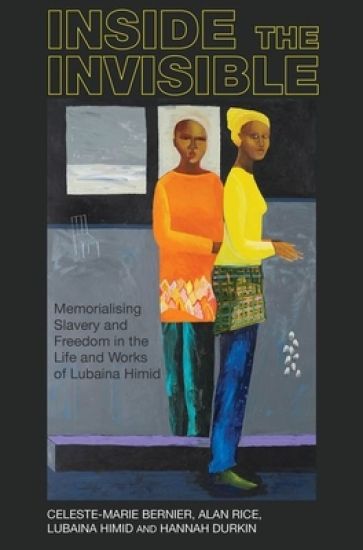
Inside the invisible

Inside the invisible

Celeste-Marie Bernier; Alan Rice; Lubaina Himid; Hannah Durkin

Liverpool University Press
2019
sidottu
Inside the Invisible provides the first examination of the work of Turner Prize-winning Black British artist and curator Professor Lubaina Himid CBE. This comprehensive volume breaks new ground by theorizing her development of an alternative visual and textual language within which to do justice to the hidden histories and untold stories of Black women, children, and men bought and sold into transatlantic slavery. For Himid, the act of forgetting within official sites of memory is indivisible from the art of remembering within an African diasporic art historical tradition. She interrogates the widespread distortion and even wholesale erasure of Black bodies and souls subjected to dehumanizing stereotypes and grotesque caricatures within western imaginaries and dominant iconographic traditions over the centuries. Creating bodies of work in which she comes to grips with the physical and psychological realities of iconic and anonymous African diasporic individuals as living breathing human beings rather than as objectified types, she bears witness not only to tragedy but to triumph. A self-appointed researcher, historian, and storyteller as well as an artist, she succeeds in seeing “inside the invisible” regarding untold narratives of Black agency and artistry by mining national archives, listening to oral stories, acknowledging art-making traditions, and revisiting autobiographical testimonies.
Inside the invisible

Inside the invisible

Celeste-Marie Bernier; Alan Rice; Lubaina Himid; Hannah Durkin

Liverpool University Press
2019
nidottu
Inside the Invisible provides the first examination of the work of Turner Prize-winning Black British artist and curator Professor Lubaina Himid CBE. This comprehensive volume breaks new ground by theorizing her development of an alternative visual and textual language within which to do justice to the hidden histories and untold stories of Black women, children, and men bought and sold into transatlantic slavery. For Himid, the act of forgetting within official sites of memory is indivisible from the art of remembering within an African diasporic art historical tradition. She interrogates the widespread distortion and even wholesale erasure of Black bodies and souls subjected to dehumanizing stereotypes and grotesque caricatures within western imaginaries and dominant iconographic traditions over the centuries. Creating bodies of work in which she comes to grips with the physical and psychological realities of iconic and anonymous African diasporic individuals as living breathing human beings rather than as objectified types, she bears witness not only to tragedy but to triumph. A self-appointed researcher, historian, and storyteller as well as an artist, she succeeds in seeing “inside the invisible” regarding untold narratives of Black agency and artistry by mining national archives, listening to oral stories, acknowledging art-making traditions, and revisiting autobiographical testimonies.
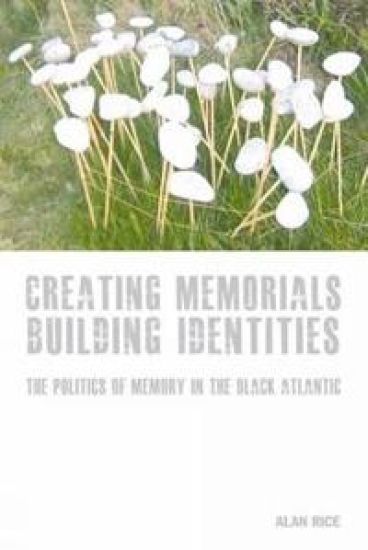
Creating Memorials, Building Identities

Creating Memorials, Building Identities

Alan Rice

Liverpool University Press
2012
nidottu
This book investigates memorials and monuments to slavery throughout the African diaspora, but with an emphasis on Europe. It analyses not only the increasing number of physical monuments, but also the practice of remembering (and forgetting) in museums and plantation houses, and in contemporary cultural forms – visual arts, literature, music and film. A series of case studies, ranging from the 18th to the 21st century, from Senegal and Montserrat to Manchester and Paris, explore issues such as the Lancashire cotton famine, the debates around the first quayside memorial to the victims of the slave trade in Britain in Lancaster, black soldiers in World War II and the 2007 commemorations of abolition in regional museums. The book also looks at ‘guerrilla memorialisation’, its refusal to consider amnesia as an option, and the artistic interventions it has provoked. The study promotes a wide Black Atlantic perspective, while the case studies emphasise a decidedly local approach to memorialisation. Using theoretical work on memory and memorialisation, the book expands on these ideas to include the work of contemporary thinkers and writers on the Black Atlantic, such as Toni Morrison, Jackie Kay and Caryl Phillips. Comparisons are made with monuments to the holocaust and critical writings on the way it has been memorialised. The book interrogates a range of complex issues, and makes a case for the continuing importance of the legacy of slavery, whilst looking at what kind of monuments and memorials are appropriate and effective.
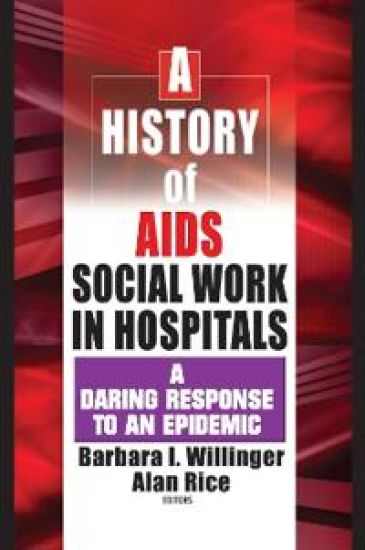
A History of AIDS Social Work in Hospitals

A History of AIDS Social Work in Hospitals

Barbara I Willinger; Alan Rice

Routledge Member of the Taylor and Francis Group
2003
sidottu
Explore the in-hospital evolution of social work with HIV/AIDS patients!A History of AIDS Social Work in Hospitals: A Daring Response to an Epidemic presents first-hand historical perspectives from frontline hospital social workers who cared for HIV/AIDS patients during the epidemic’s beginning in the early 1980s. Contributors recount personal and clinical experiences with patients, families, significant others, bureaucracies, and systems during a time of fear, challenge, and extreme caution. Their experiences illustrate the transformation of social work as the development of new programs and treatments increased the lifespan of HIV/AIDS patients.A History of AIDS Social Work in Hospitals portrays the nature of human suffering and teaches how clients deal with adversity and overcome devastating obstacles. At the same time this book, which, while nonfiction, reads like a novel, opens a window into the world of social work providers working with an illness once considered taboo (and now referred to as simply chronic). A History of AIDS Social Work in Hospitals provides you with an easy-to-understand medical overview of adult and pediatric infectious diseases that often accompany HIV/AIDS and examines: the evolution of social work with hospitalized patients during the first twenty years of the pandemic the important roles of social workers in New York, San Francisco, Philadelphia, and South Carolina challenges that resulted from improved medications and longer life expectancy the status of current HIV/AIDS care programs the development of HIV/AIDS case management in emergency room settings the benefits of developing custody planning programs for HIV-infected families the challenges of working with perinatally infected adolescentsWith case studies and thoughtful analysis of the history of city, state, and national case management responses to the AIDS crisis, A History of AIDS Social Work in Hospitals is a valuable book for educators, students, historians, beginning mental health practitioners, social workers, case managers, substance abuse counselors, and anyone interested in stories of human courage. Make it part of your collection today!
A History of AIDS Social Work in Hospitals

A History of AIDS Social Work in Hospitals

Barbara I Willinger; Alan Rice

Routledge Member of the Taylor and Francis Group
2003
nidottu
Explore the in-hospital evolution of social work with HIV/AIDS patients!A History of AIDS Social Work in Hospitals: A Daring Response to an Epidemic presents first-hand historical perspectives from frontline hospital social workers who cared for HIV/AIDS patients during the epidemic’s beginning in the early 1980s. Contributors recount personal and clinical experiences with patients, families, significant others, bureaucracies, and systems during a time of fear, challenge, and extreme caution. Their experiences illustrate the transformation of social work as the development of new programs and treatments increased the lifespan of HIV/AIDS patients.A History of AIDS Social Work in Hospitals portrays the nature of human suffering and teaches how clients deal with adversity and overcome devastating obstacles. At the same time this book, which, while nonfiction, reads like a novel, opens a window into the world of social work providers working with an illness once considered taboo (and now referred to as simply chronic). A History of AIDS Social Work in Hospitals provides you with an easy-to-understand medical overview of adult and pediatric infectious diseases that often accompany HIV/AIDS and examines: the evolution of social work with hospitalized patients during the first twenty years of the pandemic the important roles of social workers in New York, San Francisco, Philadelphia, and South Carolina challenges that resulted from improved medications and longer life expectancy the status of current HIV/AIDS care programs the development of HIV/AIDS case management in emergency room settings the benefits of developing custody planning programs for HIV-infected families the challenges of working with perinatally infected adolescentsWith case studies and thoughtful analysis of the history of city, state, and national case management responses to the AIDS crisis, A History of AIDS Social Work in Hospitals is a valuable book for educators, students, historians, beginning mental health practitioners, social workers, case managers, substance abuse counselors, and anyone interested in stories of human courage. Make it part of your collection today!
Radical Narratives of the Black Atlantic

Radical Narratives of the Black Atlantic

Alan Rice

Continuum International Publishing Group Ltd.
2003
nidottu
In this multi-faceted and interdisciplinary take on trans-Atlantic black culture, the author engages fully with Paul Gilroy's paradigm of the Black Atlantic through examination of a broad array of cultural genres including music, dance, folklore and oral literature, fine art, material culture, film and literature. The aspects of black culture under discussion range from black British gravesites to sea shanties, from the novels of Toni Morrison to the paintings of the Zanzibar born black British artist Lubaina Himid and from King Kong to the travels of Frederick Douglass and Paul Robeson. The book places such figures as the African American traveller and Barbary slave narrator Robert Adams and the West Indian slave narrator Mary Prince in a Black Atlantic context that explicates them fully. A chapter on the Titanic disaster shows how diasporan Africans composed oral poems about the disaster to criticise the discriminatory practices of its owners and racial imperialism. Overall, the book argues for the crucial importance of Black Atlantic cultures in the formation of our modern world. Moreover, it argues that looking at Black culture and history through a national lens is distorting and reductive.
Radical Narratives of the Black Atlantic

Radical Narratives of the Black Atlantic

Alan Rice

Continuum International Publishing Group Ltd.
2003
sidottu
*Broad-based survey of trans-Atlantic black culture*Newest book in the popular Black Atlantic seriesRadical Narratives of the Black Atlantic is a multi-faceted and interdisciplinary take on trans-Atlantic black culture. Alan Rice engages fully with Paul Gilroy's paradigm of the Black Atlantic through examination of a broad array of cultural genres including music, dance, folklore and oral literature, fine art, material culture, film and literature. The aspects of black culture under discussion range from black British gravesites to sea shanties, from the novels of Toni Morrison to the paintings of the Zanzibar born black British artist Lubaina Himid and from King Kong to the travels of Frederick Douglass and Paul Robeson. The book places such figures as the African American traveller and Barbary slave narrator Robert Adams and the West Indian slave narrator Mary Prince in a Black Atlantic context that explicates them fully. A chapter on the Titanic disaster shows how diasporan Africans composed oral poems about the disaster to criticise the discriminatory practices of its owners and racial imperialism. Overall, the book argues for the crucial importance of Black Atlantic cultures in the formation of our modern world. Moreover, it argues that looking at Black culture and history through a national lens is distorting and reductive.