Kirjojen hintavertailu. Mukana 12 390 323 kirjaa ja 12 kauppaa.

Kirjailija

Alan Shapiro

Kirjat ja teokset yhdessä paikassa: 28 kirjaa, julkaisuja vuosilta 1983-2026, suosituimpien joukossa Against Translation. Vertaile teosten hintoja ja tarkista saatavuus suomalaisista kirjakaupoista.

28 kirjaa

Kirjojen julkaisuhaarukka 1983-2026.

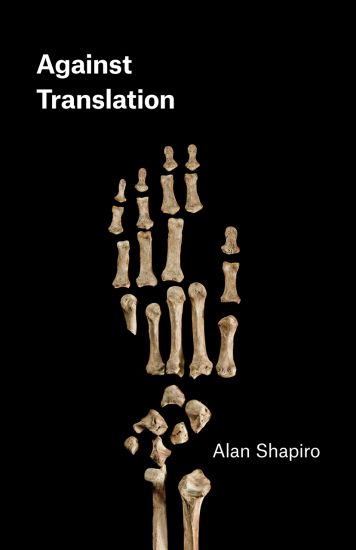
Against Translation

Against Translation

Alan Shapiro

University of Chicago Press
2019
pokkari
We often ask ourselves what gets lost in translation--not just between languages, but in the everyday trade-offs between what we experience and what we are able to say about it. But the visionary poems of this collection invite us to consider: what is loss, in translation? Writing at the limits of language--where "the signs loosen, fray, and drift"--Alan Shapiro probes the startling complexity of how we confront absence and the ephemeral, the heartbreak of what once wasn't yet and now is no longer, of what (like racial prejudice and historical atrocity) is omnipresent and elusive. Through poems that are fine-grained and often quiet, Shapiro tells of subtle bereavements: a young boy is shamed for the first time for looking "girly"; an ailing old man struggles to visit his wife in a nursing home; or a woman dying of cancer watches her friends enjoy themselves in her absence. Throughout, this collection traverses rather than condemns the imperfect language of loss--moving against the current in the direction of the utterly ineffable.

Life Pig

Life Pig

Alan Shapiro

University of Chicago Press
2016
nidottu
From Let Me Hear You Outside is inside now. The pyramid whose point we are is weightless and invisible and has become itself the night in which alone together on a high plateau we go on shouting out whatever name those winds keep blowing back into the mouth that's shouting it. Alan Shapiro's newest book of poetry is situated at the intersection between private and public history, as well as individual life and the collective life of middle-class America in the twentieth and twenty-first centuries. Whether writing about an aged and dying parent or remembering incidents from childhood and adolescence, Shapiro attends to the world in ways that are as deeply personal as they are recognizable and freshly social both timeless and utterly of this particular moment.
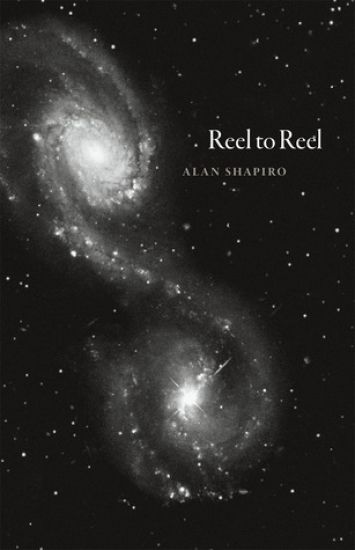
Reel to Reel

Reel to Reel

Alan Shapiro

University of Chicago Press
2014
nidottu
Wherever My Dead Go When I'm Not Remembering Them. Not gone, not here, a fern trace in the stone of living tissue it can somehow flourish from; or the dried up channel and the absent current; or maybe it's like a subway passenger on a platform in a dim lit station late at night between trains, after the trains have stopped - ahead only the faintest rumbling of the last one disappearing, and behind the dark you're looking down for any hint of light-where is it? why won't it come? you wandering now along the yellow line, restless, not knowing who you are, or even where until you see it, there it is, approaching, and you hurry to the spot you don't know how you know is marked for you, and you alone, as the door slides open into your being once again my father, my sister or brother, as if nothing's changed, as if to be known were the destination. Where are we going? What are we doing here? you don't ask, you don't notice the blur of stations we're racing past, the others out there watching in the dim light, baffled, who for a moment thought the train was theirs. Reel to Reel, Alan Shapiro's twelfth collection of poetry, moves outward from the intimate spaces of family and romantic life to embrace not only the human realm of politics and culture but also the natural world, and even the outer spaces of the cosmos itself. In language richly nuanced yet accessible, these poems inhabit and explore fundamental questions of existence, such as time, mortality, consciousness, and matter. Shapiro brings his humor, imaginative intensity, characteristic syntactical energy, and generous heart to bear on life's ultimate mysteries. In ways few poets have done, he writes from a premodern, primal sense of wonder about our postmodern world.
The Complete Euripides

The Complete Euripides

Alan Shapiro

Oxford University Press Inc
2010
sidottu
Based on the conviction that only translators who write poetry themselves can properly re-create the celebrated and timeless tragedies of Aeschylus, Sophocles, and Euripides, the Greek Tragedy in New Translations offers new translations that go beyond the literal meaning of the Greek in order to evoke the poetry of the originals. Collected here for the first time in the series are four major works by Euripides all set in Athens: Hippoltos, translated by Robert Bagg, a dramatic interpretation of the tragedy of Phaidra; Suppliant Women, translated by Rosanna Warren and Steven Scully, a powerful examination of the human psyche; Ion, translated by W. S. Di Piero and Peter Burian, a complex enactment of the changing relations between the human and divine orders; and The Children of Herakles, translated by Henry Taylor and Robert A. Brooks, a descriptive tale of the descendants of Herakles and their journey home. These four tragedies were originally avialble as single volumes. This volume retains the informative introductions and explanatory notes of the original editions and adds a single combines glossary and Greek line numbers.
The Trojan Women

The Trojan Women

Alan Shapiro; Peter Burian

Oxford University Press Inc
2009
sidottu
Among surviving Greek tragedies only Euripides' Trojan Women shows us the extinction of a whole city, an entire people. Despite its grim theme, or more likely because of the centrality of that theme to the deepest fears of our own age, this is one of the relatively few Greek tragedies that regularly finds its way to the stage. Here the power of Euripides' theatrical and moral imagination speaks clearly across the twenty-five centuries that separate our world from his. The theme is really a double one: the suffering of the victims of war, exemplified by the woman who survive the fall of Troy, and the degradation of the victors, shown by the Greeks' reckless and ultimately self-destructive behavior. It offers an enduring picture of human fortitude in the midst of despair. Trojan Women gains special relevance, of course, in times of war. It presents a particularly intense account of human suffering and uncertainty, but one that is also rooted in considerations of power and policy, morality and expedience. Furthermore, the seductions of power and the dangers both of its exercise and of resistance to it as portrayed in Trojan Women are not simply philosophical or rhetorical gambits but part of the lived experience of Euripides' day. And their analogues in our own day lie all too close at hand. This new powerful translation of Trojan Women includes an illuminating introduction, explanatory notes, a glossary, and suggestions for further reading.
The Dead Alive and Busy

The Dead Alive and Busy

Alan Shapiro

University of Chicago Press
2000
nidottu
In his sixth book of poems, Alan Shapiro once again shows that he is a master at articulating the secrets of the heart. "The Dead Alive and Busy" deals with issues of personal identity as revealed through examining the intimate bonds of family life. The poems explore these familial relations in terms of the religious, social and literary contexts that inform them, delving into such universal themes as human frailty, illness and death, bereavement and thwarted desires. By turns lyrical and narrative, slangy and elevated, analytical and visionary, this collection showcases one of America's most important poets in his top form.
The Dead Alive and Busy

The Dead Alive and Busy

Alan Shapiro

University of Chicago Press
2000
sidottu
In his sixth book of poems, Alan Shapiro once again shows that he is a master at articulating the secrets of the heart. "The Dead Alive and Busy" deals with issues of personal identity as revealed through examining the intimate bonds of family life. The poems explore these familial relations in terms of the religious, social and literary contexts that inform them, delving into such universal themes as human frailty, illness and death, bereavement and thwarted desires. By turns lyrical and narrative, slangy and elevated, analytical and visionary, this collection showcases one of America's most important poets in his top form.
Covenant

Covenant

Alan Shapiro

University of Chicago Press
1991
nidottu
"The coherence Shapiro prizes is both more thorough and more thoroughgoing than that offered by a moralizing intelligence. His poetry comes by its sad wisdom through its accomodations to human happenstance and estrangement. . . .In Covenant, sympathy grounds itself in worldly particulars, and subjectivity begets responsibilities. Hardnosed yet tenderly attentive, Shapiro's acute self-consciousness distills an exacting conscientiousness."—David Barber, Poetry"At forty-years-old and already the author of four superbly written books of poems, Shapiro has produced a work of such authority and originality that he has permanently enlarged my hopes and expectations for contemporary poetry. His risk-loving swiftness of perception and his affinity for stories that up-end convention and taboo have enabled him to reclaim, for poets of my generation, areas of feeling and linguistic virtuosity that originated with William Carlos Williams, Elizabeth Bishop, J. V. Cunningham, and Ivor Winters. It is hard for me to see how an ideal anthologist of the future will be able to include their names without gratefully including his."—Tom Sleigh, Boston Phoenix
Covenant

Covenant

Alan Shapiro

University of Chicago Press
1991
sidottu
"The coherence Shapiro prizes is both more thorough and more thoroughgoing than that offered by a moralizing intelligence. His poetry comes by its sad wisdom through its accomodations to human happenstance and estrangement. . . .In Covenant, sympathy grounds itself in worldly particulars, and subjectivity begets responsibilities. Hardnosed yet tenderly attentive, Shapiro's acute self-consciousness distills an exacting conscientiousness."—David Barber, Poetry"At forty-years-old and already the author of four superbly written books of poems, Shapiro has produced a work of such authority and originality that he has permanently enlarged my hopes and expectations for contemporary poetry. His risk-loving swiftness of perception and his affinity for stories that up-end convention and taboo have enabled him to reclaim, for poets of my generation, areas of feeling and linguistic virtuosity that originated with William Carlos Williams, Elizabeth Bishop, J. V. Cunningham, and Ivor Winters. It is hard for me to see how an ideal anthologist of the future will be able to include their names without gratefully including his."—Tom Sleigh, Boston Phoenix
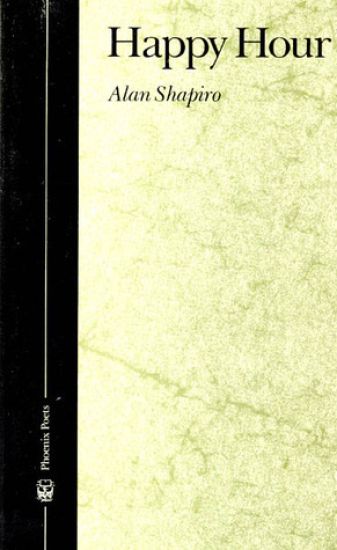
Happy Hour

Happy Hour

Alan Shapiro

University of Chicago Press
1989
nidottu
"Within his deliberately narrowed range Mr. Shapiro has cultivated a new generosity of detail and insight. This is especially important in the longer poems here, narratives of considerable power. They may seem more like versified short stories than poems, but their skill and force are moving."—J. D. McClatchy, New York Times Book Review"Happy Hour is one of the best collections I have recently read. Mr. Shapiro writes with apparently equal ease in free verse and more nearly traditional forms, and he brings his formidable technical skills to bear upon matters of great urgency: our need to love and be loved, and the often perverse ways in which we maintain our connections to those closest to us."—Henry Taylor, Washington Times"This is a haunting, mature collection that should attract a larger audience for Shapiro's fine poems."—Thomas Swiss, Chicago Tribune
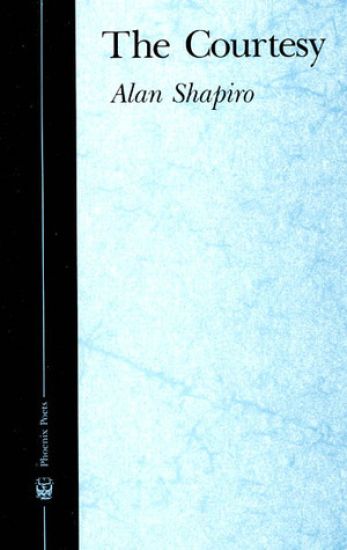
The Courtesy

The Courtesy

Alan Shapiro

University of Chicago Press
1983
nidottu
In this, his first book, Alan Shapiro vividly recreates some of the more memorable and poignant moments from his Jewish-American childhood, and in the process reveals his compassionate interest in the forgotten, the alienated, and the infirm. The Courtesy is an intelligent, reflective examination of the poet's own psychological history. "The Courtesy is really an admirable book: it shows up the unreality of a lot of the other poetry one reads, dealing honestly and with that perversity which is a sign of thoughfulness, with the slight but heavy matter of our everyday defeats."--Michael Hoffman, Poetry Nation Review
Proceed to Check Out

Proceed to Check Out

Alan Shapiro

THE UNIVERSITY OF CHICAGO PRESS
2022
nidottu
Award-winning poet Alan Shapiro offers a new collection of poems reflecting on mortality and finitude. Alan Shapiro's fourteenth collection of poetry, Proceed to Check Out, is a kind of summing up, or stock-taking, by an aging poet, of his precarious place in a world dominated by the ever-accelerating pace of technological innovation, political disruption, personal loss, and racial strife. These poems take on fundamental subjects-like the nature of time and consciousness and how or why we become who we are-but Shapiro presses them into becoming urgent and timely. Employing idiomatic range and formal variety, Shapiro's poems move through recurring dreams, the coercions of childhood, and the mysterious connections of mind and matter, pleasure and memory. They meet an abiding need to find empathy and understanding in even the most challenging places-amid disaffection, public discord, and estrangement. His grasp of contemporary life-in all its insidious violence and beauty-is distinct, comprehensive, and profound.
Human Voices Wake Us

Human Voices Wake Us

Jerald Winakur; Alan Shapiro

Kent State University Press
2017
nidottu
Patients and physicians are adrift in this era of rapidly changing medical paradigms. Perhaps it has always been so, though it seems that lately the dissatisfaction on both sides has intensified. Doctors today are struggling: debt, divorce, substance abuse, burnout, suicide. They succeed or fail on professional treadmills; patient encounters measured out with coffee spoons. The doctor-patient relationship is crumbling. Bureaucratic and corporate masters make their never-ending arguments of insidious intent. The overwhelming questions: Now where to turn? How do physicians — and their patients — avoid being crushed by the demands of science, of perfection, of expectations? How do we recover the awe we once felt in this world in which we expend our life force every day? How can we find joy once more? Human Voices Wake Us is a plea, a prayer, a path for caregivers and patients, for all of us who struggle in difficult circumstances for understanding, enlightenment, and healing. is book is a treatise on the importance of self-reflection, attentiveness to our own inner voice and needs, as well as to those who are struggling with illness, age, infirmity, and loss. It is a call to nurture our idealism: that solid foundation grounding empathic responsiveness and our own humanity.
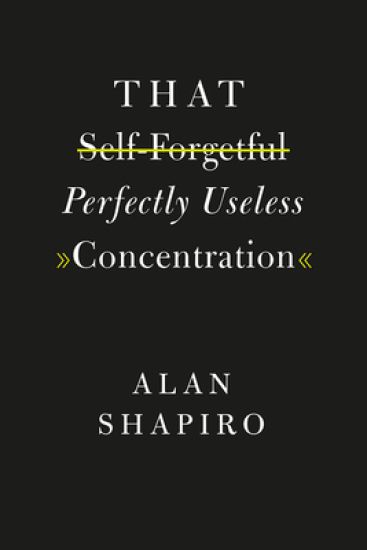
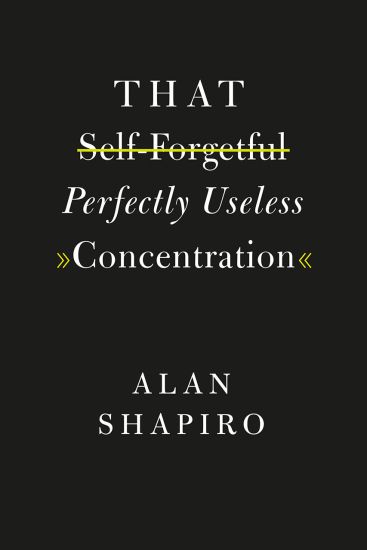
That Self-Forgetful Perfectly Useless Concentration

That Self-Forgetful Perfectly Useless Concentration

Alan Shapiro

University of Chicago Press
2016
sidottu
More than a gathering of essays, That Self-Forgetful Perfectly Useless Concentration is part memoir, part literary criticism, and an artful fusion of the two. It is an intimate portrait of a life in poetry that only Alan Shapiro could have written. In this book, Shapiro brings his characteristic warmth, humor, and many years as both poet and teacher to bear on questions surrounding two preoccupations: the role of conventions of literary and social norms in how we fashion our identities on and off the page and how suffering both requires and resists self-expression. He sketches affectionate portraits of his early teachers, revisits the deaths of his brother and sister, and examines poems that have helped him navigate troubled times. Integrating storytelling and literary analysis so seamlessly that art and life become extensions of each other, Shapiro embodies in his lively prose the very qualities he celebrates in the poems he loves. Brimming with wit and insight, this is a book for poets, students and scholars of poetry, teachers of literature, and everyone who cares about the literary arts and how they illuminate our personal and public lives.
That Self-Forgetful Perfectly Useless Concentration

That Self-Forgetful Perfectly Useless Concentration

Alan Shapiro

University of Chicago Press
2016
nidottu
More than a gathering of essays, That Self-Forgetful Perfectly Useless Concentration is part memoir, part literary criticism, and an artful fusion of the two. It is an intimate portrait of a life in poetry that only Alan Shapiro could have written. In this book, Shapiro brings his characteristic warmth, humor, and many years as both poet and teacher to bear on questions surrounding two preoccupations: the role of conventions of literary and social norms in how we fashion our identities on and off the page and how suffering both requires and resists self-expression. He sketches affectionate portraits of his early teachers, revisits the deaths of his brother and sister, and examines poems that have helped him navigate troubled times. Integrating storytelling and literary analysis so seamlessly that art and life become extensions of each other, Shapiro embodies in his lively prose the very qualities he celebrates in the poems he loves. Brimming with wit and insight, this is a book for poets, students and scholars of poetry, teachers of literature, and everyone who cares about the literary arts and how they illuminate our personal and public lives.
The Complete Aeschylus

The Complete Aeschylus

Peter Burian; Alan Shapiro

Oxford University Press Inc
2009
sidottu
Based on the conviction that only translators who write poetry themselves can properly re-create the celebrated and timeless tragedies of Aeschylus, Sophocles, and Euripides, the Greek Tragedy in New Translations series offers new translations that go beyond the literal meaning of the Greek in order to evoke the poetry of the originals. The volume brings together four major works by one of the great classical dramatists: Prometheus Bound, translated by James Scully and C. John Herrington, a haunting depiction of the most famous of Olympian punishments; The Suppliants, translated by Peter Burian, an extraordinary drama of flight and rescue arising from women's resistance to marriage; Persians, translated by Janet Lembke and C. John Herington, a masterful telling of the Persian Wars from the view of the defeated; and Seven Against Thebes, translated by Anthony Hecht and Helen Bacon, a richly symbolic play about the feuding sons of Oedipus. These four tragedies were originally available as single volumes. This new volume retains the informative introductions and explanatory notes of the original editions and adds a single combined glossary and Greek line numbers.
Tantalus in Love

Tantalus in Love

Alan Shapiro

Ecco Press
2006
nidottu
A collection of poems centered around the dissolution of a marriage probes the territory of recovery, loss, and healing in the aftermath of failed relationships, probing jealousy, romance, and lust, among other pertinent topics. Reprint.
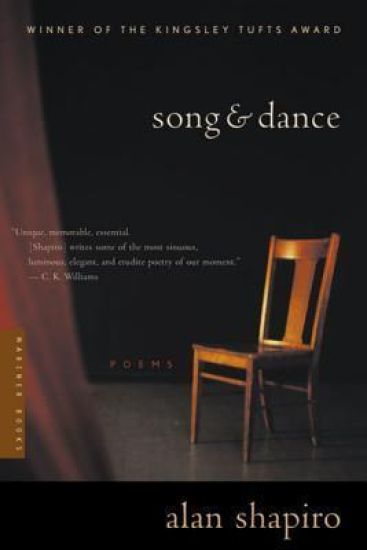
Song and Dance

Song and Dance

Alan Shapiro

Ecco Press
2004
nidottu
The poems in Alan Shapiro's seventh collection, Song and Dance, intimately describe the complicated feelings that attend the catastrophic loss of a loved one. In 1998, Shapiro's brother, David, an actor on Broadway, was diagnosed with an incurable form of brain cancer. Song and Dance recounts the poet's emotional journey through the last months of his brother's life, exploring feelings too often ignored in official accounts of grief: horror, relief, impatience, exhaustion, exhilaration, fear, self-criticism, fulfillment.