

Kirjailija
Alan Taylor
Kirjat ja teokset yhdessä paikassa: 41 kirjaa, julkaisuja vuosilta 1996-2026, suosituimpien joukossa Bridge of Stones. Vertaile teosten hintoja ja tarkista saatavuus suomalaisista kirjakaupoista.
41 kirjaa
Kirjojen julkaisuhaarukka 1996-2026.
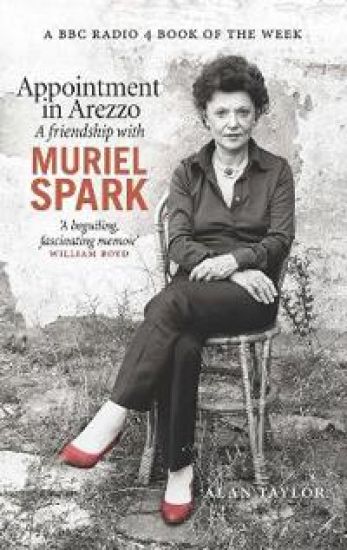
This book is an intimate, fond and funny memoir of one of the greatest novelists of the last century. This colourful, personal, anecdotal, indiscreet and admiring memoir charts the course of Muriel Spark’s life revealing her as she really was. Once, she commented sitting over a glass of chianti at the kitchen table, that she was upset that the academic whom she had appointed her official biographer did not appear to think that she had ever cracked a joke in her life. Alan Taylor here sets the record straight about this and many other things. With sources ranging from notebooks kept from his very first encounter with Muriel and the hundreds of letters they exchanged over the years, this is an invaluable portrait of one of Edinburgh’s premiere novelists. The book was published to celebrate the 100th anniversary of Muriel’s birth in 2018.

A Perfect Pair Public Relations and Event Promotions
Alan Taylor
Createspace Independent Publishing Platform
2018
nidottu
A top sports writer and award winning marketing and public relation specialist, Alan Taylor, shares his exciting and memorable experiences in the dinosaur age of event promotions and tips on how to succeed even in today's digital market place.

Often understood as a high-minded, orderly event, the American Revolution grows in this masterful history like a ground fire overspreading Britain’s mainland colonies, fuelled by local conditions and resistant to control. Emerging from the rivalries of European empires and their allies, the revolution pivoted on western expansion as well as resistance to new British taxes. In the seaboard cities, leading Patriots mobilised popular support by summoning crowds to harass opponents. Along the frontier, the war often featured guerrilla violence that persisted long after the peace treaty. The smouldering discord called forth a movement to consolidate power in a Federal Constitution but it was Jefferson’s “empire of liberty” that carried the Revolution forward. This magisterial history reveals the American Revolution in its time, free of wishful hindsight.

The book’s ambition is to uniquely yoke familiar histories of New Hollywood with aspects of critical theory that, since the 1950s, have embraced advances in the New Rhetoric as pioneered by literary theorist, philosopher, social analyst and educator Kenneth Burke (1897–1993). The study tracks the career arcs of Hollywood film directors Peter Bogdanovich, Martin Scorsese, Michael Cimino and Francis Ford Coppola whose productions are regarded as Burkean perspectives by incongruity. This analysis is contextualized within an overview that, from the 1920s to the present, considers Hollywood as a "languaged industry" that is grounded in Burkean principles of Order, identification, hierarchy, courtship and ambiguities of substance. The project is designed to serve the interests of colleagues and students in Rhetorical Theory, Film Education, Creative Writing, American Studies, Production Studies, and Film and Media Studies.

Frederick Douglass recalled that slaves living along Chesapeake Bay longingly viewed sailing ships as "freedom’s swift-winged angels." In 1813 those angels appeared in the bay as British warships coming to punish the Americans for declaring war on the empire. Over many nights, hundreds of slaves paddled out to the warships seeking protection for their families from the ravages of slavery. The runaways pressured the British admirals into becoming liberators. As guides, pilots, sailors, and marines, the former slaves used their intimate knowledge of the countryside to transform the war. They enabled the British to escalate their onshore attacks and to capture and burn Washington, D.C. Tidewater masters had long dreaded their slaves as "an internal enemy." By mobilizing that enemy, the war ignited the deepest fears of Chesapeake slaveholders. It also alienated Virginians from a national government that had neglected their defense. Instead they turned south, their interests aligning more and more with their section. In 1820 Thomas Jefferson observed of sectionalism: "Like a firebell in the night [it] awakened and filled me with terror. I considered it at once the knell of the union." The notes of alarm in Jefferson's comment speak of the fear aroused by the recent crisis over slavery in his home state. His vision of a cataclysm to come proved prescient. Jefferson's startling observation registered a turn in the nation’s course, a pivot from the national purpose of the founding toward the threat of disunion. Drawn from new sources, Alan Taylor's riveting narrative re-creates the events that inspired black Virginians, haunted slaveholders, and set the nation on a new and dangerous course.

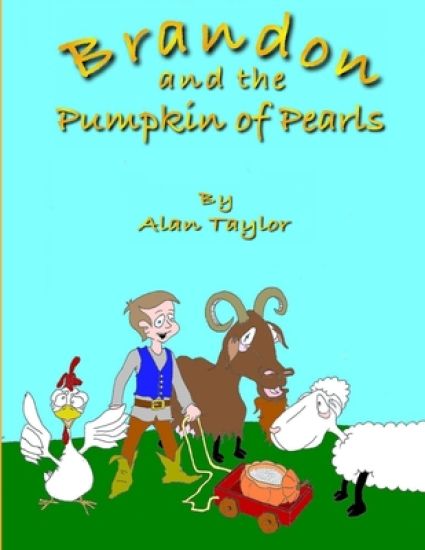
Brandon and the Pumpkin of Pearls is a story about a young boy who is too small to work on the family farm after his father is sent away to fight for the kings army. Brandon's mother is pregnant and struggles to keep up the farms maintenance, so she sends Brandon to sell their animals at the market for money to support the family but instead of listening to his mother he decides to do what he feels is best. Along the way Brandon is repeatedly tricked, cheated and hustled out of their animals by a sneaky, evil old gypsy lady. Brandon is left with no money and the family is nearly homeless. Can this young boy's crafty thinking out smart the evil old gypsy lady and save their farm? Find out inside this magical, glorious tale...

Frederick Douglass recalled that slaves living along Chesapeake Bay longingly viewed sailing ships as "freedom’s swift-winged angels." In 1813 those angels appeared in the bay as British warships coming to punish the Americans for declaring war on the empire. Over many nights, hundreds of slaves paddled out to the warships seeking protection for their families from the ravages of slavery. The runaways pressured the British admirals into becoming liberators. As guides, pilots, sailors, and marines, the former slaves used their intimate knowledge of the countryside to transform the war. They enabled the British to escalate their onshore attacks and to capture and burn Washington, D.C. Tidewater masters had long dreaded their slaves as "an internal enemy." By mobilizing that enemy, the war ignited the deepest fears of Chesapeake slaveholders. It also alienated Virginians from a national government that had neglected their defense. Instead they turned south, their interests aligning more and more with their section. In 1820 Thomas Jefferson observed of sectionalism: "Like a firebell in the night [it] awakened and filled me with terror. I considered it at once the knell of the union." The notes of alarm in Jefferson's comment speak of the fear aroused by the recent crisis over slavery in his home state. His vision of a cataclysm to come proved prescient. Jefferson's startling observation registered a turn in the nation’s course, a pivot from the national purpose of the founding toward the threat of disunion. Drawn from new sources, Alan Taylor's riveting narrative re-creates the events that inspired black Virginians, haunted slaveholders, and set the nation on a new and dangerous course.
By long convention, "American history" began during the early seventeenth century along the Atlantic Seaboard with the English colonies at Jamestown in Virginia and Plymouth in New England. From that eastern origin, America supposedly expanded westward, reaching only the Appalachian mountains by the end of the colonial period. In this version of history, earlier Spanish and contemporary French settlements seemed irrelevant except as enemies that brought out the best in the English as they remade themselves into Americans. Indians appeared only as wild and primitive peoples engaged in an ultimately futile resistance to American destiny. And historians formerly treated African slaves in passing as unfortunate aberrations in a fundamentally upbeat story of Englishmen becoming freer and more prosperous by colonizing an abundant continent of "free land." During the past generation, however, historians have broadened our understanding of colonial America by adopting both a trans-Atlantic and a trans-continental perspective, examining the interplay of Europe, Africa, and the Americas through the flows of goods, people, plants, animals, capital, and ideas. In this Very Short Introduction, Alan Taylor presents the current scholarly understanding of colonial America to a broader audience. American colonization derived from a global expansion of European exploration and commerce, beginning in the fifteenth century. In an Atlantic and global perspective, the English had to share the stage with the French, Spanish, Dutch, and Russians, each of whom created alternative Americas. By comparing the diverse colonies of rival empires, Taylor aims to recover what was truly distinctive about the English enterprise in North America. In particular, he intends to pay greater attention to slavery as central to the economy, culture, and political thought of the colonists and, by taking a "Continental approach," to restore the importance of native peoples to the colonial story. To adapt to the new land, the colonists needed the expertise, guidance, alliance, and trade of the Indians who dominated the interior. The new historical approach emphasizes the ability of the diverse natives to adapt to the newcomers and to compel concessions from them. In sum, colonial America produced an unprecedented mixing of radically diverse peoples--African, European, and Indian--under stressful circumstances for all. The colonial intermingling of peoples,microbes, plants, and animals from different continents was unparalleled in speed and volume in global history. Everyone had to adjust to a new world of unpredictable social and cultural hybrids that compromised and complicated the ambitious plans of empire-builders. ABOUT THE SERIES: The Very Short Introductions series from Oxford University Press contains hundreds of titles in almost every subject area. These pocket-sized books are the perfect way to get ahead in a new subject quickly. Our expert authors combine facts, analysis, perspective, new ideas, and enthusiasm to make interesting and challenging topics highly readable.
Squaring the Circles: The Reach of Colonial America
Alan Taylor
American Historical Association
2012
nidottu
Prominent historian Alan Taylor updates and summarizes scholarly advancements in the historiography of American colonialism in this short essay.
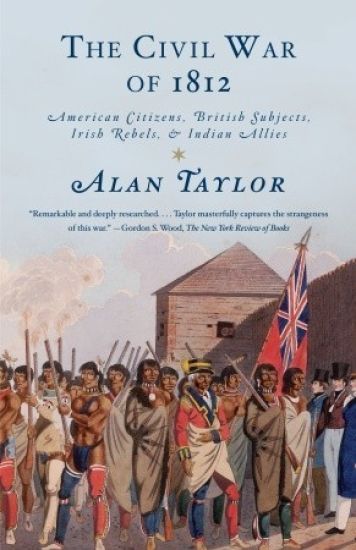
The Civil War of 1812: American Citizens, British Subjects, Irish Rebels, & Indian Allies
Alan Taylor
VINTAGE
2011
nidottu
In the early nineteenth century, Britons and Americans renewed their struggle over the legacy of the American Revolution, leading to a second confrontation that redefined North America. Pulitzer Prize-winning historian Alan Taylor's vivid narrative tells the riveting story of the soldiers, immigrants, settlers, and Indians who fought to determine the fate of a continent. Would revolutionary republicanism sweep the British from Canada? Or would the British contain, divide, and ruin the shaky republic? In a world of double identities, slippery allegiances, and porous boundaries, the leaders of the republic and of the empire struggled to control their own diverse peoples. The border divided Americans--former Loyalists and Patriots--who fought on both sides in the new war, as did native peoples defending their homelands. And dissident Americans flirted with secession while aiding the British as smugglers and spies. During the war, both sides struggled to sustain armies in a northern land of immense forests, vast lakes, and stark seasonal swings in the weather. After fighting each other to a standstill, the Americans and the British concluded that they could safely share the continent along a border that favored the United States at the expense of Canadians and Indians. Moving beyond national histories to examine the lives of common men and women, The Civil War of 1812 reveals an often brutal (sometimes comic) war and illuminates the tangled origins of the United States and Canada. Moving beyond national histories to examine the lives of common men and women, The Civil War of 1812 reveals an often brutal (sometimes comic) war and illuminates the tangled origins of the United States and Canada.
Stoke-on-Trent was the name given to the amalgamation of six famous Potteries towns, the other five being Burslem, Fenton, Hanley, Longton and Tunstall. This book deals with the entire City, illustrating its wide variety of industries and the way of life of the people in the past. The world-wide reputation of Stoke was secured by the products of the pottery manufacturers. The innovations of men like Josiah Wedgwood, Josiah Spode and the Adams family - who had been making pots since the 15th century - built up a world-beating industry. The author vividly records much of the characteristic Potteries scene, of bottle-kilns, pit-heads and workers' cottages; and of the workers themselves, as they earned their living or enjoyed their recreations. Arnold Bennett, the City's literary giant, would have loved this book.
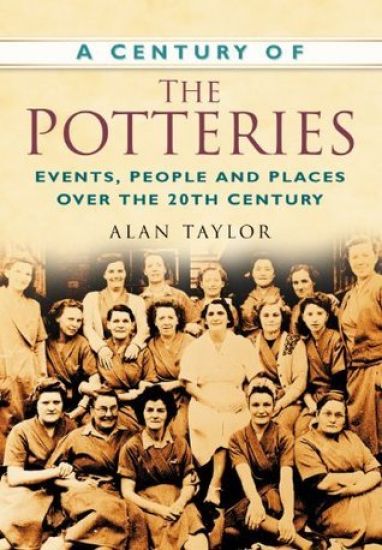
This fascinating selection of photographs illustrates the extraordinary transformation that has taken place in The Potteries during the 20th century. The book offers an insight into the daily lives and living conditions of local people and gives the reader glimpses and details of familiar places during a century of unprecedented change. Many aspects of The Potteries' recent history are covered, famous occasions and individuals are remembered and the impact of national and international events is witnessed. The book provides a striking account of the changes that have so altered the appearance of The Potteries, and records the process of transformation. Drawing on detailed local knowledge of the community, and illustrated with a wealth of black-and-white photographs, this book recalls what The Potteries has lost in terms of buildings, traditions and ways of life. It also acknowledges the regeneration that has taken place and celebrates the character and energy of local people as they move through the first years of this new century.

This stridently interdisciplinary study builds on recent postmodern advances in theatre, film, and media studies - in areas of identity, gender, and narrative - to argue for a realignment of cinema's own dissembling urban ironist, Alfred Hitchcock, within the Jacobean dramaturgical lineage. In defence, the study juxtaposes revitalized texts, such as Webster's "The White Devil" (1612) and Hitchcock's newly restored films, primarily "Vertigo" (1958), that, since the 1980s, have powerfully resonated as totemic limit texts with present day audiences. Comparative analysis of such titles builds to a contextual consideration of the vertiginous trends in new media technologies that have also, since the 1980s, beguiled users to fashion themselves as cyber observers, rhetors, Avatars and performers within the contemporary Jacobean panspectron environment.

The Divided Ground: Indians, Settlers, and the Northern Borderland of the American Revolution
Alan Taylor
VINTAGE
2007
nidottu
The changing relationship of Joseph Brant, a young Mohawk, and Samuel Kirkland, the son of a colonial clergyman, from their first meeting at a New England boarding school, is set against the role of the Native American peoples in North America during the American Revolution and the shaping of the postwar borderland between the United States and British Canada. Reprint.
"Whoever reads these essays-and whether they follow the book from cover to cover, or dip into chapters at random-will find the rich abundance and variety of early American scholarship set out before them. Readers new to the field will grasp a sense of its expansiveness and possibilities, but seasoned scholars, too, will find here a feast of insights and possibilities that will engage, provoke, and inspire them."-from the Foreword, by Christopher Clark How is American history written? In a penetrating series of review essays, prize-winning author Alan Taylor provides his own answer to this question. In the pages of The New Republic, he has regularly scrutinized the writing of the most interesting historians of early American history. Together these reviews provide the general reader a rich and rewarding introduction to their subjects. The books reviewed span an enormous range of scholarship, from popular biographies of Founding Fathers, to investigations of murders of prostitutes to discussions of frontier technology. Grouped thematically, the essays reveal a historian with an unrivaled breadth of knowledge and an admirable passion for his subject, and one who has contributed a continent-wide perspective to colonial history. As readers steep themselves in world-class scholarship, they also discover a writer who takes very seriously his role as reader.

An acclaimed historian challenges the traditional Anglocentric focus of colonial history by examining the various cultural influences from which "America" emerged and documenting the intricate ecological, ethnic, and economic history of the New World, from the Canadian north to the Pacific rim. Reprint.
This evocative and often humorous compilation of reminiscences records life as it used to be in the Potteries. A comprehensive and fascinating view of life is depicted including the experiences of childhood, work, the war years and village community. For those who remember the people and places portrayed here, this record will awaken nostalgic memories; for people of a younger generation it will provide a valuable insight into the lives of their parents and grandparents.