Kirjailija
Alan W. Watts
Kirjat ja teokset yhdessä paikassa: 17 kirjaa, julkaisuja vuosilta 1987-2022, suosituimpien joukossa Nature, Man and Woman. Vertaile teosten hintoja ja tarkista saatavuus suomalaisista kirjakaupoista.
Mukana myös kirjoitusasut: Alan W Watts
17 kirjaa
Kirjojen julkaisuhaarukka 1987-2022.
'A spiritual polymath, the first and possibly greatest' Deepak ChopraThe spiritual is not to be separated from the material, nor the wonderful from the ordinary This remarkable collection of essays from pioneering Zen scholar Alan Watts offer a challenging and comprehensive insight into 'cosmic consciousness'. From the paradoxes of self-consciousness to psychedelics and the connection of spirit and matter, this is a mind-opening exploration into the relationship between spirituality and ordinary life.
'The perfect guide for a course correction in life' Deepak ChopraTo be forever looking beyond is to remain blind to what is here In this engaging and enduring work, pioneering Zen scholar Alan Watts examines humanity's place in the natural world and the spirit's connection to the body. Drawing on the precepts of Taoism, Watts offers an alternative vision of our place in the universe that will revolutionise the way you think, feel and live.
'A revelatory classic' Maria Popova 'A spiritual polymath, the first and possibly greatest' Deepak ChopraWhat we have forgotten is that thoughts and words are conventions, and that it is fatal to take conventions too seriouslyToo often we fall into the trap of anticipating the future while lamenting the past and in the midst of this negative loop we forget how to live in the now. In this iconic and prescient text, pioneering Zen scholar Alan Watts shows us how, in an age of unprecedented anxiety, we must embrace the present in order to live a fulfilling life.
'The perfect guide for a course correction in life' Deepak ChopraIf we open our eyes and see clearly it becomes obvious that there is no other time than this instant An insightful exploration into the origins and history of Zen Buddhism from pioneering Zen scholar Alan Watts. With a rare combination of freshness and lucidity, Watts explores the principles of Zen and how it can revolutionize our daily life.
The Joyous Cosmology
Alan W. Watts; Daniel (INT) Pinchbeck; Timothy (FRW) Leary
New World Library
2013
pokkari
""The Two Hands of God: The Myths of Polarity"" is a thought-provoking book written by Alan W. Watts. In this book, Watts explores the concept of polarity and how it has been depicted in various myths and religions throughout history. He delves into the idea that the universe is made up of opposing forces, such as light and dark, good and evil, and male and female. Watts argues that these opposing forces are not truly separate, but rather two sides of the same coin, and that they are necessary for balance and harmony in the world.Throughout the book, Watts draws on examples from a wide range of cultures and traditions, including Christianity, Taoism, Hinduism, and Buddhism. He examines the myths and stories associated with these religions and shows how they all contain elements of polarity. He also discusses the ways in which individuals can use this understanding of polarity to achieve greater balance and harmony in their own lives.Overall, ""The Two Hands of God: The Myths of Polarity"" is a fascinating exploration of a complex and nuanced concept. It is a must-read for anyone interested in mythology, religion, or spirituality, and offers valuable insights for anyone seeking to better understand themselves and their place in the world.This scarce antiquarian book is a facsimile reprint of the old original and may contain some imperfections such as library marks and notations. Because we believe this work is culturally important, we have made it available as part of our commitment for protecting, preserving, and promoting the world's literature in affordable, high quality, modern editions, that are true to their original work.
The Wisdom of the Serpent: The Myths of Death, Rebirth and Resurrection
Joseph Lewis Henderson; Maud Oakes; Alan W. Watts
Literary Licensing, LLC
2012
nidottu
The Wisdom of the Serpent: The Myths of Death, Rebirth and Resurrection
Joseph Lewis Henderson; Maud Oakes; Alan W. Watts
Literary Licensing, LLC
2012
sidottu
""The Wisdom of the Serpent"" by Joseph Lewis Henderson is a comprehensive exploration of the myths surrounding death, rebirth, and resurrection. Drawing from a wide range of cultures and traditions, Henderson examines the symbolic significance of the serpent as a powerful symbol of transformation and renewal. Through his analysis of myths and legends from ancient Egypt, Greece, India, and beyond, Henderson reveals the common threads that run through these stories and the deep psychological insights they offer into the human experience of mortality and transcendence. With its blend of scholarship and poetic insight, ""The Wisdom of the Serpent"" is a rich and thought-provoking exploration of one of the most enduring and universal themes in human culture.This scarce antiquarian book is a facsimile reprint of the old original and may contain some imperfections such as library marks and notations. Because we believe this work is culturally important, we have made it available as part of our commitment for protecting, preserving, and promoting the world's literature in affordable, high quality, modern editions, that are true to their original work.
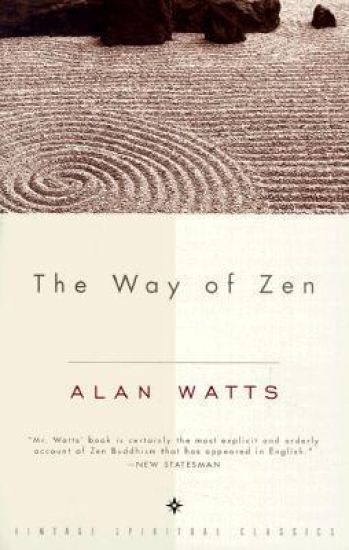
In his definitive introduction to Zen Buddhism, Alan Watts explains the principles and practices of this ancient religion to Western readers. With a rare combination of freshness and lucidity, he delves into the origins and history of Zen to explain what it means for the world today with incredible clarity. Watts saw Zen as "one of the most precious gifts of Asia to the world," and in The Way of Zen he gives this gift to readers everywhere.
In Nature, Man and Woman, philosopher Alan Watts reexamines humanity's place in the natural world--and the relation between body and spirit--in the light of Chinese Taoism. Western thought and culture have coalesced around a series of constructed ideas--that human beings stand separate from a nature that must be controlled; that the mind is somehow superior to the body; that all sexuality entails a seduction--that in some way underlie our exploitation of the earth, our distrust of emotion, and our loneliness and reluctance to love. Here, Watts fundamentally challenges these assumptions, drawing on the precepts of Taoism to present an alternative vision of man and the universe--one in which the distinctions between self and other, spirit and matter give way to a more holistic way of seeing.
A classic look at man's search for certainty from the acclaimed expert on Eastern philosophyIn this fascinating book, Alan Watts explores man's quest for psychological security, examining our efforts to find spiritual and intellectual certainty in the realms of religion and philosophy. The Wisdom of Insecurity underlines the importance of our search for stability in an age where human life seems particularly vulnerable and uncertain.Watts argues our insecurity is the consequence of trying to be secure and that, ironically, salvation and sanity lie in the recognition that we have no way of saving ourselves.Alan Watts was the foremost Western expert on Eastern thought, specialising in Zen Buddhism. He was the author of a number of books on the philosophy and psychology of religion, which have continued to be in popular demand over the past forty years.