Kirjailija
Alan Warde
Kirjat ja teokset yhdessä paikassa: 15 kirjaa, julkaisuja vuosilta 1997-2024, suosituimpien joukossa Culture, Class, Distinction. Vertaile teosten hintoja ja tarkista saatavuus suomalaisista kirjakaupoista.
15 kirjaa
Kirjojen julkaisuhaarukka 1997-2024.
How have eating habits changed in recent decades? What does it mean to eat well? This fascinating book examines continuity and change in food consumption and eating patterns since the 1950s. The culinary landscape of Britain is explored through discussion of commodification, globalisation and diversification enabling an understanding of both developing trends and enduring habits. The author’s research undertaken over 40 years offers fresh insights into such practices as everyday meals, shopping, cooking and dining out and how these are shaped by demographic, social and cultural processes. The book provides a comprehensive and engaging analysis of eating in Britain today and of the many controversies about how this has changed.
The Social Significance of Dining out
Alan Warde; Jessica Paddock; Jennifer Whillans
MANCHESTER UNIVERSITY PRESS
2022
nidottu
Dining out used to be considered exceptional. However, the Food Standards Authority reported that in 2014, one meal in six was eaten away from home in Britain. Previously considered a necessary substitute for an inability to obtain a meal in a family home, dining out has become a popular recreational activity for a majority of the population, offering pleasure as well as refreshment.Based on a major mixed-methods research project on dining out in England, this book offers a unique comparison of the social differences between London, Bristol and Preston from 1995 to 2015, charting the dynamic relationship between eating in and eating out. Addressing topics such as the changing domestic divisions of labour around food preparation, the variety of culinary experience for different sections of the population, and class differences in taste and the pleasures and satisfactions associated with dining out, the authors explore how the practice has evolved across the three cities.
The Social Significance of Dining out
Alan Warde; Jessica Paddock; Jennifer Whillans
Manchester University Press
2020
sidottu
Dining out used to be considered exceptional. However, the Food Standards Authority reported that in 2014, one meal in six was eaten away from home in Britain. Previously considered a necessary substitute for an inability to obtain a meal in a family home, dining out has become a popular recreational activity for a majority of the population, offering pleasure as well as refreshment.Based on a major mixed-methods research project on dining out in England, this book offers a unique comparison of the social differences between London, Bristol and Preston from 1995 to 2015, charting the dynamic relationship between eating in and eating out. Addressing topics such as the changing domestic divisions of labour around food preparation, the variety of culinary experience for different sections of the population, and class differences in taste and the pleasures and satisfactions associated with dining out, the authors explore how the practice has evolved across the three cities.
This book critically reviews recent social scientific investigations of consumption, a controversial topic with moral overtones, and of popular public interest and political and economic significance. The author explores how consumption affects personal identity and social position, developing a sociological analysis using theories of practice to account for everyday consumption, its role in the social order, and its consequences for environmental sustainability. The book offers a controversial analysis which explains consumption not in terms of the purchasing of commodities but of the organization and coordination of daily practices. Consumption will be of interest to scholars and students of sociology, anthropology, geography, cultural studies, consumer research, business studies and social theory.
This book reconstructs and extends sociological approaches to the understanding of food consumption. It identifies new ways to approach the explanation of food choice and it develops new concepts which will help reshape and reorient common understandings. Leading sociologist of food, Alan Warde, deals both with abstract issues about theories of practice and substantive analyses of aspects of eating, demonstrating how theories of practice can be elaborated and systematically applied to the activity of eating. The book falls into two parts. The first part establishes a basis for a practice-theoretic account of eating. Warde reviews research on eating, introduces theories of practice and constructs eating as a scientific object. The second part develops key concepts for the analysis of eating as a practice, showing how concepts like habit, routine, embodiment, repetition and convention can be applied to explain how eating is organised and coordinated through the generation, reproduction and transformation of a multitude of individual performances. The Practice of Eating thus addresses both substantive problems concerning the explanation of food habits and currently controversial issues in social theory, illustrated by detailed empirical analysis of some aspects of contemporary culinary life. It will become required reading for students and scholars of food and consumption in a wide range of disciplines, from sociology, anthropology and cultural studies to food studies, culinary studies and nutrition science.
Culture, Class, Distinction
Tony Bennett; Mike Savage; Elizabeth Bortolaia Silva; Alan Warde; Modesto Gayo-Cal; David Wright
Routledge
2009
nidottu
Culture, Class, Distinction is major contribution to international debates regarding the role of cultural capital in relation to modern forms of inequality. Drawing on a national study of the organisation of cultural practices in contemporary Britain, the authors review Bourdieu’s classic study of the relationships between culture and class in the light of subsequent debates. In doing so they re-appraise the relationships between class, gender and ethnicity, music, film, television, literary, and arts consumption, the organisation of sporting and culinary practices, and practices of bodily and self maintenance. As the most comprehensive account to date of the varied interpretations of cultural capital that have been developed in the wake of Bourdieu’s work, Culture, Class, Distinction offers the first systematic assessment of the relationships between cultural practice and the social divisions of class, gender and ethnicity in contemporary Britain. It is essential reading for anyone interested in the relationships between culture and society.
Culture, Class, Distinction
Tony Bennett; Mike Savage; Elizabeth Bortolaia Silva; Alan Warde; Modesto Gayo-Cal; David Wright
Routledge
2008
sidottu
Choice Recommended Title, February 2010Culture, Class, Distinction is major contribution to international debates regarding the role of cultural capital in relation to modern forms of inequality. Drawing on a national study of the organisation of cultural practices in contemporary Britain, the authors review Bourdieu’s classic study of the relationships between culture and class in the light of subsequent debates. In doing so they re-appraise the relationships between class, gender and ethnicity, music, film, television, literary, and arts consumption, the organisation of sporting and culinary practices, and practices of bodily and self maintenance. As the most comprehensive account to date of the varied interpretations of cultural capital that have been developed in the wake of Bourdieu’s work, Culture, Class, Distinction offers the first systematic assessment of the relationships between cultural practice and the social divisions of class, gender and ethnicity in contemporary Britain. It is essential reading for anyone interested in the relationships between culture and society.
The third edition of the highly-acclaimed Contemporary British Society is the only textbook to provide comprehensive coverage of all aspects of the social structure of modern Britain. Completely revised and updated, this new edition employs the very latest statistical information and empirical studies, and examines all the new arguments and debates concerning modern British society. Separate chapters explore the major areas of modern life in Britain - economic organization, employment, patterns of inequality, class, gender, ethnicity, family and households, education, health, media, deviance and politics. New to this edition are chapters on globalization, associations, and leisure. The emphasis throughout the book is on an accessible, user-friendly, and non-technical approach. It is written in a jargon-free and approachable style; there is extensive cross-referencing and frequent and clear summarizing of arguments; and numerous photographs, diagrams, graphs, drawings and cartoons complement and illuminate the text. Contemporary British Society is written for students of introductory sociology whether they are taking 'A' level or are in the first year of an undergraduate course in a higher education institution. It will also be useful for those taking courses in other subjects, such as social policy, health and town planning, which demand knowledge of particular aspects of British society. Please visit the accompanying website at: http://www.polity.co.uk/cbs3
The third edition of "Contemporary British Society" provides comprehensive coverage of all aspects of the social structure of modern Britain. Revised and updated, it employs statistical information and empirical studies, and examines arguments and debates concerning modern British society.
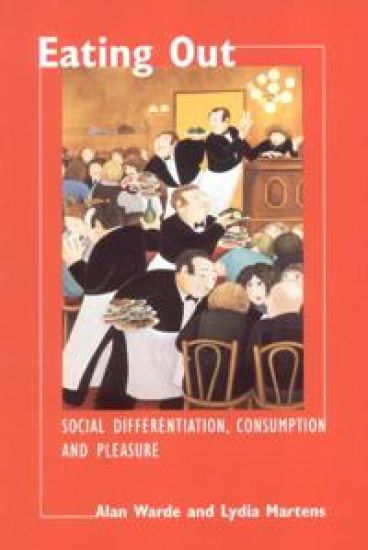
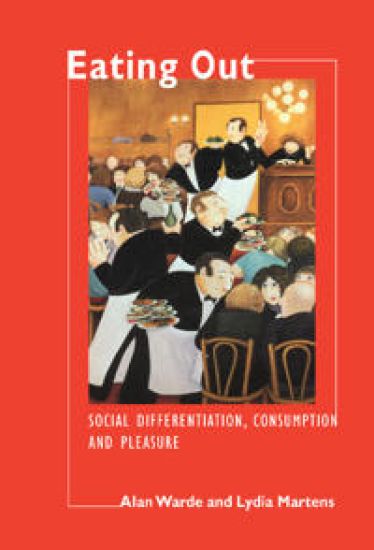
Eating Out is a fascinating study of the consumption of food outside the home, based on extensive original research carried out in England in the 1990s. Reflecting the explosion of interest in food, ranging from food scares to the national obsession with celebrity chefs, the practice of eating out has increased dramatically over recent years. Through surveys and intensive interviews, the authors have collected a wealth of information into people’s attitudes towards, and expectations of, eating out as a form of entertainment and an expression of taste and status. Amongst other topics they examine social inequalities in access to eating out, social distinction, interactions between customers and staff, and the economic and social implications of the practice. Eating Out will be a valuable resource to academics, advanced students and practitioners in the sociology of consumption, cultural studies, social anthropology, tourism and hospitality, home economics, marketing, and the general reader.
Exploring the expression of taste through the processes of consumption this book provides an incisive and accessible evaluation of the current theories of consumption, and trends in the representation and purchase of food. Alan Warde outlines various theories of change in the twentieth century, and considers the parallels between their diagnoses of consumer behaviour and actual trends in food practices. He argues that dilemmas of modern practical life and certain imperatives of the culture of consumption make sense of food selection. He suggests that contemporary consumption is best viewed as a process of continual selection among an unprecedented range of generally accessible items which are made available both commercially and informally.