Kirjojen hintavertailu. Mukana 12 390 323 kirjaa ja 12 kauppaa.

Kirjailija

Alastair Minnis

Kirjat ja teokset yhdessä paikassa: 11 kirjaa, julkaisuja vuosilta 2007-2021, suosituimpien joukossa The Cambridge Introduction to Chaucer. Vertaile teosten hintoja ja tarkista saatavuus suomalaisista kirjakaupoista.

11 kirjaa

Kirjojen julkaisuhaarukka 2007-2021.

Phantom Pains and Prosthetic Narratives

Phantom Pains and Prosthetic Narratives

Alastair Minnis

Cambridge University Press
2021
pokkari
'Phantom limb pain' designates the sensations which seem to emanate from limbs that in reality are missing. The phrase was coined by the American Civil War surgeon, Weir Mitchell, in reference to his fictional amputee, George Dedlow. Contemporary neuroscience holds that the brain encloses a schema which covers the whole body, and asserts its unity even if certain parts are missing. Reading backwards from Dedlow's sufferings, Alastair Minnis traces the medieval precedents and parallels, focusing on Augustine and Dante, who subscribed to the notion of a 'body in the soul'. Dante's souls in purgatory self-prosthesize with aerial phantoms as they long for the full embodiment which only the resurrection can bring. Is a complete body necessary for personhood? And how can the gamut of human feelings be run if parts or the entirety of one's body does not exist? Combining medieval studies and contemporary neuroscience, this absorbing study explores the fascinating and surprising history of phantom pain.
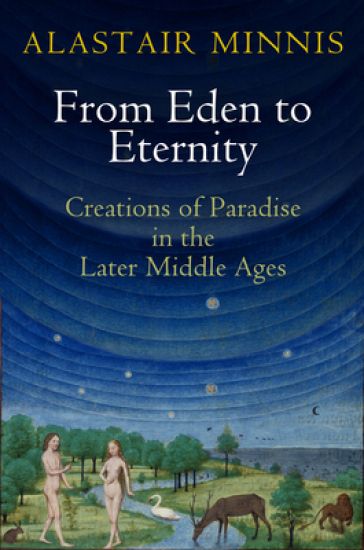
From Eden to Eternity

From Eden to Eternity

Alastair Minnis

University of Pennsylvania Press
2020
pokkari
An impressively learned and beautifully illustrated review of medieval ideas about Paradise Did Adam and Eve need to eat in Eden in order to live? If so, did human beings urinate and defecate in paradise? And since people had no need for clothing, transportation, or food, what purpose did animals serve? Would carnivorous animals have preyed on other creatures? These were but a few of the questions that plagued medieval scholars for whom the idea of Eden proved an endless source of contemplation. As theologians attempted to reconcile their own experiences with the realities of the prelapsarian paradise, they crafted complex answers that included explanations of God's interaction with creation, the existence of death, and man's dominion over nature. In From Eden to Eternity, Alastair Minnis examines accounts of the origins of the human body and soul to illustrate the ways in which the schoolmen thought their way back to Eden to discover fundamental truths about humanity. He demonstrates how theologians sought certainty in matters of orthodox Christian thought and also engaged in speculation about matters that, they freely admitted, were not susceptible to firm proof. Moreover, From Eden to Eternity argues that the preoccupation with paradise belonged not only to the schools but to society as a whole, and it traces how lay writers and artists also attempted to interpret the origins of human society. Eden transcended human understanding, yet it afforded an extraordinary amount of creative space to late medieval theologians, painters, and poets as they tried to understand the place that God had deemed worthy of the creature made in His image.
Hellish Imaginations from Augustine to Dante

Hellish Imaginations from Augustine to Dante

Alastair Minnis

Medium Aevum Monographs / Ssmll
2020
pokkari
Medieval literature and art abounds in descriptions of grotesque torments (punitive in hell, redemptive in purgatory) being meted out to the unhappy dead. But how can pain be experienced in the absence of the body? Can the main agents of suffering specified in Old Testament prophecies, fire and the worm, actually trouble a disembodied soul? The rel
Historians on Chaucer

Historians on Chaucer

Alastair Minnis

Oxford University Press
2018
nidottu
As literary scholars have long insisted, an interdisciplinary approach is vital if modern readers are to make sense of works of medieval literature. In particular, rather than reading the works of medieval authors as addressing us across the centuries about some timeless or ahistorical 'human condition', critics from a wide range of theoretical approaches have in recent years shown how the work of poets such as Chaucer constituted engagements with the power relations and social inequalities of their time. Yet, perhaps surprisingly, medieval historians have played little part in this 'historical turn' in the study of medieval literature. The aim of this volume is to allow historians who are experts in the fields of economic, social, political, religious, and intellectual history the chance to interpret one of the most famous works of Middle English literature, Geoffrey Chaucer's 'General Prologue' to the Canterbury Tales, in its contemporary context. Rather than resorting to traditional historical attempts to see Chaucer's descriptions of the Canterbury pilgrims as immediate reflections of historical reality or as portraits of real life people whom Chaucer knew, the contributors to this volume have sought to show what interpretive frameworks were available to Chaucer in order to make sense of reality and how he adapted his literary and ideological inheritance so as to engage with the controversies and conflicts of his own day. Beginning with a survey of recent debates about the social meaning of Chaucer's work, the volume then discusses each of the Canterbury pilgrims in turn. Historians on Chaucer should be of interest to all scholars and students of medieval culture whether they are specialists in literature or history.
From Eden to Eternity

From Eden to Eternity

Alastair Minnis

University of Pennsylvania Press
2015
sidottu
An impressively learned and beautifully illustrated review of medieval ideas about Paradise Did Adam and Eve need to eat in Eden in order to live? If so, did human beings urinate and defecate in paradise? And since people had no need for clothing, transportation, or food, what purpose did animals serve? Would carnivorous animals have preyed on other creatures? These were but a few of the questions that plagued medieval scholars for whom the idea of Eden proved an endless source of contemplation. As theologians attempted to reconcile their own experiences with the realities of the prelapsarian paradise, they crafted complex answers that included explanations of God's interaction with creation, the existence of death, and man's dominion over nature. In From Eden to Eternity, Alastair Minnis examines accounts of the origins of the human body and soul to illustrate the ways in which the schoolmen thought their way back to Eden to discover fundamental truths about humanity. He demonstrates how theologians sought certainty in matters of orthodox Christian thought and also engaged in speculation about matters that, they freely admitted, were not susceptible to firm proof. Moreover, From Eden to Eternity argues that the preoccupation with paradise belonged not only to the schools but to society as a whole, and it traces how lay writers and artists also attempted to interpret the origins of human society. Eden transcended human understanding, yet it afforded an extraordinary amount of creative space to late medieval theologians, painters, and poets as they tried to understand the place that God had deemed worthy of the creature made in His image.
The Cambridge Introduction to Chaucer

The Cambridge Introduction to Chaucer

Alastair Minnis

Cambridge University Press
2014
sidottu
Geoffrey Chaucer is the best-known and most widely read of all medieval British writers, famous for his scurrilous humour and biting satire against the vices and absurdities of his age. Yet he was also a poet of passionate love, sensitive to issues of gender and sexual difference, fascinated by the ideological differences between the pagan past and the Christian present, and a man of science, knowledgeable in astronomy, astrology and alchemy. This concise book is an ideal starting point for study of all his major poems, particularly The Canterbury Tales, to which two chapters are devoted. It offers close readings of individual texts, presenting various possibilities for interpretation, and includes discussion of Chaucer's life, career, historical context and literary influences. An account of the various ways in which he has been understood over the centuries leads into an up-to-date, annotated guide to further reading.
The Cambridge Introduction to Chaucer

The Cambridge Introduction to Chaucer

Alastair Minnis

Cambridge University Press
2014
pokkari
Geoffrey Chaucer is the best-known and most widely read of all medieval British writers, famous for his scurrilous humour and biting satire against the vices and absurdities of his age. Yet he was also a poet of passionate love, sensitive to issues of gender and sexual difference, fascinated by the ideological differences between the pagan past and the Christian present, and a man of science, knowledgeable in astronomy, astrology and alchemy. This concise book is an ideal starting point for study of all his major poems, particularly The Canterbury Tales, to which two chapters are devoted. It offers close readings of individual texts, presenting various possibilities for interpretation, and includes discussion of Chaucer's life, career, historical context and literary influences. An account of the various ways in which he has been understood over the centuries leads into an up-to-date, annotated guide to further reading.
Medieval Theory of Authorship

Medieval Theory of Authorship

Alastair Minnis

University of Pennsylvania Press
2010
pokkari
It has often been held that scholasticism destroyed the literary theory that was emerging during the twelfth-century Renaissance, and hence discussion of late medieval literary works has tended to derive its critical vocabulary from modern, not medieval, theory. In Medieval Theory of Authorship, now reissued with a new preface by the author, Alastair Minnis asks, "Is it not better to search again for a conceptual equipment which is at once historically valid and theoretically illuminating?" Minnis has found such writings in the glosses and commentaries on the authoritative Latin writers studied in schools and universities between 1100 and 1400. The prologues to these commentaries provide valuable insight into the medieval theory of authorship. Of special significance is scriptural exegesis, for medieval scholars found the Bible the most difficult text to describe appropriately and accurately.
Translations of Authority in Medieval English Literature

Translations of Authority in Medieval English Literature

Alastair Minnis

Cambridge University Press
2009
sidottu
In Translations of Authority in Medieval English Literature, leading critic Alastair Minnis presents the fruits of a long-term engagement with the ways in which crucial ideological issues were deployed in vernacular texts. The concept of the vernacular is seen as possessing a value far beyond the category of language - as encompassing popular beliefs and practices which could either confirm or contest those authorized by church and state institutions. Minnis addresses the crisis for vernacular translation precipitated by the Lollard heresy; the minimal engagement with Nominalism in late fourteenth-century poetry; Langland's views on indulgences; the heretical theology of Walter Brut; Margery Kempe's self-promoting biblical exegesis; and Chaucer's tales of suspicious saints and risible relics. These discussions disclose different aspects of 'vernacularity', enabling a fuller understanding of its complexity and potency.
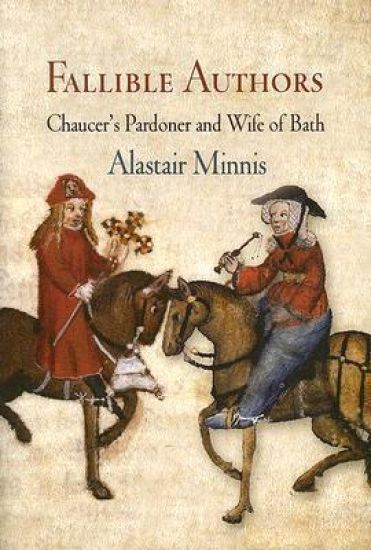
Fallible Authors

Fallible Authors

Alastair Minnis

University of Pennsylvania Press
2007
sidottu
Can an outrageously immoral man or a scandalous woman teach morality or lead people to virtue? Does personal fallibility devalue one's words and deeds? Is it possible to separate the private from the public, to segregate individual failing from official function? Chaucer addressed these perennial issues through two problematic authority figures, the Pardoner and the Wife of Bath. The Pardoner dares to assume official roles to which he has no legal claim and for which he is quite unsuited. We are faced with the shocking consequences of the belief, standard for the time, that immorality is not necessarily a bar to effective ministry. Even more subversively, the Wife of Bath, who represents one of the most despised stereotypes in medieval literature, the sexually rapacious widow, dispenses wisdom of the highest order. This innovative book places these "fallible authors" within the full intellectual context that gave them meaning. Alastair Minnis magisterially examines the impact of Aristotelian thought on preaching theory, the controversial practice of granting indulgences, religious and medical categorizations of deviant bodies, theological attempts to rationalize sex within marriage, Wycliffite doctrine that made authority dependent on individual grace and raised the specter of Donatism, and heretical speculation concerning the possibility of female teachers. Chaucer's Pardoner and Wife of Bath are revealed as interconnected aspects of a single radical experiment wherein the relationship between objective authority and subjective fallibility is confronted as never before.