Kirjojen hintavertailu. Mukana 12 595 353 kirjaa ja 12 kauppaa.
Kirjailija
Alastair Roberts
Kirjat ja teokset yhdessä paikassa: 3 kirjaa, julkaisuja vuosilta 2022-2024, suosituimpien joukossa Plough Quarterly No. 34 – Generations. Vertaile teosten hintoja ja tarkista saatavuus suomalaisista kirjakaupoista.
Simon Oliver; Sara Novic; Matthew Loftus; Arlie Coles; David Schaengold; Hannah Arendt; J. L. Wall; Alastair Roberts; Julian Peters; Robert Lee Williams
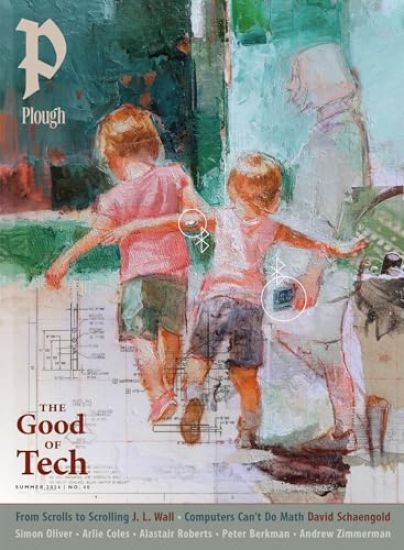
How can we live well with tech, without it becoming our master? These days, the heady promises of Silicon Valley seem suspect: the internet didn’t bring all of humanity together; neither did smartphones or social media. We have long since stopped associating tech with utopian visions of global harmony, instead blaming it for distraction, polarization, addictions to porn and gambling, the trivialization of culture, loss of privacy and work-life balance, and fears that automation may push millions out of a job. Advances in artificial intelligence seem poised to bring us to the next technological watershed. It’s a good time to ask how we can learn to live well with tech, and how we might push back against technologies that shape humans in anti-human ways. On this theme: Find out why computers can’t do math and humans can.When parenting from prison, a little tech can make a big difference.Glucose monitoring systems transform life for children with diabetes.Should ChatGPT write sermons and prayers?From scrolls to scrolling, tech has changed the way Jewish people read scriptureWill AI bring the end of the world, or is it already here?An intentional community tries to be intentional about personal technology.Our struggle with technology goes back to the Tower of Babel in Genesis.A farmer praises a simple piece of technology – the rock bar. Also in this issue: A photo essay about children on the frontlines in UkraineA philosopher’s proposal for a gift economyThe winners of the 2024 Rhina Espaillat Poetry AwardInsights from Gerard Manley Hopkins, E. F. Schumacher, Antoine de Saint-Exupéry, Jean-Pierre Dupuy, and Hannah ArendtReviews of Birding to Change the World, The Heaven & Earth Grocery Store, and All Things Are Too Small Plough Quarterly features stories, ideas, and culture for people eager to apply their faith to the challenges we face. Each issue includes in-depth articles, interviews, poetry, book reviews, and art.
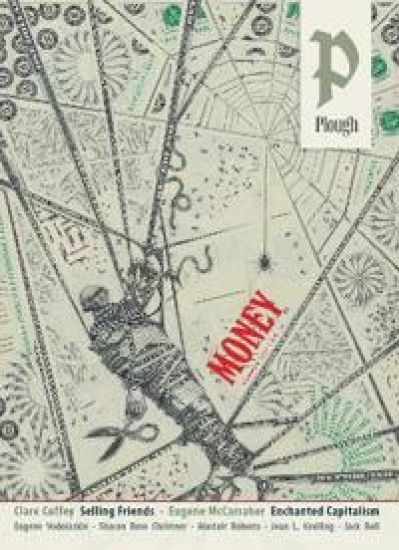
Main Description: This issue opens with the story of Melania and her real estate-magnate husband, who decide to divest themselves of their entire wealth. These early Christians, who sold off their many estates and freed eight thousand slaves, were only exceptional in the amount they gave away. Jesus, after all, had advised a rich man, “Go, sell your possessions, and give the money to the poor.” And he emphatically warned that you cannot serve two masters: you cannot serve God and money. What does that mean for Christians today, in a society and economy premised on the accumulation of capital? How can we resist and subvert the power of money? On this theme: - Clare Coffey looks at how multilevel marketing commodifies friendship. - Sharon Rose Christner describes what happens when a Vatican palace becomes a homeless shelter. - Alastair Roberts writes in praise of Mary of Bethany’s extravagant love. - A photojournalist asks what’s left of the Cuban Revolution seventy years after it began. - Jack Bell revisits William Cobbett’s spirited defense of the vanishing British commons. - Maria Weiss finds pain and friendship in the forced community of a leper colony. - Maureen Swinger reveals the joys and pitfalls of owning twenty-two cars (collectively). - Robert Lockridge describes what he’s learned running a pay-as-you-can café. Also in the issue: - The winning poems in the 2023 Rhina Espaillat Poetry Award contest - An excerpt from Eugene Vodolazkin’s new novel, A History of the Island - Reviews of Kerri ní Dochartaigh’s Thin Places, Lydia Millet’s Dinosaurs, and Jennifer Banks’s Natality - Readings on Christianity and money from Eberhard Arnold, Peter Riedemann, Nicolai Berdyaev, Basil of Caesarea, Maria Skobtsova, C. S. Lewis, and Dorothy Day Plough Quarterly features stories, ideas, and culture for people eager to apply their faith to the challenges we face. Each issue includes in-depth articles, interviews, poetry, book reviews, and art.
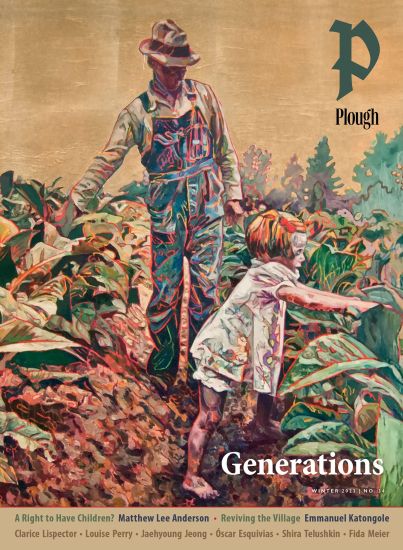
We’re born with a hunger for roots and a desire to pass on a legacy.The past two decades have seen a boom in family history services that combine genealogy with DNA testing, though this is less a sign of a robust connection to past generations than of its absence. Everywhere we see a pervasive rootlessness coupled with a cult of youth that thinks there is little to learn from our elders. The nursing home tragedies of the Covid-19 pandemic laid bare this devaluing of the old. But it’s not only the elderly who are negatively affected when the links between generations break down; the young lose out too. When the hollowing-out of intergenerational connections deprives youth of the sense of belonging to a story beyond themselves, other sources of identity, from trivial to noxious, will fill the void.Yet however important biological kinship is, the New Testament tells us it is less important than the family called into being by God’s promises. “Who is my mother, and who are my brothers?” Jesus asks a crowd of listeners, then answers: “Whoever does the will of my Father in heaven is my brother, and sister, and mother.” In this great intergenerational family, we are linked by a bond of brotherhood and sisterhood to believers from every era of the human story, past, present, and yet to be born. To be sure, our biological families and inheritances still matter, but heredity and blood kinship are no longer the primary source of our identity. Here is a cure for rootlessness.On this theme: - Matthew Lee Anderson argues that even in an age of IVF no one has a right to have a child. - Emmanuel Katongole describes how African Christians are responding to ecological degradation by returning to their roots. - Louise Perry worries that young environmentalist don’t want kids. - Helmuth Eiwen asks what we can do about the ongoing effects of the sins of our ancestors. - Terence Sweeney misses an absent father who left him nothing. - Wendy Kiyomi gives personal insight into the challenges of adopting children with trauma in their past. - Alastair Roberts decodes that long list of “begats” in Matthew’s Gospel. - Rhys Laverty explains why his hometown, Chessington, UK, is still a family-friendly neighborhood. - Springs Toledo recounts, for the first time, a buried family story of crime and forgiveness. - Monica Pelliccia profiles three generations of women who feed migrants riding the trains north.Also in the issue: - A new Christmas story by Óscar Esquivias, translated from the Spanish - Original poetry by Aaron Poochigian - Reviews of Kim Haines-Eitzen’s Sonorous Desert, Matthew P. Schneider’s God Loves the Autistic Mind, Adam Nicolson’s Life between the Tides, and Ash Davidson’s Damnation Spring. - An appreciation for Augustine’s mother, Monica - Short sketches by Clarice Lispector of her father and sonPlough Quarterly features stories, ideas, and culture for people eager to apply their faith to the challenges we face. Each issue includes in-depth articles, interviews, poetry, book reviews, and art.