Kirjojen hintavertailu. Mukana 12 390 323 kirjaa ja 12 kauppaa.

Kirjailija

Albert Camus

Kirjat ja teokset yhdessä paikassa: 231 kirjaa, julkaisuja vuosilta 1972-2026, suosituimpien joukossa The Stranger. Vertaile teosten hintoja ja tarkista saatavuus suomalaisista kirjakaupoista.

231 kirjaa

Kirjojen julkaisuhaarukka 1972-2026.

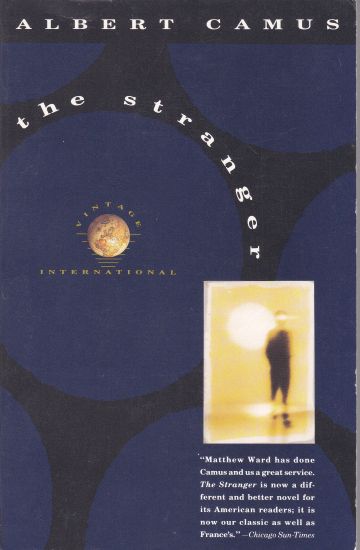
The Stranger

The Stranger

Albert Camus

Vintage Books
2014
nidottu
Through the story of an ordinary man unwittingly drawn into a senseless murder on an Algerian beach, Camus explored what he termed -the nakedness of man faced with the absurd.- First published in 1946; now in a new translation by Matthew Ward.
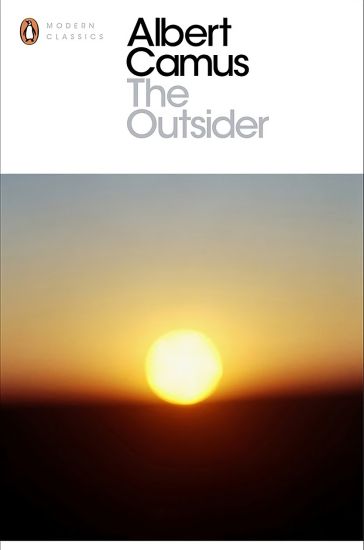
Outsider

Outsider

Albert Camus

Penguin Books Ltd.
2013
pokkari
Meursault, his anti-hero, will not lie. When his mother dies, he refuses to show his emotions simply to satisfy the expectations of others. And when he commits a random act of violence on a sun-drenched beach near Algiers, his lack of remorse compounds his guilt in the eyes of society and the law. Yet he is as much a victim as a criminal.
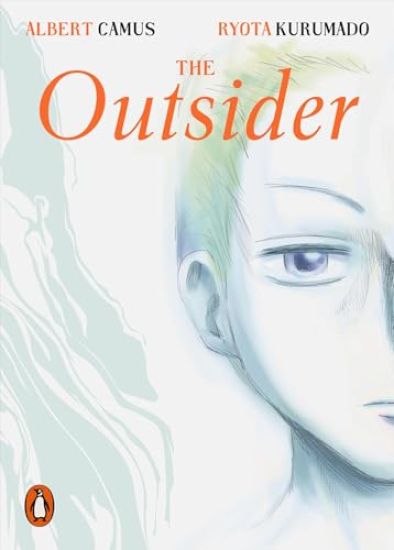
The Outsider

The Outsider

Albert Camus

PENGUIN BOOKS LTD
2024
nidottu
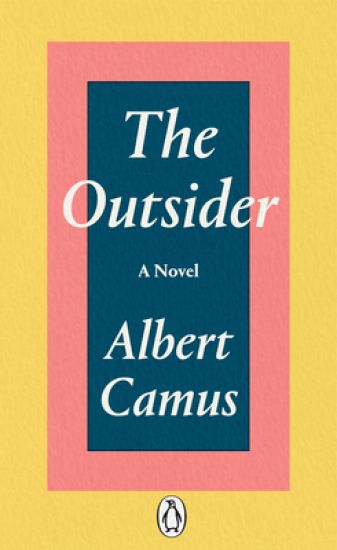
The first manga adaptation of one of the world’s greatest twentieth-century fiction classics'My mother died today. Or maybe yesterday, I don't know.'An outsider in society, an outsider in his own life, Meursault seems indifferent to everything. The death of his mother, a marriage proposal, the brutality of a friend… even the random act of violence he commits on a sun-drenched beach. An act which lands him in the dock, waiting for judgement.Adapted by the Japanese artist Ryota Kurumado, this is the first ever manga version of Albert Camus’s masterpiece: the portrayal of a man confronting the absurdity of human life.
Helen's Exile

Helen's Exile

Albert Camus

Eris
2024
pokkari
“The Greeks never said that the limit could not he overstepped. They said it existed and that whoever dared to exceed it was mercilessly struck down. Nothing in present history can contradict them.”Written in the aftermath of the Second World War, Albert Camus’s essay is a searching inquiry into the origins of the hubris and fanaticism that laid waste to twentieth-century Europe. At once a celebration of the classical virtues of balance and serenity and a warning to Camus’s contemporaries, Helen’s Exile is a profound analysis of the nature of modernity.
The Outsider

The Outsider

Albert Camus

PENGUIN BOOKS LTD
2022
sidottu
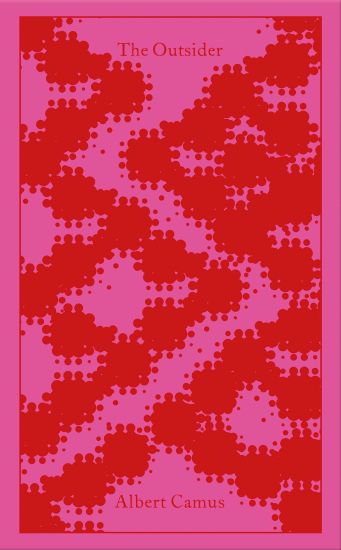
Albert Camus' existentialist masterpiece, now in a wonderful new Clothbound Classics editionIn The Outsider, his classic existentialist novel, Camus explores the alienation of an individual who refuses to conform to social norms. Meursault, his anti-hero, will not lie. When his mother dies, he refuses to show his emotions simply to satisfy the expectations of others. And when he commits a random act of violence on a sun-drenched beach near Algiers, his lack of remorse compounds his guilt in the eyes of society and the law. Yet he is as much a victim as a criminal.
The Outsider

The Outsider

Albert Camus

Penguin Classics
2020
nidottu
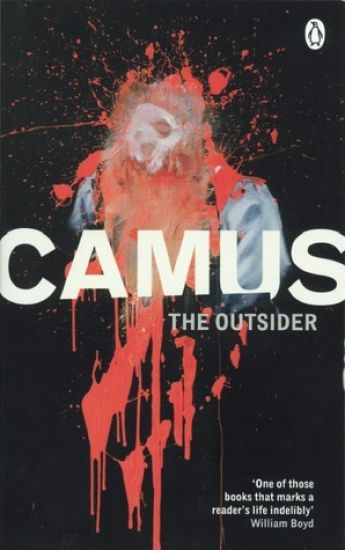
'One of those books that marks a reader's life indelibly' William Boyd'A compelling, dreamlike fable' GuardianIn The Outsider, Camus explores the alienation of an individual who refuses to conform to social norms. Meursault, his anti-hero, will not lie. When his mother dies, he refuses to show his emotions simply to satisfy the expectations of others. And when he commits a random act of violence on a sun-drenched beach near Algiers, his lack of remorse compounds his guilt in the eyes of society and the law. Yet he is as much a victim as a criminal.
(L'Etranger) The Outsider

(L'Etranger) The Outsider

Albert Camus

Oberon Books Ltd
2018
nidottu
Camus’ sparse parable about the human condition is one of the great stories of the 20th Century, here adapted for the stage by Booker prize winner Ben Okri. A faceless man who can no longer pretend, Mersault commits a senseless murder under the glare of the Algerian sun. On trial he feels distanced from proceedings, he is castigated for not expressing remorse, for not crying at his mother's funeral, and is forced to confront the hypocrisy and injustice of society. In an age where we are being increasingly told what to feel, The Outsider is a blast of uncompromising honesty.Albert Camus, French novelist, essayist, philosopher and Nobel laureate, was one of the most influential thinkers of the 20th Century. Ben Okri, author of The Famished Road, is one of contemporary literature’s most important writers. This adaption brings them together for a rare dramatisation of one of modern literature’s most celebrated works.
The Outsider

The Outsider

Albert Camus

Penguin Books Ltd
2010
nidottu
The Outsider is an enduring classic of existential writing by Albert Camus'Mother died today. Or maybe yesterday, I don't know'Meursault is different. He will not lie. He will not pretend. He is true to himself.So when his mother dies and he is unmoved, he refuses to do the proper thing and grieve. Returning to Algiers after the funeral, he carries on life as usual until he becomes involved in a violent murder.In court, it is clear that Meursault's guilt or innocence will not be determined by what he did or did not do. He is on trial for being different - an outsider.'The story of a beach murder, one of the century's classic novels. Blood and sand' J.G. Ballard'A compelling, dreamlike fable' GuardianAlbert Camus was born in Algeria in 1913. He studied philosophy in Algiers and then worked in Paris as a journalist. He was one of the intellectual leaders of the Resistance movement and, after the War, established his international reputation as a writer. His books include The Plague, The Just and The Fall, and he won the Nobel Prize for Literature in 1957. Camus was killed in a road accident in 1960.
The Outsider

The Outsider

Albert Camus

Everyman's Library
1998
sidottu
Albert Camus' laconic masterpiece about a Frenchman who murders an Arab in colonial Algeria is famous in its time for diagnosing a state of alienation and spiritual exhaustion which summed up the mood of the mid-twentieth century. Today, more than fifty years after its first appearance, we can see that this early success was no passing fashion: The Outsider continues to speak to us of ultimate things with the force of a parable and the excitement of a thriller and remains one of the most widely read and influential classics of the century.
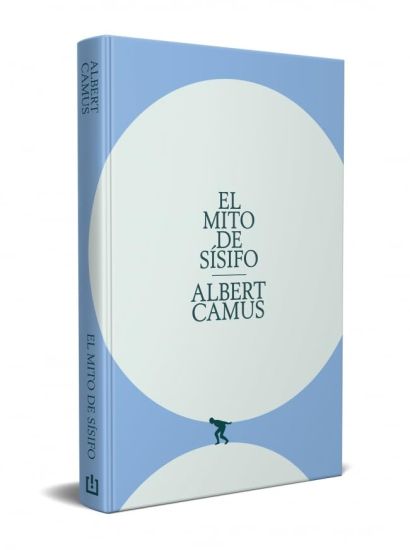
El Mito de Sísifo / The Myth of Sisyphus
No hay sino un problema filos fico realmente serio: el suicidio . El mito de S sifo es el ensayo fundacional de la filosof a del absurdo, una obra may scula que dio a conocer el gran talento de Albert Camus. Publicada en 1942, el mismo a o que El extranjero, fue una de las primeras obras que revelaron al p blico la inteligencia y la sensibilidad del autor. El t tulo del ensayo hace referencia a un personaje de la mitolog a griega que enfad a los dioses por su extraordinaria astucia y fue condenado a empujar perpetuamente una piedra enorme monta a arriba. Al llegar a la cima, la piedra volv a a caer hasta el valle, desde donde S sifo deb a volver a empujarla hasta la cumbre, y as eternamente. Por medio de esta alegor a, Camus discute la cuesti n del suicidio y el valor de la vida, presentando a S sifo como imagen del esfuerzo in til e incesante del hombre. De este modo plantea la filosof a del absurdo, seg n la cual nuestras vidas son insignificantes y no tienen m s valor que el de lo que creamos. Siendo el mundo tan f til, pregunta Camus, qu alternativa hay al suicidio? ENGLISH DESCRIPTION "There is only one truly serious philosophical problem: suicide." The Myth of Sisyphus is the foundational essay of the philosophy of the absurd, a major work that revealed the great talent of Albert Camus. Published in 1942, the same year as The Stranger, it was one of the first works to reveal the author's intelligence and sensitivity to the public. The title of the essay refers to a character from Greek mythology who angered the gods with his extraordinary cunning and was condemned to perpetually push a huge stone up a mountain. Upon reaching the summit, the stone would roll back down into the valley, from where Sisyphus would have to push it back up to the top, and so on forever. Through this allegory, Camus discusses the question of suicide and the value of life, presenting Sisyphus as an image of man's futile and incessant effort. In this way, he proposes the philosophy of the absurd, according to which our lives are meaningless and have no value other than that which we create. With the world being so futile, Camus asks, what alternative is there to suicide?
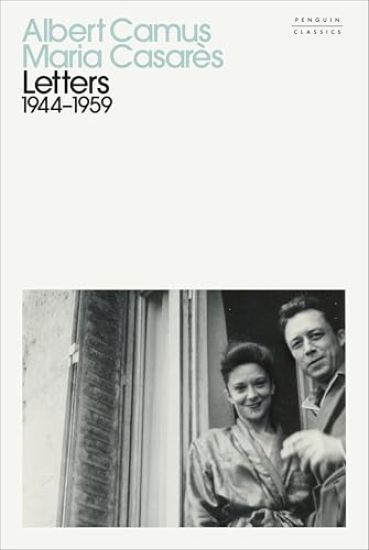
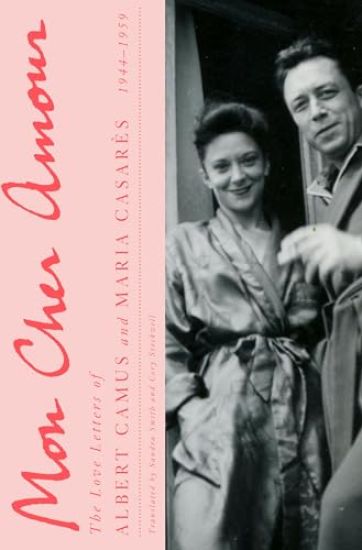
Mon Cher Amour: The Love Letters of Albert Camus and Maria Casares, 1944-1959
The impassioned correspondence between the Nobel Prize-winning author and the renowned Spanish French actress who appeared in his plays, tracing the extreme highs and lows of their all-consuming love affair--a bestseller in France, translated for the first time into English Albert. Albert ch ri. Write me sweet, passionate things. Tell me you love me and how you love me. Tell me you'll take me to the sea one day--any sea at all--and that we'll spend time on the shore and in the water. Tell me you'll always be with me. Tell me about you, and today, especially, talk to me about us. --Maria Casar s to Albert Camus, Feb 1, 1950 It's said that the affair began on June 6, 1944, the day the Allied forces landed in Normandy. The twenty-one-year-old Casar s was starring in a production of the thirty-year-old Camus's play The Misunderstanding--and one thing (an after-party hosted by Jean-Paul Sartre and Simone de Beauvoir) led to another. Though their fling would be cut short by the end of the Occupation--and the return to Paris of Camus's wife, Francine--the two were destined to meet again: four years later, to the day, they crossed paths by chance on the Boulevard Saint-Germain. Over the next twelve years, without interruption--until the car wreck of January 4, 1960, that stole Camus's life--the author and actress would correspond furiously, their words swelling and shimmering and surging like the ocean. Ah It's so hard to leave you, your dear face will again fade into the night, but I'll find you once more in this ocean you love, at the time of evening when the sky takes on the color of your eyes. --Albert Camus to Maria Casar s, June 1, 1949 Across 865 letters of immense and exquisite emotion, they cry and laugh and bicker and beg, make and break promises, talk Stendhal and Proust and Orwell, French theater, sickness, death, writer's block, and, most of all, they pine--leaving behind a record of one of the great love stories of the twentieth century.
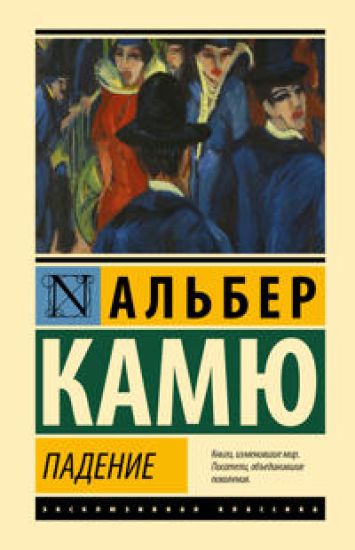
Padenie

Padenie

Albert Camus

Ast
2026
sidottu
"Padenie" - poslednjaja zakonchennaja povest A. Kamju. Pytajas otvetit na vechnyj vopros: "V chem smysl chelo-vecheskogo suschestvovanija?", pisatel vybiraet formu monologa-ispovedi geroja. Kamju obnazhaet naibolee strashnye chelovecheskie poroki, kotorye ne poddajutsja osuzhdeniju sudom kak instantsiej, no protivorechat dobrodeteli. Glavnyj geroj povesti, osoznav sebja litsemerom i greshnikom, ne otkazyvaetsja ot svoej suti, a nakhodit opravdanie dlja prodol-zhenija privychnoj emu zhizni... Nedarom Zhan-Pol Sartr kharakterizoval povest kak "samuju krasivuju i naimenee ponjatuju" knigu A. Kamju.
Krizis cheloveka

Krizis cheloveka

Albert Camus

Ast
2026
nidottu
V etom izdanii sobrano bolee tridtsati publichnykh vystuplenij Albera Kamju, v tom chisle rech na torzhestvennom bankete po sluchaju prisuzhdenija emu Nobelevskoj premii, "O Dostoevskom", "Neverujuschij i khristiane", "Zaschitnik svobody" i "Krizis cheloveka".Eti lektsii - rassuzhdenija Kamju o sudbe tsivilizatsii i o krizise, ovladevshem chelovechestvom, kotorye v polnoj mere otrazhajut ego vzgljad na sostojanie mira posle Vtoroj mirovoj.
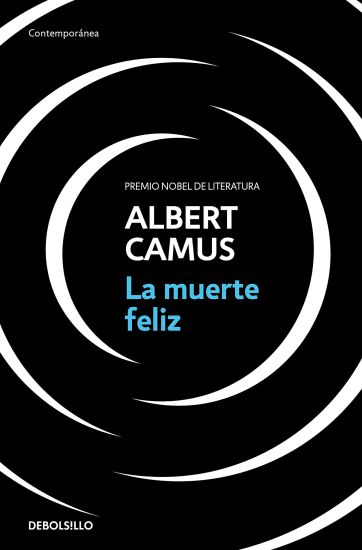
La Muerte Feliz / A Happy Death

La Muerte Feliz / A Happy Death

Albert Camus

Debolsillo
2026
nidottu
In dita en vida del autor, La muerte feliz es la primera novela escrita por Albert Camus y una notable precursora de El extranjero. Albert Camus escribi La muerte feliz en 1935, cuando contaba con solo veintitr s a os de edad. Pese a dejar el texto casi terminado, nunca intent publicarlo, y todo indica que lo aparc para volcarse en su siguiente proyecto, El extranjero. As pues, hubo que esperar hasta 1971, once a os despu s de su muerte, para que el in dito saliera a la luz. Pero la espera no fue en vano. En sus evocaciones l ricas del mar y el paisaje mediterr neo, La muerte feliz aporta claves sobre la experiencia de Camus en Argelia, mientras que su trama y sus personajes prefiguran la cosmovisi n que el autor expuso poco despu s en su «ciclo del absurdo . Le da hoy, esta notable novela de juventud no solo es imprescindible para descubrir las primeras muestras del enorme talento de Camus, sino que resulta un libro fascinante por derecho propio. ENGLISH DESCRIPTION The first novel from the Nobel Prize-winning author lays the foundation for The Stranger, telling the story of an Algerian clerk who kills a man in cold blood. In A Happy Death, written when Albert Camus was in his early twenties and retrieved from his private papers following his death in 1960, revealed himself to an extent that he never would in his later fiction. For if A Happy Death is the study of a rule-bound being shattering the fetters of his existence, it is also a remarkably candid portrait of its author as a young man. As the novel follows the protagonist, Patrice Mersault, to his victim's house -- and then, fleeing, in a journey that takes him through stages of exile, hedonism, privation, and death -it gives us a glimpse into the imagination of one of the great writers of the twentieth century. For here is the young Camus himself, in love with the sea and sun, enraptured by women yet disdainful of romantic love, and already formulating the philosophy of action and moral responsibility that would make him central to the thought of our time.

The Complete Notebooks

The Complete Notebooks

Albert Camus

THE UNIVERSITY OF CHICAGO PRESS
2025
sidottu
The first complete translation of Albert Camus’s personal notebooks written between 1933 and 1959, including new material never before published in English. Throughout his career, French writer and philosopher Albert Camus kept a series of notebooks that offers an unrivaled glimpse into the writer at his most personal and reflective. These notebooks contain his thoughts on politics, solitude, personal failings and regrets, his travels, and his relationships with friends and rivals. They also provide insight into his process as a thinker—his frustrations, his ideas for novels and plays (some pursued and others abandoned), his routines, his aspirations, and his self-recriminations. For Camus devotees, there is no more intimate experience than reading these notebooks. On the one hand, his fallibility is on full display: He is irritated by mediocrity, frustrated with his health, plagued by insomnia, and miserable about life’s petty necessities. Yet, he is also intensely curious and observant, sometimes moved to rapture by landscapes and people. Readers will experience the bounty of Camus’s philosophical imagination and will witness firsthand how his ideas take shape. The notebooks contain drafts of letters to friends and recorded reflections on the compromises that being in the world demands. This publication marks the first time Camus’s complete notebooks have been published in one comprehensive volume. Expertly and movingly translated by Ryan Bloom with extensive footnotes contextualizing the entries, The Complete Notebooks will remain a literary treasure for years to come.
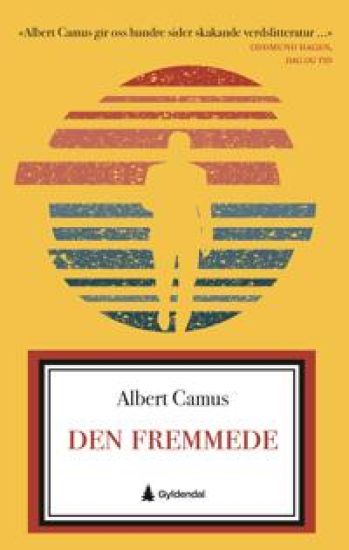
Den fremmede

Den fremmede

Albert Camus

Gyldendal
2025
nidottu
Kontorarbeideren Meursault beveger seg som en fremmed gjennom livet. Han arbeider, elsker, dreper og dømmes uten å vite hvorfor. Som en likegyldig tilskuer følger han rettssaken som avgjør skjebnen hans, for døden kan bare bli en stum protest mot en verdensorden han aldri har godtatt og som ikke angår ham. Dette er den klassiske fortellingen om menneskets fremmedfølelse og dets nederlag overfor tilfeldighetenes spill – enkel, krystallklar og lavmælt, men desto sterkere i sin virkning. Den fremmede (1942) er nobelprisvinneren Albert Camus debutroman og også blant hans mest kjente verker. Til tross for sitt beskjedne format, hører boken til hovedverkene i det 20. århundrets litteratur. «Albert Camus gir oss hundre sider skakande verdslitteratur [...] når ein les debutromanen hans frå 1942 ... blir ein slått av kor moderne han er også i dag, både i tilslaget og i tankegangen, 73 år seinare.» Oddmund Hagen, Dag og Tid
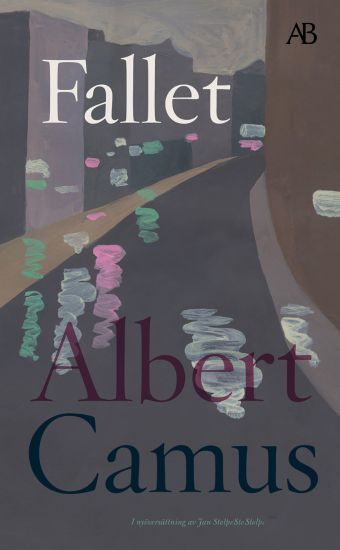
Fallet

Fallet

Albert Camus; Lydia Sandgren

Albert Bonniers Förlag
2025
pokkari
Parisaren Jean-Baptiste Clamence, en tidigare respekterad advokat och försvarare av fattiga och utstötta, har efter sitt spektakulära fall sökt tillflykt i Amsterdam. På en sliten hamnkrog agerar Clamence sin egen domare och pläderar föraktfullt om sin meningslösa existens. ”Fallet” utkom första gången 1956 och räknas vid sidan om ”Främlingen” och ”Pesten” som en av Camus viktigaste romaner.
Travels in the Americas

Travels in the Americas

Albert Camus

THE UNIVERSITY OF CHICAGO PRESS
2025
nidottu
Albert Camus’s lively journals from his eventful visits to the United States and South America in the 1940s, available again in a new translation. In March 1946, the young Albert Camus crossed from Le Havre to New York. Though he was virtually unknown to American audiences at the time, all that was about to change—The Stranger, his first book translated into English, would soon make him a literary star. By 1949, when he set out on a tour of South America, Camus was an international celebrity. Camus’s journals offer an intimate glimpse into his daily life during these eventful years and showcase his thinking at its most personal—a form of observational writing that the French call choses vues (things seen). Camus’s journals from these travels record his impressions, frustrations, joys, and longings. Here are his unguarded first impressions of his surroundings and his encounters with publishers, critics, and members of the New York intelligentsia. Long unavailable in English, the journals have now been expertly retranslated by Ryan Bloom, with a new introduction by Alice Kaplan. Bloom’s translation captures the informal, sketch-like quality of Camus’s observations—by turns ironic, bitter, cutting, and melancholy—and the quick notes he must have taken after exhausting days of travel and lecturing. Bloom and Kaplan’s notes and annotations allow readers to walk beside the existentialist thinker as he experiences changes in his own life and the world around him, all in his inimitable style.