Kirjojen hintavertailu. Mukana 12 595 353 kirjaa ja 12 kauppaa.

Kirjailija

Albert Einstein

Kirjat ja teokset yhdessä paikassa: 241 kirjaa, julkaisuja vuosilta 1916-2026, suosituimpien joukossa New Evidence of the Militarization of America. Vertaile teosten hintoja ja tarkista saatavuus suomalaisista kirjakaupoista.

241 kirjaa

Kirjojen julkaisuhaarukka 1916-2026.

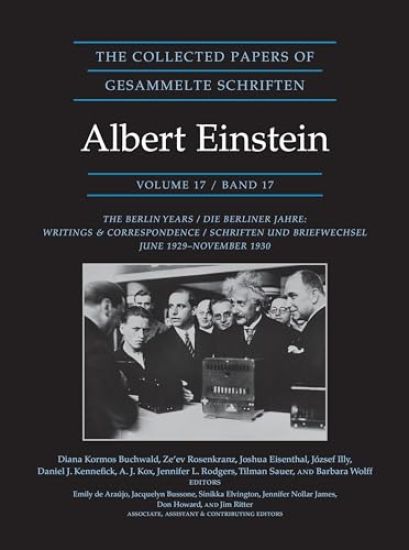
The Collected Papers of Albert Einstein, Volume 17 (Documentary Edition)
A definitive scholarly edition of the correspondence and papers of Albert EinsteinThis volume finds Einstein recovered and traveling again after a prolonged illness, to Paris, London, and Zurich to receive three honorary doctorates; to the Sixth Solvay Congress in Brussels and to Leyden; and to attend the Constituent Meeting of the Jewish Agency Council in Zurich and the twelfth session of the ICIC in Geneva. By the end of the volume, Einstein embarks on a transatlantic voyage for the first time in five years to spend an academic term at the California Institute of Technology in Pasadena.Einstein’s work focuses on the teleparallel approach to unified field theory, on which he engages in intensive correspondence with Élie Cartan and begins his collaboration with Walther Mayer. He also presents popular accounts of his work, surveying the historical progression from classical to twentieth-century physics leading up to the latest developments in unified field theory. He also engages in lively exchanges on both technical and foundational issues in quantum mechanics with W. Pauli, M. Born, M. Schlick, and others.His personal correspondence reflects eventful changes: the Einsteins realize their dream of owning a summer house outside Berlin, Einstein becomes a grandfather, his younger son Eduard commences his university studies and has his first serious mental health crisis, and his younger stepdaughter Margot gets married.Einstein’s ties to the Zionist movement are seriously tested in the wake of the violence that erupts in British Mandate Palestine in 1929, to which he reacts with forceful calls for a genuine symbiosis between Jews and Arabs, proposing the establishment of joint administrative, economic, and social organizations. He warns that without finding “the path to honest cooperation and honest negotiations with the Arabs,” “we [Jews] have learned nothing from our two-thousand-year ordeal and deserve the fate that will befall us.”In Germany, too, Einstein champions democracy in the face of rising support for the Nazi Party, is active on behalf of Jewish refugees, opposes the death penalty, and supports abortion rights and the decriminalization of homosexuality.Einstein promotes pacifism more vigorously. His efforts to promote peace follow three distinct transnational avenues: disarmament, conscientious objection, and apolitical pacifism, aimed “to find practical mechanisms to restrict the nation state.”
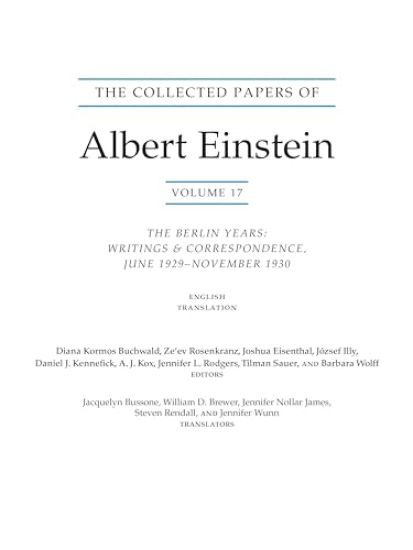
The Collected Papers of Albert Einstein, Volume 17 (Translation Supplement)
An English-language edition of selected correspondence and papers of Albert EinsteinA translation of selected non-English texts included in Volume 17 is available in paperback. Since this supplementary paperback includes only select portions of Volume 17, it is not recommended for purchase without the main volume.Every document in The Collected Papers of Albert Einstein appears in the language in which it was written, and this supplementary paperback volume presents the English translations of select portions of non-English materials in Volume 17. This translation does not include notes or annotations of the documentary volume and is not intended for use without the original language documentary edition, which provides the extensive editorial commentary necessary for a full historical and scientific understanding of the documents.
The Foundation of the Generalized Theory of Relativity
The theory which is sketched in the following pages forms the most wide-going generalization conceivable of what is at present known as "the theory of Relativity;" this latter theory I differentiate from the former "Special Relativity theory," and suppose it to be known. The generalization of the Relativity theory has been made much easier through the form given to the special Relativity theory by Minkowski, which mathematician was the first to recognize clearly the formal equivalence of the space like and time-like co-ordinates, and who made use of it in the building up of the theory. The mathematical apparatus useful for the general relativity theory, lay already complete in the "Absolute Differential Calculus", which were based on the researches of Gauss, Riemann and Christoffel on the non-Euclidean manifold, and which have been shaped into a system by Ricci and Levi-Civita, and already applied to the problems of theoretical physics. I have in part B of this communication developed in the simplest and clearest manner, all the supposed mathematical auxiliaries, not known to Physicists, which will be useful for our purpose, so that, a study of the mathematical literature is not necessary for an understanding of this paper. Finally in this place I thank my friend Grossmann, by whose help I was not only spared the study of the mathematical literature pertinent to this subject, but who also aided me in the researches on the field equations of gravitation.
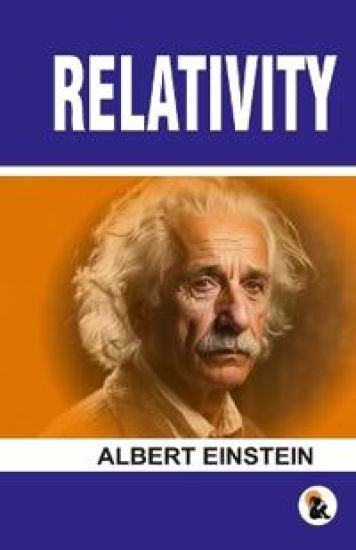
Relativity (Translated)

Relativity (Translated)

Albert Einstein

Blurb
2024
sidottu
Relativity: The Special and the General Theory began as a short paper and was eventually published as a book written by Albert Einstein with the aim of giving: "an exact insight into the theory of relativity to those readers who, from a general scientific and philosophical point of view, are interested in the theory, but who are not conversant with the mathematical apparatus of theoretical physics. (From Preface) It was first published in German in 1916 and later translated into English in 1920. 1] 2] 3] It is divided into 3 parts, the first dealing with special relativity, the second dealing with general relativity and the third dealing with considerations on the universe as a whole. There have been many versions published since the original in 1916 and this proves to be the best translated English edition.
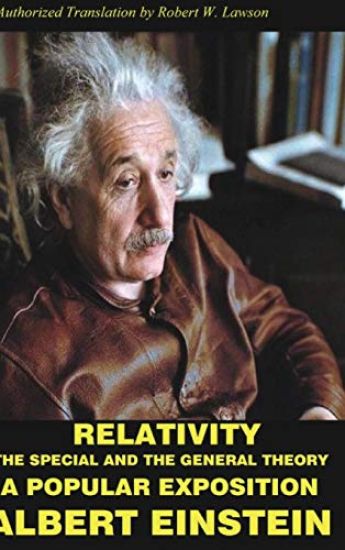
Relativity

Relativity

Albert Einstein

Blurb
2024
sidottu
The present book is intended, as far as possible, to give an exact insight into the theory of Relativity to those readers who, from a general scientific and philosophical point of view, are interested in the theory, but who are not conversant with the mathematical apparatus of theoretical physics. The work presumes a standard of education corresponding to that of a university matriculation examination, and, despite the shortness of the book, a fair amount of patience and force of will on the part of the reader. The author has spared himself no pains in his endeavor to present the main ideas in the simplest and most intelligible form, and on the whole, in the sequence and connection in which they actually originated. In the interest of clearness, it appeared to me inevitable that I should repeat myself frequently, without paying the slightest attention to the elegance of the presentation. I adhered scrupulously to the precept of that brilliant theoretical physicist L. Boltzmann, according to whom matters of elegance ought to be left to the tailor and to the cobbler. I make no pretence of having withheld from the reader difficulties which are inherent to the subject. On the other hand, I have purposely treated the empirical physical foundations of the theory in a "step-motherly" fashion, so that readers unfamiliar with physics may not feel like the wanderer who was unable to see the forest for the trees. May the book bring someone a few happy hours of suggestive thought December, 1916 A. EINSTEIN
Mathematical Foundation of the General Theory of Relativity
The theory which is sketched in the following pages forms the most wide-going generalization conceivable of what is at present known as "the theory of Relativity;" this latter theory I differentiate from the former "Special Relativity theory," and suppose it to be known. The generalization of the Relativity theory has been made much easier through the form given to the special Relativity theory by Minkowski, which mathematician was the first to recognize clearly the formal equivalence of the space like and time-like co-ordinates, and who made use of it in the building up of the theory. The mathematical apparatus useful for the general relativity theory, lay already complete in the "Absolute Differential Calculus", which were based on the researches of GAUSS, RIEMANN and CHRISTOFFEL on the non-Euclidean manifold, and which have been shaped into a system by RICCI and LEVI-CIVITA, and already applied to the problems of theoretical physics. I have in part B of this communication developed in the simplest and clearest manner, all the supposed mathematical auxiliaries, not known to Physicists, which will be useful for our purpose, so that, a study of the mathematical literature is not necessary for an understanding of this paper. Finally in this place I thank my friend GROSSMANN, by whose help I was not only spared the study of the mathematical literature pertinent to this subject, but who also aided me in the researches on the field equations of gravitation.