Kirjojen hintavertailu. Mukana 12 523 786 kirjaa ja 12 kauppaa.
Kirjailija
Albert G. MacKey
Kirjat ja teokset yhdessä paikassa: 189 kirjaa, julkaisuja vuosilta 1994-2025, suosituimpien joukossa The French Masonic Guilds of the Middle Ages. Vertaile teosten hintoja ja tarkista saatavuus suomalaisista kirjakaupoista.
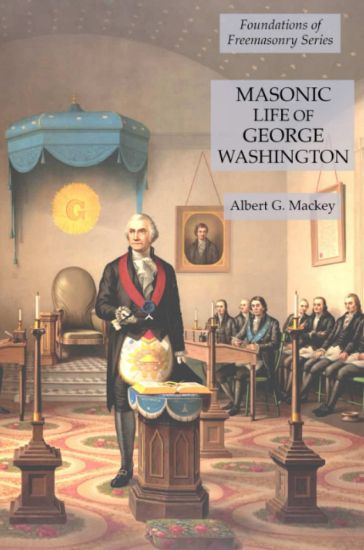
Masonic scholar Albert G. Mackey outlines the biography of our most notable American president, George Washington. This was originally a lecture given by him, in South Carolina. Additionally, presented here is the masonic testimony of George Washington. Also included is supplementary material relating to the masonic biographies of other U.S. presidents.
Prominent masonic scholars explore how the religion of the Druids played a role in the history of the masonic fraternity. Included here are: Druidism and Freemasonry, The Druidic Mysteries of Britain and Gaul, The Druidical Mysteries and Freemasonry and the Druids.m
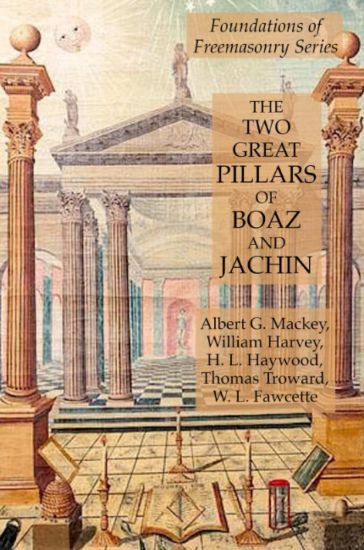
Prominent masonic scholars explore the history, myth and symbolism behind Freemasonry's twin pillars. Included here are: The Two Great Pillars, Pillars of the Porch, The Dual Unity of Jachin and Boaz, The History of the Two Pillars and The Pillars of Freemasonry.
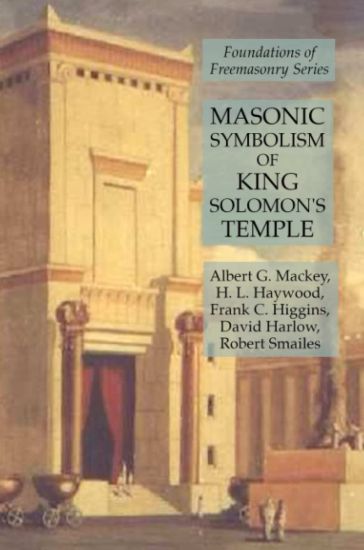
Prominent masonic scholars explore the history, myth and symbolism behind Freemasonry's greatest edifice, the Temple of Solomon the King. Included here are: The Symbolism of Solomon's Temple, Solomon's Temple, The Middle Chamber of Solomon's Temple, Esoteric Symbolism of King Solomon's Temple, A Short Explanation of the Seal of Solomon and King Solomon's Temple and the Story of the Third Degree.
Prominent masonic scholars discuss the meaning and symbolism behind the common stone and its placement, which is frequently encountered, in a variety of different ways, throughout the masonic journey. Presented here are the essays: Symbolism of the Corner Stone by Albert G. Mackey, The North-East Corner by William Harvey and Religious & Masonic Symbolism of Stones by William Wynn Westcott.
Prominent masonic scholars explore the history, myth and symbolism behind Freemasonry's most prominent character; the one our rituals are quite literally built around. Presented here are the essays: The Story of Hiram Abiff by William Harvey, The Legend of Hiram Abiff by Manly P. Hall and The Hiramic Legend by Albert G. Mackey.
Prominent masonic scholars discuss the meaning and symbolism behind the three Blue Lodge degrees of Freemasonry, which every mason will encounter, during his initiatic journey. Presented here are the essays: Studies in Blue Lodge Symbolism by H. L. Haywood, Symbolism of the First Degree by Asahel W. Gage, The Wages of an Entered Apprentice by William Harvey, Discourse on the Fellowcraft Degree by Arthur Edward Waite, The Legend of the Winding Stairs by Albert G. Mackey, The Third Degree: Its Ornaments and Emblems by William Harvey and Soliloquy For a Master Mason.
A small collection of three pieces exploring the impact and legacy that Pythagoras has left on both Freemasonry, as well as modern, esoteric, philosophical thought. Includes "The Influence of Pythagoras on Freemasonry" by Albert G. Mackey, "The Golden Verses of Pythagoras" which is traditionally attributed to Pythagoras himself and "The Life and Philosophy of Pythagoras" by Manly P. Hall. This is a nice primer for someone becoming interested in Pythagoras.
Of the various modes of communicating instruction to the uninformed, the Masonic student is particularly interested in two; namely, the instruction by legends and that by symbols. It is to these two, almost exclusively, that he is indebted for all that he knows, and for all that he can know, of the philosophic system which is taught in the institution. All its mysteries and its dogmas, which constitute its philosophy, are entrusted for communication to the neophyte, sometimes to one, sometimes to the other of these two methods of instruction, and sometimes to both of them combined. The Freemason has no way of reaching any of the esoteric teachings of the Order except through the medium of a legend or a symbol. A legend differs from an historical narrative only in this-that it is without documentary evidence of authenticity. It is the offspring solely of tradition. Its details may be true in part or in whole. There may be no internal evidence to the contrary, or there may be internal evidence that they are altogether false. But neither the possibility of truth in the one case, nor the certainty of falsehood in the other, can remove the traditional narrative from the class of legends. It is a legend simply because it rests on no written foundation. It is oral, and therefore legendary. In grave problems of history, such as the establishment of empires, the discovery and settlement of countries, or the rise and fall of dynasties, the knowledge of the truth or falsity of the legendary narrative will be of importance, because the value of history is impaired by the imputation of doubt. But it is not so in Freemasonry. Here there need be no absolute question of the truth or falsity of the legend. The object of the Masonic legends is not to establish historical facts, but to convey philosophical doctrines. They are a method by which esoteric instruction is communicated, and the student accepts them with reference to nothing else except their positive use and meaning as developing Masonic dogmas. Take, for instance, the Hiramic legend of the third degree. Of what importance is it to the disciple of Masonry whether it be true or false? All that he wants to know is its internal signification; and when he learns that it is intended to illustrate the doctrine of the immortality of the soul, he is content with that interpretation, and he does not deem it necessary, except as a matter of curious or antiquarian inquiry, to investigate its historical accuracy, or to reconcile any of its apparent contradictions. So of the lost keystone; so of the second temple; so of the hidden ark: these are to him legendary narratives, which, like the casket, would be of no value were it not for the precious jewel contained within. Each of these legends is the expression of a philosophical idea. But there is another method of Masonic instruction, and that is by symbols. No science is more ancient than that of symbolism. At one time, nearly all the learning of the world was conveyed in symbols. And although modern philosophy now deals only in abstract propositions, Freemasonry still cleaves to the ancient method, and has preserved it in its primitive importance as a means of communicating knowledge. According to the derivation of the word from the Greek, "to symbolize" signifies "to compare one thing with another." Hence a symbol is the expression of an idea that has been derived from the comparison or contrast of some object with a moral conception or attribute. Thus we say that the plumb is a symbol of rectitude of conduct. The physical qualities of the plumb are here compared or contrasted with the moral conception of virtue, or rectitude. Then to the Speculative Mason it becomes, after he has been taught its symbolic meaning, the visible expression of the idea of moral uprightness. Albert G. mackey
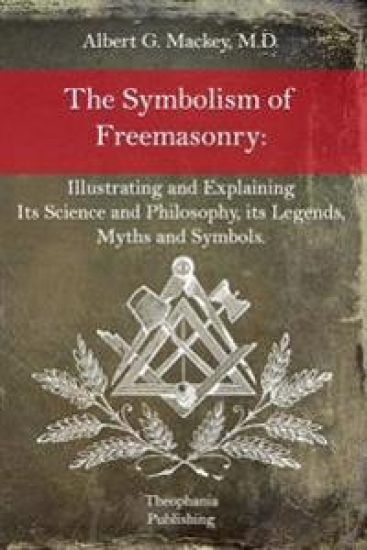
To study the symbolism of Masonry is the only way to investigate its philosophy. This is the portal of its temple, through which alone we can gain access to the sacellum where its aporrheta are concealed. Its philosophy is engaged in the consideration of propositions relating to God and man, to the present and the future life. Its science is the symbolism by which these propositions are presented to the mind. The work now offered to the public is an effort to develop and explain this philosophy and science. It will show that there are in Freemasonry the germs of profound speculation. If it does not interest the learned, it may instruct the ignorant. If so, I shall not regret the labor and research that have been bestowed upon its composition. Albert G. Mackey, M.D. Charleston, S.C., Feb. 22, 1869