Kirjojen hintavertailu. Mukana 12 390 323 kirjaa ja 12 kauppaa.

Kirjailija

Albert Hofmann

Kirjat ja teokset yhdessä paikassa: 18 kirjaa, julkaisuja vuosilta 1988-2025, suosituimpien joukossa LSD My Problem Child. Vertaile teosten hintoja ja tarkista saatavuus suomalaisista kirjakaupoista.

18 kirjaa

Kirjojen julkaisuhaarukka 1988-2025.

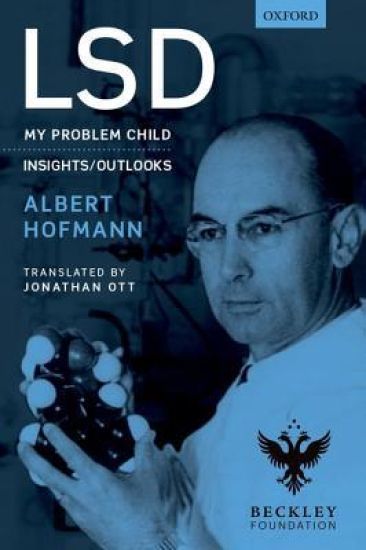
LSD My Problem Child

LSD My Problem Child

Albert Hofmann

Multidisciplinary Association for Psychedelic Studies
2023
nidottu
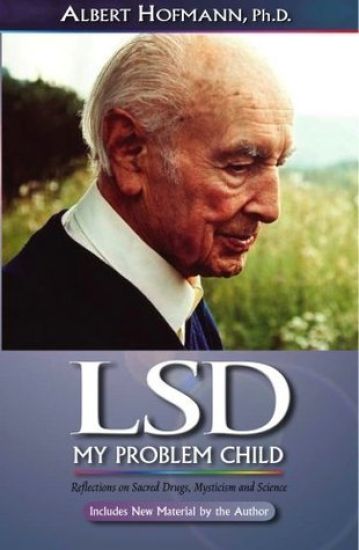
This is the story of LSD told by a concerned yet hopeful father, organic chemist Albert Hofmann, Ph.D. He traces LSD's path from a promising psychiatric research medicine to a recreational drug sparking hysteria and prohibition. In LSD: My Problem Child, we follow Dr. Hofmann's trek across Mexico to discover sacred plants related to LSD, and listen in as he corresponds with other notable figures about his remarkable discovery. Underlying it all is Dr. Hofmann's powerful conclusion that mystical experiences may be our planet's best hope for survival. Whether induced by LSD, meditation, or arising spontaneously, such experiences help us to comprehend the wonder, the mystery of the divine, in the microcosm of the atom, in the macrocosm of the spiral nebula, in the seeds of plants, in the body and soul of people. More than sixty years after the birth of Albert Hofmann's problem child, his vision of its true potential is more relevant, and more needed, than ever.

Die elektrische Hoch- und Untergrundbahn in Berlin

Die elektrische Hoch- und Untergrundbahn in Berlin

Fritz Eiselen; Albert Hofmann

Books on Demand
2022
pokkari
Mit der Er ffnung der Berliner Hoch- und Untergrundbahn am 18. Februar 1902 fanden zehn Jahre Planung und Bau der ersten deutschen U-Bahn ihren vorl ufigen Abschluss. Die damaligen Redakteure der Deutschen Bauzeitung Fritz Eiselen und Albert Hofmann schildern die Arbeiten aus Sicht der Ingenieure und Architekten. Dabei gehen sie nicht nur auf die technischen Aspekte ein, sondern widmen sich auch der k nstlerischen Ausgestaltung der Strecke und der Bahnh fe. Zahlreiche Fotos und Zeichnungen illustrieren dieses Zeitdokument der Berliner Verkehrsgeschichte.
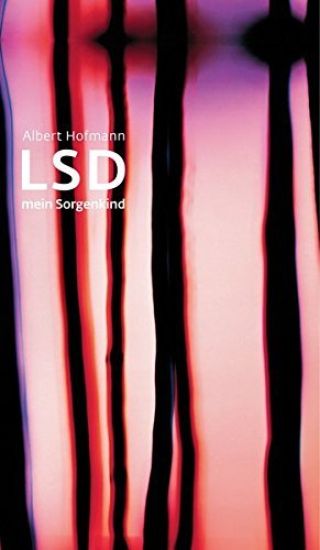
LSD

LSD

Albert Hofmann

Oxford University Press
2018
nidottu
Albert Hofmann, who died in 2008 aged 102, first synthesized lysergic acid diethylamide (LSD) in 1938, but the results of animal tests were so unremarkable that the chemical was abandoned. Driven by intuition, he synthesized it again in 1943, and serendipitously noticed its profound effects on himself. Although his work produced other important drugs, including methergine, hydergine and dihydroergotamine, it was LSD that shaped his career. After his discovery of LSD's properties, Hofmann spent years researching sacred plants. He succeeded in isolating and synthesizing the active compounds in the Psilocybe mexicana mushroom, which he named psilocybin and psilocin. During the 60s, Hofmann struck up friendships with personalities such as Aldous Huxley, Gordon Wasson, and Timothy Leary. He continued to work at Sandoz until 1971 when he retired as Director of Research for the Department of Natural Products. He subsequently served as a member of the Nobel Prize Committee, and was nominated by Time magazine as one of the most influential figures of the 20th century. In 2007, Albert Hofmann asked Amanda Feilding if she could publish his Problem Child, and shortly before his death he approved a new and updated translation of his autobiography (first published by McGraw Hill in 1979). It appears here for the first time in print.
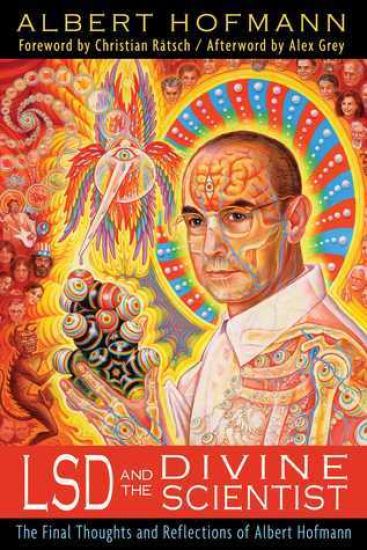
LSD and the Divine Scientist

LSD and the Divine Scientist

Albert Hofmann; Christian Rätsch; Alex Grey

Inner Traditions Bear and Company
2013
pokkari
Best known as the first person to synthesize, ingest, and discover the psychedelic effects of LSD, Albert Hofmann was more than just a chemist. A pioneer in the field of visionary plant research, he was one of the first people to suggest the use of entheogens for psychological healing and spiritual growth. His insights into the consciousness-expanding effects of psychedelics as well as human nature, the psyche, and the nature of reality earned him a reputation as a mystical scientist and visionary philosopher. This book--Hofmann’s last work before his death in 2008 at the age of 102--offers the acclaimed scientist’s personal experiences and thoughts on chemistry, the natural sciences, mind-altering drugs, the soul, and the search for happiness and meaning in life. Hofmann explains different methods of pharmaceutical research based on traditional plant medicine and discusses psilocybin, the active compound in psychedelic mushrooms that he discovered. He examines the psychological role of psychoactives, their therapeutic potential, and their use in easing the life-to-death transition. Sharing a different side of the father of LSD, one known only to his friends and close colleagues, this book also includes the poetry of this mystical prophet of psychedelic science.
The Encyclopedia of Psychoactive Plants

The Encyclopedia of Psychoactive Plants

Christian Rätsch; Albert Hofmann

Park Street Press,U.S.
2005
sidottu
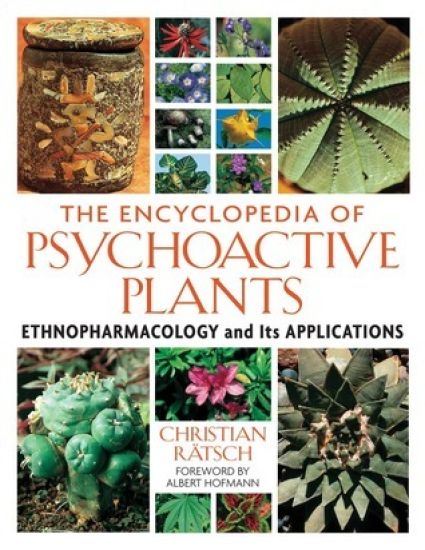
In the traditions of every culture, plants have been highly valued for their nourishing, healing, and transformative properties. The most powerful plants--those known to transport the human mind into other dimensions of consciousness--have traditionally been regarded as sacred. In The Encyclopedia of Psychoactive PlantsChristian Rätsch details the botany, history, distribution, cultivation, and preparation and dosage of more than 400 psychoactive plants. He discusses their ritual and medicinal usage, cultural artifacts made from these plants, and works of art that either represent or have been inspired by them. The author begins with 168 of the most well-known psychoactives--such as cannabis, datura, and papaver--then presents 133 lesser known substances as well as additional plants known as “legal highs,” plants known only from mythological contexts and literature, and plant products that include substances such as ayahuasca, incense, and soma. The text is lavishly illustrated with 797 color photographs--many of which are from the author’s extensive fieldwork around the world--showing the people, ceremonies, and art related to the ritual use of the world’s sacred psychoactives.
The Physics of Synchrotron Radiation

The Physics of Synchrotron Radiation

Albert Hofmann

Cambridge University Press
2004
sidottu
This book explains the underlying physics of synchrotron radiation and derives its main properties. It is divided into four parts. The first covers the general case of the electromagnetic fields created by an accelerated relativistic charge. The second part concentrates on the radiation emitted by a charge moving on a circular trajectory. The third looks at undulator radiation, covering plane weak undulators, strong undulators and other more general undulators. The final part deals with applications and investigates the optics of synchrotron radiation dominated by diffraction due to the small opening angle. It also includes a description of electron storage rings as radiation sources and the effect of the emitted radiation on the electron beam. This book provides a valuable reference for scientists and engineers in the field of accelerators, and all users of synchrotron radiation.
Plants of the Gods

Plants of the Gods

Richard Evans Schultes; Albert Hofmann; Christian Rätsch

Healing Arts Press
2001
pokkari
World-renowned anthropologist and ethnopharmacologist Christian Ratsch provides the latest scientific updates to this classic work on psychoactive flora by two eminent researchers. - Numerous new and rare color photographs complement the completely revised and updated text. - Explores the uses of hallucinogenic plants in shamanic rituals throughout the world. - Cross-referenced by plant, illness, preparation, season of collection, and chemical constituents. - First edition sold 33,000 copies. Three scientific titans join forces to completely revise the classic text on the ritual uses of psychoactive plants. They provide a fascinating testimony of these andquot;plants of the gods,andquot; tracing their uses throughout the world and their significance in shaping culture and history. In the traditions of every culture, plants have been highly valued for their nourishing, healing, and transformative properties. The most powerful of those plants, which are known to transport the human mind into other dimensions of consciousness, have always been regarded as sacred. The authors detail the uses of hallucinogens in sacred shamanic rites while providing lucid explanations of the biochemistry of these plants and the cultural prayers, songs, and dances associated with them. The text is lavishly illustrated with 400 rare photographs of plants, people, ceremonies, and art related to the ritual use of the world's sacred psychoactive flora.