

Kirjailija
Albert Hourani
Kirjat ja teokset yhdessä paikassa: 9 kirjaa, julkaisuja vuosilta 1983-2025, suosituimpien joukossa Middle Eastern Affairs Number Three. Vertaile teosten hintoja ja tarkista saatavuus suomalaisista kirjakaupoista.
9 kirjaa
Kirjojen julkaisuhaarukka 1983-2025.

In a bestselling work of profound and lasting importance, the late Albert Hourani told the definitive history of the Arab peoples from the seventh century, when the new religion of Islam began to spread from the Arabian peninsula westwards, to the present day. It is a masterly distillation of a lifetime of scholarship and a unique insight into a perpetually troubled region.This updated edition by Malise Ruthven adds a substantial new chapter which includes recent events such as 9/11, the US invasion of Iraq and its bloody aftermath, the fall of the Mubarak and Ben Ali regimes in Egypt and Tunisia, and the incipient civil war in Syria, bringing Hourani's magisterial history up to date. Ruthven suggests that while Hourani can hardly have been expected to predict in detail the massive upheavals that have shaken the Arab world recently he would not have been entirely surprised, given the persistence of the kin-patronage networks he describes in his book and the challenges now posed to them by a new media-aware generation of dissatisfied youth.In a new biographical preface, Malise Ruthven shows how Hourani's perspectives on Arab history were shaped by his unique background as an English-born Arab Christian with roots in the Levant.
"Here at last is a genuinely readable, genuinely responsive history of the Arabs."--Edward W. Said, Los Angeles Times Book Review Upon its publication in 1991, Albert Hourani's masterwork was hailed as the definitive story of Arab civilization, and became both a bestseller and an instant classic. In a panoramic view encompassing twelve centuries of Arab history and culture, Hourani brilliantly illuminated the people and events that have fundamentally shaped the Arab world. Now this seminal book is available in an expanded second edition. Noted Islamic scholar Malise Ruthven brings the story up to date from the mid-1980s, including such events as the Gulf War; civil unrest in Algeria; the change of leadership in Syria, Morocco, and Jordan; and the aftermath of the events of September 11, 2001. The terrorist attacks in the United States, ongoing crisis in Iraq, and renewed violence between Israelis and Palestinians all underscore the need for a balanced and well-informed understanding of the Arab world, and make this insightful history of the Arab peoples more important than ever.
After the end of World War I, international pressures prevented the Allies from implementing direct colonial rule over the former Arab provinces of the Ottoman Empire. Instead, the Allies created a system of mandates for the governance of the Middle East. France was assigned Lebanon and Syria, and Britain was assigned Iraq, Palestine, and Transjordan. First published in 1976, Britain in Iraq has long been recognized as the definitive history of the mandate period, providing a meticulous and engaging account of Britain's political involvement in Iraq as well as rare insights into the motives behind the founding of the Iraqi state. Peter Sluglett presents a historical narrative of the development and implementation of the mandate in the face of considerable opposition in both Iraq and Britain and shows how the British maintained a "reliable" group of Iraqi clients in power to protect imperial interests. Sluglett explores the changing relationship between Britain and Iraq over the eighteen years of occupation and mandate, the interactions between Shi'ite and Sunni populations, the position of the Kurds, the boundary between Turkey and northern Iraq, and policies relating to defense, land tenure and the tribes, and education. A new conclusion attempts to analyze the legacy of the mandate and to offer some explanation for Iraq's continuing weakness as a state and the structural obstacles preventing the emergence of a plural political system.
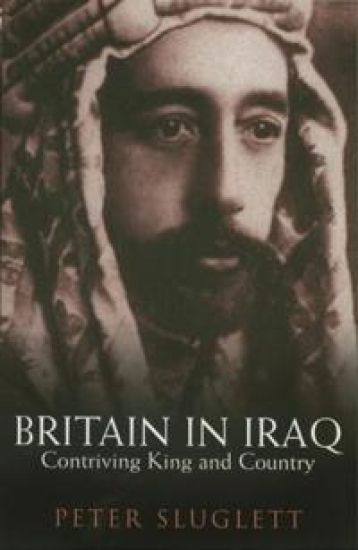
After the end of World War I, international pressures prevented the Allies from implementing direct colonial rule over the former Arab provinces of the Ottoman Empire. Instead, the Allies created a system of mandates for the governance of the Middle East. France was assigned Lebanon and Syria, and Britain was assigned Iraq, Palestine, and Transjordan. First published in 1976, Britain in Iraq has long been recognized as the definitive history of the mandate period, providing a meticulous and engaging account of Britain's political involvement in Iraq as well as rare insights into the motives behind the founding of the Iraqi state. Peter Sluglett presents a historical narrative of the development and implementation of the mandate in the face of considerable opposition in both Iraq and Britain and shows how the British maintained a "reliable" group of Iraqi clients in power to protect imperial interests. Sluglett explores the changing relationship between Britain and Iraq over the eighteen years of occupation and mandate, the interactions between Shi'ite and Sunni populations, the position of the Kurds, the boundary between Turkey and northern Iraq, and policies relating to defense, land tenure and the tribes, and education. A new conclusion attempts to analyze the legacy of the mandate and to offer some explanation for Iraq's continuing weakness as a state and the structural obstacles preventing the emergence of a plural political system.
This collection of essays focuses on the relation between European and Islamic thought and culture from the late eighteenth to the twentieth century. Albert Hourani explores the development of ideas about Islam in European thought and discusses the individual writers who played an important part in informing and communicating an image of Islamic history and civilisation. He also examines some of the reactions of the Islamic world to the powerful new ideas of European civilization including the first Arabic encyclopedia and translation of Homer.
This is a study of the modernizing trend of political and social thought in the Arab Middle East. Albert Hourani studies the way in which ideas about politics and society changed during the 19th century and the first half of the 20th century, in response to the expanding influence of Europe.