Kirjojen hintavertailu. Mukana 12 595 353 kirjaa ja 12 kauppaa.

Kirjailija

Albert J. Mauroni

Kirjat ja teokset yhdessä paikassa: 8 kirjaa, julkaisuja vuosilta 1998-2022, suosituimpien joukossa Chemical and Biological Warfare. Vertaile teosten hintoja ja tarkista saatavuus suomalaisista kirjakaupoista.

8 kirjaa

Kirjojen julkaisuhaarukka 1998-2022.

Biocrisis

Biocrisis

Albert J. Mauroni

BLOOMSBURY PUBLISHING PLC
2022
sidottu
This book examines the recent intersection of national security and public health regarding biological threats to the U.S. populace and proposes improvements to the executive and legislative development of U.S. policy addressing biological threat mitigation.Over the last 20 years, the national security community has engaged with disease-related issues that have traditionally been the scope of public health agencies. The federal government's response has been to create a single national biodefense strategy, which has been largely ineffective in improving conditions due to poor terminology, a lack of leadership, and a failure to assess government programs.Applying a public policy framework, Albert J. Mauroni examines how the government addresses biological threats—including disease prevention, bioterrorism response, military biodefense, biosurety, and agricultural biosecurity and food safety. He proposes a new approach to countering biological threats, arguing that lead agencies should focus on implementing discrete portfolios with annual assessments against clear and achievable objectives.
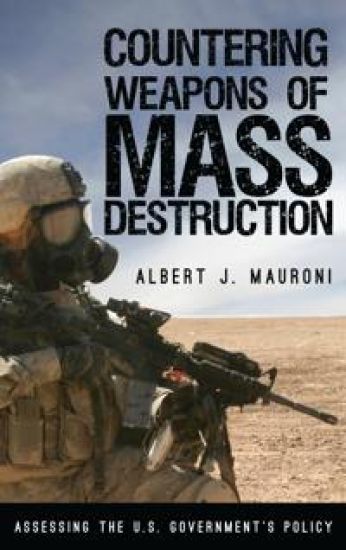
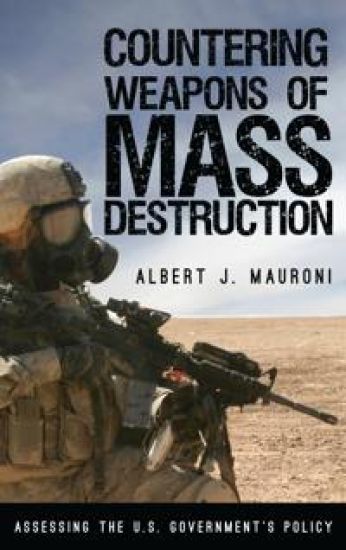
Countering Weapons of Mass Destruction

Countering Weapons of Mass Destruction

Albert J. Mauroni

Rowman Littlefield
2016
sidottu
The Cold War phrase “weapons of mass destruction” continues to be used despite significant changes in international political cultures, military concepts of operation, and technology advances. Today, the term “weapons of mass destruction” (WMD) is used to address many things, from grams of ricin and barrels of industrial chemicals to megaton nuclear weapons. As a direct result of the decision to refer to all nuclear, biological, and chemical (NBC) weapons as well as biological, chemical and radiological (CBR) hazards as “WMD,” we have lost the ability to accurately develop, assess, and discuss policy concerns relating to the contemporary use of unconventional weapons on the battlefield and within the homeland. This book uses a public policy framework to examine how the U.S. government, and in particular the U.S. military, should address the potential use of unconventional weapons in the 21st century. It defines the problem, identifies the policy actors and reviews policy options. It discusses past policy efforts before offering a critical review of current strategies and how WMD issues are integrated into the current military Joint Operating Concepts (deterrence, cooperative security, major combat operations, irregular warfare, stability, and homeland security), and proposes new national framework for countering WMD. The aim is to answer such questions as what does counterproliferation mean and whether the U.S. government is adequately prepared to protect U.S. citizens and its armed forces from adversaries developing unconventional weapons.
Countering Weapons of Mass Destruction

Countering Weapons of Mass Destruction

Albert J. Mauroni

Rowman Littlefield
2016
nidottu
The Cold War phrase “weapons of mass destruction” continues to be used despite significant changes in international political cultures, military concepts of operation, and technology advances. Today, the term “weapons of mass destruction” (WMD) is used to address many things, from grams of ricin and barrels of industrial chemicals to megaton nuclear weapons. As a direct result of the decision to refer to all nuclear, biological, and chemical (NBC) weapons as well as biological, chemical and radiological (CBR) hazards as “WMD,” we have lost the ability to accurately develop, assess, and discuss policy concerns relating to the contemporary use of unconventional weapons on the battlefield and within the homeland. This book uses a public policy framework to examine how the U.S. government, and in particular the U.S. military, should address the potential use of unconventional weapons in the 21st century. It defines the problem, identifies the policy actors and reviews policy options. It discusses past policy efforts before offering a critical review of current strategies and how WMD issues are integrated into the current military Joint Operating Concepts (deterrence, cooperative security, major combat operations, irregular warfare, stability, and homeland security), and proposes new national framework for countering WMD. The aim is to answer such questions as what does counterproliferation mean and whether the U.S. government is adequately prepared to protect U.S. citizens and its armed forces from adversaries developing unconventional weapons.
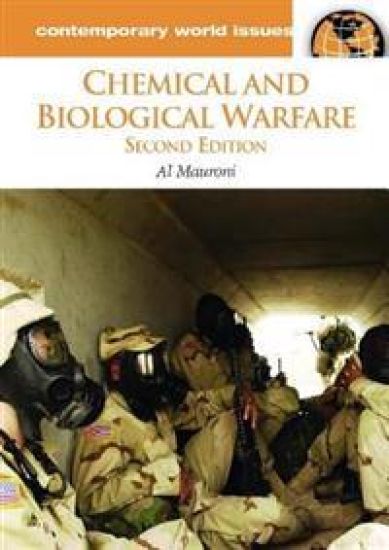
Chemical and Biological Warfare

Chemical and Biological Warfare

Albert J. Mauroni

ABC-CLIO
2006
sidottu
A thorough handbook covering the facts, history, and controversies surrounding our most controversial and misunderstood unconventional weapons.Unlike most books on this topic, the expanded second edition of Mauroni’s popular reference handbook is neither sensationalistic nor moralistic. Instead, it offers readers a reasoned, thorough, and fact-based introduction to this highly charged issue.Covering the period from World War I through the Iraq War, Chemical and Biological Warfare not only describes the development of key chemical and biological agents, such as anthrax, tularemia, brucellosis, VEE, Q fever, and botulinum toxin, it also assesses the threats we face, compares military CB warfare with terrorist incidents, explains effective defensive measures, and clarifies the responsibilities of the various federal agencies charged to address these issues. With extensive new material, this edition provides an authoritative and up-to-date introduction to this vitally important topic.Outstanding research aids include key Internet and published references and an index offering rapid access to entries on key figures, government agencies, and defensive equipmentA chronology of chemical-biological warfare incidents from the mid-20th century onward offers a thorough historical overview
Chemical Demilitarization

Chemical Demilitarization

Albert J. Mauroni

Praeger Publishers Inc
2003
sidottu
For more than 15 years, the Army's chemical demilitarization program has been criticized and castigated as a potentially dangerous effort, poorly executed without concern for the public. By reviewing the chemical demilitarization program as a public policy area, Mauroni offers a different perspective on how the Army worked with Congress and the public to offer the safest program possible. The Army was forced to delay its own schedule and increase the breadth and depth of the program to address political demands and idealistic environmental concerns. Mauroni contends that Army and Department of Defense leadership's insistence on treating this program as a strictly technical effort, rather than as a public policy concern is in part responsible for the public's misunderstanding of the Army's execution of the program.Despite its challenges, the Army is well on its way to accomplishing its goal of destroying the U.S. chemical weapons stockpile with no impact on the public or environment. They have stumbled through, however, rather than planned their exit. According to Mauroni, the Army needs to examine this program carefully to identify how to address public policy questions better in the future, to include responding to chemical and biological terrorism, developing a biological warfare vaccine program, and addressing future Gulf War illness questions. Their failure to learn will otherwise result in a continued inability to address critical questions on how they respond to chemical and biological warfare issues.
America's Struggle with Chemical-Biological Warfare

America's Struggle with Chemical-Biological Warfare

Albert J. Mauroni

Praeger Publishers Inc
2000
sidottu
Fear and ignorance have colored the perception of chemical and biological (CB) warfare both in the public and military spheres. Media coverage following the alleged gassing of sheep at Dugway Proving Ground in 1968 has led most people to believe that CB warfare is an unstoppable doomsday weapon of mass destruction. Yet, in 1972, General Creighton Abrams, the Army Chief of Staff, attempted to disestablish the Chemical Corps because he saw no need for it. Had that decision not been reversed in 1976, there would not have been any chemical defense specialists or equipment available for Operation Desert Storm in 1990.This study tracks events relating to the Department of Defense's CB warfare program between 1968 and 1990, as it evolved up to the Gulf War. It also details how the military develops and procures CB defense equipment to protect today's soldiers. Mauroni draws parallels between the development of binary chemical weapons, the chemical demilitarization program, and the DoD CB terrorism response efforts, as each has very similar issues and solutions. He seeks to educate leading officials and the general public about the facts behind CB warfare and the options for coping with it in the future. With proper training and equipment, the challenge of CB warfare can be met and dealt with on the modern battlefield.
Chemical-Biological Defense

Chemical-Biological Defense

Albert J. Mauroni

Praeger Publishers Inc
1999
nidottu
The Gulf War has been the only conflict in the last half-century that featured the possible use of chemical-biological weapons against U.S. forces. Vulnerability to such an attack spurred the Department of Defense to action from the first hint of trouble in August 1990 through the end of hostilities in March 1991. Nearly disbanded in 1972, the U.S. Army Chemical Corps would be the prime force in ensuring that U.S. forces could both survive and sustain combat operations under chemical-biological warfare conditions. Focussing on the work of senior Army officials, this account assesses the degree of readiness achieved by the ground war's initiation and the lessons learned since the conflict. For an appropriately trained and equipped military force, chemical weapons pose not the danger of mass destruction but the threat of mass disruption, no more deadly than smart munitions or B-52 air strikes. This book will reveal a coordinated response to train and equip U.S. forces did take place prior to the feared Iraqi chemical and biological attacks. Undocumented in any other book, it details the plans that rushed sixty Fox reconnaissance vehicles to the Gulf, the worldwide call for protective suits and masks, and the successful placement of biological agent detectors prior to the air offensive. In addition, the work addresses what really happened at Khamisiyah. Were troops exposed to chemical weapons and what is behind the mysterious Gulf War Syndrome?
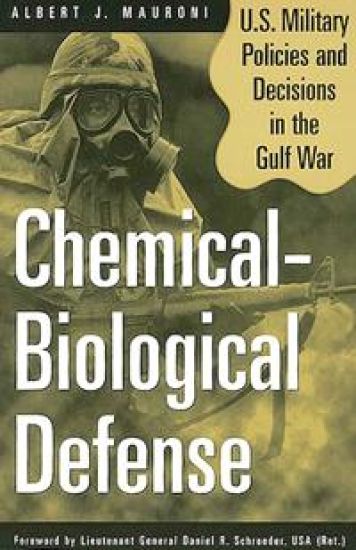
Chemical-Biological Defense

Chemical-Biological Defense

Albert J. Mauroni

Praeger Publishers Inc
1998
sidottu
The Gulf War has been the only conflict in the last half-century that featured the possible use of chemical-biological weapons against U.S. forces. Vulnerability to such an attack spurred the Department of Defense to action from the first hint of trouble in August 1990 through the end of hostilities in March 1991. Nearly disbanded in 1972, the U.S. Army Chemical Corps would be the prime force in ensuring that U.S. forces could both survive and sustain combat operations under chemical-biological warfare conditions. Focussing on the work of senior Army officials, this account assesses the degree of readiness achieved by the ground war's initiation and the lessons learned since the conflict.For an appropriately trained and equipped military force, chemical weapons pose not the danger of mass destruction but the threat of mass disruption, no more deadly than smart munitions or B-52 air strikes. This book will reveal a coordinated response to train and equip U.S. forces did take place prior to the feared Iraqi chemical and biological attacks. Undocumented in any other book, it details the plans that rushed sixty Fox reconnaissance vehicles to the Gulf, the worldwide call for protective suits and masks, and the successful placement of biological agent detectors prior to the air offensive. In addition, the work addresses what really happened at Khamisiyah. Were troops exposed to chemical weapons and what is behind the mysterious Gulf War Syndrome?