Kirjojen hintavertailu. Mukana 12 657 676 kirjaa ja 12 kauppaa.

Kirjailija

Albert N. Link

Kirjat ja teokset yhdessä paikassa: 57 kirjaa, julkaisuja vuosilta 1992-2026, suosituimpien joukossa Public Support of Private Innovation. Vertaile teosten hintoja ja tarkista saatavuus suomalaisista kirjakaupoista.

Mukana myös kirjoitusasut: Albert N Link

57 kirjaa

Kirjojen julkaisuhaarukka 1992-2026.

Public Support of Private Innovation

Public Support of Private Innovation

John W. Hardin; David J. Kaiser; Albert N. Link

now publishers Inc
2020
nidottu
Public Support of Private Innovation describes the One North Carolina Small Business Program's purpose and history, as well as offer an assessment of whether it has met its stated goals and objectives. Through an analysis of data collected through a 2017 survey of all the program's grantee companies, this monograph provides both descriptive findings as well as econometric assessments of the Program against its four stated goals. Both the descriptive findings and the econometric analyses are supportive of the conclusion that the program is meeting its legislatively authorized purpose and goals.This monograph is divided into five sections. Section 1 provides background context on the One North Carolina Small Business Program. Section 2 describes the Federal SBIR and STTR Programs and how North Carolina has fared under the programs since their establishment. Section 3 presents descriptive information on the programs' survey and sets the stage for section 4, which details the econometric assessment of the program. Concluding observations are presented in section 5.
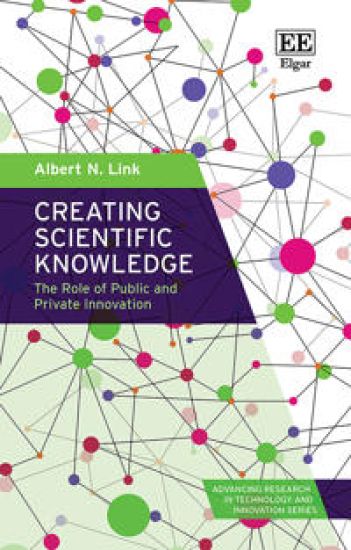
Creating Scientific Knowledge

Creating Scientific Knowledge

Albert N. Link

EDWARD ELGAR PUBLISHING LTD
2026
sidottu
This fascinating book explores the role of public and private external innovation in enhancing the creation of scientific knowledge. Albert Link explores how external knowledge innovation leads to the creation of scientific knowledge, which in turn results in the spillover of scientific knowledge into society. Link evaluates empirical information from knowledge-intensive entrepreneurial firms as well as smaller firms that received research funding through small business innovation research programs. He compares and contrasts the two, analyzing key topics including commercialization, patenting, scientific publishing, university knowledge innovation and human and technical capital. Drawing on cluster theory, the book highlights the evolutionary nature of knowledge sources and concepts. It calls for future research to address the economics of knowledge, and to develop a more complete model of its generation as a circular process, achieved through the recombination of existing knowledge items. Scholars and students of economics, innovation studies, technology policy and public policy will benefit from this book’s insights. Creating Scientific Knowledge is also an essential read for global policy makers interested in how the spillover of scientific knowledge can benefit society.
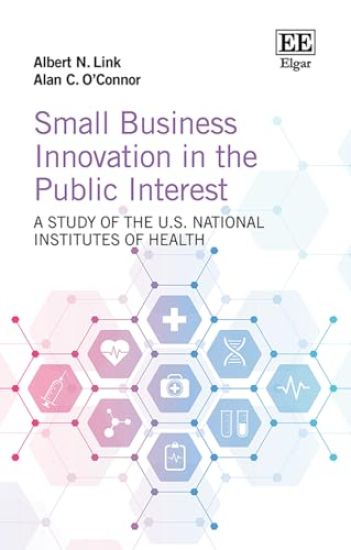
Small Business Innovation in the Public Interest

Small Business Innovation in the Public Interest

Albert N. Link; Alan C. O’Connor

EDWARD ELGAR PUBLISHING LTD
2025
sidottu
This book presents an in-depth investigation into small business research activity supported by the U.S. National Institutes of Health (NIH). Albert N. Link and Alan C. O’Connor explain the historical importance of small firms to the NIH and conduct insightful analysis of the Institutes and Centers funded through the Small Business Innovation Research (SBIR) program.Exploring prominent Institutes within the NIH and using data from the SBIR program, they discuss innovation and social benefits associated with the NIH’s Institutes and Centers. Topics covered include commercialization success, patenting activities of firms, and correlations between diversity measures and various performance metrics. Ultimately, the book delineates the success of the firms that receive awards from the SBIR, and these firms' abilities to support technological development.Small Business Innovation in the Public Interest is an invaluable resource for academics, researchers and students across health policy and economics, entrepreneurship, biotechnology and innovation. Policymakers working in the health industry will also find the insights into innovation funding beneficial.
Federal Investments in Research and Development in the United States
This essential book examines the history, trends and institutional nature of federal investments in research and development (R&D) in the United States. Esteemed expert in the field, Albert N. Link charts unexplored topics and issues associated with the role of public sector R&D in influencing economic growth.Rich in econometric data, this book traces the history of federal R&D investments. Chapters outline how the institutional nature of federal R&D investments includes the research activity of Federally Funded Research and Development Centers, individual national laboratories, mission-driven government agencies, and private-sector firms with research projects funded through the Small Business Innovation Research program. Link emphasizes the diversity of principal investigators involved in federally funded R&D endeavors, as well as the influence of guidance given to federal R&D research by public-sector project managers.Providing a roadmap for future academic and policy research on federal investments in R&D, this book is invaluable to students and scholars of innovation and technology, economics, knowledge management, public policy, and public administration. Its practical insights are beneficial to public-sector policy officials.
Small Firm Research Supported by the National Institutes of Health’s National Cancer Institute
Small Firm Research Supported by the National Institutes of Health’s National Cancer Institute focuses on and describes dimensions of research and innovative behavior in a unique sample of small firms publicly funded through the Small Business Innovation Research (SBIR) program and discusses the policy implications from the descriptive findings. Section 2 briefly overviews the history of the National Institutes of Health (NIH) and its oldest Institute, the National Cancer Institute (NCI). Section 3 offers a roadmap for the study of small firm research funded through the NCI’s SBIR program. Section 4 describes the data used to explore dimensions of small firm SBIR funded research. The findings from the empirical analysis of the data described in Section 4 that are related to the commercialization of NCI-funded new technologies are presented in Section 5. The findings from the empirical analysis of the data described in Section 4 that are related to the outflow of technical knowledge through technology transfer metrics from NCI-funded new technologies are described in Section 6. Technology relationships are the focus of Section 7. Section 8 explores the dimensions of funded firms that responded on the NRC survey that they would have pursued their Phase II project in the absence of SBIR funding. Section 9 considers the social impact of the NCI as quantified through the producer surplus and consumer surplus generated from the sale of NCI funded research projects. Section 10 concludes with a discussion of the findings from the analyses related to the NCI’s support of small firm research and offers a call for future studies that address this topic from the perspective of other NIH Institutes and Centers and from the perspective of U.S. research agencies in general.
Public Sector Technology Transfer

Public Sector Technology Transfer

Albert N. Link

EDWARD ELGAR PUBLISHING LTD
2024
sidottu
In this insightful book, Albert N. Link offers a perceptive explanation as to why the U.S. public sector is involved in technology transfer, and how the institutions that support technology transfer have become cornerstones of U.S. economic growth and development.Public-Sector Technology Transfer traces the policy history of public-sector support and illustrates the impact of the Great Recession on technology transfer activity in the U.S. Chapters explore the federal laboratory consortium, technology transfer mechanisms and metrics, publicly- funded small business research programs, and knowledge and technology transfers from publicly funded firms. Link provides an illuminating account of the heuristic and empirical reasons for technology transfer, concluding that many technology transfers occur for the common good of society.This astute account will be a vital read for academics, researchers and students in economics, entrepreneurship, public policy, public management and business. Its comprehensive exploration of technology transfer in the US will also be of benefit to practitioners and policy makers in government institutions, as well as small business entrepreneurs.
Entrepreneurs’ Search for Sources of Knowledge

Entrepreneurs’ Search for Sources of Knowledge

Albert N. Link

Now Publishers Inc
2023
nidottu
The primary purpose of Entrepreneurs’ Search for Sources of Knowledge is to explore the search process for knowledge used by entrepreneurs and entrepreneurial firms in pursuit of new opportunities, new product innovation opportunities in particular. The second purpose of this monograph is to present empirical evidence about the sources of knowledge that entrepreneurs and entrepreneurial firms actually use (and actually do not use) in an effort to allow observed behaviour to inform future economics and management theory about the search for and use of knowledge sources. And, the third purpose of this monograph is to generate new and more complete empirical efforts to construct databases and to conduct analyses--empirical analyses and case studies--related not only to entrepreneur’s and entrepreneurial firm’s search for and use of sources of knowledge but also to measure the trends in the impacts of their use.
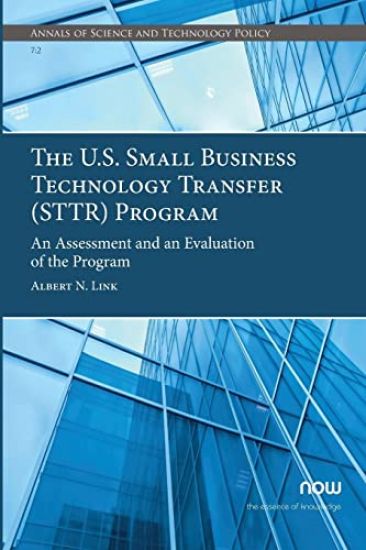
The U.S. Small Business Technology Transfer (STTR) Program
The U.S. Small Business Technology Transfer (STTR) Program: An Assessment and an Evaluation of the Program is intended to expand the National Academies’ report and set a stage for more in depth studies in the future of the STTR program by offering a systematic analytical overview of the STTR program and tying that overview to a qualitative/quantitative assessment and evaluation of the program given the limited data collected by and available from the NRC. In addition, this is an effort to orientate readers to a number of nuances of the STTR program that were beyond the scope of the National Academies’ report. A secondary purpose is to highlight the economic importance of the STTR program itself. The remainder of this monograph is organized as follows. The legislative background for the STTR program is discussed in Section 2. Section 3 explains program assessments and program evaluations from a conceptual perspective. Section 4 describes the nature of the NRC’s dataset used in this study, and based on that dataset a systematic analytical overview of the STTR program is presented. Section 5 presents a qualitative/quantitative assessment of the STTR program followed by a qualitative/quantitative evaluation of the STTR program in Section 6. Section 7 offers a summary of the paper and some concluding observations and additional suggestions for future NRC-led studies.
The Economics and Science of Measurement

The Economics and Science of Measurement

Albert N. Link

TAYLOR FRANCIS LTD
2023
nidottu
Metrology is the study of measurement science. Although classical economists have emphasized the importance of measurement per se, the majority of economics-based writings on the topic have taken the form of government reports related to the activities of specific national metrology laboratories. This book is the first systematic study of measurement activity at a national metrology laboratory, and the laboratory studied is the U.S. National Institute of Standards and Technology (NIST) within the U.S. Department of Commerce.The primary objective of the book is to emphasize for academic and policy audiences the economic importance of measurement not only as an area of study but also as a tool for sustaining technological advancement as an element of economic growth. Toward this goal, the book offers an overview of the economic benefits and consequences of measurement standards; an argument for public sector support of measurement standards; a historical perspective of the measurement activities at NIST; an empirical analysis of one particular measurement activity at NIST, namely calibration testing; and a roadmap for future research on the economics of metrology.
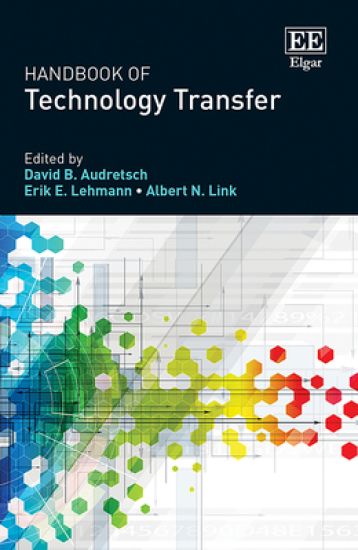
Handbook of Technology Transfer

Handbook of Technology Transfer

David E. Audretsch; Erik B. Lehmann; Albert N. Link

EDWARD ELGAR PUBLISHING LTD
2022
sidottu
Written by a plethora of expert contributors from a range of institutions, the Handbook of Technology Transfer provides an engaging deep-dive review of technology transfer as a complex and dynamic process, applying different mechanisms characterising activities in a variety of countries.
Public Sector Entrepreneurship

Public Sector Entrepreneurship

Albert N. Link

EDWARD ELGAR PUBLISHING LTD
2022
sidottu
This timely book argues that the overcrowding of national parks in the United States represents a social problem in need of public sector action and a policy solution, as no systematic means to address this problem has been implemented either nationally or on a park-by-park basis.
The Returns to Publicly Funded R&D

The Returns to Publicly Funded R&D

Albert N. Link; James A. Cunningham

Now Publishers Inc
2022
nidottu
The Returns to Publicly Funded R&D focuses on the returns to U.S. public-sector investments in R&D and the accompanying new empirical analysis relates specifically to the returns to public-sector R&D expenditures in U.S. Federally Funded Research and Development Centers (FFRDCs). One motivation for studying the rates of return to public-sector R&D is the paucity of existing literature on the topic. However, there are two other important motivations for studying the rates of returns to public-sector R&D: a public accountability motivation and a mandated public policy motivation. Although the analysis of investments in R&D in FFRDCs presented herein is econometrics based, there is however a frequently overlooked program evaluation literature that also offers insight into the rates of returns to public-sector R&D. Examples of the program evaluation literature is presented in Section 3 for completeness as well as to illustrate a broader rate of return concept than that presented in the econometrics-based literature. U.S. legislative actions to increase publicly funded R&D in support of private-sector R&D are discussed in Section 4. For the purpose of providing context, a brief history of FFRDCs in the United States is presented in Section 5. FFRDCs have surprisingly been an overlooked element of the public-sector ecosystem that supports public-sector research. An empirical analysis of U.S. public-sector R&D expenditures in FFRDCs, and the associated scientific publications, is presented and discussed in Section 6. Concluding observations about the themes discussed throughout this monograph are offered in Section 7.
Vannevar Bush

Vannevar Bush

Albert N. Link

Now Publishers Inc
2022
nidottu
This monograph defines public sector entrepreneurship in terms of innovative public policy initiatives that generate greater economic prosperity by transforming a status quo economic environment into one that is more conducive to economic units engaging in creative activities in the face of uncertainty. Based on that definition, the author examines Vannevar Bush as an example of a public sector entrepreneur. Using Bush and the Bayh-Dole Act of 1980 as an example of public sector entrepreneurship, the monograph provides a framework that can serve as a unifying taxonomy for interpreting future research on public sector entrepreneurship.
Technology and Innovation Policy

Technology and Innovation Policy

James A. Cunningham; Albert N. Link

Edward Elgar Publishing Ltd
2021
sidottu
This book discusses technology policy and innovation policy from an international perspective, with a particular emphasis on the policies of the United States and the United Kingdom. The importance of these policy areas, as well as their relationship to one another, is a unifying theme throughout, and this relationship is illustrated through an integrating policy framework.Private sector and public sector investments in R&D are posited to be the relevant target variables for technology policy, and vehicles to provide incentives for making each more effective are discussed along with suggestive information about how effective incentives have actually been. Consideration is given to the unintended consequences of technology policy. Also emphasized is the environment in which technology policy is promulgated and its relationship to a global innovation ecosystem. Innovation policy is a consequence of technology policy, and the innovation policies of various countries are also discussed.Technology and Innovation Policy will benefit academic researchers, senior scientists, innovation and technology policy makers, and graduate students who seek a deeper understanding of the relationship between technology and innovation policies from an international perspective.
The Economics and Science of Measurement

The Economics and Science of Measurement

Albert N. Link

Taylor Francis Ltd
2021
sidottu
Metrology is the study of measurement science. Although classical economists have emphasized the importance of measurement per se, the majority of economics-based writings on the topic have taken the form of government reports related to the activities of specific national metrology laboratories. This book is the first systematic study of measurement activity at a national metrology laboratory, and the laboratory studied is the U.S. National Institute of Standards and Technology (NIST) within the U.S. Department of Commerce.The primary objective of the book is to emphasize for academic and policy audiences the economic importance of measurement not only as an area of study but also as a tool for sustaining technological advancement as an element of economic growth. Toward this goal, the book offers an overview of the economic benefits and consequences of measurement standards; an argument for public sector support of measurement standards; a historical perspective of the measurement activities at NIST; an empirical analysis of one particular measurement activity at NIST, namely calibration testing; and a roadmap for future research on the economics of metrology.
Collaborative Research in the United States

Collaborative Research in the United States

Albert N. Link

Taylor Francis Ltd
2021
nidottu
In order to understand collaborative research activity in the United States, it is important to understand the contextual environment in which firms pursue a collaborative research strategy. The U.S. environment for formal collaborative research was established through a number of policy initiatives promulgated in the 1980s in response to the widespread productivity slowdown throughout industry that began in the early 1970s and then intensified in the late 1970s and early 1980s. These initiatives include the Bayh–Dole Act of 1980, the Stevenson–Wydler Act of 1980 and its amendments, the National Cooperative Research Act of 1984 and its amendments, and the Federal Technology Transfer Act of 1986.Collaborative Research in the United States offers a critical and retrospective description of collaborative research activity in the United States in an effort to provide a prospective framework for policymakers to evaluate future policy initiatives to encourage such strategic behavior. The analysis that underlies the policy framework draws from the performance of U.S. firms’ experiences, presenting a quantitative foundation for recommendations about future policy initiatives. It will be of interest to researchers, academics, policymakers, and students in the fields of critical management studies, strategic management, economics, and public policy.
Advanced Introduction to Technology Policy

Advanced Introduction to Technology Policy

Albert N. Link; James A. Cunningham

Edward Elgar Publishing Ltd
2021
nidottu
Elgar Advanced Introductions are stimulating and thoughtful introductions to major fields in the social sciences, business and law, expertly written by the world’s leading scholars. Designed to be accessible yet rigorous, they offer concise and lucid surveys of the substantive and policy issues associated with discrete subject areas. This insightful Advanced Introduction provides an in-depth review of current U.S. technology policy, tracing the legislative history of policies such as the Economic Recovery Tax Act, the Small Business Innovation Development Act and the National Cooperative Research Act. The critical elements of the ecosystem in which technology policy exists are also discussed, with a particular focus on U.S. patent policy and U.S. investments in infrastructure technology. Key features include: Historical trace of U.S. technology policy ideas over the past 75 yearsComparison of U.S. technology policies to those in other nationsAgenda for future thinking about U.S. technology policyIntegrated discussion of U.S. technology policyEconomic rationale for U.S. technology policyThis Advanced Introduction will be invaluable for international business leaders and policymakers, in addition to scholars in economics, public administration, business and public policy.
Advanced Introduction to Technology Policy

Advanced Introduction to Technology Policy

Albert N. Link; James A. Cunningham

Edward Elgar Publishing Ltd
2021
sidottu
Elgar Advanced Introductions are stimulating and thoughtful introductions to major fields in the social sciences, business and law, expertly written by the world’s leading scholars. Designed to be accessible yet rigorous, they offer concise and lucid surveys of the substantive and policy issues associated with discrete subject areas. This insightful Advanced Introduction provides an in-depth review of current U.S. technology policy, tracing the legislative history of policies such as the Economic Recovery Tax Act, the Small Business Innovation Development Act and the National Cooperative Research Act. The critical elements of the ecosystem in which technology policy exists are also discussed, with a particular focus on U.S. patent policy and U.S. investments in infrastructure technology. Key features include: Historical trace of U.S. technology policy ideas over the past 75 yearsComparison of U.S. technology policies to those in other nationsAgenda for future thinking about U.S. technology policyIntegrated discussion of U.S. technology policyEconomic rationale for U.S. technology policyThis Advanced Introduction will be invaluable for international business leaders and policymakers, in addition to scholars in economics, public administration, business and public policy.