Kirjailija
Albert Payson Terhune
Kirjat ja teokset yhdessä paikassa: 227 kirjaa, julkaisuja vuosilta 2004-2026, suosituimpien joukossa Bruce. Vertaile teosten hintoja ja tarkista saatavuus suomalaisista kirjakaupoista.
227 kirjaa
Kirjojen julkaisuhaarukka 2004-2026.
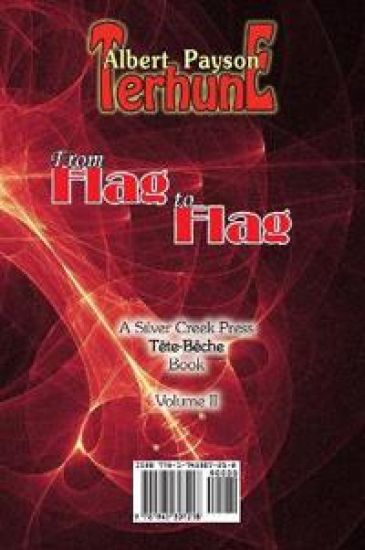
Two historical novels by Albert Payson Terhune, author of stories of Lad and other dogs. FromFlag to Flag takes place during the War of 1812, where the reader is eyewitness, through themain character, of the conquest by the British of Washington DC. In Their Last Hope, the maincharacters meet Charles "Chinese" Gordon and later experience the horrors of the fall ofKhartum. These two novels were originally serialized in 1907 and 1909.
The Woman
Albert Payson Terhune; William Churchill De Mille
Creative Media Partners, LLC
2019
sidottu
Terhune's classic book of adventure stories involving heroic dogs and their masters is presented anew to the modern reader. Originally published in 1922, this collection of short fiction featuring canines channels Albert Payson Terhune's profound love for man's best friend. After beginning this compilation with a poetic forward, we hear of the adventures of various collie dogs, whose intelligence and prowess in tracking and herding secured their lasting popularity in rural America, and a place as prominent characters in fiction. The stories are universally imbued by the author's love and experience for breeding and raising hounds, particularly the rough collie breed. Unusually for popular fiction, one may encounter occasional pointers and knowledge about breeding dogs in the descriptions Terhune uses in his narratives. Albert Terhune was, from the 1900s to the 1930s, a regular contributor to popular magazines and journals.
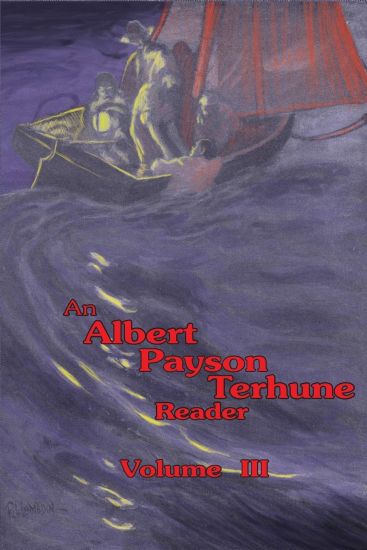
27 stories from 1900 to 1919 by Albert Payson Terhune, author of Lad: A Dog. Contents: Introduction by Anthony Tollin; The Beat that Failed (Lippincott's Magazine, November 1900); The Seal of Silence (Lippincott's Magazine, January 1902); She and the Monster (Argosy, October 1908); A Bridegroom's Dilemma (Argosy, September 1909); A Jersey Knight Errant (Argosy, November 1910); The Watcher in the Hall (Top-Notch, July 1 1911); The Montclair Flurry (Top-Notch, January 15 1912); The Girl Who Couldn't Go Wrong (Smart Set, July 1913); When Man Meets Man (Top-Notch, January 1, 1914); An Inside Scoop (Popular, August 10, 1914); The Tale of the Taxi-Meter (Green Book, January 1915); The Man Who Went Wrong (Blue Book, May 1915); Clarissa-Out-of-a-Book (Red Book, July 1915); The Greater Radiance (Blue Book, September 1915); The "Tip" of the Rocket (Adventure, October 1915); The Welcher (Blue Book, May 1916); The Songbird (Green Book, April 1917); The Rabbit Man (Red Book, May, 1917); Caritas (Saturday Evening Post, December 15, 1917); Pretty Baby (Green Book, August 1918); The Wildcat (Saturday Evening Post, October 19 1918); Forsaking All Others (Blue Book, April 1919); The Dented Halo (Green Book, April 1919); Branded (Cosmopolitan, July 1919); The Laugh (Saturday Evening Post, August 23 1919); A Citizen of the Ice (Saturday Evening Post, August 23 1919); The Lotus-Eater (Cosmopolitan, September and October, 1919); Appendix A: Source material and notes. Appendix B: Reproductions of letters from Terhune to his editor.
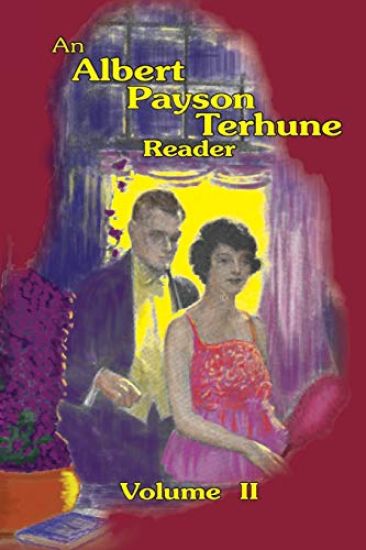
26 stories from 1901 to 1922 by Albert Payson Terhune, author of Lad: A Dog. Contents: A Lightning Change (Lippincott's Magazine, July 1901); A Park Row Galahad (Lippincott's Magazine, September 1902); Drunk or Crazy? (Argosy, March 1910); Back to the Wickiup (Argosy, June 1912); A Knight of New York (Top-Notch, June 1 1912); The Sights They Missed (Top-Notch, December 1, 1913); When Man Meets Man (Top-Notch, January 1, 1914); Cephas the Paladin (Popular, Febuary 15, 1914); The Fate Chaser (Popular, October 23, 1914); The "Other Man" (Green Book, March 1915); A Post-Marital Engagement (Blue Book, June 1915); Money Makes the Marriage Go (Blue Book, October 1915); The Night of the Dub (Saturday Evening Post, March 31, 1917); The 101st Man (Green Book, May 1917); The Crippled Doughnut (Green Book, August, 1917); The Dubess (Saturday Evening Post, August 17, 1918); The Cross-of-War Man (Green Book, January 1919); The Final Crop (Green Book, February 1919); Tidy Emotions (Green Book, May 1919); The Winner (Blue Book, August 1919); Human Interest Stuff (Red Book, November 1919); The Unmarrying of Veeder (Red Book, December 1919); The Dub of Peace (Saturday Evening Post, July 24, 1920); Females of the Species (Cosmopolitan, September, 1920); The Whiffet (Popular, February 20, 1922); Beauty (Popular, July 20, 1922); The Punch (Popular, August 7, 1922). Appendix A: Source material and notes. Appendix B: Reproductions of letters from Terhune, and several editors, regarding an inquiry from Terhune about the dramatic rights of one of his stories. Appendix C: How the publisher creates a book like this.
Lad: A Dog is a 1919 American novel written by Albert Payson Terhune and published by E. P. Dutton. Composed of twelve short stories first published in magazines, the novel is based on the life of Terhune's real-life rough collie, Lad. Born in 1902, the real-life Lad was an unregistered collie of unknown lineage originally owned by Terhune's father. Lad's death in 1918 was mourned by many of the story's fans, particularly children. Through the stories of Lad's adventures, Terhune expresses his views on parenting, obtaining perfect obedience without force, and the nature and rights of the "well-bred." Terhune began writing the stories in 1915 at the suggestion of his Red Book Magazine editor. They gained in popularity and, as Terhune was under contractual obligation to submit something to Doubleday-Page, he collected them into novel form. After Doubleday rejected the novel, he solicited other publishers until it was picked up by Dutton. After a slow start, the novel became a best seller in the adult fiction and children's fiction markets, having been repositioned as a young adult novel by Grosset and Dunlap in the 1960s and 1970s. Selling over one million copies, it is Terhune's best-selling work and the one that propelled him to fame. It has been reprinted over 70 times by Dutton, and republished by a variety of publishers since its original release, including at least six international translations. Contemporaneous critics praised Terhune's writing style and the overall story appeal, while dog breeders criticized his unrealistic canine characters. In retrospective reviews, critics considered that the novel had aged badly, and that Terhune displayed little actual writing skill, but noted that the novel was able to hold long-lasting appeal as it triggered the reader's desire to have such an ideal dog. Terhune himself considered the novel "hack writing" and did not understand why it was so popular. Because of its reception, he went on to publish two additional novels featuring Lad and one featuring Lad's son, Wolf, as well as many other fictional stories featuring dogs. Warner Brothers released a film adaptation in June 1962. A series of four children's picture books based on three of the stories from the novel were published by Margo Lundell between 1997 and 1998... Albert Payson Terhune (December 21, 1872 - February 18, 1942) was an American author, dog breeder, and journalist. The public knows him best for his novels relating the adventures of his beloved collies and as a breeder of collies at his Sunnybank Kennels, the lines of which still exist in today's Rough Collies. Albert Payson Terhune was born in New Jersey to Mary Virginia Hawes and the Reverend Edward Payson Terhune. His mother, Mary Virginia Hawes, was a writer of household management books and pre-Civil War novels under the name Marion Harland. Terhune had four sisters and one brother, though only two of his sisters lived to be adults: Christine Terhune Herrick (1859-1944); and Virginia Terhune Van De Water (1865-1945). Sunnybank (41.0012N 74.2755W) was originally the family's summer home, with Terhune making it his permanent residence in 1912. He was educated at Columbia University where he received a Bachelor of Arts degree in 1893. From 1894 to 1916, he worked as a reporter for The Evening World.He boxed exhibition matches with James J. Corbett, Bob Fitzsimmons and James J. Jeffries. His Sunnybank Kennels where he bred and raised rough collies were "the most famed collie kennels in the U.S..."..........
Buff: A Collie, and Other Dog-Stories By Albert Payson Terhune
Albert Payson Terhune, perhaps best known for his book Lad, a Dog (later turned into a popular movie), was also a breeder of collies and a journalist. Some of his collie lines survive to this day. His Dog is a story about Link Ferris who finds an injured dog on his way home one evening. Knowing nothing about dogs, Link nurses the dog back to health and the two form a bond such as only can be formed between human and canine. Unable to locate the collie's owner, Link christens his dog 'Chum' who becomes invaluable in tending to the daily needs of his meager farm. Unknown to Ferris however, Chum's original owners have been looking for their lost collie, and the story finds Link torn between that which he knows is morally right and his love for what he believes has become his dog.
After the original collection of stories featuring his lovable collie Lad was met with astounding success, journalist and dog expert Albert Payson Terhune penned a second batch of canine-centric yarns to please his clamoring fans. As always, the proud and playful Lad is at the center of these stories, bringing his usual mix of adventure, action, and adorable hijinks.
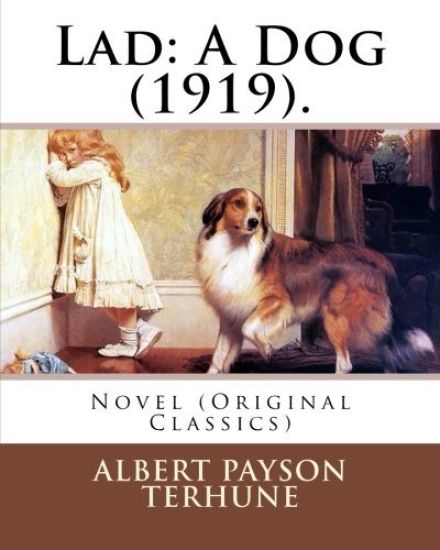
Lad: A Dog (1919). By: Albert Payson Terhune: Novel (Original Classics)
Albert Payson Terhune
Createspace Independent Publishing Platform
2017
nidottu
Lad: A Dog is a 1919 American novel written by Albert Payson Terhune and published by E. P. Dutton. Composed of twelve short stories first published in magazines, the novel is based on the life of Terhune's real-life rough collie, Lad. Born in 1902, the real-life Lad was an unregistered collie of unknown lineage originally owned by Terhune's father. Lad's death in 1918 was mourned by many of the story's fans, particularly children. Through the stories of Lad's adventures, Terhune expresses his views on parenting, obtaining perfect obedience without force, and the nature and rights of the "well-bred". Terhune began writing the stories in 1915 at the suggestion of his Red Book Magazine editor. They gained in popularity and, as Terhune was under contractual obligation to submit something to Doubleday-Page, he collected them into novel form. After Doubleday rejected the novel, he solicited other publishers until it was picked up by Dutton. After a slow start, the novel became a best seller in the adult fiction and children's fiction markets, having been repositioned as a young adult novel by Grosset and Dunlap in the 1960s and 1970s. Selling over one million copies, it is Terhune's best-selling work and the one that propelled him to fame. It has been reprinted over 70 times by Dutton, and republished by a variety of publishers since its original release, including at least six international translations. Contemporaneous critics praised Terhune's writing style and the overall story appeal, while dog breeders criticized his unrealistic canine characters. In retrospective reviews, critics considered that the novel had aged badly, and that Terhune displayed little actual writing skill, but noted that the novel was able to hold long-lasting appeal as it triggered the reader's desire to have such an ideal dog. Terhune himself considered the novel "hack writing" and did not understand why it was so popular. Because of its reception, he went on to publish two additional novels featuring Lad and one featuring Lad's son, Wolf, as well as many other fictional stories featuring dogs. Warner Brothers released a film adaptation in June 1962. A series of four children's picture books based on three of the stories from the novel were published by Margo Lundell between 1997 and 1998... Albert Payson Terhune (December 21, 1872 - February 18, 1942) was an American author, dog breeder, and journalist. The public knows him best for his novels relating the adventures of his beloved collies and as a breeder of collies at his Sunnybank Kennels, the lines of which still exist in today's Rough Collies. Albert Payson Terhune was born in New Jersey to Mary Virginia Hawes and the Reverend Edward Payson Terhune. His mother, Mary Virginia Hawes, was a writer of household management books and pre-Civil War novels under the name Marion Harland. Terhune had four sisters and one brother, though only two of his sisters lived to be adults: Christine Terhune Herrick (1859-1944); and Virginia Terhune Van De Water (1865-1945). Sunnybank (41.0012 N 74.2755 W) was originally the family's summer home, with Terhune making it his permanent residence in 1912. He was educated at Columbia University where he received a Bachelor of Arts degree in 1893. From 1894 to 1916, he worked as a reporter for The Evening World.He boxed exhibition matches with James J. Corbett, Bob Fitzsimmons and James J. Jeffries. His Sunnybank Kennels where he bred and raised rough collies were "the most famed collie kennels in the U.S."............