Kirjojen hintavertailu. Mukana 12 595 353 kirjaa ja 12 kauppaa.

Kirjailija

Alberto Ferreiro

Kirjat ja teokset yhdessä paikassa: 7 kirjaa, julkaisuja vuosilta 2003-2023, suosituimpien joukossa The Visigoths in Gaul and Iberia (Update). Vertaile teosten hintoja ja tarkista saatavuus suomalaisista kirjakaupoista.

7 kirjaa

Kirjojen julkaisuhaarukka 2003-2023.

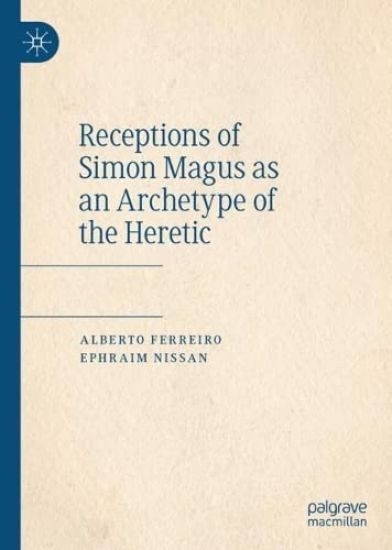
Receptions of Simon Magus as an Archetype of the Heretic

Receptions of Simon Magus as an Archetype of the Heretic

Alberto Ferreiro; Ephraim Nissan

Springer International Publishing AG
2023
sidottu
This book about receptions of Simon Magus uncovers further facets of one who was held to be the evil archetype of heretics. Ephraim Nissan and Alberto Ferreiro explore how Simon Magus has been represented in text, visual art, and music. Special attention is devoted to the late medieval Catalan painter Lluís Borrassà and the Italian librettist and musician Arrigo Boito. The tradition of Simon Magus’ demonic flight, ending in his crashing down, first appears in the patristic literature. The book situates that flight typologically across cultures. Fascinating observations emerge, as the discussion spans flight of the wicked in rabbinic texts, flight and death of King Lear’s father and a Soviet-era Buryat Buddhist monk, flight and doom of the fool in an early modern German broadsheet, and more. The book explains and moves beyond extant scholarly wisdom on how the polemic against Mani (the founder of Manichaeism) was tinged with hues of Simon Magus. The novelty of this book is that it shows that Simon Magus’ receptions teach us a great deal about the contexts in which this archetype was deployed.
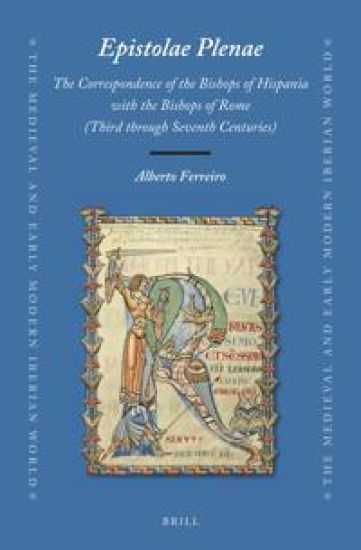
Epistolae Plenae, The Correspondence of the Bishops of Hispania with the Bishops of Rome
This monograph offers a full inventory and analysis of all of the extant correspondence between the bishops of Hispania and Rome from the third to the seventh century. No such study has been executed in any language. The study intends to enlighten the reader on how the bishops of Hispania and the Roman pontiffs interacted with each other. Of interest is the development of the Petrine Primacy and how it was applied in many situations where Rome was asked to intervene in Hispania, dealing with issues including the liturgy, creeds, heresy, sacraments, episcopal authority, ecclesiology, papal authority and more.
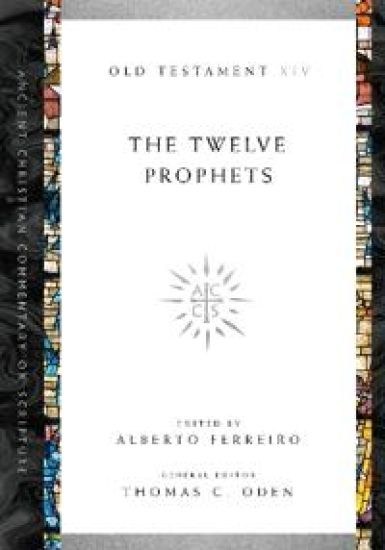
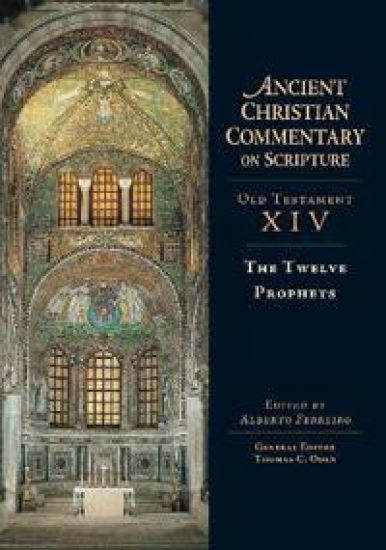
The Twelve Prophets

The Twelve Prophets

Alberto Ferreiro; Thomas C. Oden

IVP Academic
2019
nidottu
"And beginning with Moses and all the prophets, [the risen Jesus] interpreted to them in all the scriptures the things concerning himself" (Lk 24:27). The church fathers mined the Old Testament throughout for prophetic utterances regarding the Messiah, but few books yielded as much messianic ore as the Twelve Prophets, sometimes known as the Minor Prophets because of the relative brevity of their writings. Encouraged by the example of the New Testament writers, the church fathers found numerous parallels between the Gospels and the prophetic books. Among the events foretold, they found not only the flight into Egypt after the nativity, the passion, and resurrection of Christ, and the outpouring of the Spirit at Pentecost, but also Judas's act of betrayal, the earthquake at Jesus' death and the rending of the temple veil. Detail upon detail brimmed with significance for Christian doctrine, including baptism and the Eucharist as well as the relation between the covenants. In this rich and vital resource you will find excerpts, some translated here into English for the first time, from more than thirty church fathers, ranging in time from Clement of Rome, Justin Martyr, and Irenaeus (late first and early second centuries) to Gregory the Great, Braulio of Saragossa, and Bede the Venerable (late sixth to early eighth centuries). Geographically the sources range from the great Cappadocians—Basil the Great, Gregory of Nazianzus, Gregory of Nyssa—John Chrysostom, Ephrem the Syrian, and Hippolytus in the East, to Ambrose, Augustine, Cyprian, and Tertullian in the West, and Origen, Cyril, and Pachomius in Egypt. This Ancient Christian Commentary on Scripture volume is a treasure trove out of which Christians may bring riches both old and new in their understanding of these ancient texts.
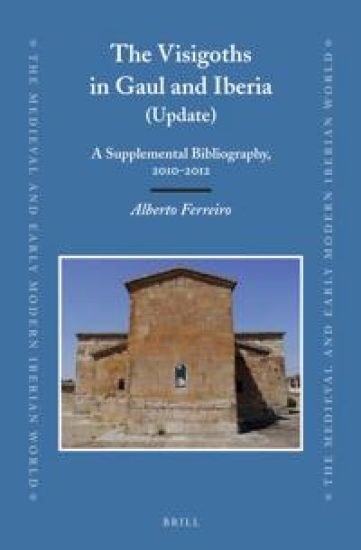
The Visigoths in Gaul and Iberia (Update)
The bibliography includes material published from 2010 to 2012. Following on from the first bibliography (Brill, 1988) and its updates (Brill 2006, 2008, 2011) this volume covers recent literature on: Archaeology, Liturgy, Monasticism, Iberian-Gallic Patristics, Paleography, Linguistics, Germanic and Muslim Invasions, and more. In addition, peoples such as the Vandals, Sueves, Basques, Alans and Byzantines are included. The book contains author and subject indexes and is extensively cross-indexed for easy consultation. A periodicals index of hundreds of journals accompanies the volume. Further updates are to be expected at intervals of three years.
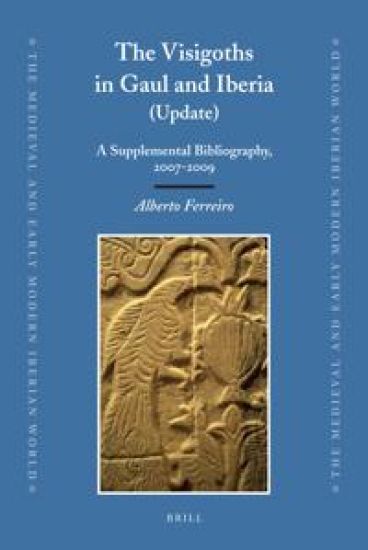
The Visigoths in Gaul and Iberia (Update)
The bibliography includes material published from 2007 to 2009. Following on from the first bibliography (Brill, 1988) and its first update (Brill 2007) this volume covers recent literature on: Archaeology, Liturgy, Monasticism, Iberian-Gallic Patristics, Paleography, Linguistics, Germanic and Muslim Invasions, and more. In addition, peoples such as the Vandals, Sueves, Basques, Alans and Byzantines are included. The book contains author and subject indexes and is extensively cross-indexed for easy consultation. A periodicals index of hundreds of journals accompanies the volume. Further updates are to be expected at intervals of three years.
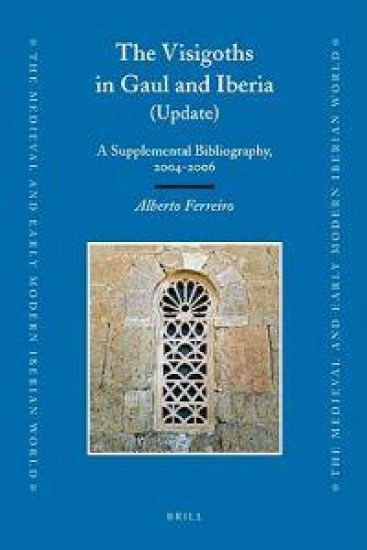
The Visigoths in Gaul and Iberia (Update)
The bibliography includes material published from 2004 to 2006. The historical chronology now includes the fourth century, covering Iberian Fathers such as Gregory of Elvira, Potamius of Lisboa, Prudentius, Pacian of Barcelona and Egeria. Following on from the first bibliography (Brill, 1988) and its first update (Brill 2006) this volume covers recent literature on: Archaeology, Liturgy, Monasticism, Iberian-Gallic Patristics, Paleography, Linguistics, Germanic and Muslim Invasions, and more. In addition, peoples such as the Vandals, Sueves, Basques, Alans and Byzantines are included. The book contains author and subject indexes and is extensively cross-indexed for easy consultation. A periodicals index of hundreds of journals accompanies the volume. Further updates are to be expected at intervals of three years.
The Twelve Prophets

The Twelve Prophets

Alberto Ferreiro; Thomas C. Oden

Inter-Varsity Press
2003
sidottu
"And beginning with Moses and all the prophets, [the risen Jesus] interpreted to them in all the scriptures the things concerning himself" (Lk 24:27). The church fathers mined the Old Testament throughout for prophetic utterances regarding the Messiah, but few books yielded as much messianic ore as the Twelve Prophets, sometimes known as the Minor Prophets because of the relative brevity of their writings. Encouraged by the example of the New Testament writers, the church fathers found numerous parallels between the Gospels and the prophetic books. Among the events foretold, they found not only the flight into Egypt after the nativity, the passion, and resurrection of Christ, and the outpouring of the Spirit at Pentecost, but also Judas's act of betrayal, the earthquake at Jesus' death and the rending of the temple veil. Detail upon detail brimmed with significance for Christian doctrine, including baptism and the Eucharist as well as the relation between the covenants. In this rich and vital resource you will find excerpts, some translated here into English for the first time, from more than thirty church fathers, ranging in time from Clement of Rome, Justin Martyr, and Irenaeus (late first and early second centuries) to Gregory the Great, Braulio of Saragossa, and Bede the Venerable (late sixth to early eighth centuries). Geographically the sources range from the great Cappadocians—Basil the Great, Gregory of Nazianzus, Gregory of Nyssa—John Chrysostom, Ephrem the Syrian, and Hippolytus in the East, to Ambrose, Augustine, Cyprian, and Tertullian in the West, and Origen, Cyril, and Pachomius in Egypt. This Ancient Christian Commentary on Scripture volume is a treasure trove out of which Christians may bring riches both old and new in their understanding of these ancient texts.