Kirjojen hintavertailu. Mukana 12 152 606 kirjaa ja 12 kauppaa.

Kirjailija

Alberto Stefana

Kirjat ja teokset yhdessä paikassa: 8 kirjaa, julkaisuja vuosilta 2017-2026, suosituimpien joukossa Surrealism and Psychoanalysis in Grace Pailthorpe's Life and Work. Vertaile teosten hintoja ja tarkista saatavuus suomalaisista kirjakaupoista.

8 kirjaa

Kirjojen julkaisuhaarukka 2017-2026.

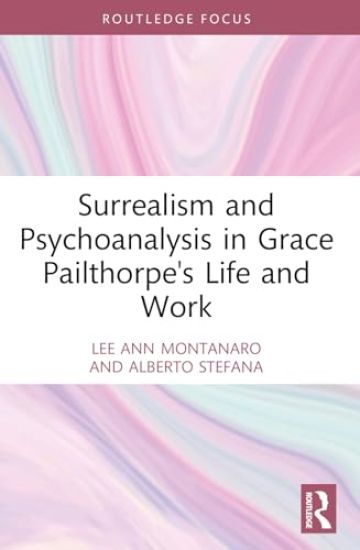
Surrealism and Psychoanalysis in Grace Pailthorpe's Life and Work

Surrealism and Psychoanalysis in Grace Pailthorpe's Life and Work

Lee Ann Montanaro; Alberto Stefana

TAYLOR FRANCIS LTD
2026
nidottu
This book outlines the life and intellectual thought of the English surrealist artist and psychoanalyst, Dr Grace Pailthorpe (1883–1971). It gathers her published and unpublished writings, providing an in-depth study of the importance of Surrealism in her work and legacy. Pailthorpe’s theoretical understanding of the psyche informed her approach to art, setting her work apart from other Surrealist artists by unifying artistic, scientific, and therapeutic aims. Pailthorpe considered Surrealism to be a method of investigation into unconscious mental life and believed that it was essential that the repressed part of our minds should find expression. Her theories were influenced by personal and professional experiences such as her work with female offenders, her psychoanalytic training, and her research project with Reuben Mednikoff. By bringing her artistic and theoretical work to light, Montanaro and Stefana reassert Pailthorpe’s significance to the histories of both psychoanalysis and Surrealism, rendering the cross-disciplinary relevance of her work accessible to a contemporary audience. This book is a rich resource for scholars and students interested in psychoanalysis and art history and provides an invaluable case study for the continuing significance of visual artistic practices to clinical work.
Surrealism and Psychoanalysis in Grace Pailthorpe's Life and Work

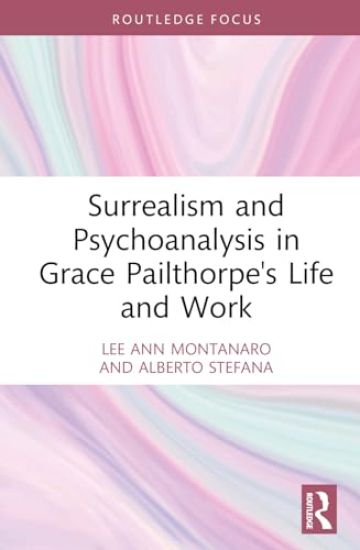
Surrealism and Psychoanalysis in Grace Pailthorpe's Life and Work

Lee Ann Montanaro; Alberto Stefana

TAYLOR FRANCIS LTD
2024
sidottu
This book outlines the life and intellectual thought of the English surrealist artist and psychoanalyst, Dr Grace Pailthorpe (1883–1971). It gathers her published and unpublished writings, providing an in-depth study of the importance of Surrealism in her work and legacy.Pailthorpe’s theoretical understanding of the psyche informed her approach to art, setting her work apart from other Surrealist artists by unifying artistic, scientific, and therapeutic aims. Pailthorpe considered Surrealism to be a method of investigation into unconscious mental life and believed that it was essential that the repressed part of our minds should find expression. Her theories were influenced by personal and professional experiences such as her work with female offenders, her psychoanalytic training, and her research project with Reuben Mednikoff. By bringing her artistic and theoretical work to light, Montanaro and Stefana reassert Pailthorpe’s significance to the histories of both psychoanalysis and Surrealism, rendering the cross-disciplinary relevance of her work accessible to a contemporary audience.This book is a rich resource for scholars and students interested in psychoanalysis and art history and provides an invaluable case study for the continuing significance of visual artistic practices to clinical work.
Marion Milner

Marion Milner

Alberto Stefana; Alessio Gamba

TAYLOR FRANCIS LTD
2023
sidottu
This focused and thorough book by Alberto Stefana and Alessio Gamba delves into Marion Milner’s contribution to psychoanalytic clinical theory and technique.The authors offer an overview of Milner’s work as a psychoanalyst, writer, and gifted painter. They bring to light how each of her clinical concepts and theorisations have been shaped by predecessors and, in turn, have inspired subsequent analysts. The importance of imaginative scenarios for both patient and therapist within the analytic context is particularly emphasised. The authors conclude by focusing on the retained clinical relevance of Milner’s contribution for contemporary psychoanalysis.Marion Miler: A Contemporary Introduction is essential for students of psychoanalysis, as well as academics and psychoanalytic practitioners interested in the clinical-theoretical work of this pioneer in psychoanalysis.
Marion Milner

Marion Milner

Alberto Stefana; Alessio Gamba

TAYLOR FRANCIS LTD
2023
nidottu
This focused and thorough book by Alberto Stefana and Alessio Gamba delves into Marion Milner’s contribution to psychoanalytic clinical theory and technique.The authors offer an overview of Milner’s work as a psychoanalyst, writer, and gifted painter. They bring to light how each of her clinical concepts and theorisations have been shaped by predecessors and, in turn, have inspired subsequent analysts. The importance of imaginative scenarios for both patient and therapist within the analytic context is particularly emphasised. The authors conclude by focusing on the retained clinical relevance of Milner’s contribution for contemporary psychoanalysis.Marion Miler: A Contemporary Introduction is essential for students of psychoanalysis, as well as academics and psychoanalytic practitioners interested in the clinical-theoretical work of this pioneer in psychoanalysis.
Grace Pailthorpe’s Writings on Psychoanalysis and Surrealism

Grace Pailthorpe’s Writings on Psychoanalysis and Surrealism

Alberto Stefana; Lee Ann Montanaro

TAYLOR FRANCIS LTD
2022
sidottu
This book gathers the published and unpublished writings of Dr Grace Pailthorpe (1883-1971), English surgeon, specialist in psychological medicine and surrealist artist to provide an in-depth study of her work and legacy.Pailthorpe’s theoretical understanding of the psyche informed her approach to art, setting her work apart from other Surrealist artists by unifying artistic, scientific and therapeutic aims. Pailthorpe considered Surrealism to be a method of investigation into unconscious mental life, and believed that it was essential that the repressed part of our minds should find expression. By bringing her artistic and theoretical work to light, Montanaro and Stefana reassert Pailthorpe’s significance to the histories of both psychoanalysis and Surrealism, rendering the cross-disciplinary relevance of her work accessible to a contemporary audience. This book will prove to be a rich resource for scholars and students interested in psychoanalysis and art history, and provides an invaluable case study for the continuing significance of visual artistic practices to clinical work.
Grace Pailthorpe’s Writings on Psychoanalysis and Surrealism

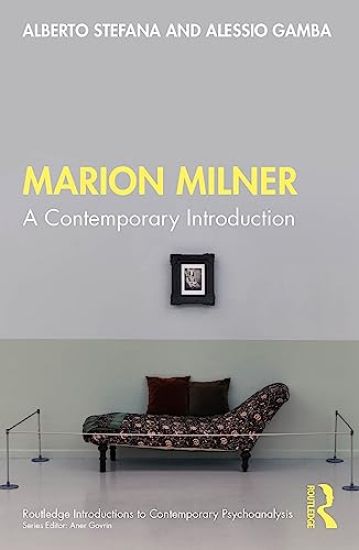
Grace Pailthorpe’s Writings on Psychoanalysis and Surrealism

Alberto Stefana; Lee Ann Montanaro

TAYLOR FRANCIS LTD
2022
nidottu
This book gathers the published and unpublished writings of Dr Grace Pailthorpe (1883-1971), English surgeon, specialist in psychological medicine and surrealist artist to provide an in-depth study of her work and legacy.Pailthorpe’s theoretical understanding of the psyche informed her approach to art, setting her work apart from other Surrealist artists by unifying artistic, scientific and therapeutic aims. Pailthorpe considered Surrealism to be a method of investigation into unconscious mental life, and believed that it was essential that the repressed part of our minds should find expression. By bringing her artistic and theoretical work to light, Montanaro and Stefana reassert Pailthorpe’s significance to the histories of both psychoanalysis and Surrealism, rendering the cross-disciplinary relevance of her work accessible to a contemporary audience. This book will prove to be a rich resource for scholars and students interested in psychoanalysis and art history, and provides an invaluable case study for the continuing significance of visual artistic practices to clinical work.
History of Countertransference

History of Countertransference

Alberto Stefana

Routledge
2017
sidottu
The constant and polymorphous development of the field of psychoanalysis since its inception has led to the evolution of a wide variety of psychoanalytic ‘schools’. In seeking to find common ground between them, Alberto Stefana examines the history of countertransference, a concept which has developed from its origins as an apparent obstacle, to become an essential tool for analysis, and which has undergone profound changes in definition and in clinical use.In History of Countertransference, Stefana follows the development of this concept over time, exploring a very precise trend which begins with the original notion put forward by Sigmund Freud and leads to the ideas of Melanie Klein and the British object relations school. The book explores the studies of specific psychoanalytic theorists and endeavours to bring to light how the input from each one may have been influenced by previous theories, by the personal history of the analyst, and by their historical-cultural context. By shedding light on how different psychoanalytic groups work with countertransference, Stefana helps the reader to understand the divergences that exist between them.This unique study of a key psychoanalytical concept will be essential reading for psychoanalysts in practice and in training, and academics and students of psychoanalytic studies and the history of psychology.
History of Countertransference

History of Countertransference

Alberto Stefana

Routledge
2017
nidottu
The constant and polymorphous development of the field of psychoanalysis since its inception has led to the evolution of a wide variety of psychoanalytic ‘schools’. In seeking to find common ground between them, Alberto Stefana examines the history of countertransference, a concept which has developed from its origins as an apparent obstacle, to become an essential tool for analysis, and which has undergone profound changes in definition and in clinical use.In History of Countertransference, Stefana follows the development of this concept over time, exploring a very precise trend which begins with the original notion put forward by Sigmund Freud and leads to the ideas of Melanie Klein and the British object relations school. The book explores the studies of specific psychoanalytic theorists and endeavours to bring to light how the input from each one may have been influenced by previous theories, by the personal history of the analyst, and by their historical-cultural context. By shedding light on how different psychoanalytic groups work with countertransference, Stefana helps the reader to understand the divergences that exist between them.This unique study of a key psychoanalytical concept will be essential reading for psychoanalysts in practice and in training, and academics and students of psychoanalytic studies and the history of psychology.