Kirjojen hintavertailu. Mukana 12 657 676 kirjaa ja 12 kauppaa.
Kirjailija
Alberto Toscano
Kirjat ja teokset yhdessä paikassa: 10 kirjaa, julkaisuja vuosilta 2013-2025, suosituimpien joukossa Communism in Philosophy. Vertaile teosten hintoja ja tarkista saatavuus suomalaisista kirjakaupoista.
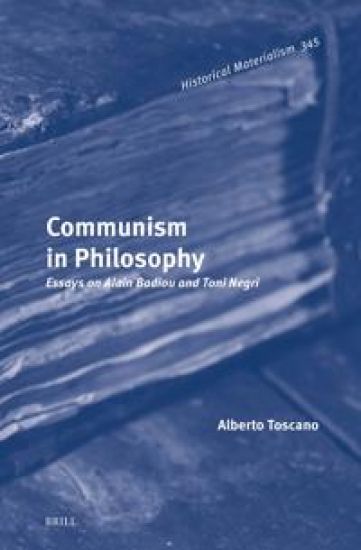
From the “red years” that followed the social explosion of May '68 into the first decades of the 21st century, Alain Badiou and Toni Negri have produced two imposing and consequential bodies of philosophical writing, while never abandoning their commitment to a militant politics of equality. The essays collected in this book tackle multiple dimensions of their work—from ontology to biopolitics, from art to violence, from the theory of capitalism to the challenge of counter-revolution. But all of them are also efforts to explore and answer a single question: What does it mean to be a communist in philosophy?
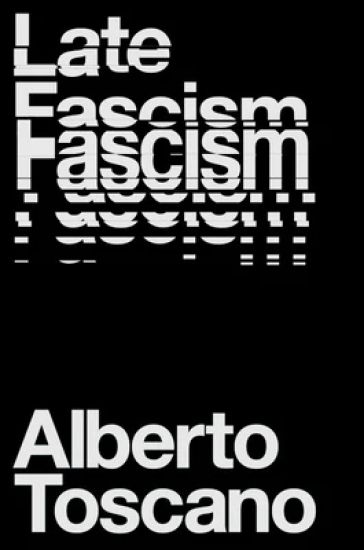
The rich archive of twentieth-century debates on fascism can steer a path through an increasingly authoritarian present. Developing anti-fascist theory is an urgent and vital task. From the 'Great Replacement' to campaigns against critical race theory and 'gender ideology', today's global far right is launching lethal panics about the threats to traditional political, sexual and racial hierarchies.Drawing especially on Black radical and anti-colonial theories of fascism, Toscano makes clear the limits of associating fascism primarily with the kind of political violence experienced by past European regimes. Rather than looking for analogies from history, we should see fascism as a mutable process, one anchored in racial and colonial capitalism, which both predates and survives its crystallization in Mussolini's Italy and Hitler's Germany. It is a threat that continues to evolve in the present day.
A timely book addressing the burning concerns of our times, from the excesses of capitalism to the global crisis of leadership. There is widespread agreement, across a voluble political spectrum and around the planet, that we live in times of intensifying insecurity and turmoil. If ours is an age of transition, its direction is anything but certain. Momentous transformations in ecology, geopolitics, and everyday life are shadowed by a suffocating sense of stasis. The limits to capital and the limits of nature are entangled in frightful ways, while the profoundly obsolete form of leadership, domination, and conflict exacerbate an already baleful situation. And yet struggles for liberation have not been quelled. Terms of Disorder confronts this moment by probing some of the defining terms in the modern vocabulary of emancipation, with the aim of testing their capacity to name and orient collective action set on abolishing the present state of things. Ranging from communism to leadership, the eleven keywords addressed in this book provide a set of interlocking points of entry into the common task of forging a political language capable of navigating our disorientation. If, as Gramsci famously noted, the interregnum is a time when the new struggles to be born while the old order is moribund, we may wish to heed Cedric Robinson’s call to “choose wisely among the dying.”
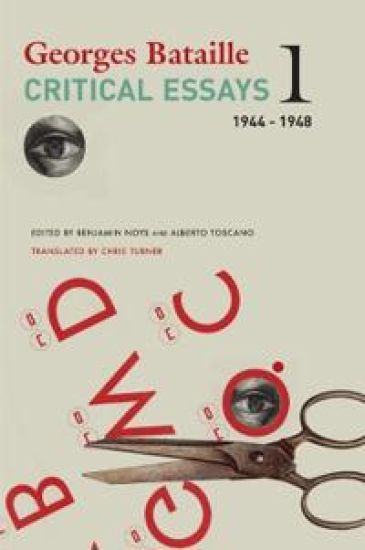
This first book in a three-volume collection of Georges Bataille’s essays introduces English readers to his philosophical and critical writings. In the aftermath of the Second World War, French thinker and writer Georges Bataille forged a singular path through the moral and political impasses of his age. In 1946, animated by “a need to live events in an increasingly conscious way,” and to reject any compartmentalization of intellectual life, Bataille founded the journal Critique. Adopting the format of the review essay, he surveyed the post-war cultural landscape while advancing his reflections on excess, non-knowledge, and the general economy. Focusing on literature as a mode of sovereign uselessness, he tackled prominent and divisive figures such as Henry Miller and Albert Camus. In keeping with Critique’s mission to explore the totality of human knowledge, Bataille’s articles did not just focus on the literary but featured important reflections on the science of sexuality, the Chinese Revolution, and historical accounts of drunkenness, among other matters. Throughout, he was attuned to how humanity would deal with the excessive forces of production and destruction it had unleashed, his aim being a way of thinking and living that would inhabit that excess. This is the first of three volumes collecting Bataille’s post-war essays. Beginning with an article on Nietzsche and fascism written shortly after the liberation of Paris and running to the end of 1948, these texts make available for the first time in English the systematic diversity of Bataille’s post-war thought.
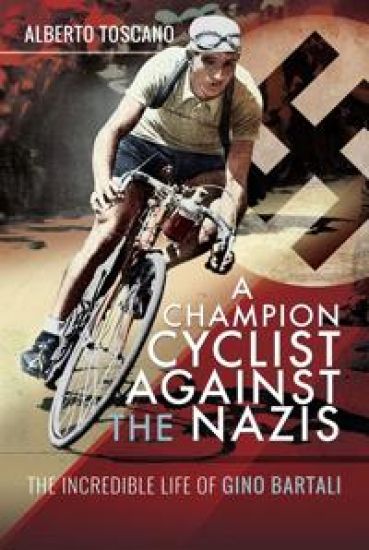
Italy, 1943\. Although allied with Hitler, there were those who refused to accept the fascist policies of racial discrimination and deportation. Among them was Gino Bartali. A champion cyclist, he won the Giro d'Italia (Tour of Italy) three times and the Tour de France twice. But these weren't his only achievements. Deeply religious, Bartali never spoke about what he did during those dark years, when he agreed to work with the Resistance and pass messages from one end of the country to the other. Despite the dangers, Bartali used his training as a pretext to criss-cross Italy, hiding documents in the handlebars and saddle of his bicycle, all the while hoping that each time he was searched they wouldn't think to disassemble his machine. As a result of his bravery, 800 Jews including numerous children were saved from deportation. He died in Florence in 2000 and was recognised as one of the 'Righteous Among the Nations' in 2013. In this book, Alberto Toscano shares the incredible story of this great sportsman and recalls the dramatic moments in Italy and Europe in the twentieth century.
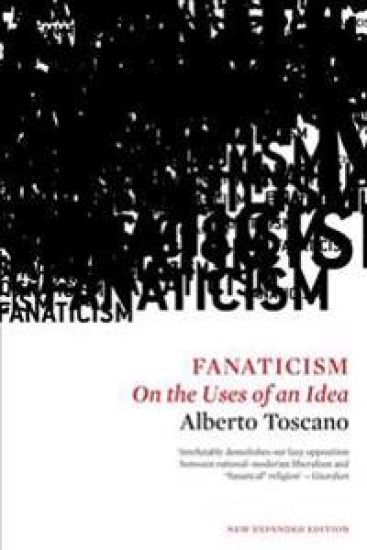
The idea of fanaticism as a deviant or extreme variant of an already irrational set of religious beliefs is today invoked by the West in order to demonize and psychologize any non-liberal politics. Alberto Toscano's compelling and erudite counter-history explodes this accepted interpretation in exploring the critical role fanaticism played in forming modern politics and the liberal state. Tracing its development from the traumatic Peasants' War of early sixteenth-century Germany to contemporary Islamism, Toscano tears apart the sterile opposition of 'reasonableness' and fanaticism. Instead, in a radical new interpretation, he places the fanatic at the very heart of politics, arguing that historical and revolutionary transformations require a new understanding of his role. Showing how fanaticism results from the failure to formulate an adequate emancipatory politics, this illuminating history sheds new light on an idea that continues to dominate debates about faith and secularism.
Can capital be seen? Cartographies of the Absolute surveys the disparate answers to this question offered by artists, film-makers, writers and theorists over the past few decades. It zones in on the crises of representation that have accompanied the enduring crisis of capitalism, foregrounding the production of new visions and artefacts that wrestle with the vastness, invisibility and complexity of the abstractions that rule our lives.