
Kirjailija
Albie Sachs
Kirjat ja teokset yhdessä paikassa: 6 kirjaa, julkaisuja vuosilta 1973-2018, suosituimpien joukossa 20 Years of South African democracy. Vertaile teosten hintoja ja tarkista saatavuus suomalaisista kirjakaupoista.
6 kirjaa
Kirjojen julkaisuhaarukka 1973-2018.
20 Years of South African democracy
Justice Dikeng Moseneki; Frene Ginwala; Sydney Mufamadi; Parks Mayor Tau; Pascal Moloi; Patricia McFadden; Trevor Manuel; Miriam Altman; Albie Sachs; Renosi Mokate
Real African Publishers Pty Ltd
2016
nidottu
This publication is the outcome of a conference marking the beginning of South Africa's third decade of democracy hosted in November 2014 by the Mapungubwe Institute for Strategic Reflection (MISTRA) and the Thabo Mbeki African Leadership Institute (TMALI) at the University of South Africa (Unisa). The conference was entitled 20 Years of South African Democracy: So Where to Now? The main focus of the conference was projective reflections into the next two decades of democracy. It aimed to deal with the theoretical perspectives underpinning the state of South Africa in two decades of democracy and, most importantly, prospects for the future. This publication covers the following main themes of the conference: Reflections on Historical Moments The South African Political Economy Values, Nation Formation and Social Compacting Innovation and Transdisciplinary Knowledge for Action Building a Capable Development StateContained herein are inputs from a wide range of prominent South African and international thinkers, practitioners and activists. Some are in the form of prepared papers and others are taken from transcripts of presentations. They are presented in the hope that the thought-provoking and incisive discourse that took place at the conference can contribute to the continuation of a discussion that, by its nature, can have no end. Contributors: Justice Dikeng Moseneki, Frene Ginwala, Sydney Mufamadi, Mayor Parks Tau, Pascal Moloi, Patricia McFadden, Trevor Manuel, Miriam Altman, Albie Sachs, Renosi Mokate, Vusi Gumede, Pregs Govender, Raenette Taljaard, Mammo Muchie, Mazibuko Jara, Hester du Plessis, Tshilidzi Marwala, Imraan Patel, Erika Kraemer-Mbula and Sibusiso Vil-Nkomo.
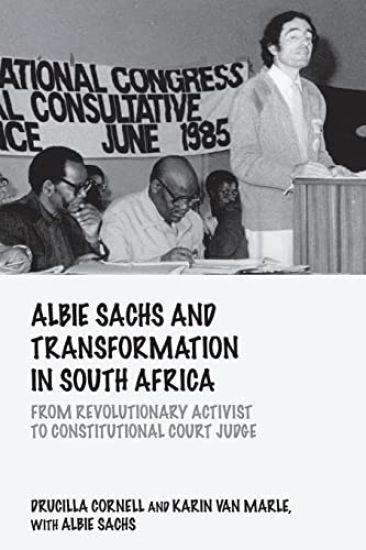
Albie Sachs and Transformation in South Africa
Ucilla Cornell; Karin van Marle; Albie Sachs
CRC Press
2015
nidottu
Many critical theorists talk and write about the day after the revolution, but few have actually participated in the constitution of a revolutionary government. Emeritus Justice Albie Sachs was a freedom fighter for most of his life. He then played a major role in the negotiating committee for the new constitution of South Africa, and was subsequently appointed to the new Constitutional Court of South Africa. Therefore, the question of what it means to make the transition from a freedom fighter to a participant in a revolutionary government is not abstract, in Hegel’s sense of the word, it is an actual journey that Albie Sachs undertook. The essays in this book raise the complex question of what it actually means to make this transition without selling out to the demands of realism. In addition, the preface written by Emeritus Justice Albie Sachs and his interview with Drucilla Cornell and Karin van Marle, further address key questions about revolution in the twentieth- and twenty-first centuries: from armed struggle to the organization of a nation state committed to ethical transformation in the name of justice.Albie Sachs and transformation in South Africa: from revolutionary activist to constitutional court judge illuminates the theoretical and practical experiences of revolution and its political aftermath. With first-hand accounts alongside academic interrogation, this unique book will intrigue anyone interested in the intersection of Law and Politics.
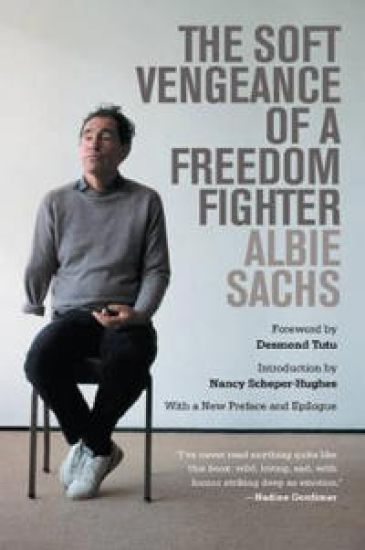
The Soft Vengeance of a Freedom Fighter
Albie Sachs; Desmond (FRW) Tutu; Nancy (INT) Scheper-Hughes
University of California Press
2014
pokkari
On April 7, 1988, Albie Sachs, an activist South African lawyer and a leading member of the ANC, was car-bombed in Maputo, the capital of Mozambique, by agents of South Africa's security forces. His right arm was blown off, and he lost sight in one eye. This intimate and moving account of his recovery traces the gradual recuperation of his broken body and his triumphant reentry into the world, where his dream of soft vengeance was realized with the achievement of democracy in South Africa. This book captures the spirit of a remarkable man: his enormous optimism, his commitment to social justice, and his joyous wonder at the life that surrounds him. A new preface and epilogue reflect on the making of Abby Ginzberg's documentary film titled Soft Vengeance: Albie Sachs and the New South Africa.

Albie Sachs and Transformation in South Africa
ucilla Cornell; Karin van Marle; Albie Sachs
Birkbeck Law Press
2014
sidottu
Many critical theorists talk and write about the day after the revolution, but few have actually participated in the constitution of a revolutionary government. Emeritus Justice Albie Sachs was a freedom fighter for most of his life. He then played a major role in the negotiating committee for the new constitution of South Africa, and was subsequently appointed to the new Constitutional Court of South Africa. Therefore, the question of what it means to make the transition from a freedom fighter to a participant in a revolutionary government is not abstract, in Hegel’s sense of the word, it is an actual journey that Albie Sachs undertook. The essays in this book raise the complex question of what it actually means to make this transition without selling out to the demands of realism. In addition, the preface written by Emeritus Justice Albie Sachs and his interview with Drucilla Cornell and Karin van Marle, further address key questions about revolution in the twentieth- and twenty-first centuries: from armed struggle to the organization of a nation state committed to ethical transformation in the name of justice.Albie Sachs and transformation in South Africa: from revolutionary activist to constitutional court judge illuminates the theoretical and practical experiences of revolution and its political aftermath. With first-hand accounts alongside academic interrogation, this unique book will intrigue anyone interested in the intersection of Law and Politics.
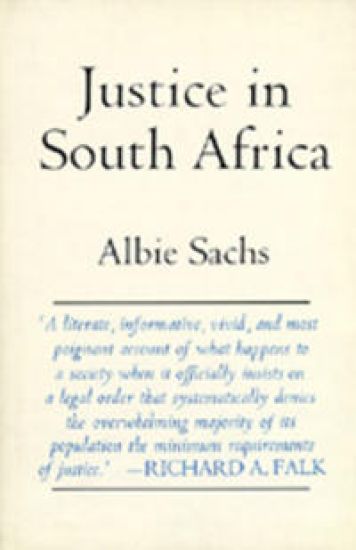
"A literate, informative, vivid, and most poignant account of what happens to a society when it officially insists on a legal order that systematically denies the overwhelming majority of its population the minimum requirements of justice."--Richard A. Falk, professor emeritus of international law at Princeton University