

Kirjailija
Albrecht Koschorke
Kirjat ja teokset yhdessä paikassa: 6 kirjaa, julkaisuja vuosilta 2003-2026, suosituimpien joukossa Souveränität der Vernunft. Vertaile teosten hintoja ja tarkista saatavuus suomalaisista kirjakaupoista.
6 kirjaa
Kirjojen julkaisuhaarukka 2003-2026.


How can we develop a cultural theory starting with the basic insight that human beings are "storytelling animals"? Within literary studies, narratology is a highly developed field. However, literary historians have not paid much attention to the large and small stories abounding in everyday discourse, guiding all kinds of social activity, and providing common ground for whole societies—but also fueling controversies and hostilities. Moreover, "narrative" is not only a scholarly category but has come into use in many fields of social activity as a tool for cultural self-fashioning. This book is based on the assumption that to a large extent, social dynamics is modeled in an aesthetic manner via narratives. It explores the narrative organization of cultural spaces and time-frames, the mythological shaping of communities and adversaries, and the co-production of narratives and institutions aimed at stabilizing social life. In this framework, the epistemological problem looms large of how an instrument as unreliable as narrative can participate in the creation of a social consensus regarding truth. This problem endows the general topics explored in this book with a particularly contemporary dimension.
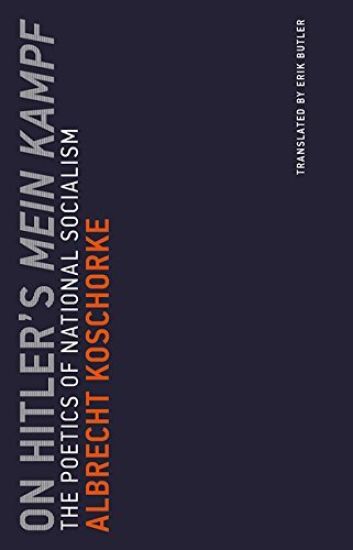
An examination of the narrative strategies employed in the most dangerous book of the twentieth century and a reflection on totalitarian literature.Hitler's Mein Kampf was banned in Germany for almost seventy years, kept from being reprinted by the accidental copyright holder, the Bavarian Ministry of Finance. In December 2015, the first German edition of Mein Kampf since 1946 appeared, with Hitler's text surrounded by scholarly commentary apparently meant to act as a kind of cordon sanitaire. And yet the dominant critical assessment (in Germany and elsewhere) of the most dangerous book of the twentieth century is that it is boring, unoriginal, jargon-laden, badly written, embarrassingly rabid, and altogether ludicrous. (Even in the 1920s, the consensus was that the author of such a book had no future in politics.) How did the unreadable Mein Kampf manage to become so historically significant? In this book, German literary scholar Albrecht Koschorke attempts to explain the power of Hitler's book by examining its narrative strategies.Koschorke argues that Mein Kampf cannot be reduced to an ideological message directed to all readers. By examining the text and the signals that it sends, he shows that we can discover for whom Hitler strikes his propagandistic poses and who is excluded. Koschorke parses the borrowings from the right-wing press, the autobiographical details concocted to make political points, the attack on the Social Democrats that bleeds into an anti-Semitic conspiracy theory, the contempt for science, and the conscious attempt to trigger outrage. A close reading of National Socialism's definitive text, Koschorke concludes, can shed light on the dynamics of fanaticism. This lesson of Mein Kampf still needs to be learned.
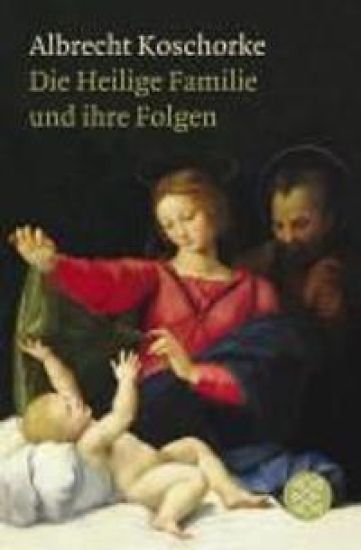
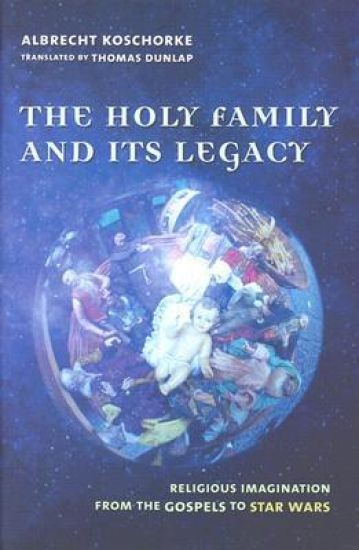
Why do biblical themes continue to have such an impact on the popular imagination? Why do Mary-like mothers and Jesus-like sons play such a prominent role not only in the late Middle Ages and the Reformation but also in the Enlightenment; the nineteenth century, with its faith in science; and even our time, in such movies as The Terminator and the Star Wars saga-to the extent that we can count them among Western society's leading cultural archetypes? And what does the figure of the father-God reveal about the social and familial institutions of male-dominated society? In this provocative and engaging book, Albrecht Koschorke suggests that the story of the Holy Family has become a cultural code embedded in secular society. The Western nuclear family consists of the Christian prototype of mother, father, and child. Thus the Holy Family has come to be a model for modern family dynamics. The holy child stands at the center of centuries of art history, just as the child stands at the center of parental attention today. Similarly, the roles of modern women and men provide dramatic parallels to the surrogate mother Mary and to Joseph, a proxy for the absent father. But as the position of the father in Christianity remains ambiguous, Koschorke argues, the Holy Family model actually disrupts the nuclear "ideal," with reverberations throughout Western culture, including art, literature, film, popular culture, and political ideology. The anomalies of the Christian nativity-a present but nonbiological father and an absent spiritual father, for example-support the ideology of the state as a powerful and patriarchal determinant of society. Ranging over two millennia of history and culture, Koschorke deftly contrasts the cultural archetype of the Holy Family with the theories of Freud and Weber and with the literary works of Rousseau, Kleist, and others in an exploration that illuminates issues of historical, religious, artistic, psychological, and cultural significance.