Kirjojen hintavertailu. Mukana 12 390 323 kirjaa ja 12 kauppaa.

Kirjailija

Alden T. Vaughan

Kirjat ja teokset yhdessä paikassa: 6 kirjaa, julkaisuja vuosilta 1993-2012, suosituimpien joukossa Shakespeare in America. Vertaile teosten hintoja ja tarkista saatavuus suomalaisista kirjakaupoista.

6 kirjaa

Kirjojen julkaisuhaarukka 1993-2012.

Shakespeare in America

Shakespeare in America

Alden T. Vaughan; Virginia Mason Vaughan

Oxford University Press
2012
sidottu
OXFORD SHAKESPEARE TOPICS General Editors: Peter Holland and Stanley Wells Oxford Shakespeare Topics provide students and teachers with short books on important aspects of Shakespeare criticism and scholarship. Each book is written by an authority in its field, and combines accessible style with original discussion of its subject. This book traces Shakespeare's contributions to America's cultural history from the colonial era to the present, with substantial attention to theatre history, publishing history, and criticism. It identifies four broad themes that distinguish Shakespeare in the United States from the dramatist's reception in other countries. During the eighteenth and nineteenth centuries, Americans in search of self-improvement took a utilitarian approach to the plays, mining them for moral insights and everyday wisdom; beginning in the nineteenth century, American entrepreneurs collected, edited, and adapted Shakespeare for their own pleasure and profit; while America's public schools and theatre practitioners sought to make the works widely accessible; and throughout American history, Americans have had fun with Shakespeare in spoofs, parodies, and other appropriations and the collection of Shakespeare kitsch. Shakespeare in America also examines America's evolving awareness of Shakespeare, initially through the importation of his writings in the early eighteenth century, the staging a few decades later of English adaptations of the plays, and in the nineteenth century and beyond, through the promotion of Shakespeare and his works at Lyceums, Chautauquas, Shakespeare Clubs (both scholarly men's associations and more socially-oriented women's clubs), and America's literary 'renaissance' as championed by Emerson, Thoreau, Melville, Whitman, and others. The nineteenth century also witnessed growing attention to Shakespeare in schools, especially in William H McGuffey's Readers, and later in colleges, while simultaneously American familiarity with Shakespeare encouraged burlesques on stage, including the popular 'black' minstrel shows of the 1840s through 1870s. The twentieth century witnessed new organizations for promoting Shakespeare, such as the Shakespeare Association of America, and new venues for amateur and professional performances, such as Shakespeare summer festivals beginning in the 1930s and still going strong; and in new media for enjoying Shakespeare, such as feature films, Broadway musicals, and, toward the end of the twentieth century, radical adaptations of the plays on stage, on film, and in fiction, often aimed at persuading American youth that Shakespeare speaks to them. The story of Shakespeare in America is ever-changing.
Shakespeare in America

Shakespeare in America

Alden T. Vaughan; Virginia Mason Vaughan

Oxford University Press
2012
nidottu
OXFORD SHAKESPEARE TOPICS General Editors: Peter Holland and Stanley Wells Oxford Shakespeare Topics provide students and teachers with short books on important aspects of Shakespeare criticism and scholarship. Each book is written by an authority in its field, and combines accessible style with original discussion of its subject. This book traces Shakespeare's contributions to America's cultural history from the colonial era to the present, with substantial attention to theatre history, publishing history, and criticism. It identifies four broad themes that distinguish Shakespeare in the United States from the dramatist's reception in other countries. During the eighteenth and nineteenth centuries, Americans in search of self-improvement took a utilitarian approach to the plays, mining them for moral insights and everyday wisdom; beginning in the nineteenth century, American entrepreneurs collected, edited, and adapted Shakespeare for their own pleasure and profit; while America's public schools and theatre practitioners sought to make the works widely accessible; and throughout American history, Americans have had fun with Shakespeare in spoofs, parodies, and other appropriations and the collection of Shakespeare kitsch. Shakespeare in America also examines America's evolving awareness of Shakespeare, initially through the importation of his writings in the early eighteenth century, the staging a few decades later of English adaptations of the plays, and in the nineteenth century and beyond, through the promotion of Shakespeare and his works at Lyceums, Chautauquas, Shakespeare Clubs (both scholarly men's associations and more socially-oriented women's clubs), and America's literary 'renaissance' as championed by Emerson, Thoreau, Melville, Whitman, and others. The nineteenth century also witnessed growing attention to Shakespeare in schools, especially in William H McGuffey's Readers, and later in colleges, while simultaneously American familiarity with Shakespeare encouraged burlesques on stage, including the popular 'black' minstrel shows of the 1840s through 1870s. The twentieth century witnessed new organizations for promoting Shakespeare, such as the Shakespeare Association of America, and new venues for amateur and professional performances, such as Shakespeare summer festivals beginning in the 1930s and still going strong; and in new media for enjoying Shakespeare, such as feature films, Broadway musicals, and, toward the end of the twentieth century, radical adaptations of the plays on stage, on film, and in fiction, often aimed at persuading American youth that Shakespeare speaks to them. The story of Shakespeare in America is ever-changing.
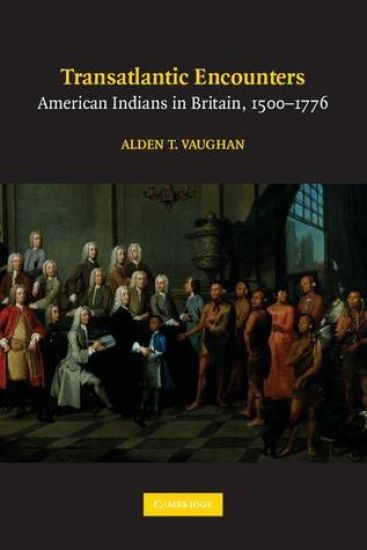
Transatlantic Encounters

Transatlantic Encounters

Alden T. Vaughan

Cambridge University Press
2008
pokkari
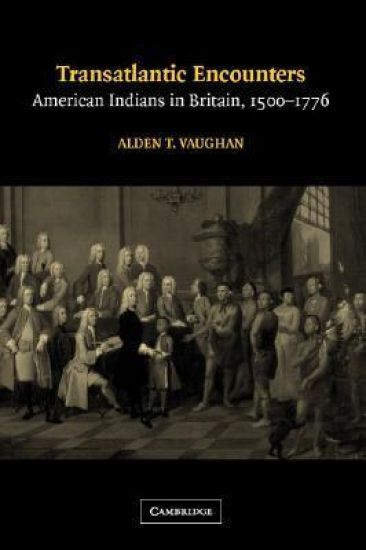
Transatlantic Encounters examines the diverse origins and experiences of approximately 175 American Indians and Inuits who traveled to the British Isles before the American Revolution. Their homelands ranged from northern Canada to Brazil, their ages from infant to nonagenarian, their statuses from slave (the largest category) to 'emperor', their occupations from warrior to missionary. Some American natives died soon after arrival, but others remained as long as fourteen years and returned home; still others, their arrival and death dates undocumented, may have endured long lives abroad. And always, Indians and Inuits fascinated the British people, whether the Americans were captives or on commercial display, interpreters-in-training, or voluntary voyagers to petition the monarch and tour Britain's famous sites. British artists painted their portraits and eminent writers invoked them in plays and essays. In the imperial crisis of 1776, Indian diplomats who had been to London would staunchly support the British Empire.
Transatlantic Encounters

Transatlantic Encounters

Alden T. Vaughan

Cambridge University Press
2006
sidottu
Transatlantic Encounters examines the diverse origins and experiences of approximately 175 American Indians and Inuits who traveled to the British Isles before the American Revolution. Their homelands ranged from northern Canada to Brazil, their ages from infant to nonagenarian, their statuses from slave (the largest category) to 'emperor', their occupations from warrior to missionary. Some American natives died soon after arrival, but others remained as long as fourteen years and returned home; still others, their arrival and death dates undocumented, may have endured long lives abroad. And always, Indians and Inuits fascinated the British people, whether the Americans were captives or on commercial display, interpreters-in-training, or voluntary voyagers to petition the monarch and tour Britain's famous sites. British artists painted their portraits and eminent writers invoked them in plays and essays. In the imperial crisis of 1776, Indian diplomats who had been to London would staunchly support the British Empire.
New England Frontier, 3rd Edition

New England Frontier, 3rd Edition

Alden T. Vaughan

University of Oklahoma Press
1995
nidottu
This study argues that the first two generations of Puritan settlers in New England were not hostile toward their Indian neighbours but sought peaceful and equitable relations as a first step to moulding the Indians into neo-Englishman.
Shakespeare's Caliban

Shakespeare's Caliban

Alden T. Vaughan; Virginia Mason Vaughan

Cambridge University Press
1993
pokkari
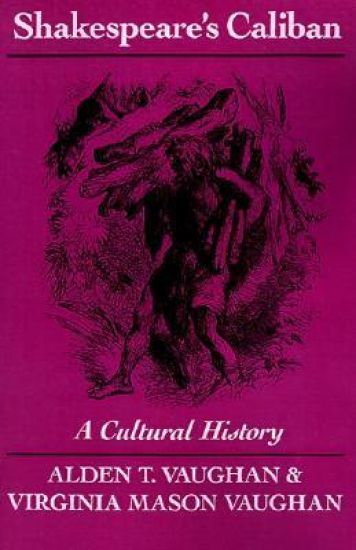
Among Shakespeare’s numerous stage characters, probably none has been so variously interpreted as the ‘savage and deformed slave’ Caliban in The Tempest. For nearly four centuries, widely diverse writers and artists from around the world have found the rebellious monster an intriguing and useful signifier. He has been portrayed in the theatre and in literary criticism as - among other things - a fish, a tortoise, the missing link, an American Indian, and an African slave. He has also appeared extensively and diversely in poems by Browning, Auden, and Brathwaite among others, and in illustrations by Hogarth, Fuseli, Walter Crane, and other major artists. In the twentieth century, he has been widely adopted as a cultural icon, especially in the Caribbean, Latin America, and Africa: first as a symbol of imperialist North Americans, more recently as an emblem of colonised native populations. Shakespeare’s Caliban looks first at the historical, etymological, literary, and folklore contexts in which Shakespeare created Caliban. The authors weigh the plausible intellectual influences of early Jacobean England and reach a tentative conclusion about what Shakespeare may have had in mind. The rest (and far larger part) of the book traces Caliban’s evolution from his first appearance in 1611 to the present, with chapters on the major artistic genres in which Caliban has been interpreted, appropriated, and adapted: criticism, stage, painting, poetry, film, and sociopolitical literature. Shakespeare’s Caliban relates the monster’s changing incarnations to the cultural and intellectual forces that allowed him to reflect major trends - including romanticism, Darwinism, the late nineteenth-century Anglo-American rapproachment, and the Third World liberation movements after World War II.