Kirjojen hintavertailu. Mukana 12 390 323 kirjaa ja 12 kauppaa.

Kirjailija

Alec Brew

Kirjat ja teokset yhdessä paikassa: 31 kirjaa, julkaisuja vuosilta 1996-2024, suosituimpien joukossa 100 Years of Wolverhampton's Airports. Vertaile teosten hintoja ja tarkista saatavuus suomalaisista kirjakaupoista.

31 kirjaa

Kirjojen julkaisuhaarukka 1996-2024.

Lost Wolverhampton

Lost Wolverhampton

Alec Brew

AMBERLEY PUBLISHING
2024
nidottu
Wolverhampton was granted city status in 2000, but its origins lie in Anglo-Saxon England. During the Middle Ages Wolverhampton was a prosperous Staffordshire market town and a centre for the wool trade. Its coal and iron deposits enabled it to grow rapidly during the Industrial Revolution, when it became one of the most heavily industrialised areas of the country, specialising in coal mining, iron and steel production, engineering and manufacturing. The wealth brought into the town is seen today by the many civic buildings in Wolverhampton from that era, and large areas of social housing were built in the twentieth century to accommodate the population. Much has changed in Wolverhampton following the large-scale urban planning schemes of the 1960s and 1970s and later regeneration schemes for the city centre, reflecting a change in working practices from industry and manufacturing to more service-based employment, but Wolverhampton has still retained its distinctive identity. Lost Wolverhampton presents a portrait of this corner of the West Midlands over the last century to recent decades that has radically changed or disappeared today, showing not only the industries and buildings that have gone but also the people and street scenes, many popular places of entertainment and much more. This fascinating photographic history of lost Wolverhampton will appeal to all those who live in the area or know it well, as well as those who remember it from previous decades.
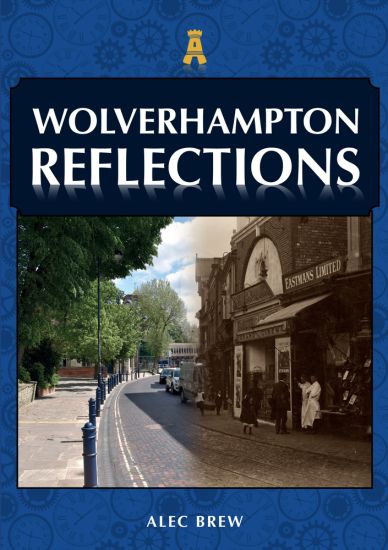
Wolverhampton Reflections

Wolverhampton Reflections

Alec Brew

Amberley Publishing
2021
nidottu
Wolverhampton was a Staffordshire market town in the Middle Ages but became a major industrial town during the Industrial Revolution, renowned for coal mining, metalworking and steel making. The prosperity brought to the town from this era is in evidence in many buildings in the city, and the growing population required a large programme of public housing in the early twentieth century. The development of Wolverhampton continued post-war, with much of the centre being rebuilt in the 1960s and 1970s. Granted city status in 2000, Wolverhampton continues to be redeveloped but despite the many changes, it has retained its strong identity in the West Midlands. Wolverhampton Reflections features an exciting collection of historic and modern pictures that are individually merged to reveal how the area has changed over the decades. Each of the 180 pictures in this book combines a recent colour view of Wolverhampton with the matching sepia archive scene. Through the split-image effect, readers can see how streets, buildings and everyday life have transformed with the passing of time. Local author Alec Brew presents this fascinating visual chronicle that ingeniously reflects past and present glimpses of Wolverhampton. This book will be of interest to residents, visitors, local historians and all those with links to the area.
Sunbeam Aero Engines

Sunbeam Aero Engines

Alec Brew

Fonthill Media
2020
nidottu
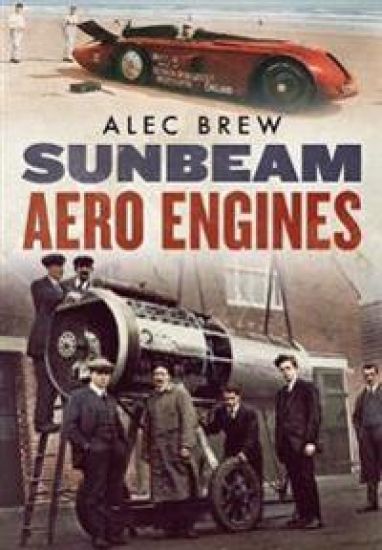
The first great British aircraft engine manufacturer, the Sunbeam Motor Car Company turned to the sunrise industry of aviation in 1912, and was among the first to buy an aircraft to test their engines, flown by a full-time test pilot, the famous Jack Alcock. Through the First World War Sunbeam was a vital supplier, of both engines and aircraft, particularly to the Royal Naval Air Service. Consistently Sunbeams were the most powerful British engines available, and they were fitted to the first aircraft to torpedo an enemy ship, the only aircraft to fly at the Battle of Jutland, and the first seaplanes to operate in the heart of Africa. After the War they powered the greatest of British Airships the R.34, the first aircraft to fly the Atlantic east to west, and the first to make the double crossing, and the R.33, the British dirigible with the highest flying hours. As Sunbeam reverted to car manufacture their aero engines were fitted to a succession of land speed record-breaking cars, including the first to exceed 150 mph and the first to exceed 200 mph, ironically, faster than any Sunbeam-powered aircraft.
Boulton Paul Aircraft Since 1915

Boulton Paul Aircraft Since 1915

Alec Brew

Fonthill Media
2020
sidottu
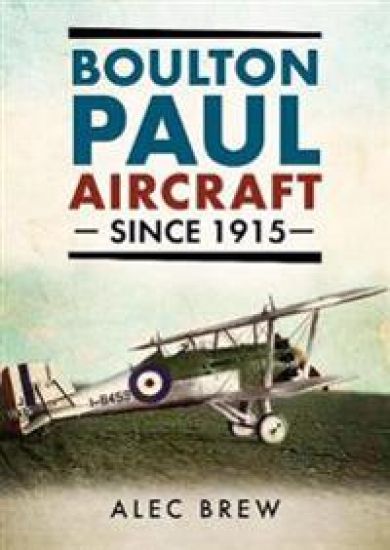
The ancient Norwich firm of Boulton & Paul were brought into aircraft construction in 1915, and quickly became one of the great innovators. They pioneered metal construction and built the frame of the largest aircraft ever built in Britain, the R.101 airship. The Overstrand, the last of their superlative medium bombers, was the first aircraft in the world to feature a power-operated gun turret, and after their move to Wolverhampton in 1936 and change of name to Boulton Paul Aircraft their gun turrets became a vital component of the war effort, not least in their own Defiant, which fought in the Battle of Britain and was the most successful night fighter in the dark nights of the Blitz. Their post-war Balliol trainer was the World’s first single-engine turboprop and their last production aircraft, because the technology of their gun turrets was translated into their world lead as manufacturers of power operated control units, and then fly-by-wire. Becoming part of the Dowty Group and later GE Aviation, their advanced aerospace product line is now invested in the firm of Moog, still in Wolverhampton, still innovating.
Molineux

Molineux

Alec Brew

Fonthill Media
2019
nidottu
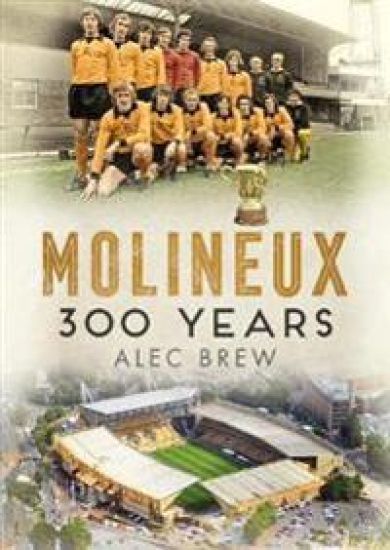
For 300 Years the name Molineux has been indelibly linked with the town of Wolverhampton, known throughout the World as the home of Wolverhampton Wanderers FC, but only for the last 130 of those years. Built in 1720 as one of the finest private homes in the town, with large formal gardens, Molineux became in turn a hotel with pleasure gardens and a home for major exhibitions, and cricket and boxing matches and the home of cycle racing in this country, but then the local football club moved in and began developing a stadium in which the Wolves won famous victories against top European teams in floodlit friendlies, and inspired the creation of the European Cup. After both the hotel and the team and stadium fell into the depths of decay, they eventually re-emerged as the home of the City’s Archives, and a magnificent home for a re-energised team which brought back European football, and local pride.
Boulton Paul Defiant

Boulton Paul Defiant

Alec Brew

Amberley Publishing
2019
nidottu
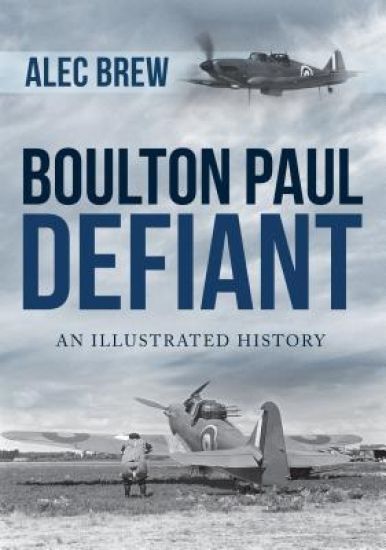
Fighting over the beaches of Dunkirk and in the Battle of Britain, guarding the night skies during the perilous months of the Blitz, pioneering electronic countermeasures, and serving air-sea rescue roles all around our coasts, the Boulton Paul Defiant played a vital part through most of the Second World War, finishing it in the important target-tug role. The Defiant is rightly considered Wolverhampton’s highest profile contribution to the war, and the most important product of Boulton Paul Aircraft. This book celebrates the contribution of the Defiant to the war in over 200 illustrations, most from Boulton Paul’s own archives, and many never published before. It exposes some of the false myths attached to an aircraft held in great affection by many of its crews.
Wolverhampton Through Time

Wolverhampton Through Time

Alec Brew

Amberley Publishing
2019
nidottu
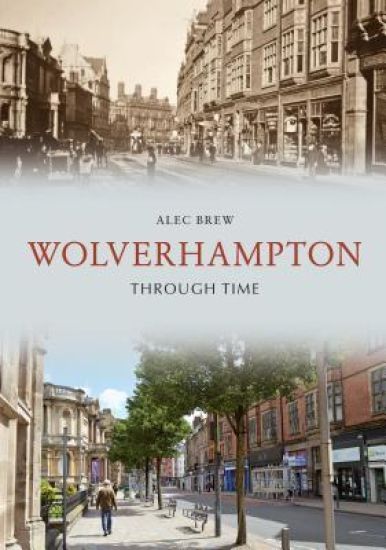
The West Midlands city of Wolverhampton has a fascinating history. Originally a medieval market town, it grew rapidly during the Industrial Revolution through the new coal-mining and manufacturing industries because of its mineral resources, particularly iron, coal and limestone. With the decline of these industries in the late twentieth century, Wolverhampton has had to change yet again, but in spite of the many changes that have occurred here the city has retained its identity. This fascinating selection of old and new images of Wolverhampton will be essential reading for all those who know this part of the West Midlands.
Boulton Paul Balliol

Boulton Paul Balliol

Alec Brew

Fonthill Media
2014
nidottu
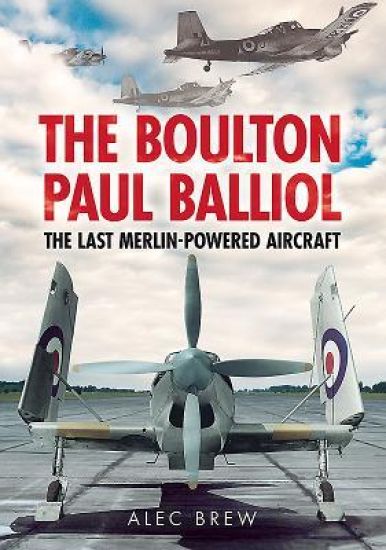
The Boulton Paul Balliol was the last British aircraft powered by the iconic Rolls-Royce Merlin engine, and the last piston-powered advanced trainer in both the Royal Air Force and the Fleet Air Arm. Yet it began life as the world's first turbo-trainer, conceived in the last days of the Second World War, and became the first aircraft with a single prop-jet, beating the rival Avro Athena into the air by two weeks. However, policy changed and it was with the trusty Merlin that the Balliol ultimately went into production. Boulton Paul Aircraft hoped for huge orders-opening a second production line at Blackburn Aircraft in anticipation-but the RAF decided to switch to all-jet training; even though a dozen were sold to the Royal Ceylon Air Force, total Balliol production only ever amounted to just over 200 examples. Consigned to another footnote in aviation history, this was the last aircraft Boulton Paul-already world-leaders in the manufacture of power controls- would ever build. The Boulton Paul Balliol: The Last Merlin-Powered Aircraft is a detailed account of the journey of this aeroplane and its creators, and the shifting sands within the highly competitive post-war aeronautics industry. This is a beautifully illustrated insight into how a small, pioneering British manufacturer dealt with the fluctuating demands of its era, enhanced by the author's own story as a Boulton Paul enthusiast and restorer.
Wolverhampton Sporting Heroes

Wolverhampton Sporting Heroes

Joey Brew; Alec Brew

Amberley Publishing
2010
nidottu
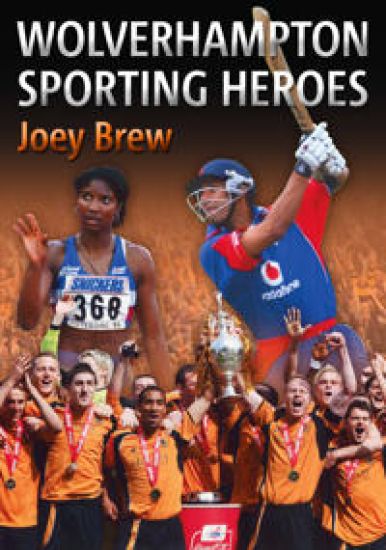
Wolverhampton has been blessed with a large number of successful sports clubs and individuals who have won national and international acclaim. Wolverhampton Wanderers are the reason that the city's name is known worldwide. However, Wolverhampton & Bilston Athletics Club and Wolverhampton Judo Club both have a greater claim to the accolade of most successful sporting club in the city. The 'other' Wolves, Wolverhampton's speedway team, have consistently ridden in the top flight of British Speedway. Also, cars from local motor company Sunbeam broke the World Land Speed Record five times, and the company also became involved in the early history of British aviation. Other clubs may not have reached the same heady heights, but have achieved great success at the level at which they compete and have produced individuals who have gone on to represent major counties or their country. One good example of this is Wolverhampton Cricket Club, the oldest sports club in the town. In this fascinating, illustrated guide to the sporting heroes of the city, Joey Brew discusses those, like Billy Wright, who may not have been born in the area, but who have represented Wolverhampton clubs and have gone on to achieve national and international success, as well as those who were born in the area, who may have achieved sporting fame elsewhere, like Arthur Rowley. This book is perfect for any Wolverhampton sports fan, who will find between these pages a wide variety of sporting heroes, perhaps even their own personal hero, and will almost certainly also learn a thing or two.
100 Years of Wolverhampton's Airports

100 Years of Wolverhampton's Airports

Alec Brew

Amberley Publishing
2009
nidottu
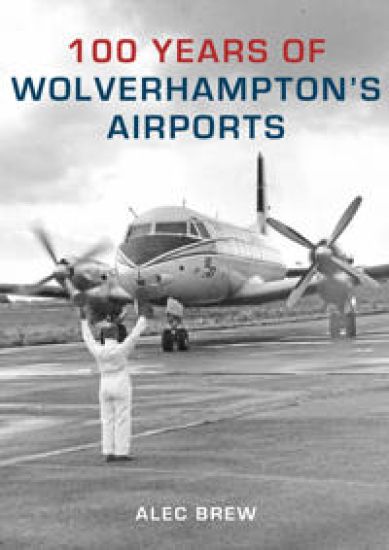
On 27 June 1910, the first ever all-British Flying Meeting began at Dunstall Park racecourse, Wolverhampton, and began an unbroken century of flying in the area. Dunstall Park, actually one of the first airports in the whole country, was to remain the town's airport until after the First World War, though an anti-Zeppelin landing strip was established at the Fern Fields, Perton, during the War. Though dogged by bad weather the Flying Meeting, only the third ever held in the country, attracted huge crowds, and considerable Press interest. After the Meeting most of the flyers left, but Dunstall Park continued to be used to test fly the odd aircraft, most notably those built by the two local car companies, Sunbeam and Star. The pioneer of British Airships, E. T. Willows, based his airship at Dunstall Park for a while, and balloon pilots took advantage of the proximity of Wolverhampton Gas Works to inflate their envelopes before setting course for wherever the wind took them. RAF Pendeford was built to serve the local area. Wolverhampton's first true municipal airport was built at Barnhurst Farm, Pendeford. Though flying had already commenced, in 1936, Wolverhampton Airport did not officially open until 27 June 1938, exactly twenty-eight years after Dunstall Park. The municipal airport was taken over as a training airfield, as RAF Wolverhampton, during the War, but resumed its civil function at the end. RAF Perton closed after the War, but remained largely untouched until the huge new housing estate was built on it, during the 1970s. A similar fate awaited Pendeford after its closure in 1971. The former RAF airfield at Halfpenny Green was re-opened, for civil flying in 1961. Halfpenny Green had been built as a RAF training airfield during the War, and was re-opened after its post-war closure in the early 1950s. After lying dormant for seven years, it became Wolverhampton's de facto airport with the closure of Pendeford, a fact recognised by its subsequent re-branding, firstly as Wolverhampton Business Airport, and now Wolverhampton Halfpenny Green Airport. On 27 June 2010, Wolverhampton starts its hundredth year of having a designated local airport.
RAF Cosford

RAF Cosford

Alec Brew

The History Press Ltd
2009
nidottu
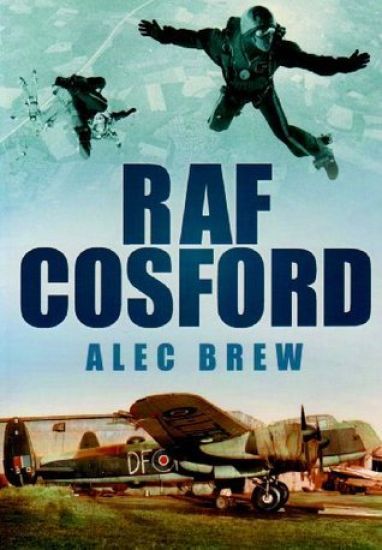
RAF Cosford was built as part of the pre-war RAF Expansion Plan in 1937 and in 1938 it was designated as a site for one of the new Technical Training Schools, aimed at strengthening the knowledge and manpower of the air force. By the outbreak of war, Cosford housed over 3,500 trainees. In 1939 it became the base for No 9 Maintenance Units, who were responsible for maintaining, repairing and modifying aircraft for battle. During the war Cosford grew and became the site of a major new RAF hospital, as well as the base for the first all-female Air Transport Auxiliary Unit. Towards the end of the war re-patriation centres were built for ex-prisoners on the base and over 13,000 POWs passed through Cosford, before returning to their homes. RAF Cosford (now DCAE Cosford) continues to train numerous new recruits and houses a major RAF Museum. This book highlights Cosford's central role in the air force during the war years and the many images evoke the men and women, who lived and worked there. A fascinating insight for those visitors to Cosford and aviation enthusiasts.
Albrighton and Shifnal: Pocket Images

Albrighton and Shifnal: Pocket Images

Alec Brew

Nonsuch Publishing
2006
nidottu
Sandwiched between the industrial conurbations of Telford and the Black Country is the quiet rural area centred on the small communities of Albrighton and Shifnal. With around 220 photographs, this book chronicles those close-knit villages and their surrounds. It also includes historical captions.
Bridgnorth Revisited

Bridgnorth Revisited

Alec Brew; C F Gwilt

The History Press Ltd
2005
nidottu
Collection of over 200 archive pictures highlighting the developments that have taken place in the Shropshire market town of Bridgnorth during the last century. Every aspect of life in Bridgnorth is explored, from schools, churches and shops to sporting achievements, ceremonies and events.
Penn & Blakenhall

Penn & Blakenhall

Alec Brew

Nonsuch Publishing
2005
nidottu
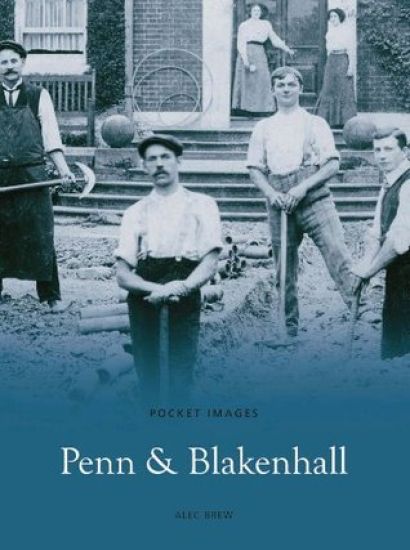
Local history of Penn and Blakenhall, in the West Midlands, through a series of old and rare photographs, which, together with detailed captions provide a window in to a bygone golden age.