Kirjailija
Aleida Assmann
Kirjat ja teokset yhdessä paikassa: 24 kirjaa, julkaisuja vuosilta 2010-2025, suosituimpien joukossa Eckert. Die Schriftenreihe.. Vertaile teosten hintoja ja tarkista saatavuus suomalaisista kirjakaupoista.
24 kirjaa
Kirjojen julkaisuhaarukka 2010-2025.
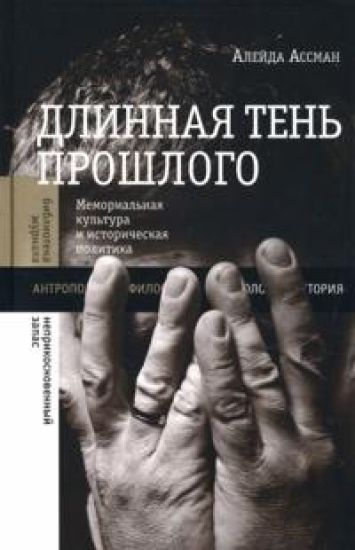
Dlinnaja ten proshlogo. Memorialnaja kultura i istoricheskaja politika
Aleida Assmann
Novoe literaturnoe obozrenie
2023
sidottu
V knige izvestnogo nemetskogo issledovatelja istoricheskoj pamjati Alejdy Assman predprinjata vpechatljajuschaja popytka obobschenija teoreticheskikh debatov o tom, kak skladyvajutsja sotsialnye predstavlenija o proshlom, chto stoit za chelovecheskoj sposobnostju pomnit i predavat zabveniju, blagodarja chemu individualnoe vospominanie est ne tolko neposredstvennoe svidetelstvo o proshlom, no i simptom, otrazhajuschij kulturnyj kontekst samogo vspominajuschego. Materialom, kotoryj pozvoljaet prochertit postojanno menjajuschiesja traektorii etikh teoreticheskikh debatov, javljaetsja tragicheskaja istorija XX veka.3-e izdanie.Perevodchik: Khlebnikov B.


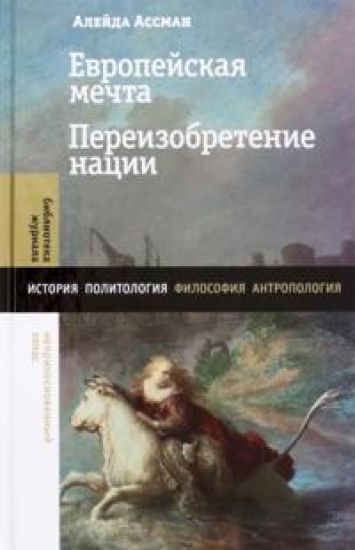
Evropejskaja mechta. Pereizobretenie natsii
Aleida Assmann
Novoe literaturnoe obozrenie
2022
sidottu
Nasledie glavnykh katastrof XX veka zastavljaet evropejskie strany snova i snova peresmatrivat svoe otnoshenie k istorii, v protsesse takikh revizij reshaetsja sudba ne tolko proshlogo, no i buduschego. Glavnyj vopros, kotoryj pered nami stoit, zvuchit tak: "Est li alternativa natsionalnoj gordosti, opirajuschejsja na chekannye obrazy vraga i zabyvajuschej o zhertvakh sobstvennoj istorii?" V dvukh novykh knigakh, obedinennykh v etom izdanii pod odnoj oblozhkoj, nemetskij istorik i spetsialist po kulturnoj pamjati Alejda Assman tozhe zadaetsja etim voprosom. Na fone sdviga v storonu natsionalizma, sluchivshegosja v poslednie gody vo mnogikh evropejskikh gosudarstvakh, znamenitaja issledovatelnitsa analiziruet poslevoennyj opyt i osmyslivajuschie ego kriticheskie teorii. Avtor predlagaet ne soglashatsja ni s utopistami, mechtajuschimi o globalnom kosmopoliticheskom obschestve, ni s voinstvennymi populistami, apellirujuschimi k gordosti i sile natsii, a svjazat svoi nadezhdy s memorialnoj kulturoj, zadacha kotoroj - pereizobresti natsii, sformirovat u nikh sovest i sdelat ikh otvetstvennymi za bezopasnoe buduschee Evropy.Perevodchik: Khlebnikov B.

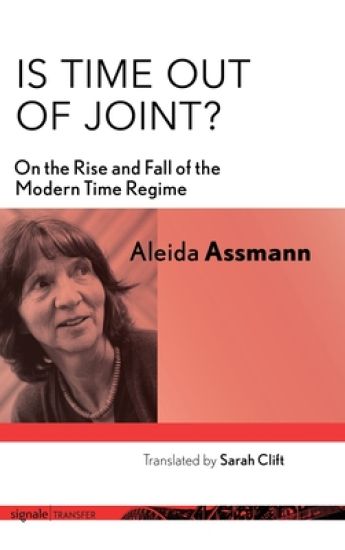
Is Time Out of Joint?
Aleida Assmann
Cornell University Press and Cornell University Library
2020
sidottu
Is, as Hamlet once complained, time out joint? Have the ways we understand the past and the future—and their relationship to the present—been reordered? The past, it seems, has returned with a vengeance: as aggressive nostalgia, as traumatic memory, or as atavistic origin narratives rooted in nation, race, or tribe. The future, meanwhile, has lost its utopian glamor, with the belief in progress and hope for a better future eroded by fears of ecological collapse. In this provocative book, Aleida Assmann argues that the apparently solid moorings of our temporal orientation have collapsed within the span of a generation. To understand this profound cultural crisis, she reconstructs the rise and fall of what she calls "time regime of modernity" that underpins notions of modernization and progress, a shared understanding that is now under threat. Is Time Out of Joint? assesses the deep change in the temporality of modern Western culture as it relates to our historical experience, historical theory, and our life-world of shared experience, explaining what we have both gained and lost during this profound transformation.
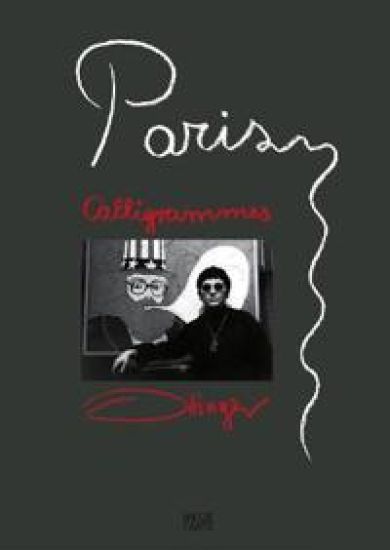
Paris Calligrammes: (English, German & French edition)
Aleida Assmann; Laurence A. Rickels; Marguerite Vappereau
Hatje Cantz
2019
nidottu
In Paris Calligrammes the filmmaker, photographer and collector of worlds Ulrike Ottinger links historical archival material with her own art and film works to create a sociogram of the era in which she came of age as an artist. In the grip of political upheavals, Paris of the 1960s attracted artists from all over the world and was a pulsating stream of energy hovering between trauma management and the utopia of Europe. From the Librairie Calligrammes, a meeting place of exiled German intellectuals, to the Cinémathèque française, which sparked her love of film, Ulrike Ottinger charts a city and its utopias. They live on in her collaged landscape of memories in a workshop exhibition complimenting her film Paris Calligrammes (2019).Ulrike Ottinger's (*1942 Konstanz, Germany) films were shown at the most important international festivals and honored at various major museums, including the Centre Pompidou, Paris, the Museo Reina Sofia, Madrid, and the Museum of Modern Art, New York. With her photographs she was represented at the documenta and the Biennale di Venezia. Exhibition: HKW, Haus der Kulturen der Welt, Berlin 23.8—13.10.2019



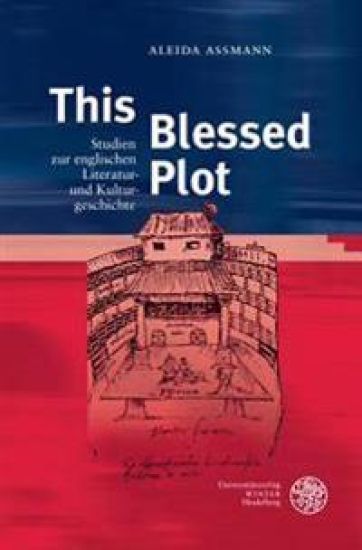
This Blessed Plot: Studien Zur Englischen Literatur- Und Kulturgeschichte
Aleida Assmann
Universitatsverlag Winter
2016
sidottu
English summary: The essays that have been collected in this anthology were written over a period of twenty-five years and document a work on texts, which circumvents the current, often pointedly polemical, opposition between literary studies and cultural studies. The focus of each chapter is texts which concerns the literary canon as well as discoveries from the archives. The contributions are divided into three chronological sections covering the early modern period, the Enlightenment and Romanticism and finally the modern period and within that framework present a somewhat different literary history. The chief concern of each chapter is neither to isolate some texts from other texts nor to consider these texts independently from the great questions of the period. The point in reconstructing epoch-specific issues and the connection to important thematic congruencies like national identity, mystery, spirits, collection or contemporary problems is not to serve historicizing or relativization, but rather to enrich these texts with knowledge, meaning, fascination, and ongoing relevance. German description: Die Aufsatze, die in diesem Band versammelt sind, stammen aus 25 Jahren und dokumentieren eine Arbeit an Texten, die den heute oft polemisch zugespitzten Gegensatz von Literaturwissenschaft und Kulturwissenschaft unterlauft. In jedem Kapitel stehen Texte im Mittelpunkt, die sich sowohl auf den literarischen Kanon als auch auf Entdeckungen aus dem Archiv beziehen. Sie sind chronologisch in drei Teile von der Fruhen Neuzeit uber Aufklarung und Romantik bis zur Moderne gegliedert und fugen sich damit in eine etwas andere Literaturgeschichte. Das Anliegen eines jeden Kapitels besteht darin, die Texte nie isoliert von anderen Texten und unabhangig von grossen Fragen der Zeit zu betrachten. Die Rekonstruktion epochenspezifischer Fragestellungen und der Bezug auf wichtige Themenkomplexe wie Nationsbildung, Geheimnis, Geister, Sammeln oder Zeitprobleme geschieht dabei nicht um ihrer Historisierung und Relativierung willen, sondern im Gegenteil im Sinne ihrer Anreicherung mit Wissen, Bedeutung, Faszination und andauernder Relevanz.

We have left the twentieth century, but this century of violence and extremes has not left us: Its shadow has become longer and blacker. Seventy years after the end of the Second World War, the memory of the Holocaust is less and less anchored in the lived experience of survivors and witnesses. Shadows of Trauma analyzes the transformation of the past from an individual experience to a collective construction, with special attention to the tensions that arise when personal experience collides with official commemoration. In addition to surveying memory's important terms and distinctions, Assmann traces the process that emerged after the fall of the Berlin Wall, of creating a new German memory of the Holocaust. Assmann revisits the pitfalls of "false memory" and lingering forms of denial and repression, as well as the new twenty-first-century discourses, such as that of German "victimhood," as well as the new memory sites for a future in which German memory will be increasingly oriented toward a European context. Combining theoretical analysis with historical case studies, the book revisits crucial debates and controversial issues out of which "memory culture" has emerged as a collective project and a work in progress.

We have left the twentieth century, but this century of violence and extremes has not left us: Its shadow has become longer and blacker. Seventy years after the end of the Second World War, the memory of the Holocaust is less and less anchored in the lived experience of survivors and witnesses. Shadows of Trauma analyzes the transformation of the past from an individual experience to a collective construction, with special attention to the tensions that arise when personal experience collides with official commemoration. In addition to surveying memory's important terms and distinctions, Assmann traces the process that emerged after the fall of the Berlin Wall, of creating a new German memory of the Holocaust. Assmann revisits the pitfalls of "false memory" and lingering forms of denial and repression, as well as the new twenty-first-century discourses, such as that of German "victimhood," as well as the new memory sites for a future in which German memory will be increasingly oriented toward a European context. Combining theoretical analysis with historical case studies, the book revisits crucial debates and controversial issues out of which "memory culture" has emerged as a collective project and a work in progress.