Kirjojen hintavertailu. Mukana 12 595 353 kirjaa ja 12 kauppaa.
Kirjailija
Alejandro Portes
Kirjat ja teokset yhdessä paikassa: 15 kirjaa, julkaisuja vuosilta 1976-2024, suosituimpien joukossa Urban Latin America. Vertaile teosten hintoja ja tarkista saatavuus suomalaisista kirjakaupoista.
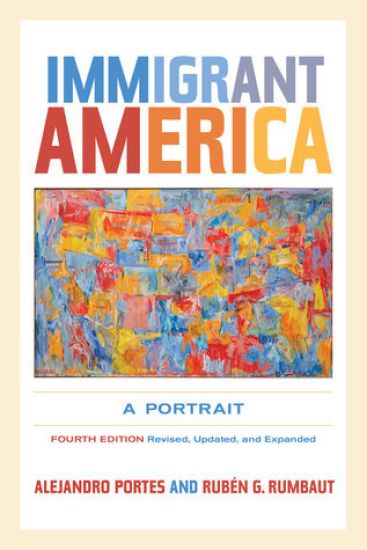
This revised and updated fifth edition of Immigrant America: A Portrait provides a comprehensive and current overview of immigration to the United States, including its history, the principal theories seeking to account for its diverse origins, the main types of immigrants, and the various forms of immigrants' incorporation within American society. With the latest available data, Immigrant America further explores the economic, political, regional, linguistic, and religious aspects of immigration. It offers detailed analyses of the adaptation process experienced by adult children of immigrants and adds an updated and expanded concluding chapter on changing immigration policy regimes both past and present.
This revised and updated fifth edition of Immigrant America: A Portrait provides a comprehensive and current overview of immigration to the United States, including its history, the principal theories seeking to account for its diverse origins, the main types of immigrants, and the various forms of immigrants' incorporation within American society. With the latest available data, Immigrant America further explores the economic, political, regional, linguistic, and religious aspects of immigration. It offers detailed analyses of the adaptation process experienced by adult children of immigrants and adds an updated and expanded concluding chapter on changing immigration policy regimes both past and present.
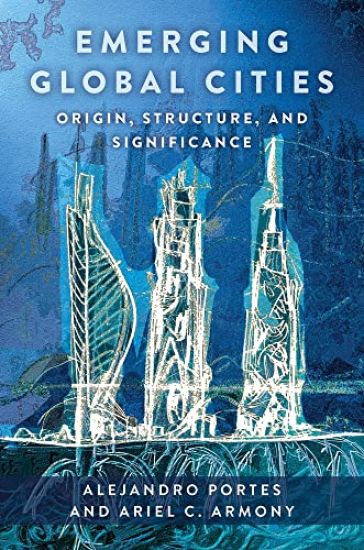
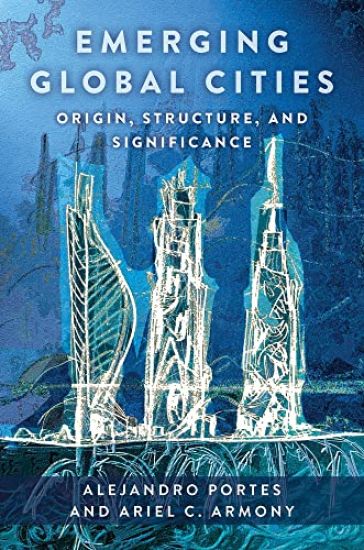
Certain cities—most famously New York, London, and Tokyo—have been identified as “global cities,” whose function in the world economy transcends national borders. Without the same fanfare, formerly peripheral and secondary cities have been growing in importance, emerging as global cities in their own right. The striking similarity of the skylines of Dubai, Miami, and Singapore is no coincidence: despite following different historical paths, all three have achieved newfound prominence through parallel trends.In this groundbreaking book, Alejandro Portes and Ariel C. Armony demonstrate how the rapid and unexpected rise of these three cities recasts global urban studies. They identify the constellation of factors that allow certain urban places to become “emerging global cities”—centers of commerce, finance, art, and culture for entire regions. The book traces the transformations of Dubai, Miami, and Singapore, identifying key features common to these emerging global cities. It contrasts them with “global hopefuls,” cities that, at one point or another, aspired to become global, and analyzes how Hong Kong is threatened with the loss of this status. Portes and Armony highlight the importance of climate change to the prospects of emerging global cities, showing how the same economic system that propelled their rise now imperils their future. Emerging Global Cities provides a powerful new framework for understanding the role of peripheral cities in the world economy and how they compete for and sometimes achieve global standing.
Certain cities—most famously New York, London, and Tokyo—have been identified as “global cities,” whose function in the world economy transcends national borders. Without the same fanfare, formerly peripheral and secondary cities have been growing in importance, emerging as global cities in their own right. The striking similarity of the skylines of Dubai, Miami, and Singapore is no coincidence: despite following different historical paths, all three have achieved newfound prominence through parallel trends.In this groundbreaking book, Alejandro Portes and Ariel C. Armony demonstrate how the rapid and unexpected rise of these three cities recasts global urban studies. They identify the constellation of factors that allow certain urban places to become “emerging global cities”—centers of commerce, finance, art, and culture for entire regions. The book traces the transformations of Dubai, Miami, and Singapore, identifying key features common to these emerging global cities. It contrasts them with “global hopefuls,” cities that, at one point or another, aspired to become global, and analyzes how Hong Kong is threatened with the loss of this status. Portes and Armony highlight the importance of climate change to the prospects of emerging global cities, showing how the same economic system that propelled their rise now imperils their future. Emerging Global Cities provides a powerful new framework for understanding the role of peripheral cities in the world economy and how they compete for and sometimes achieve global standing.
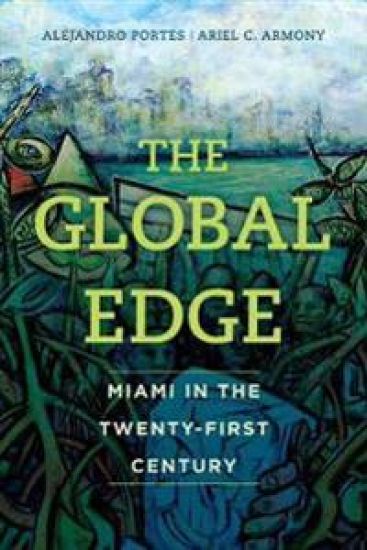
Over the last quarter century, no other city like Miami has rapidly transformed into a global city. The Global Edge charts the social tensions and unexpected consequences of this remarkable process of change. Acting as a follow-up to the highly successful City on the Edge, The Global Edge examines Miami in the context of globalization and scrutinizes its newfound place as a major international city. Written by two well-known scholars in the field, the book examines Miami’s rise as a finance and banking center and the simultaneous emergence of a highly diverse but contentious ethnic mosaic. The Global Edge serves as a case study of Miami’s present cultural, economic, and political transformation, and describes how its future course can provide key lessons for other metropolitan areas throughout the world.
Over the last quarter century, no other city like Miami has rapidly transformed into a global city. The Global Edge charts the social tensions and unexpected consequences of this remarkable process of change. Acting as a follow-up to the highly successful City on the Edge, The Global Edge examines Miami in the context of globalization and scrutinizes its newfound place as a major international city. Written by two well-known scholars in the field, the book examines Miami’s rise as a finance and banking center and the simultaneous emergence of a highly diverse but contentious ethnic mosaic. The Global Edge serves as a case study of Miami’s present cultural, economic, and political transformation, and describes how its future course can provide key lessons for other metropolitan areas throughout the world.
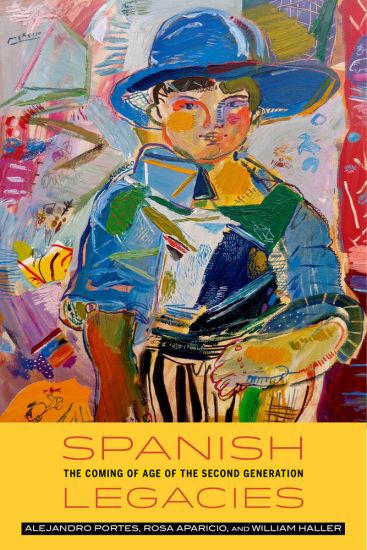
Much like the United States, the countries of Western Europe have experienced massive immigration in the last three decades. Spain, in particular, has been transformed from an immigrant-exporting country to one receiving hundreds of thousands of new immigrants. Today, almost 13 percent of the country's population is foreign-born. Spanish Legacies, written by internationally known experts on immigration, explores how the children of immigrants-the second generation-are coping with the challenges of adaptation to Spanish society, comparing their experiences with those of their peers in the United States. Using a rich data set based on both survey and ethnographic material, Spanish Legacies describes the experiences of growing up by the large population of second-generation youths in Spain and the principal outcomes of the process-from national self-identification and experiences of discrimination to educational attainment and labor-market entry. The study is based on a sample of almost 7,000 second-generation students who were interviewed in Madrid and Barcelona in 2008 and then followed and re-interviewed four years later. A survey of immigrant parents, a replacement sample for lost respondents in the second survey, and a survey of native-parentage students complement this rich data set. Outcomes of the adaptation process in Spain are systematically presented in five chapters, introduced by real-life histories of selected respondents drawn by the study's ethnographic module. Systematic comparisons with results from the United States show a number of surprising similarities in the adaptation of children of immigrants in both countries, as well as differences marked by contrasting experiences of discrimination, self-identities, and ambition.
Much like the United States, the countries of Western Europe have experienced massive immigration in the last three decades. Spain, in particular, has been transformed from an immigrant-exporting country to one receiving hundreds of thousands of new immigrants. Today, almost 13 percent of the country's population is foreign-born. Spanish Legacies, written by internationally known experts on immigration, explores how the children of immigrants-the second generation-are coping with the challenges of adaptation to Spanish society, comparing their experiences with those of their peers in the United States. Using a rich data set based on both survey and ethnographic material, Spanish Legacies describes the experiences of growing up by the large population of second-generation youths in Spain and the principal outcomes of the process-from national self-identification and experiences of discrimination to educational attainment and labor-market entry. The study is based on a sample of almost 7,000 second-generation students who were interviewed in Madrid and Barcelona in 2008 and then followed and re-interviewed four years later. A survey of immigrant parents, a replacement sample for lost respondents in the second survey, and a survey of native-parentage students complement this rich data set. Outcomes of the adaptation process in Spain are systematically presented in five chapters, introduced by real-life histories of selected respondents drawn by the study's ethnographic module. Systematic comparisons with results from the United States show a number of surprising similarities in the adaptation of children of immigrants in both countries, as well as differences marked by contrasting experiences of discrimination, self-identities, and ambition.
This revised, updated, and expanded fourth edition of Immigrant America: A Portrait provides readers with a comprehensive and current overview of immigration to the United States in a single volume. Updated with the latest available data, Immigrant America explores the economic, political, spatial, and linguistic aspects of immigration; the role of religion in the acculturation and social integration of foreign minorities; and the adaptation process for the second generation. This revised edition includes new chapters on theories of migration and on the history of U.S. - bound migration from the late nineteenth century to the present, offering an updated and expanded concluding chapter on immigration and public policy.
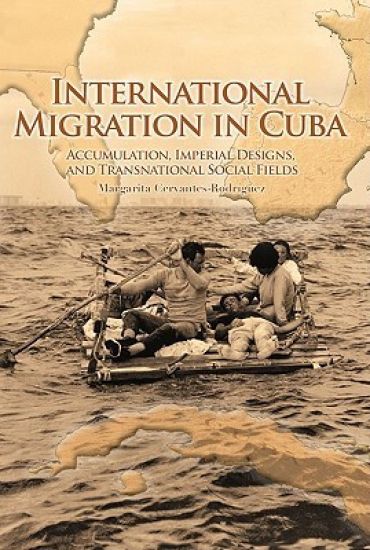
Since the arrival of the Spanish conquerors at the beginning of the colonial period, Cuba has been hugely influenced by international migration. Between 1791 and 1810, for instance, many French people migrated to Cuba in the wake of the purchase of Louisiana by the United States and turmoil in Saint-Domingue. Between 1847 and 1874, Cuba was the main recipient of Chinese indentured laborers in Latin America. During the nineteenth century as a whole, more Spanish people migrated to Cuba than anywhere else in the Americas, and hundreds of thousands of slaves were taken to the island. The first decades of the twentieth century saw large numbers of immigrants and temporary workers from various societies arrive in Cuba. And since the revolution of 1959, a continuous outflow of Cubans toward many countries has taken place—with lasting consequences.In this book, the most comprehensive study of international migration in Cuba ever undertaken, Margarita Cervantes-Rodríguez aims to elucidate the forces that have shaped international migration and the involvement of the migrants in transnational social fields since the beginning of the colonial period. Drawing on Fernand Braudel’s concept of longue durée, transnational studies, perspectives on power, and other theoretical frameworks, the author places her analysis in a much wider historical and theoretical perspective than has previously been applied to the study of international migration in Cuba, making this a work of substantial interest to social scientists as well as historians.
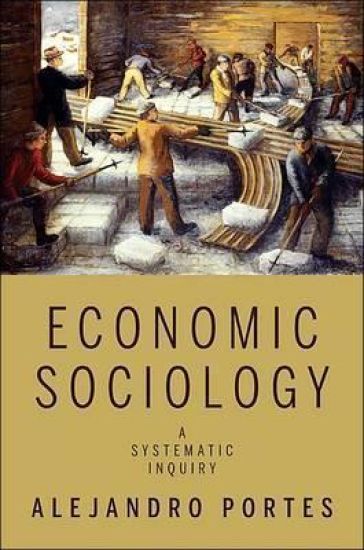
The sociological study of economic activity has witnessed a significant resurgence. Recent texts have chronicled economic sociology's nineteenth-century origins while pointing to the importance of context and power in economic life, yet the field lacks a clear understanding of the role that concepts at different levels of abstraction play in its organization. Economic Sociology fills this critical gap by surveying the current state of the field while advancing a framework for further theoretical development. Alejandro Portes examines economic sociology's principal assumptions, key explanatory concepts, and selected research sites. He argues that economic activity is embedded in social and cultural relations, but also that power and the unintended consequences of rational purposive action must be factored in when seeking to explain or predict economic behavior. Drawing upon a wealth of examples, Portes identifies three strategic sites of research--the informal economy, ethnic enclaves, and transnational communities--and he eschews grand narratives in favor of mid-range theories that help us understand specific kinds of social action. The book shows how the meta-assumptions of economic sociology can be transformed, under certain conditions, into testable propositions, and puts forward a theoretical agenda aimed at moving the field out of its present impasse.
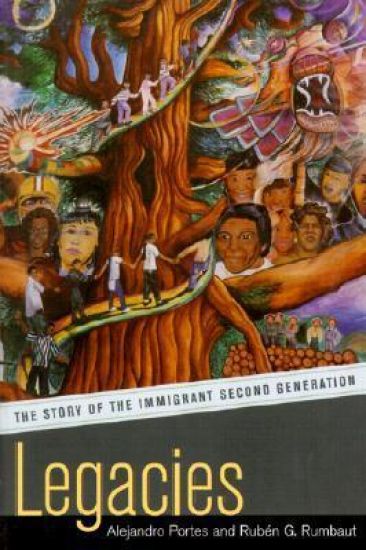
One out of five Americans, more than 55 million people, are first-or second-generation immigrants. This landmark study, the most comprehensive to date, probes all aspects of the new immigrant second generation's lives, exploring their immense potential to transform American society for better or worse. Whether this new generation reinvigorates the nation or deepens its social problems depends on the social and economic trajectories of this still young population. In "Legacies", Alejandro Portes and Ruben G. Rumbaut - two of the leading figures in the field - provide a close look at this rising second generation, including their patterns of acculturation, family and school life, language, identity, experiences of discrimination, self-esteem, ambition, and achievement. Based on the largest research study of its kind, "Legacies" combines vivid vignettes with a wealth of survey and school data. Accessible, engaging, and indispensable for any consideration of the changing face of American society, this book presents a wide range of real-life stories of immigrant families - from Mexico, Cuba, Nicaragua, Colombia, the Dominican Republic, Haiti, Jamaica, Trinidad, the Philippines, China, Laos, Cambodia, and Vietnam - now living in Miami and San Diego, two of the areas most heavily affected by the new immigration. The authors explore the world of second-generation youth, looking at patterns of parent-child conflict and cohesion within immigrant families, the role of peer groups and school subcultures, the factors that affect the children's academic achievement, and much more. A companion volume to "Legacies", entitled "Ethnicities: Children of Immigrants in America", was published by California in Fall 2001. Edited by the authors of "Legacies", this book will bring together some of the country's leading scholars of immigration and ethnicity to provide a close look at this rising second generation. It is a co-publication with the Russell Sage Foundation.
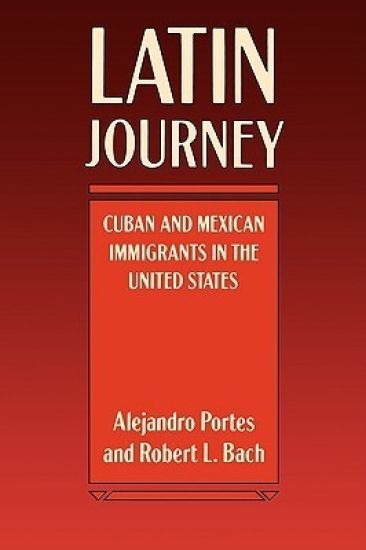
'The authors reveal how the Cuban success story has transformed the character of Miami while delineating more sharply the identity of other ethnic communities' - "New York Times Book Review". 'Makes a case for the importance of political capital ...in building ethnic solidarity' - "Contemporary Sociology".
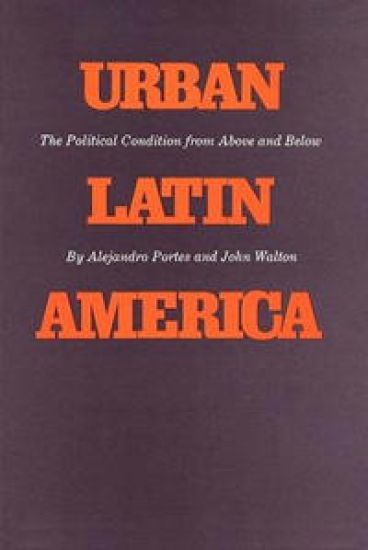
Much research on the city in developing societies has focused mainly on one of three areas-planning, demography, or economics-and has emphasized either power elites or the masses, but not both. The published literature on Latin America has reflected these interests and has so far failed to provide a comprehensive view of Latin American urbanization. Urban Latin America is an attempt to integrate research on Latin American social organization within a single theoretical framework: development as fundamentally a political problem. Alejandro Portes and John Walton have included material on both elites and marginal populations and on the three major areas of research in order to formulate and address some of the key questions about the structure of urban politics in Latin America. Following an introduction that delineates the scope of Latin American urban studies, Portes discusses the Latin American city as a creation of European colonialism. He goes on to examine political behavior among the poor, with central reference to system support and countersystem potential. Walton provides material for a comparative study of four cities: Monterrey and Guadalajara in Mexico and MedellÍn and Cali in Colombia. He also summarizes a large number of urban elite studies and develops a theoretical interpretation of their collective results, based on class structure and vertical integration. Material in each chapter is cross-referenced to other chapters, and the authors have used a common methodological approach in synthesizing and interpreting the research literature. In the final chapter they generalize current findings, elaborating on the interface between elite and mass politics in the urban situation. They make some observations on approaching changes and pinpoint possible research strategies for the future.