Kirjojen hintavertailu. Mukana 12 657 676 kirjaa ja 12 kauppaa.

Kirjailija

Aleksandra Jordanoska

Kirjat ja teokset yhdessä paikassa: 3 kirjaa, julkaisuja vuosilta 2017-2024, suosituimpien joukossa Edwin H. Sutherland. Vertaile teosten hintoja ja tarkista saatavuus suomalaisista kirjakaupoista.

3 kirjaa

Kirjojen julkaisuhaarukka 2017-2024.

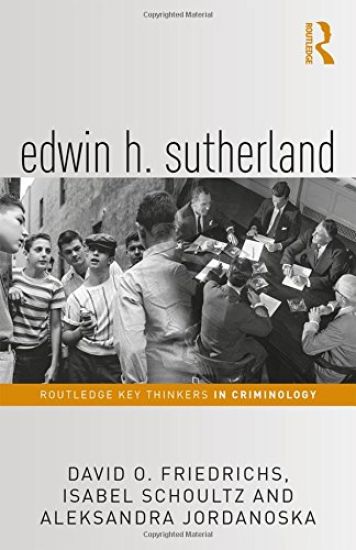
Edwin H. Sutherland

Edwin H. Sutherland

David Friedrichs; Isabel Schoultz; Aleksandra Jordanoska

Routledge
2020
nidottu
Edwin H. Sutherland is widely identified as the single most important and influential criminologist of the twentieth century. He is especially well-known for his path-breaking criminology textbook (first published in 1924), his promotion of a sociological (and scientific) approach to the understanding of crime and its control, his theory of differential association, and his work over his final ten years on white-collar crime, a term he is credited with having introduced. This book explores the contemporary meaning of Edwin Sutherland and considers why criminologists today should continue to engage with his work. What can and should Sutherland mean to future 21st century criminologists, those working in the field say between 2021 and 2050, or some one hundred years after the 1921 to 1950 period that encompassed Sutherland’s criminological career? Which dimensions of Sutherland’s work have best survived the march of time and which are most likely to – and deserve to – survive going forward?Making the case that Sutherland is important to both mainstream and critical criminologists, to positivistic criminologists and those who study crimes of the powerful, this book is essential reading for both students and scholars interested in exploring the enduring legacy of this key thinker in criminology.
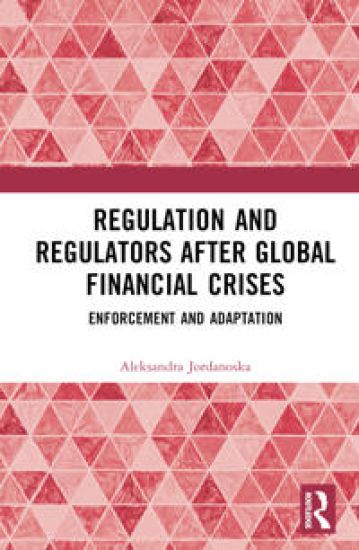
Regulation and Regulators after Global Financial Crises

Regulation and Regulators after Global Financial Crises

Aleksandra Jordanoska

TAYLOR FRANCIS LTD
2024
sidottu
This book provides an original theoretically and empirically grounded analysis of regulatory enforcement activism in post-crisis periods and the ensuing regulatory interactions. It critically addresses the ‘more regulation’ enforcement agenda relating to financial misconduct in the aftermath of the 2008 financial crisis, showing how misconduct was constructed through the enforcement policies and practices of the powerful UK financial conduct regulator and its interactions with the subjects of enforcement proceedings and their legal representatives during a tumultuous time in the financial markets. Drawing from interviews with regulators, professional intermediaries, and markets participants; documentary analysis of enforcement decisions and speeches; and observations, the volume adopts an interdisciplinary approach grounded in social constructivist perspectives on compliance and deviance, regulation theory, and socio-legal research. Through a multi-dimensional analytical framework of regulatory enforcement activism that links shifts in regulatory policymaking; experimentations with legal powers in information-gathering, legal and extra-legal penalties, and individual accountability; and the use of enforcement tools in micro-level interactions, the book documents a more interventionist and punitive post-crisis enforcement agenda. The findings challenge current thinking in the 'scandal and reform' literature. The work argues that despite the increased focus on enforcement, it is not necessarily the case that the power has tilted more towards the regulator. This fine-grained socio-legal enquiry makes innovative and timely theoretical contributions to our understanding of the limitations of regulatory activism and regulatory control, regulatory relationships, the governance of financial markets, and broader thinking on regulating corporations and the individuals within them. It will appeal to academics, researchers, regulators, and policymakers working in regulation across law, criminology, sociology, and politics.
Edwin H. Sutherland

Edwin H. Sutherland

David Friedrichs; Isabel Schoultz; Aleksandra Jordanoska

Routledge
2017
sidottu
Edwin H. Sutherland is widely identified as the single most important and influential criminologist of the twentieth century. He is especially well-known for his path-breaking criminology textbook (first published in 1924), his promotion of a sociological (and scientific) approach to the understanding of crime and its control, his theory of differential association, and his work over his final ten years on white-collar crime, a term he is credited with having introduced. This book explores the contemporary meaning of Edwin Sutherland and considers why criminologists today should continue to engage with his work. What can and should Sutherland mean to future 21st century criminologists, those working in the field say between 2021 and 2050, or some one hundred years after the 1921 to 1950 period that encompassed Sutherland’s criminological career? Which dimensions of Sutherland’s work have best survived the march of time and which are most likely to – and deserve to – survive going forward?Making the case that Sutherland is important to both mainstream and critical criminologists, to positivistic criminologists and those who study crimes of the powerful, this book is essential reading for both students and scholars interested in exploring the enduring legacy of this key thinker in criminology.