
Kirjailija
Alessandra Comini
Kirjat ja teokset yhdessä paikassa: 40 kirjaa, julkaisuja vuosilta 1980-2025, suosituimpien joukossa The Letters and Journals of Paula Modersohn-Becker. Vertaile teosten hintoja ja tarkista saatavuus suomalaisista kirjakaupoista.
40 kirjaa
Kirjojen julkaisuhaarukka 1980-2025.

Retired art and music historian Megan Crespi is traveling across Europe doing research for a book on Cosima Wagner, daughter of Franz Liszt, wife of Richard Wagner, and defiant protector of Bayreuth's Wagner theater and its Wagner-only operas. With Megan are three colleagues from the fields of museums, music, and photography who had previously joined her in an investigation of composer Fanny Mendelssohn. Switching their group name from the "Mendelssohn Quartet" to the "Wagner Quartet," they soon become bound up in a series of anti-Wagner protests that quickly grow from harmless picket lines to physical sabotage of opera houses presenting Wagner operas. The Quartet's travels take them from London and Paris to Leipzig, Dresden, Riga in Latvia, Weimar, Zurich, Tribschen on Lake Lucerne, Munich, Bayreuth, and finally to Venice where Richard Wagner died a sudden death in 1883. Perhaps Megan's richest discovery on this trip was the unearthing of Wagner's forgotten first wife of some thirty years, Minne Planer. How will this affect her book on Cosima Wagner?


Megan Crespi is back in Europe researching for a biography on "the other Mendelssohn," Felix's sister Fanny, also a prolific and until recently long overlooked composer. She is joined by three colleagues from the fields of music, museum, and photography. They encounter a spate of antisemitic demonstrations masterminded by neo-Nazi organizations in the two German cities associated with the Mendelssohns, Hamburg and Berlin. American composer Simon Saragon's groundbreaking A Jewish Requiem premieres at a historic Berlin synagogue with dire results. Following Fanny's footsteps in Italy, where Megan discovers an unknown oil portrait of Fanny, our Mendelssohn Quartet is confronted by a neo-Fascist in Rome's fabled bohemian Caff Greco. Upon reaching Fanny's beloved Terracina on Italy's southern coast and the island of Ponza, their lives are threatened. Can rescue on this isolated island be on its way?

Megan Crespi is back in Europe researching for a biography on "the other Mendelssohn," Felix's sister Fanny, also a prolific and until recently long overlooked composer. She is joined by three colleagues from the fields of music, museum, and photography. They encounter a spate of antisemitic demonstrations masterminded by neo-Nazi organizations in the two German cities associated with the Mendelssohns, Hamburg and Berlin. American composer Simon Saragon's groundbreaking A Jewish Requiem premieres at a historic Berlin synagogue with dire results. Following Fanny's footsteps in Italy, where Megan discovers an unknown oil portrait of Fanny, our Mendelssohn Quartet is confronted by a neo-Fascist in Rome's fabled bohemian Caff Greco. Upon reaching Fanny's beloved Terracina on Italy's southern coast and the island of Ponza, their lives are threatened. Can rescue on this isolated island be on its way?


Researching for her book on 19th-century virtuoso pianist Clara Schumann and her eight children, Professor Megan Crespi encounters startling hatred or praise for them and for Clara's composer husband Robert. These strong reactions come in the form of grave vandalism, outrageous graffiti on Schumann museums across Germany, in Switzerland and Vienna, and even murder. Why? Megan's travel companion is her sister-in-law Susan, a pediatrician whose expertise becomes crucial for the thirteen-year-old Italian child prodigy Stella Scarpauomo, referred to by the press as "the twenty-first-century Clara Schumann." Disparate characters include three dedicated detectives, two Viennese widows who are founders of the local Clara Schumann Society, and two Schumann museum directors, one helpful, the other easily annoyed. Also involved are a wacky Schumann archivist, a patroness of the arts who refuses to use one of her two surnames, and a brilliant young pianist from Liberia whose promising career has veered from that of performing artist to assistant piano tuner. Will Crespi and the detectives put the dangerous jigsaw puzzle together before further disaster strikes? Includes Readers Guide.

After visiting the nineteenth-century German/Texan sculptor Elisabet Ney Museum in Austin, art crimes detective Professor Megan Crespi identifies an unknown bust of the young, beardless Johannes Brahms in a local antique store, and happily acquires it. Two days later she speaks on Brahms and the Visual Arts in his birth city of Hamburg. She continues to Vienna where she is to lecture on Gustav Klimt and Music and attend a controversial concert series that juxtaposes Austrian-born Anton Bruckner symphonies with those of German-born Brahms. As partisans bicker, the conductor Agatha Endlich encounters growing threats with violent consequences. Suspects include conductors Brahms-lover Lukas Eifer and Bruckner-fanatic Christian Begeist as well as their devious cohorts. Descendants and ancestors of the world-famous Wittgenstein family of Vienna play a role. After the revelation that Brahms produced a secret work in a genre totally unassociated with him, Megan attempts to discover the score that has been hidden for over one hundred and fifty years. Will she be successful? Includes Readers Guide.



Kyra Belan From Myth to Reality
Alessandra Comini; Carol Damian; Basia Sliwinska
Independently Published
2019
nidottu
This book is about feminist, social and political art by Kyra Belan and a record of her solo exhibition at Ceres Gallery, New York. Her works include paintings, drawings in colored pencils, textual and mixed media. Created in contemporary realist or surreal styles these artworks express her feminist, political and ecological concerns, and her interpretations of symbols, legends and myths that are relevant to women. They convey multiple layers of messages that are accessible and relevant to the observers. The two main Series featured in this solo exhibition are her ongoing Lady Liberty and the Amazing Women.

During a performance of Beethoven's Fidelio at the Vienna State Opera there is an explosion in the foyer just off the auditorium. Auguste Rodin's famous 1909 bronze bust of composer/conductor Gustav Mahler has been blown up and a hate-filled note has been left at the scene demanding that there be "no more Jews defiling our culture." Retired art historian/musicologist Megan Crespi, in Vienna to lecture, is at the performance with her former student, the renowned cellist Egga Streicher, and is asked by her friend, Chief of Police Erich Decker, to help in tracking down the culprit. Soon copy-cat vandalism of Jewish monuments around the city breaks out. Things come to a horrendous climax during a performance of Mahler's great Second Symphony, the "Resurrection" symphony, but is it the only surprise awaiting Megan Crespi's dangerous investigation? Includes Readers Guide.

The bronze bust of composer/conductor Gustav Mahler is blown up at the Vienna State Opera, causing Megan Crespi to investigate a spate of anti-Semitic vandalisms and finally murder in the "Waltz Capital."

A moving van filled with eleven Wassily Kandinsky paintings stolen from Munich's famous Lenbach House Museum during a violent neo-Nazi demonstration is hijacked in Slovakia. Two rival Kandinsky collectors appear to be involved: Igor Rasputin of Odessa, visiting in Munich, and Boris Zima of Moscow, whose agent Raisa Sokolova is keeping tabs on Rasputin. Puzzlingly, the museum adamantly declares there has been no theft, even though its night watchman has been found murdered. Also visiting Munich is retired art history professor Megan Crespi, slated to give a lecture she titles, curiously enough, "Double Kandinsky." In between visits to "mad" King Ludwig's fantasy castles, Megan comes into contact with possible suspects, ranging from Rasputin to Iris and Laszlo Togarassy, owners of Munich's new The Blue Rider gallery featuring Kandinsky's works, to Katrina Keller, associate director of the Lenbach. Manipulating events connected with the theft are a young, careless gambler who owns a building behind the Lenbach, two men from the Ukrainian island of Amiinyi-one a computer wizard, the other a science photographer-and their Munich engineer friend Alyksandr Miesel, neo-Nazi leader Walter Krankenhauer, and Detective Dieter L ser. Crespi's lecture, including results of state-of-the-art XRF technology, becomes the revelatory preamble to a thrilling denouement that cracks the Kandinsky conundrum. Includes a Readers Guide.

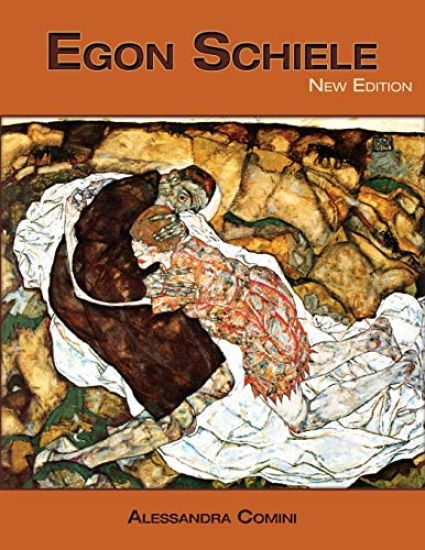
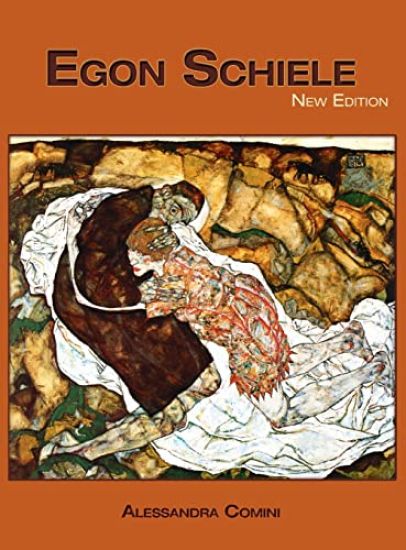
Egon Schiele was a meteor that flashed across the galaxy of Viennese art at the beginning of the last century. Although he lived only twenty-eight years--dying quite suddenly of influenza in 1918 just as World War I came to an end--he left a stunning pictorial oeuvre. Schiele's obsession with sexuality, his own and that of others, made him at once a voyeur and a participant in that sexual imperative which Freud was concurrently plumbing with such unsettling results. The disturbing revelations of Schiele's unmasking portraiture and of the new science of psychology disclosed a collective cultural anxiety during the last years of the crumbling Austrian empire. Schiele was disturbingly dualistic: his provocative explorations of erotica with their startlingly modern sensibilities do not prepare the viewer for the tenderness revealed in his lyrical landscapes and mostly unpeopled town scenes. These emit a haunting loneliness and are related to an obsession with pathos expressed in the artist's melancholy allegories and existential portraits.

Austria's most influential and revered artist at the beginning of the last century was Gustav Klimt (1862-1918). Master of three genres--allegory, portraiture, and landscape--his alluring imagery, decorative colors, and sinuous line seduce the eye and stir the mind. His landscapes are studded with opulent symbols of regeneration and fecundity, while his philosophical allegories enact and question the eternal recurrence of life and death. During an age of lingering societal repression, Klimt's riveting, sumptuous portraits of society women delivered an unmistakable and urgent message of sensuality. In this landmark study of Klimt and the cultural climate of imperial Vienna, Comini discusses the "reverse" parallel between Freud's revelation of the supposed erotic content of dream symbols and Klimt's obscuring of the manifest content--the sexual imperative--through cumulative and symbolic ornament. Her text brings a startling new dimension to the compelling art of a very private man.