Kirjojen hintavertailu. Mukana 12 169 172 kirjaa ja 12 kauppaa.

Kirjailija

Alessandro Barchiesi

Kirjat ja teokset yhdessä paikassa: 5 kirjaa, julkaisuja vuosilta 2001-2026, suosituimpien joukossa Virgilian Geopoetics. Vertaile teosten hintoja ja tarkista saatavuus suomalaisista kirjakaupoista.

5 kirjaa

Kirjojen julkaisuhaarukka 2001-2026.

Virgilian Geopoetics

Virgilian Geopoetics

Alessandro Barchiesi

Cambridge University Press
2026
sidottu
This is an exploration of how the spatial dimension of the Aeneid is enriched by history, memory, and prophecy. As the travel of Aeneas moves on through the Mediterranean, space is turning into place, and place is turning into a Romanized map of the world. Alessandro Barchiesi brings to bear on the poetry of Virgil issues that are central to historical studies, such as colonization, imperialism, exile, conquest, diaspora, ethnicity, and deportation. He clarifies a number of connections between space, geography, and historical memory, revealing the significance of landscapes and seascapes in the light of a poetics of empire. He further investigates the political significance of contact zones, the recurring role of cult and religion, and the function of intertextuality in the construction of space. The book encourages dialogue between ancient studies and ecocriticism and provides a case study of how poetry interacts with Roman ideologies of empire.
Virgilian Geopoetics

Virgilian Geopoetics

Alessandro Barchiesi

Cambridge University Press
2026
pokkari
This is an exploration of how the spatial dimension of the Aeneid is enriched by history, memory, and prophecy. As the travel of Aeneas moves on through the Mediterranean, space is turning into place, and place is turning into a Romanized map of the world. Alessandro Barchiesi brings to bear on the poetry of Virgil issues that are central to historical studies, such as colonization, imperialism, exile, conquest, diaspora, ethnicity, and deportation. He clarifies a number of connections between space, geography, and historical memory, revealing the significance of landscapes and seascapes in the light of a poetics of empire. He further investigates the political significance of contact zones, the recurring role of cult and religion, and the function of intertextuality in the construction of space. The book encourages dialogue between ancient studies and ecocriticism and provides a case study of how poetry interacts with Roman ideologies of empire.
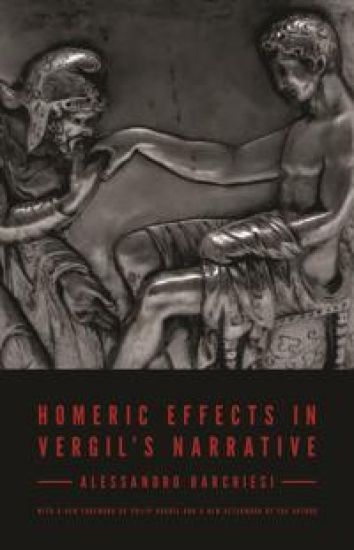
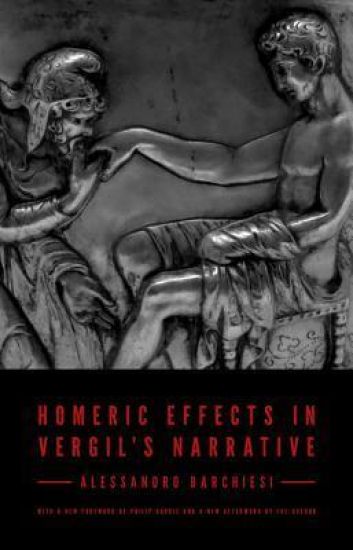
Homeric Effects in Vergil's Narrative

Homeric Effects in Vergil's Narrative

Alessandro Barchiesi; Philip Hardie

Princeton University Press
2017
pokkari
The study of Homeric imitations in Vergil has one of the longest traditions in Western culture, starting from the very moment the Aeneid was circulated. Homeric Effects in Vergil's Narrative is the first English translation of one of the most important and influential modern studies in this tradition. In this revised and expanded edition, Alessandro Barchiesi advances innovative approaches even as he recuperates significant earlier interpretations, from Servius to G. N. Knauer. Approaching Homeric allusions in the Aeneid as "narrative effects" rather than glimpses of the creative mind of the author at work, Homeric Effects in Vergil's Narrative demonstrates how these allusions generate hesitations and questions, as well as insights and guidance, and how they participate in the creation of narrative meaning. The book also examines how layers of competing interpretations in Homer are relevant to the Aeneid, revealing again the richness of the Homeric tradition as a component of meaning in the Aeneid. Finally, Homeric Effects in Vergil's Narrative goes beyond previous studies of the Aeneid by distinguishing between two forms of Homeric intertextuality: reusing a text as an individual model or as a generic matrix. For this edition, a new chapter has been added, and in a new afterword the author puts the book in the context of changes in the study of Latin literature and intertextuality. A masterful work of classical scholarship, Homeric Effects in Vergil's Narrative also has valuable insights for the wider study of imitation, allusion, intertextuality, epic, and literary theory.
Homeric Effects in Vergil's Narrative

Homeric Effects in Vergil's Narrative

Alessandro Barchiesi; Philip Hardie

Princeton University Press
2015
sidottu
The study of Homeric imitations in Vergil has one of the longest traditions in Western culture, starting from the very moment the Aeneid was circulated. Homeric Effects in Vergil's Narrative is the first English translation of one of the most important and influential modern studies in this tradition. In this revised and expanded edition, Alessandro Barchiesi advances innovative approaches even as he recuperates significant earlier interpretations, from Servius to G. N. Knauer. Approaching Homeric allusions in the Aeneid as "narrative effects" rather than glimpses of the creative mind of the author at work, Homeric Effects in Vergil's Narrative demonstrates how these allusions generate hesitations and questions, as well as insights and guidance, and how they participate in the creation of narrative meaning. The book also examines how layers of competing interpretations in Homer are relevant to the Aeneid, revealing again the richness of the Homeric tradition as a component of meaning in the Aeneid. Finally, Homeric Effects in Vergil's Narrative goes beyond previous studies of the Aeneid by distinguishing between two forms of Homeric intertextuality: reusing a text as an individual model or as a generic matrix. For this edition, a new chapter has been added, and in a new afterword the author puts the book in the context of changes in the study of Latin literature and intertextuality. A masterful work of classical scholarship, Homeric Effects in Vergil's Narrative also has valuable insights for the wider study of imitation, allusion, intertextuality, epic, and literary theory.
Speaking Volumes

Speaking Volumes

Alessandro Barchiesi

Bristol Classical Press
2001
nidottu
In a poem written in exile, Ovid pictures his latest book in conversation with his previous volumes, united in the bookcase containing his collected works back in Rome. One can imagine their dialogue - in the protected space of the whispering bookcase - as loaded with allusion and intertextuality. "Speaking Volumes", a collection of essays by the classicist Alessandro Barchiesi examines Ovid and his 'rationalistic art of illusion' along with intertextuality in Latin literature more generally, and in the wider context of the Graeco-Roman tradition. Professor Barchiesi provides perspectives on the literary selfconsciousness of the Latin poets, the allusive density of their texts, and the conflict between poetry and power in the Augustan age. The conflict between classicists and the texts they comment on, argue over and theorise about is also examined. Among the recurring topics in this book are the impact of intertextuality on the form of epic and epistle, the strategic significance of allusive poetics in a political context, and the importance of reading and interpretation as poetic themes.