Kirjojen hintavertailu. Mukana 12 215 281 kirjaa ja 12 kauppaa.
Kirjailija
Alessandro Minelli
Kirjat ja teokset yhdessä paikassa: 14 kirjaa, julkaisuja vuosilta 1994-2026, suosituimpien joukossa Evolvability and Evolution of Diptera. Vertaile teosten hintoja ja tarkista saatavuus suomalaisista kirjakaupoista.
Our understanding of reproduction and reproductive processes is often biased towards the behaviour of organisms most familiar to us. As such, the amazing disparity of the phenomena of reproduction and sex is often overlooked. Understanding Reproduction addresses all the main facets of this large chapter of the life sciences, including discussions of asexual reproduction, parthenogenesis, sex determination, reproductive effort, and much more. The book features an abundance of examples from across the tree of life, including animals, plants, fungi, protists and bacteria. Written in an accessible and easy to digest style, overcoming the intimidating diversity of the technical terminology, this book will appeal to interested general readers, biologists, science educators, philosophers and medical doctors.
Developmental biology is seemingly well understood, with development widely accepted as being a series of programmed changes through which an egg turns into an adult organism, or a seed matures into a plant. However, the picture is much more complex than that: is it all genetically controlled or does environment have an influence? Is the final adult stage the target of development and everything else just a build-up to that point? Are developmental strategies the same in plants as in animals? How do we consider development in single-celled organisms? In this concise, engaging volume, Alessandro Minelli, a leading developmental biologist, addresses these key questions. Using familiar examples and easy-to-follow arguments, he offers fresh alternatives to a number of preconceptions and stereotypes, awakening the reader to the disparity of developmental phenomena across all main branches of the tree of life.
Developmental biology is seemingly well understood, with development widely accepted as being a series of programmed changes through which an egg turns into an adult organism, or a seed matures into a plant. However, the picture is much more complex than that: is it all genetically controlled or does environment have an influence? Is the final adult stage the target of development and everything else just a build-up to that point? Are developmental strategies the same in plants as in animals? How do we consider development in single-celled organisms? In this concise, engaging volume, Alessandro Minelli, a leading developmental biologist, addresses these key questions. Using familiar examples and easy-to-follow arguments, he offers fresh alternatives to a number of preconceptions and stereotypes, awakening the reader to the disparity of developmental phenomena across all main branches of the tree of life.
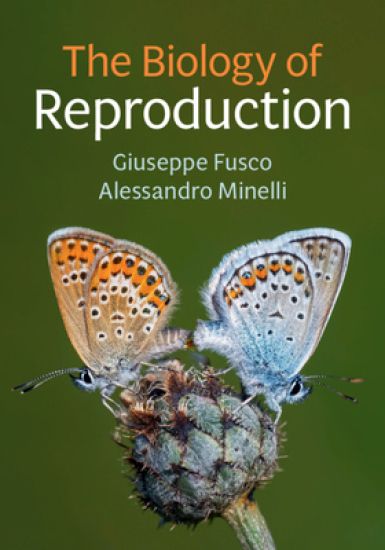
Reproduction is a fundamental feature of life, it is the way life persists across the ages. This book offers new, wider vistas on this fundamental biological phenomenon, exploring how it works through the whole tree of life. It explores facets such as asexual reproduction, parthenogenesis, sex determination and reproductive investment, with a taxonomic coverage extended over all the main groups - animals, plants including 'algae', fungi, protists and bacteria. It collates into one volume perspectives from varied disciplines - including zoology, botany, microbiology, genetics, cell biology, developmental biology, evolutionary biology, animal and plant physiology, and ethology - integrating information into a common language. Crucially, the book aims to identify the commonalties among reproductive phenomena, while demonstrating the diversity even amongst closely related taxa. Its integrated approach makes this a valuable reference book for students and researchers, as well as an effective entry point for deeper study on specific topics.
Reproduction is a fundamental feature of life, it is the way life persists across the ages. This book offers new, wider vistas on this fundamental biological phenomenon, exploring how it works through the whole tree of life. It explores facets such as asexual reproduction, parthenogenesis, sex determination and reproductive investment, with a taxonomic coverage extended over all the main groups - animals, plants including 'algae', fungi, protists and bacteria. It collates into one volume perspectives from varied disciplines - including zoology, botany, microbiology, genetics, cell biology, developmental biology, evolutionary biology, animal and plant physiology, and ethology - integrating information into a common language. Crucially, the book aims to identify the commonalties among reproductive phenomena, while demonstrating the diversity even amongst closely related taxa. Its integrated approach makes this a valuable reference book for students and researchers, as well as an effective entry point for deeper study on specific topics.
Compared to animals, plants have been largely neglected in evolutionary developmental biology. Mainstream research has focused on developmental genetics, while a rich body of knowledge in comparative morphology is still to be exploited. No integrated account is available. In this volume, Minelli fills this gap using the same approach he gave to animals, revisiting traditional concepts and providing an articulated analysis of genetic and molecular data. Topics covered include leaf complexity and the evolution of flower organs, handedness, branching patterns, flower symmetry and synorganization, and less conventional topics such as fractal patterns of plant organization. Also discussed is the hitherto neglected topic of the evolvability of temporal phenotypes like a plant's annual, biennial or perennial life cycle, flowering time and the timing of abscission of flower organs. This will be informative reading for anyone in the field of plant evo-devo, from students to lecturers and researchers.
What comes first, form or function? Trumpeted as the future of biological science, evolutionary developmental biology (or "evo-devo") answers this fundamental question by showing how evolution controls the development of organisms. In Forms of Becoming, Alessandro Minelli, a leading international figure in the field, takes an in-depth and comprehensive look at the history and key issues of evo-devo. Spirited and insightful, this book focuses on the innovative ways animal organisms evolve through competition and cooperation. Minelli provides a complete overview of conceptual developments--from the fierce nineteenth-century debates between the French biologists Geoffroy and Cuvier, who fought over questions of form versus function--to modern theories of how genes dictate body formation. The book's wide-ranging topics include expression patterns of genes, developmental bias, the role of developmental genes, and genetic determinism. Drawing from diverse examples, such as the anatomy of butterflies, giraffes, Siamese twins, and corals, Minelli extends and reformulates important concepts from development, evolution, and the interplay between the two. Presenting the accessible and cutting-edge ideas of evolutionary developmental biology, Forms of Becoming is fascinating reading for anyone interested in genetics and the animal form.
Animal phylogeny is undergoing a major revolution due to the availability of an exponentially increasing amount of molecular data and the application of novel methods of phylogenetic reconstruction, as well as the many spectacular advances in palaeontology and molecular developmental biology. Traditional views of the relationships among major phyla have been shaken and new, often unexpected, relationships are now being considered. At the same time, the emerging discipline of evolutionary developmental biology, or 'evo-devo', has offered new insights into the origin and evolvability of major traits of animal architecture and life cycle. All these developments call for a revised interpretation of the pathways along which animal structure and development has evolved since the origin of the Metazoa. Perspectives in Animal Phylogeny and Evolution takes on this challenge, successfully integrating morphological, fossil and molecular evidence to produce a novel reinterpretation of animal evolution. Central to the book's approach is an 'evo-devo' perspective on animal evolution (with all the fresh insights this has given into the origin of animal organization and life cycles), complementary to the more traditional perspectives of pattern (cladistics, comparative anatomy and embryology), mechanisms (developmental biology) and adaptation (evolutionary biology). The author advocates the need to approach the study of animal evolution with a critical attitude towards many key concepts of comparative morphology and developmental biology. Particular attention in the book is paid to the evolution of life cycles and larval forms.
Animal phylogeny is undergoing a major revolution due to the availability of an exponentially increasing amount of molecular data and the application of novel methods of phylogenetic reconstruction, as well as the many spectacular advances in palaeontology and molecular developmental biology. Traditional views of the relationships among major phyla have been shaken and new, often unexpected, relationships are now being considered. At the same time, the emerging discipline of evolutionary developmental biology, or 'evo-devo', has offered new insights into the origin and evolvability of major traits of animal architecture and life cycle. All these developments call for a revised interpretation of the pathways along which animal structure and development has evolved since the origin of the Metazoa. Perspectives in Animal Phylogeny and Evolution takes on this challenge, successfully integrating morphological, fossil and molecular evidence to produce a novel reinterpretation of animal evolution. Central to the book's approach is an 'evo-devo' perspective on animal evolution (with all the fresh insights this has given into the origin of animal organization and life cycles), complementary to the more traditional perspectives of pattern (cladistics, comparative anatomy and embryology), mechanisms (developmental biology) and adaptation (evolutionary biology). The author advocates the need to approach the study of animal evolution with a critical attitude towards many key concepts of comparative morphology and developmental biology. Particular attention in the book is paid to the evolution of life cycles and larval forms.
Contemporary research in the field of evolutionary developmental biology, or 'evo-devo', has to date been predominantly devoted to interpreting basic features of animal architecture in molecular genetics terms. Considerably less time has been spent on the exploitation of the wealth of facts and concepts available from traditional disciplines, such as comparative morphology, even though these traditional approaches can continue to offer a fresh insight into evolutionary developmental questions. The Development of Animal Form aims to integrate traditional morphological and contemporary molecular genetic approaches and to deal with post-embryonic development as well. This approach leads to unconventional views on the basic features of animal organization, such as body axes, symmetry, segments, body regions, appendages and related concepts. This book will be of particular interest to graduate students and researchers in evolutionary and developmental biology, as well as to those in related areas of cell biology, genetics and zoology.
Contemporary research in the field of evolutionary developmental biology, or 'evo-devo', has to date been predominantly devoted to interpreting basic features of animal architecture in molecular genetics terms. Considerably less time has been spent on the exploitation of the wealth of facts and concepts available from traditional disciplines, such as comparative morphology, even though these traditional approaches can continue to offer a fresh insight into evolutionary developmental questions. The Development of Animal Form aims to integrate traditional morphological and contemporary molecular genetic approaches and to deal with post-embryonic development as well. This approach leads to unconventional views on the basic features of animal organization, such as body axes, symmetry, segments, body regions, appendages and related concepts. This book will be of particular interest to graduate students and researchers in evolutionary and developmental biology, as well as to those in related areas of cell biology, genetics and zoology.
"Biological Systematics" provides a critical overview of the state of the art in biological systematics and presents a broad perspective of the subject, covering its history, theory and practice. The most improtant current theoretical issues are reviewed with the emphasis on the species concept, the methodology of phylogenetic reconstruction and contrasting views on the relationships between phylogenetics and systematics. A large part of the book is devoted to a review of the current state of taxonomy of the main groups, concluding with a discussion of evolutionary patterns.
To some potential readers of this book the description of Biological System atics as an art may seem outdated and frankly wrong. For most people art is subjective and unconstrained by universal laws. While one picture, play or poem may be internally consistent comparison between different art products is meaningless except by way of the individual artists. On the other hand modern Biological Systematics - particularly phenetics and cladistics - is offered as objective and ultimately governed by universal laws. This implies that classifications of different groups of organisms, being the products of systematics, should be comparable irrespective of authorship. Throughout this book Minelli justifies his title by developing the theme that biological classifications are, in fact, very unequal in their expressions of the pattern and processes of the natural world. Specialists are imbibed with their own groups and tend to establish a consensus of what constitutes a species or a genus, or whether it should be desirable to recognize sub species, cultivars etc. Ornithologists freely recognize subspecies and rarely do bird genera contain more than 10 species. On the other hand some coleopterists and botanists work with genera with over 1500 species. This asymmetry may reflect a biological reality; it may express a working practicality, or simply an historical artefact (older erected genera often contain more species). Rarely are these phenomena questioned.