
Kirjojen hintavertailu. Mukana 12 390 323 kirjaa ja 12 kauppaa.

Kirjailija

Alex Bates

Kirjat ja teokset yhdessä paikassa: 2 kirjaa, julkaisuja vuosilta 2015-2017, suosituimpien joukossa Metamorphosis Alpha 2. Vertaile teosten hintoja ja tarkista saatavuus suomalaisista kirjakaupoista.

2 kirjaa

Kirjojen julkaisuhaarukka 2015-2017.

Metamorphosis Alpha 2

Metamorphosis Alpha 2

James M. Ward; Craig J. Brain; Alex Bates

Createspace Independent Publishing Platform
2017
nidottu
METAMORPHOSIS ALPHA, Chronicles from the Starship Warden, Volume 2. A vast starship, a virtual world in itself, carrying colonists, livestock, and the flora and fauna of Terra is struck by a cloud of unknown radiation while en route to a distant star. Chaos reigns when the radiation kills most of the crew, and in the ensuing madness, the knowledge of what the ship is and where its destination lies is lost to the survivors - and there are many survivors. Intelligent mutated animals and plants now populate the vessel, and these compete or perhaps cooperate with the humans aboard. In METAMORPHOSIS ALPHA, you are aboard the stricken starship and struggling to survive, trying to gain knowledge of the strange devices and mechanical apparatus of the vessel, attempting to learn the secrets of the strange "world" you inhabit... Fourteen stories that help bring the world of METAMORPHOSIS ALPHA alive. Led by James M. Ward, the game's original creator, enter the starship Warden, and through the eyes of the authors, enjoy the adventures of the bold as they struggle to complete their quests to understand what their "world" is all about. With stories by James M. Ward Craig Martelle Alex Bates Scott Moon Valerie Emerson Stephen A. Lee Bob Brinkman Scott King Christopher Clark Craig J. Brain E.E. Isherwood Thomas J. Rock Steve Peek Bill Patterson
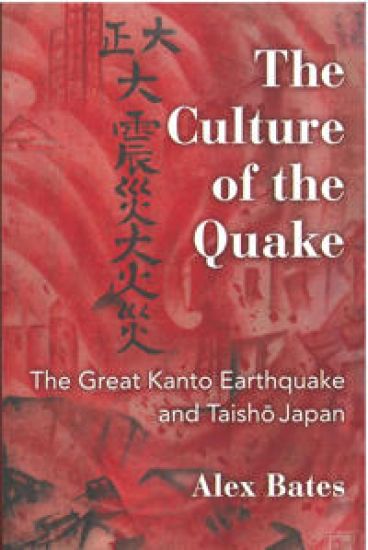
The Culture of the Quake

The Culture of the Quake

Alex Bates

Center for Japanese Studies, University of Michigan
2015
nidottu
The Culture of the Quake is first and foremost an exploration of Taisho-era narrative fiction. Every major film studio produced earthquake films, and authors from I-novelists to modernists, proletarian writers to popular fiction writers wrote something on the earthquake. In every case pre-existing attitudes toward their work shaped the way these people represented the earthquake, and yet the overwhelming destruction and mass suffering also posed particular challenges in representation. How could one show the pain without exploitation? Other scholars have looked at some of these groups of writers or filmmakers individually, but there are no studies looking at how they each tackled a similar subject. The Great Kanto Earthquake is an understudied event that has only recently caught the attention of scholars. By focusing on the way it was represented in high and low culture, The Culture of the Quake gives insight into how people experienced the disaster and how they interpreted it in the years following. This book should be of interest to scholars of Japanese and Asian literature, film, culture, and history, and scholars of disaster studies.