
Kirjailija
Alex Houen
Kirjat ja teokset yhdessä paikassa: 8 kirjaa, julkaisuja vuosilta 2002-2025, suosituimpien joukossa See You Through. Vertaile teosten hintoja ja tarkista saatavuus suomalaisista kirjakaupoista.
8 kirjaa
Kirjojen julkaisuhaarukka 2002-2025.
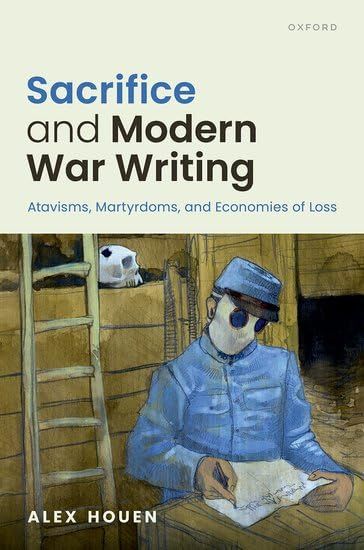
Sacrifice and Modern War Writing presents the most extensive study to date of twentieth- and twenty-first-century war writing. Examining works by over 110 authors, Alex Houen surveys how war writing explores sacrifice in relation to major modern and contemporary conflicts, from the First World War to the War on Terror. Various conceptions of sacrifice are examined, including Christian, Jewish, Islamic, and secular. The discussion ranges across literary portrayals of multiple sacrificial practices, including ancient rituals of child sacrifice, martyrdom, scapegoating, and suicide bombing. Houen builds an innovative interdisciplinary approach to how war, sacrifice, and their representations interrelate, and a wide range of Anglophone literature is discussed, including novels, memoirs, short stories, essays, manifestoes, elegies, ballads, and lyric poetry. Whereas critics and theorists have tended to emphasize that war's reality exceeds any attempt to represent it, Houen contends that political, religious, and cultural frames of sacrifice have continued to play a significant part in shaping how war's reality is shaped and experienced. Those frames are inextricably tied to modes of representation, which include symbolism and mimesis. Sacrifice and Modern War Writing explores how sacrificial killing in war is itself riddled with symbolic transfigurations and mimetic exchanges, and it builds a fresh approach by arguing that the figurative and imaginative aspects of literary writing ironically become its very means of engaging closely with the reality of war's sacrifices. That approach also develops by using the literary analyses to critique and revise various prominent theories of sacrifice and war.
Poetry. A beautiful, formidably intelligent yet profoundly inviting book, Alex Houen's much-anticipated RING CYCLE brilliantly orchestrates its many motifs across poems that move from the metaphysical to the intimate to the droll sometimes within one poem. Houen is a poet of lavish linguistic sensuality, his poems vibrating with his attunement to fissures within the self, between lovers; salutes to friends; romantic skirmish; the ambient dread of our moment. Houen's brilliantly mash-upping mind encompasses pirated DVDs, Dryden and Alexander McQueen, conceits poetic and contemporary and untimely and unheimlich. A book of enormous range, simultaneously lush and austere, RING CYCLE tracks the perversities of erotic and filial suspension alongside questions of conscience and aesthetics.
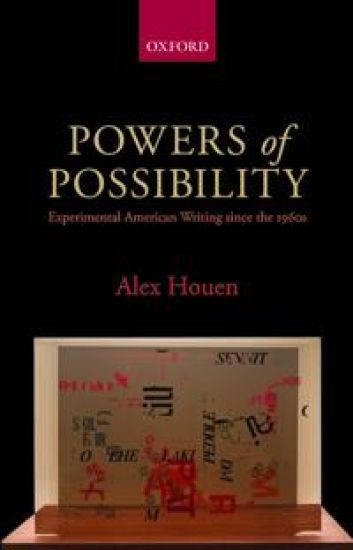
In The Meaning of Contemporary Realism (1957) Georg Lukács discussed how the power struggle of the Cold War made it all the more pressing for literary writers to present 'concrete potentialities' of individual character in novel ways. Powers of Possibility explores how American experimental writers since the 1960s have set about presenting exactly that while engaging with specific issues of social power. The book's five chapters cover a range of writers, literary genres, and political issues, including: Allen Ginsberg's anti-Vietnam War poems; LeRoi Jones/Amiri Baraka and Black Power theatre; William S. Burroughs's novels and the Space Programmes; Kathy Acker's fiction and Biopolitics; and Lyn Hejinian, Language poetry, and the Cold War. Each chapter examines how relations of character and social power were widely discussed in terms of potentiality: Black Power groups, for example, debated the 'revolutionary potential' of African Americans, while advances in the space programmes led to speculation about the evolution of 'human potential' in space colonies. In considering how the literary writers engage with such debates, Alex Houen also shows how each writer's approach entails combining different meanings of 'potential': 'possible as opposed to actual'; 'a quantity of force'; a 'capacity' or 'faculty'; and 'potency'. Such an approach can be characterised as a literary 'potentialism' that turns literary possibilities (including experiments with style and form) into an affective aesthetic force with which to combat or reorient the effects of social power on people. Potentialism is not a literary movement, Houen emphasises, so much as a novel concept of literary practice-a concept that stands as a refreshing alternative to notions of 'postmodernism' and the 'postmodern avant-garde'.
In The Meaning of Contemporary Realism (1957) Georg Lukács discussed how the power struggle of the Cold War made it all the more pressing for literary writers to present 'concrete potentialities' of individual character in novel ways. Powers of Possibility explores how American experimental writers since the 1960s have set about presenting exactly that while engaging with specific issues of social power. The book's five chapters cover a range of writers, literary genres, and political issues, including: Allen Ginsberg's anti-Vietnam War poems; LeRoi Jones/Amiri Baraka and Black Power theatre; William S. Burroughs's novels and the Space Programmes; Kathy Acker's fiction and Biopolitics; and Lyn Hejinian, Language poetry, and the Cold War. Each chapter examines how relations of character and social power were widely discussed in terms of potentiality: Black Power groups, for example, debated the 'revolutionary potential' of African Americans, while advances in the space programmes led to speculation about the evolution of 'human potential' in space colonies. In considering how the literary writers engage with such debates, Alex Houen also shows how each writer's approach entails combining different meanings of 'potential': 'possible as opposed to actual'; 'a quantity of force'; a 'capacity' or 'faculty'; and 'potency'. Such an approach can be characterised as a literary 'potentialism' that turns literary possibilities (including experiments with style and form) into an affective aesthetic force with which to combat or reorient the effects of social power on people. Potentialism is not a literary movement, Houen emphasises, so much as a novel concept of literary practice-a concept that stands as a refreshing alternative to notions of 'postmodernism' and the 'postmodern avant-garde'.
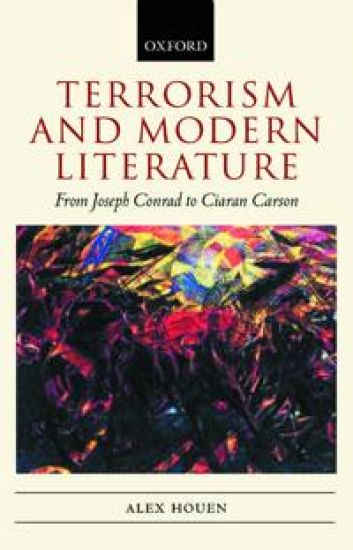
This work is an extensive study of modern literature's engagement with terrorism. Ranging from the 1880s to the 1980s, Alex Houen explores how literary figures clash or collude between terrorist violence and discursive performativity.
Is terrorism's violence essentially symbolic? Does it impact on culture primarily through the media? What kinds of performative effect do the various discourses surrounding terrorism have? Such questions have not only become increasingly important in terrorism studies, they have also been concerns for many literary writers. This book is the first extensive study of modern literature's engagement with terrorism. Ranging from the 1880s to the 1980s, the terrorism examined is as diverse as the literary writings on it: chapters include discussions of Joseph Conrad's novels on Anarchism and Russian Nihilism; Wyndham Lewis's avant-garde responses to Syndicalism and the militant Suffragettes; Ezra Pound's poetic entanglement with Segregationist violence; Walter Abish's fictions about West German urban guerrillas; and Seamus Heaney's and Ciaran Carson's poems on the 'Troubles' in Northern Ireland. In each instance, Alex Houen explores how the literary writer figures clashes or collusions between terrorist violence and discursive performativity. What is revealed is that writing on terrorism has frequently involved refiguring the force of literature itself. In terrorism studies the cultural impact of terrorism has often been accounted for with rigid, structural theories of its discursive roots. But what about the performative effects of violence on discourse? Addressing the issue of this mutual contagion, Terrorism and Modern Literature shows that the mediation and effects of terrorism have been historically variable. Referring to a variety of sources in addition to the literature--newspaper and journal articles, legislation, letters, manifestoes--the book shows how terrorism and the literature on it have been embroiled in wider cultural fields. The result is not just a timely intervention in debates about terrorism's performativity. Drawing on literary/critical theory and philosophy, it is also a major contribution to debates about the historical and political dimensions of modernist and postmodernist literary practices.